Ruffed Grouse Range in Alaska
Hunting Ruffed Grouse in Alaska can be a bit like a treasure hunt – you know they're somewhere, but pinpointing their exact locations can be incredibly frustrating if you're expecting them around every corner like their cousins. Unlike other grouse species that seem to thrive across vast swathes of the Last Frontier, Ruffed Grouse are a bit more particular about where they set up shop. This guide is going to peel back the layers on where you can realistically expect to find Ruffed Grouse in Alaska, helping you understand their specific habitat needs and geographical strongholds so you can make the most of your hunting efforts.
Understanding the Ruffed Grouse's Preferred Habitat in Alaska
When we talk about Ruffed Grouse, we're not talking about your typical spruce forest dweller. These birds have very specific tastes when it comes to their home turf, and understanding this is the absolute first step in finding them in Alaska. If you go into the deep spruce stands, you'll probably find a Spruce Grouse Behavior in the Interior, but a Ruffed Grouse? Not so much.
Ruffed Grouse are deciduous forest specialists. They absolutely thrive in young, regenerating forests dominated by aspen, birch, and willow. Think about areas that have recently experienced logging, forest fires, or even heavy wind events that create dense, shrubby growth. These thickets provide critical cover from predators, abundant food sources in the form of buds and catkins, and drumming logs for the males during breeding season. The key here is young and deciduous.
Mature, unbroken stands of spruce or hemlock typically won't hold Ruffed Grouse. They need that brushy understory, that patchwork of differing ages of timber, often referred to as "edge habitat." This mix of open areas, dense young trees, and more mature deciduous stands allows them to feed, hide, and breed effectively. If you're looking at a map, consider areas that have recent burn scars – these can create incredible new Willow Regrowth and Moose Numbers and aspen stands that are perfect Ruffed Grouse real estate. Think about how many times you've heard a moose hunter talk about the thick, regenerating cover they hunt in, and you're getting closer to ideal grouse habitat.
The challenge in Alaska, of course, is that these specific habitat types aren't uniform. Large expanses of the state are dominated by boreal spruce forests or tundra. This is why their distribution is so much more limited here compared to, say, the Midwest or Eastern U.S. When scouting, especially if you're using digital tools, look for those bright green splotches indicating deciduous growth, often interspersed with darker green conifers, but never entirely dominated by them. A helpful tip is to identify areas that might also be good for moose browsing, as the same young, brushy deciduous growth attracts both. Looking for Old Burns and Where Moose Feed in Them on satellite imagery can reveal prime grouse habitat. Using a robust mapping system, perhaps something like GoHunt offers, to mark promising areas during scouting trips can significantly boost your success.
Pinpointing Ruffed Grouse Concentrations in Alaska
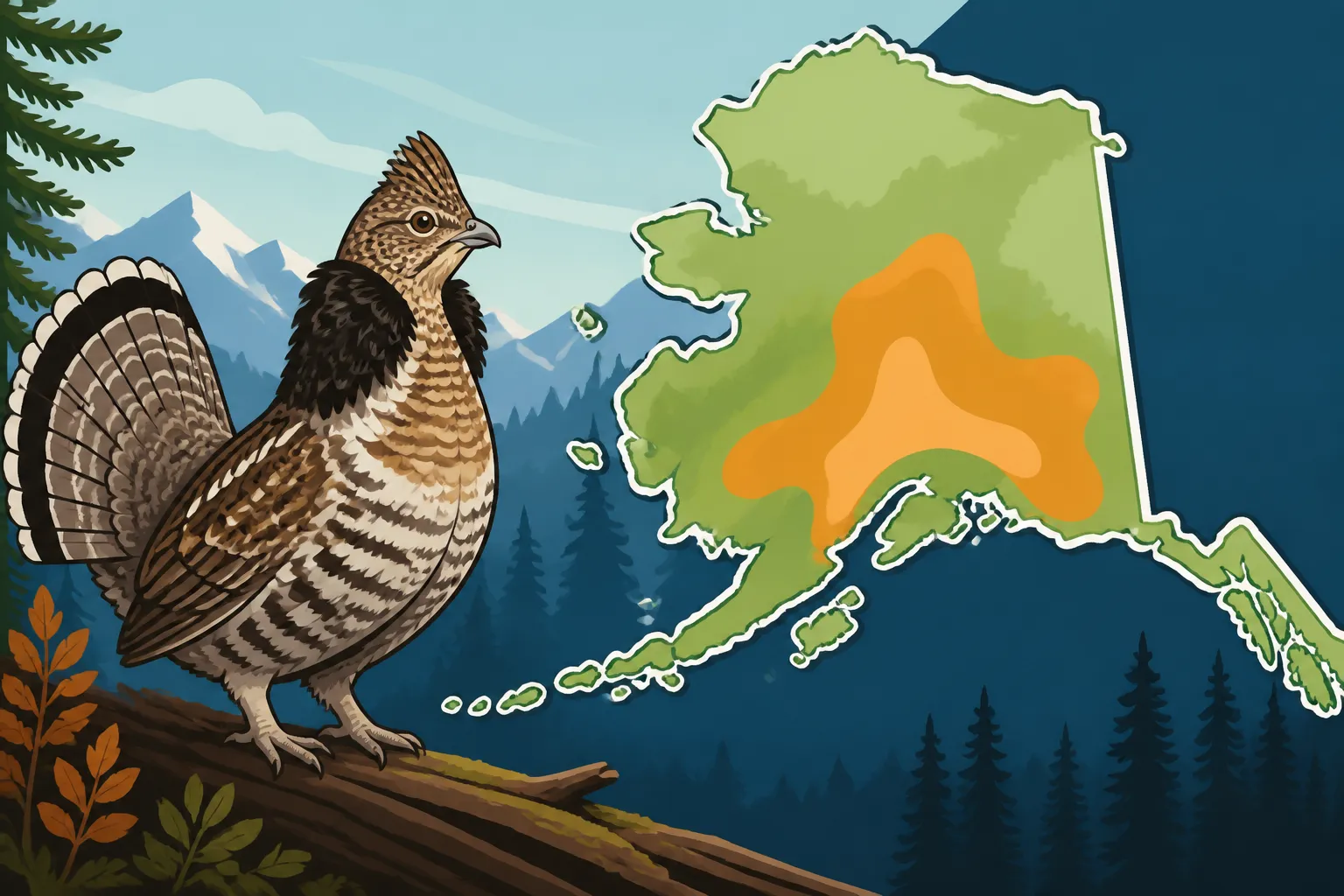
Given their specific habitat needs, Ruffed Grouse in Alaska are not found statewide. Their range is concentrated in certain regions, primarily within the Interior and south-central parts of the state where those mixed deciduous and conifer forests are more prevalent. If you're planning a trip specifically for Ruffed Grouse, knowing these general areas is crucial.
The "sweet spot" for Ruffed Grouse in Alaska tends to be the Interior, particularly around the Fairbanks area and extending south into the Copper River Basin and parts of the Susitna Valley. Here, you'll find a greater abundance of birch, aspen, and willow stands, often a result of past forest fires or glacial outwash plains.
Let's break down some general areas:
| Region | Typical Habitat Characteristics | Key Considerations |
|---|---|---|
| Fairbanks Area | Extensive birch and aspen forests, river bottoms with willows | Some of the most consistent Ruffed Grouse populations. Access often off road systems or short hikes into adjacent timber. Look for areas with a history of wildfire in the last 10-30 years. |
| Mat-Su Valley | Mixed forests, riverine habitats, regenerating clearings | Can be good, but often more localized. Focus on areas with ample birch, aspen, and cottonwood. Matanuska Valley Hunting Close to Palmer can offer opportunities, but be mindful of private land. |
| Copper River Basin | Aspen and birch stands, especially near rivers and old burns | Often associated with areas also known for moose. Can be excellent, but access might be more challenging, requiring ATVs or boats. |
| Kenai Peninsula (Limited) | Some mixed forests, particularly on the northern end | Less consistent than the Interior, but pockets exist. Look for specific areas with strong deciduous components, perhaps along river corridors or in recently disturbed areas. Hunting Near Seward in Unit 7 would likely require extensive scouting for specific habitat. |
| Southeast Alaska | Generally too wet and dominated by conifers (hemlock, spruce) | Ruffed Grouse are largely absent. You're more likely to find Blue Grouse or Spruce Grouse in this region. |
| Western/Northern Alaska | Too much tundra, too few deciduous forests | Ruffed Grouse are not typically found in these regions. You'd encounter Willow Ptarmigan Versus Rock Ptarmigan here. |
When you're looking at a map, whether it's a paper copy or a detailed online platform, focus on game management units (GMUs) that encompass these forest types. For instance, parts of Unit 20, 13, and 14 are good places to start. Remember that the presence of deciduous trees alone isn't enough; they need that varied structure, that mix of young, dense cover and slightly more open foraging areas. Tools like GoHunt can layer vegetation maps right over topographic data, making it much easier to visualize these prime spots from your home office before you ever step foot in the bush. Understanding Where to Find Unit Maps for Alaska is essential for narrowing down your search. Even areas like Hunting Off the Glenn Highway Near Sheep Mountain might offer localized ruffed grouse opportunities if the specific habitat criteria are met.
Challenges and Misconceptions of Hunting Ruffed Grouse in Alaska
It's easy to get excited about chasing any game bird, but approaching Ruffed Grouse in Alaska with realistic expectations is crucial. A common misconception is that because Alaska is so wild and vast, all game species must be abundant everywhere. For Ruffed Grouse, this couldn't be further from the truth.
One of the biggest challenges is simply their localized distribution. As mentioned, they aren't found in every drainage or every timber stand. Hunters coming from states where Ruffed Grouse are widespread across vast tracts of forest might be disappointed to find that even within a seemingly ideal area, the birds are often concentrated in very specific pockets. This means more legwork, more careful scouting, and a deeper understanding of micro-habitats. You can't just walk any old woods and expect to flush them.
Another challenge is competing with other grouse species. In many of the same areas where you might find Ruffed Grouse, you'll also encounter Spruce Grouse. While both are "grouse," their behavior and preferred cover can differ. Spruce Grouse are typically less wary and stick to thicker conifer cover, whereas Ruffed Grouse are known for their explosive flushes and preference for those denser, younger deciduous stands. Learning to distinguish their flushes and the type of cover they emerge from is part of the fun – and the challenge.
Hunting Ruffed Grouse often means still-hunting or slow-walking through dense cover. This can be physically demanding, especially in Alaska where the brush can be incredibly thick. Unlike Ptarmigan hunts above timberline where you might be Shooting Grouse Along a Pack Trail in relatively open country, Ruffed Grouse hunting is often close-quarters work. You'll be crashing through alders and willow, often with limited visibility. This also means you need to be prepared for quick shots and have a shotgun that handles well in tight spaces. You're rarely going to get a long, open shot.
For those venturing into grouse country, consider bringing a small-game shotgun that's quick to shoulder. And while it's tempting to focus solely on big game, don't underestimate the joy of Shooting Small Game With a Big Game Rifle if you only have your primary hunting rifle, but be mindful of meat damage. Even if your primary target is moose or caribou, carrying a .22 pistol or a specific shotgun for grouse can add a delicious camp meal and make the hunting experience even richer. Just remember to always check current regulations for firearm restrictions and bag limits in your specific hunting unit, as these can vary.
Disclaimer
This article is for general informational purposes only and does not constitute professional advice. Laws, prices and regulations vary by location and change over time. Consult a qualified professional for guidance on your specific situation.