Old Burns and Where Moose Feed in Them
Navigating the vast, wild landscapes of Alaska in pursuit of a bull moose can often feel overwhelming. Unlike some hunts where game concentrates in predictable patterns, finding these massive animals often demands a deep understanding of their habitat preferences. While dense timber and willow thickets are classic moose country, one of the most consistently productive, yet frequently misunderstood, areas for moose hunting is the "old burn." Many hunters overlook these seemingly desolate areas, not realizing that a forest fire, while destructive in the short term, often creates a veritable buffet and ideal sanctuary for moose in the years that follow. This guide will delve into the science and strategy behind targeting moose in old burns, helping you decipher these complex landscapes and increase your odds of success.
Why Old Burns Become Moose Magnets
It might seem counterintuitive at first glance – a landscape scarred by fire, full of blackened snags and open ground, hardly seems like prime habitat. Yet, given enough time, these areas transform into some of the best moose country you can find in Alaska. It’s all about ecological succession and how moose exploit the rapid changes fire brings to the ecosystem.
Regenerative Ecology and Forage Growth
The immediate aftermath of a wildfire is indeed devastating, leaving behind a moonscape of ash and charred timber. However, nature quickly begins its healing process. Within a few years, pioneer plant species begin to colonize the nutrient-rich soil left behind by the fire. These are often the fast-growing, highly palatable species that moose absolutely thrive on: willow, aspen, birch, and fireweed. Unlike the mature, often less nutritious browse found in an old-growth forest, these young shoots are packed with vital nutrients and are much easier for moose to digest.
This burst of new growth typically hits its prime within 5 to 20 years after a significant burn. During this window, the sheer volume and quality of browse can support incredibly high moose densities. As we explore in more detail in our piece on Moose Habitat in Alaska Burn Scars, these areas often become critical feeding grounds. As the burn ages past 20 years, larger conifer species might begin to dominate again, eventually shading out the preferred browse and reducing the area's attractiveness to moose, but that 5-20 year sweet spot is pure gold.
The fire also plays a crucial role in nutrient cycling. By consuming old vegetation and woody debris, the fire releases nutrients back into the soil, creating a fertile bed for new plant growth. This natural fertilization supercharges the browse, making it even more appealing to moose seeking to build fat reserves, especially before the long Alaska winter. Understanding this cycle is fundamental to predicting where the moose will be.
Cover and Safety Benefits
Beyond the smorgasbord of food, old burns provide surprisingly effective cover and a sense of security for moose. While a recent burn might feel exposed, a 5- to 20-year-old burn is often choked with dense stands of regenerating willow, alder, and young deciduous trees. This thick regrowth, combined with the standing dead timber (snags) from the original fire, creates excellent visual obstruction. A moose can easily disappear from sight just a few yards into such an area.
The remaining snags also offer partial protection. In the warmer months, they can provide scattered shade, and even in colder weather, the broken topography and remaining woody structures can break up wind, offering some relief. This combination of dense vertical and horizontal cover allows moose to bed down feeling secure, knowing they are hidden from potential predators and human hunters.
Furthermore, the mosaic pattern often created by wildfires – where some areas burn intensely, others lightly, and some pockets remain unburned – results in a diverse habitat. Moose can bed in the thickest parts of the regrowth, feed just a few steps away, and quickly move into an unburned timber stand for deeper cover if disturbed. This efficiency in accessing both food and security is a major draw, reducing the energy moose need to expend daily to survive and thrive.
Identifying Productive Burn Areas for Moose
You can't just stumble into any old burn and expect to find moose. Identifying the truly productive areas requires some serious homework before you even leave home, followed by keen observation once you're in the field.
Satellite Imagery and Mapping for Pre-Hunt Scouting
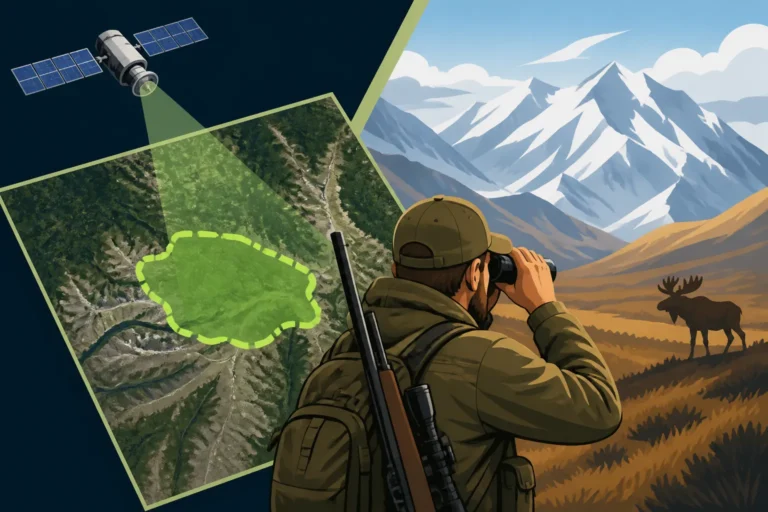
Modern technology has revolutionized pre-hunt scouting, and nowhere is this more evident than when dissecting burn areas. Services like GoHunt, along with other robust mapping platforms, provide invaluable satellite imagery that allows you to identify burn perimeters, estimate their age, and analyze the type of regrowth. Look for areas with distinct boundaries where the lighter greens of new growth meet the darker shades of mature forest.
When using satellite imagery, zoom in and look for the texture of the vegetation. Very smooth, uniform green might indicate a younger, denser stand of regenerating browse. If you can use historical imagery, track the date of the fire. Aim for burns that occurred roughly 5 to 20 years prior to your hunt date. Anything more recent might lack sufficient browse, while very old burns may have transitioned back to less favorable coniferous forests, as discussed in Willow Regrowth and Moose Numbers.
Pay close attention to transition zones where the burn meets other habitat types, such as mature timber, wetlands, or riparian corridors. Moose frequently use these edges as travel routes and feeding areas, exploiting the benefits of both habitat types. Identifying these high-contrast areas on your map can give you a significant advantage. Also, don't forget to cross-reference burn areas with topographic maps to pinpoint features like south-facing slopes, saddles, or small basins within the burn. These micro-habitats often concentrate moose due to favorable sun exposure or sheltered bedding. This detailed reconnaissance is crucial for Scouting a Unit From Satellite Imagery Before You Fly.
On-the-Ground Observation and Sign Reading
Once you’re boots-on-the-ground, your eyes become your most important tool. While satellite imagery guides you to general areas, finding specific moose depends on your ability to read the landscape. Start by looking for fresh sign: tracks, rubs, browsed vegetation, and scat. Moose are heavy animals, and their tracks can be quite distinct, especially in damp soil or snow. Pay attention to the freshness – clear, sharp tracks mean a moose was recently there.
Browsed vegetation is a definitive indicator of moose activity. Look for twigs, typically willow, birch, or aspen, that have been cleanly clipped or torn. Unlike deer, moose lack upper incisors, so their browsing often leaves a ragged or torn appearance on the end of a branch, though smaller twigs might be clipped more cleanly. Our article What Moose Eat in a Ten-Year-Old Burn offers more insight into their dietary preferences in these habitats. If you find extensive fresh browsing, you're in a productive area.
Well-used trails winding through the dense regrowth are another excellent sign. Moose are creatures of habit and will often use the same paths repeatedly, especially when moving between bedding and feeding areas, or to water sources. Follow these trails cautiously, as they often lead directly to areas of high moose concentration. Finally, don't overlook nearby water sources. Moose need water regularly, and a burn adjacent to a small pond, slough, or creek will always be more appealing.
Strategic Hunting Approaches in Burned Landscapes
Hunting old burns presents its own unique set of challenges and opportunities. The dense cover and often difficult terrain demand specific strategies to be successful.
Glassing Techniques for Open Burns
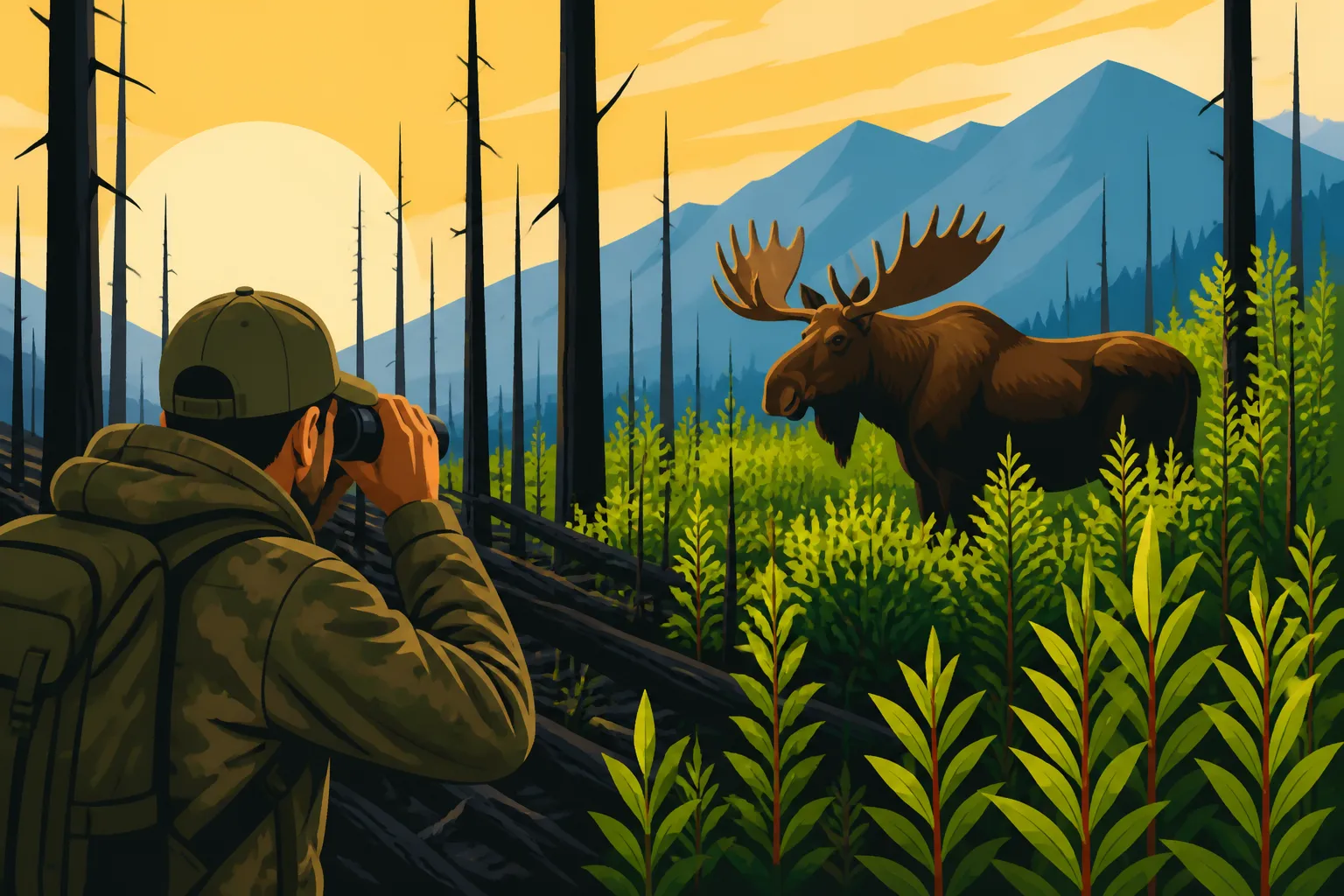
While much of an old burn can be thick, there are almost always openings, clearings, or higher vantage points that lend themselves perfectly to glassing. Position yourself on elevated terrain – a ridge, knoll, or even a large pile of downed timber – that offers an expansive view. A quality spotting scope and a good pair of binoculars, ideally mounted on a tripod, are indispensable here. As we detail in Glassing the Alaska Range: Finding Game Before You Move, patience and a systematic approach are key.
Break the burn into manageable sections and methodically scan each one, moving your optics slowly, searching for anything that looks out of place. Look for the horizontal lines of a moose's back, the dark curve of an antler, or the flick of an ear against the jumble of dead snags and new growth. Moose can be incredibly difficult to spot, even in relatively open areas, blending in seamlessly with their surroundings. Don't just scan; study every shadow and clump of brush. Utilizing a Tripod Height for All-Day Glassing allows you to maintain steady focus and reduce fatigue during long glassing sessions.
Prime glassing times are typically early morning and late evening when moose are most active and moving between feeding and bedding areas. However, don't neglect midday, especially during the rut. Bulls may be bedded in shaded pockets or near water, conserving energy. If you've done your GoHunt scouting diligently, you'll know exactly which key features to focus your glassing efforts on, increasing efficiency.
Navigating the Obstacles and Calling Strategies
Hunting in burns is physically demanding. You'll likely encounter a maze of deadfall, uneven ground, and incredibly dense regrowth. This terrain can be slow, noisy, and frustrating to navigate. A sturdy Backpack Hunting in Alaska: Gear Weight and Meat Loads setup will be appreciated when you are picking your way through these obstacles. Moving stealthily is paramount but challenging; try to use the wind to your advantage, and move slowly, stopping frequently to listen. The crunching of old wood underfoot is unavoidable, so time your steps with natural sounds like wind gusts or distant airplane noise.
Despite the navigation difficulties, burns offer excellent opportunities for calling, especially during the rut. The relatively open nature of some burn areas, especially those with sparser regrowth, allows sound to carry well. Moose, particularly bulls during the rut, are often eager to respond to calls, thinking they’re hearing a rival bull or a receptive cow. Effective Calling Bull Moose During the Alaska Rut often involves a combination of cow calls, grunts, and raking brush to simulate a bull.
Position yourself carefully when calling. Try to find a spot with good visibility and clear shooting lanes in the direction you expect a moose to approach. Have an escape route in mind, especially if dealing with an aggressive bull. Remember, these animals are huge, and a surprised or agitated bull can cover ground quickly. Using a Calling Moose in Alaska With a Scapula and a Cow Call can be incredibly convincing, adding realism to your setup and drawing in curious or territorial bulls.
Seasonal Nuances and Considerations in Burn Areas
The attractiveness of a burn area to moose isn't static; it changes throughout the hunting season, influenced by food availability, breeding cycles, and approaching winter.
Early Season vs. Rutting Season in Burns
In the early season, typically late August to early September, moose are primarily focused on feeding to build up crucial fat reserves before the rut and winter. Burns with their abundance of succulent browse are prime feeding grounds. During this period, moose might be less responsive to calls as their priority is nutrition, not breeding. Your best bet is often to locate them through quiet spot-and-stalk tactics or methodical glassing, catching them as they move or feed.
As the rut approaches and peaks from mid-September into early October, the dynamic in burn areas shifts dramatically. Bulls become much more active, vocal, and driven by the urge to find cows. Burns offer an ideal mix for rutting moose: abundant food for cows, decent cover for bedding, and open enough areas for bulls to display their dominance, rake trees, and vocalize. This is when calling strategies become incredibly effective. Bulls will often travel significant distances across a burn, crashing through the regrowth, to investigate calls. Understanding When Moose Seasons Open Across Alaska Units will help you time your hunt for optimal rut activity.
Post-Rut and Winter Feeding Patterns
Even after the intense energy drain of the rut, burns continue to be vital for moose. Bulls and cows alike will still be focused on replenishing lost weight and foraging for every available calorie before the snows deepen and winter truly sets in. The browse in a 5- to 15-year-old burn remains highly attractive and critical during this recovery phase.
As winter approaches and snow begins to accumulate, moose may start to shift their movements. While burns with very dense willow and aspen regrowth can still provide accessible forage even with moderate snow, extremely deep snow can make movement and feeding too difficult. In such conditions, moose might seek out more sheltered valleys, river bottoms, or unburned pockets of timber that offer some protection from harsh weather, or where forage remains above the snowline. Our insights into Winter Range and Moose Survival in Interior Alaska shed more light on these critical habitat choices.
The cycle of fire, regrowth, and moose utilization is a continuous one. By understanding these seasonal patterns, you're not just finding a moose for this year's hunt; you're building a deeper knowledge of moose ecology that will serve you well for many seasons to come, helping you locate where Alaska Moose: Where the Biggest Bulls Live and even helping to understand Why Unit 20A Holds So Many Moose.
Burn Age and Moose Utilization
To help visualize how moose utilize different stages of burn regrowth, here's a quick overview:
| Burn Age (Years Post-Fire) | Key Characteristics | Primary Moose Utility | Hunting Challenges |
|---|---|---|---|
| 1-4 (Recent) | Ash, standing snags, minimal regrowth | Minimal | Lack of cover/food; very difficult travel. |
| 5-10 (Young) | Dense willow/aspen/birch saplings, snags | Peak feeding & cover | Very thick navigation, potential for noisy travel. |
| 11-20 (Mature) | Taller brush, maturing deciduous, some conifers | Excellent feeding & cover | Very dense cover, reduced visibility for glassing. |
| 20+ (Old) | Conifer re-establishment, less pioneer browse | Declining feeding, good cover | Less primary forage; moose may be widely dispersed. |
Disclaimer
The information provided in this guide is for informational purposes only and is not a substitute for official hunting regulations. Always consult the most current Alaska Department of Fish and Game regulations, hunt specific rules, and land use policies before planning any hunt. Hunting is an inherently risky activity; ensure you prioritize safety, carry appropriate gear, and inform others of your travel plans.