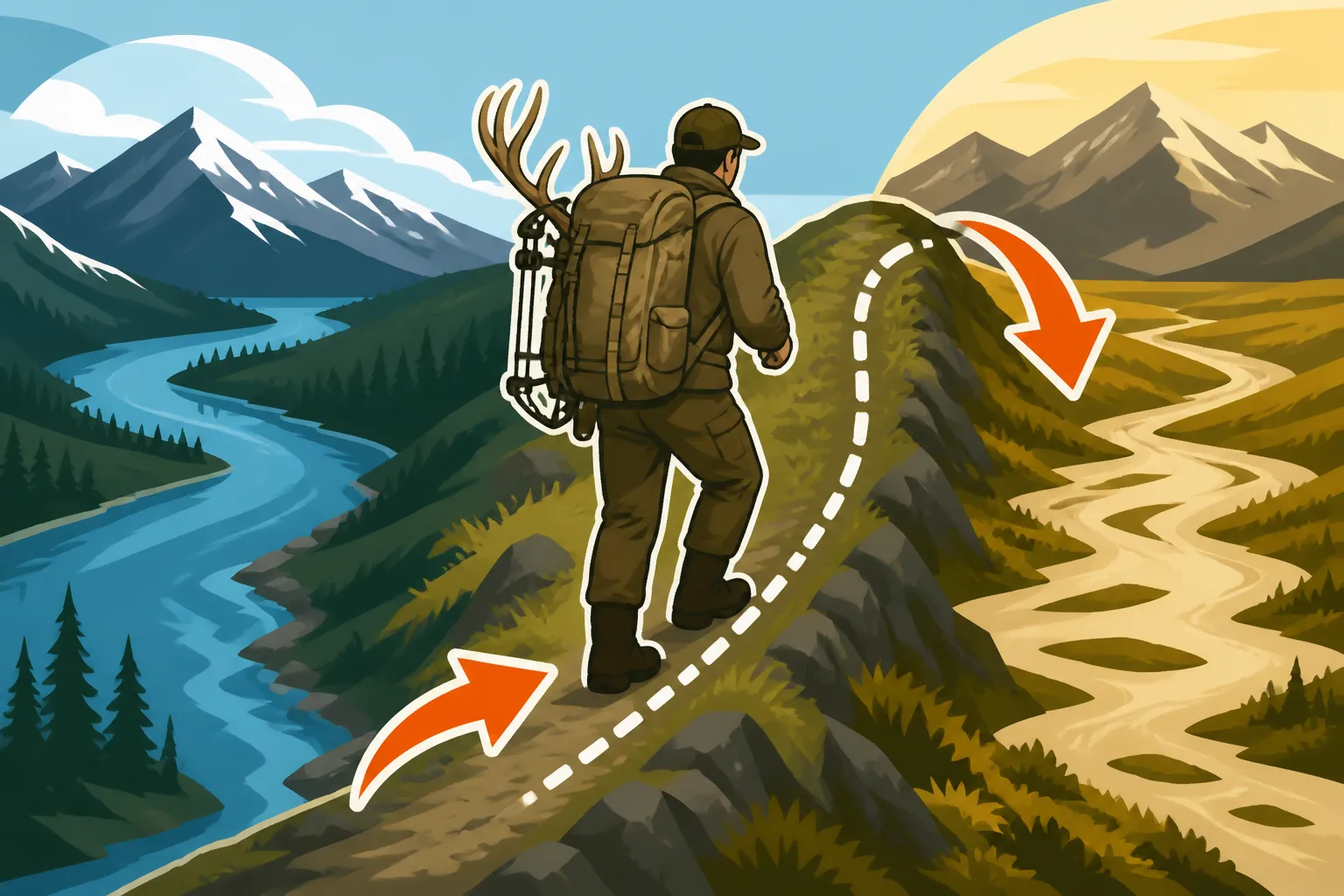
Portage Routes Between Two Drainages
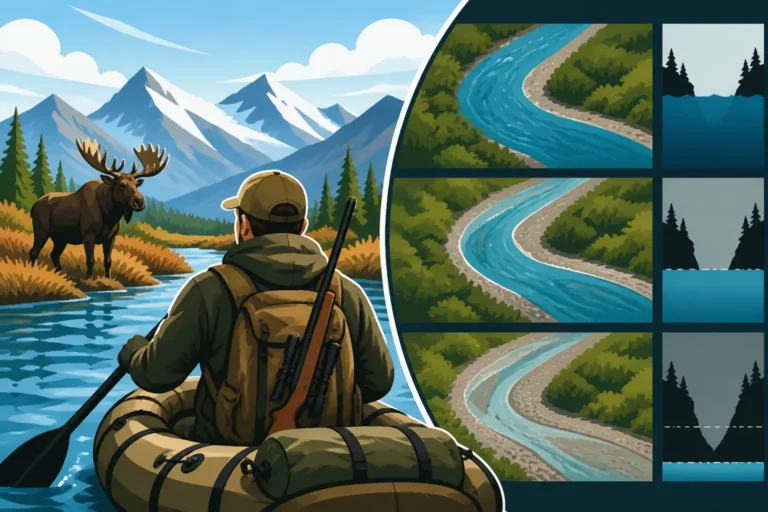
There’s nothing quite like the feeling of having a good float hunt going, drifting down a pristine Alaska river, and then realizing the drainage you’re in might not hold the trophy you’re after, or worse, that your river is about to turn into an unrunnable tangle of logs and shallow braids. It’s a frustrating moment when you’re literally and figuratively stuck. This guide will walk you through the often-overlooked but crucial skill of portaging between drainages, opening up new hunting opportunities and ensuring you can always find a way forward in the vast Alaskan wilderness.
Understanding the "Why" Behind Portage Routes
When you're out in the Alaskan bush, whether you're on a float hunt, a backpacking trip, or a combination of both, the landscape can present both incredible opportunities and formidable challenges. Sometimes, the path of least resistance isn't always the best path, and knowing how to navigate between river systems or valleys can be a game-changer for your hunting success and overall safety.
Expanding Your Hunting Footprint
Imagine you've been working a river system for several days, seeing decent sign, but nothing that gets your heart really pumping. Maybe the bull moose are just across the ridge in the next valley, or the caribou migration has shifted. Hunting a single drainage, especially one dictated by a river, can be limiting. Game animals, especially moose and caribou, often utilize different drainages depending on forage availability, rutting activity, or migration patterns. By knowing how to portage, you can literally pick up your camp and move it to where the game is. This ability to adapt and expand your hunting footprint beyond the immediate river corridor can dramatically increase your odds, allowing you to access untouched basins or areas where pressure is lower. It's about turning what looks like an impenetrable barrier into a mere bridge to better hunting grounds, letting you chase those big bulls or rams into adjacent territories.
Avoiding River Obstacles and Dead Ends
Alaska's rivers are wild and unpredictable. What looks like a clear, navigable waterway on a map can quickly become a nightmare of sweepers, log jams, and incredibly shallow braids, especially later in the season when water levels drop. Encountering an unrunnable section of river can halt your progress completely, forcing you to backtrack or risking serious damage to your raft or gear. Worse still, you might find yourself in a drainage that simply dead-ends into impassable rapids or a large, boggy plain that’s impossible to traverse with a heavy load. This is precisely where a well-planned portage becomes a lifeline. Instead of being stuck, you can pull your boat out, pack your gear, and walk it over a divide to another, more favorable river system or a section of the same river that bypasses the obstacle. This not only saves precious hunting time but can also be a critical safety measure, preventing you from getting stranded in a dangerous situation far from your planned pickup point. For anyone considering a float hunt, truly understanding how to choose a float hunt river by water level and length is vital for minimizing the need for emergency portages.
Scouting and Planning Your Portage
The success of any portage in Alaska hinges almost entirely on meticulous planning and scouting. You can't just decide to "wing it" when you're miles from anywhere with heavy loads. The modern tools available to hunters today make this planning phase far more effective than it used to be.
Leveraging Topographical Maps and Satellite Imagery
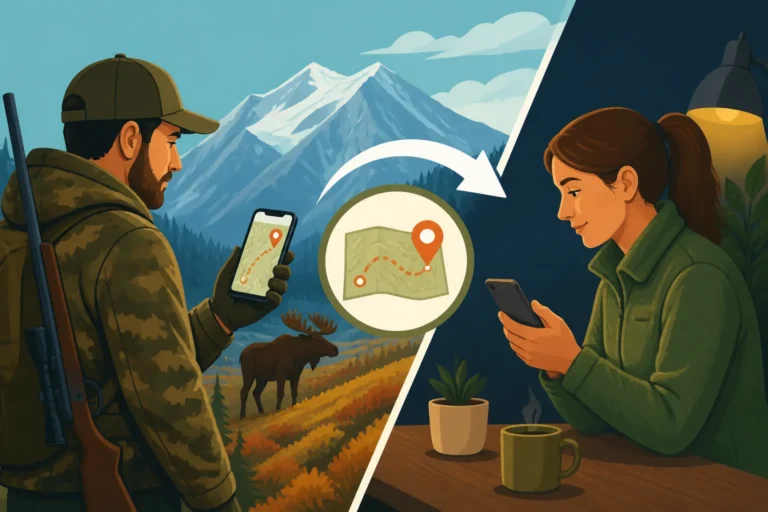
Before you even step foot in a raft or on the tundra, your best friend will be detailed topographical maps and satellite imagery. Digital platforms and apps like GoHunt, Gaia GPS, or Google Earth are invaluable for this. Start by identifying the two drainages you want to connect. Then, zoom in and look for the lowest points along the divide separating them. These low points are often saddles or passes. You're searching for gentle slopes, wide valleys, or areas where the contour lines are spread farthest apart, indicating less steep terrain. Pay close attention to the vegetation overlays; dense spruce forests, thick alders, or expansive, boggy tundra will slow you down considerably.
Look for potential natural corridors like old game trails, dry creek beds, or natural clearings that might offer an easier path. It's also critical to look for water sources. A portage might take a day or more, and having access to potable water is non-negotiable. Before your fly-in, make sure you download offline maps so you have access to your planned routes and waypoints even without cell service in the remote bush. You can even mark potential camping spots or cache locations along your planned route. By meticulously "Scouting a Unit From Satellite Imagery Before You Fly," you can eliminate many unknowns and dramatically improve your chances of a smooth transition.
Identifying Key Terrain Features for Easy Passage
When you're scrutinizing those maps and satellite images, you're looking for specific features that signal an easier walk. A gentle, rolling saddle between two peaks is far more appealing than a sheer rock face. Sparse timber, especially mature spruce or birch stands, is generally easier to navigate than dense, thorny alder thickets that can be almost impenetrable. Look for benches – flat or gently sloping areas on hillsides that can provide easier walking, especially important when you’re reading contour lines for sheep benches. Old burn scars can sometimes offer more open country, but they can also be choked with new growth or fallen timber.
Conversely, be highly wary of features that scream "trouble": tightly packed contour lines indicating cliffs or steep ascents, large areas marked as swamp or muskeg (those squiggly lines on a topo map are your enemy), or areas of known dense brush. Always consider the elevation gain and loss. While a straight line on a map might seem shortest, a slightly longer route that avoids a punishing climb and descent will be much faster and safer in the long run, especially when hauling gear or meat.
Considering Water Sources and Camp Locations
A portage isn't just about moving from Point A to Point B; it's about sustaining yourself during the journey. Depending on the length and difficulty, a portage could take hours or even multiple days. That means you need reliable access to water. As you scout your route, identify potential streams, small lakes, or snowfields that could provide drinking water. Mark these as waypoints on your GPS. Always carry a reliable water filter or purification tablets.
Beyond water, consider where you might need to set up a spike camp. If your portage is more than a single long day, or if you anticipate needing to make multiple trips with loads, you'll want designated, safe areas to pitch a tent. Look for flat, well-drained ground, ideally with some natural shelter from wind or rain, and away from obvious game trails that bears might use. Knowing where you might be setting up a spike camp above a sheep basin, for example, even if you're hunting moose, applies the same principles of selecting a good, secure location.
Executing a Successful Portage in the Field
Even with the best planning, the field execution of a portage is where the rubber truly meets the road. It's physically demanding, requires mental fortitude, and a methodical approach to ensure everything gets moved safely and efficiently.
Gear Considerations for the Haul
When you’re preparing for an Alaska hunt that might involve a portage, every ounce of gear needs to be scrutinized. This is where lightweight, durable equipment truly shines. If you're doing a float hunt with an anticipated portage, a packraft is often the most practical choice. Unlike rigid canoes or larger rafts, packrafts can be deflated, rolled up, and carried on a backpack, making them ideal for these transitions. You'll need to pay close attention to the specific packraft weight versus load capacity to ensure you can carry all your gear, plus a downed animal's meat.
Beyond the boat, a robust internal frame backpack capable of handling heavy, awkward loads is essential. Think about how you’ll secure your deflated raft and paddles to your pack, and how you’ll distribute the weight. Consider specialized game bags that breathe in coastal rain to protect meat if you're packing it. Minimize non-essential items; every extra pound becomes a monumental burden on a portage. This is especially true for Backpack Hunting in Alaska: Gear Weight and Meat Loads, where every item is chosen for its multi-use capability and minimal weight.
The Art of Multiple Loads
Unless you're a superhero, you won't be moving all your gear, plus an animal's meat and hide, in a single trip. The reality of portaging in Alaska almost always involves multiple loads. This requires a methodical approach. First, prioritize. Safety gear, essential survival items, and perhaps a light spike camp should go in the first load. Then, the bulk of your camp gear. Finally, if you've harvested an animal, the meat.
When moving loads, establish clear caches. Choose a visible, memorable spot for each drop-off, and mark it clearly with flagging tape or a GPS waypoint. Don't just toss gear into the brush; organize it, protect it from the elements with tarps or heavy-duty garbage bags, and secure it from scavengers. Make sure each cached load is high enough off the ground to deter rodents and, ideally, covered to hide it from birds. When you return for subsequent loads, you should know exactly where to go. It's a slow process, often requiring a lot of "leapfrogging" – moving one load a certain distance, going back for the next, moving it past the first, and so on. Patience is key.
Navigating Unfamiliar Terrain
The biggest challenge during a portage, especially when moving between drainages, is often navigation. You're likely off-trail, moving through dense vegetation, over varied terrain, and often in weather that can reduce visibility. Relying solely on a planned GPS track is risky; electronics can fail. Always carry a physical map and a compass as backups. Regularly check your position against landmarks and your map. Take frequent compass bearings when fog shuts down glassing, and make sure you understand how to use those bearings to stay on course.
Pay attention to natural cues: the direction of water flow, the slope of the land, the position of the sun (if visible). Mark your path with flagging tape if permitted and necessary, especially if you anticipate poor visibility or returning for multiple loads. However, be mindful of leaving minimal trace. If you’re using a mapping app like those from GoHunt, ensure your breadcrumb trail is active and you're regularly saving your progress. The goal is to move deliberately, not quickly, ensuring you don't get disoriented or lost, which can quickly turn a challenging portage into a dangerous situation.
Safety and Contingency Planning
Alaska's wilderness demands a high level of preparedness, and portaging adds several layers of complexity to an already challenging environment. Prioritizing safety and having solid contingency plans in place can literally be a lifesaver.
Bear Safety on Portage Routes
Moving slowly through dense brush, especially when carrying gear and potentially meat, significantly increases your risk of a bear encounter. Bears often use the same low passes and natural corridors that make good portage routes. If you’ve made a kill and are packing out meat, the risk escalates. Always make noise as you move through thick cover to avoid surprising a bear. Carry bear spray readily accessible on your chest or hip belt, and know how to use it. Many hunters also choose to carry a sidearm around a kill site, especially when working slowly and methodically. However, remember that bear spray versus rifle at close range each have their own considerations; bear spray is often effective in preventing an attack, while a rifle is a last resort. Keep your weapon chambered and ready, but your primary defense should always be avoidance and deterrence. If you have to cache meat during a multiple-load portage, make sure it’s secured out of reach and sight of bears, ideally in a bear fence setup at a meat cache, if practical.
Weather Changes and Route Adjustments
The weather in Alaska is notoriously fickle and can change from bright sunshine to heavy rain or a whiteout snowstorm in a matter of hours. A dry creek bed you planned to follow could become a raging torrent, or a clear pass could be swallowed by dense fog. These rapid changes necessitate flexibility and the ability to adjust your plans. Before you embark on a portage, always check the latest weather forecast for the specific area. Once on the ground, constantly monitor conditions. If the weather deteriorates significantly, it might be safer to hunker down and wait it out, even if it means losing precious hunting time.
Have alternative routes mentally mapped out. What if your primary pass is impassable? Is there a higher, but more exposed, route? Or a longer, but safer, option around a major obstacle? Knowing these alternatives, even if they aren't ideal, can prevent you from being trapped. This goes hand-in-hand with effective navigation; being able to adapt to changing conditions using your map and compass is paramount.
Communication and Emergency Protocols
In remote Alaska, cell service is virtually non-existent. This makes reliable communication devices absolutely essential for any trip, but especially one involving a potentially strenuous portage. Satellite messengers (like an InReach or Garmin Messenger) allow you to send and receive text messages, share your location, and, critically, trigger an SOS if something goes wrong. Ensure your signal devices and check-in plans for solo Alaska hunts are clearly established before you leave.
Always leave a detailed trip plan with a trusted contact back home. This plan should include your expected route, specific dates for each leg of your journey (including anticipated portage days), and your planned check-in schedule. If you fail to check in by a certain time, your contact knows to initiate emergency procedures. Don't deviate significantly from your plan without notifying your contact if possible. Having a clear, agreed-upon emergency protocol is not just smart; it's a non-negotiable part of responsible hunting in the Alaskan wilderness.
Terrain Considerations for Portage Planning
| Terrain Type | Description | Difficulty Level (1-5) | Gear Considerations |
|---|---|---|---|
| Open Tundra | Rolling hills, sparse vegetation, often wet and spongy. Can be rocky in alpine areas. | 2-3 | Good waterproof boots, trekking poles, packraft (if applicable), lightweight frame pack. |
| Dense Alders | Impenetrable thickets of brush, often near riverbanks or in drainages. | 5 | Heavy-duty brush pants, machete/saw (if desperate), bear spray/sidearm easily accessible. Avoid if possible. |
| Old Burn Scars | Areas of previous wildfire. Can be open with new growth, or choked with fallen timber. | 3-4 | Strong boots for uneven ground, caution for hidden holes, good navigation to avoid deadfall tangles. |
| River Gravel Bars | Relatively flat, open, and easy walking, often used as landing strips. Can be soft sand or loose rock. | 1-2 | Appropriate footwear for varied surfaces. |
| Alpine Passes/Saddles | Higher elevation, rocky, can have snowfields. Often offers clearest path between drainages. | 3-4 | Sturdy boots with ankle support, trekking poles, layered clothing, potentially micro-spikes. |
| Muskeg/Swamp | Wet, boggy ground, often covered in moss and low brush. Extremely slow and tiring to traverse. | 4-5 | Hip waders or tall rubber boots, extreme caution for deep holes. Avoid at all costs. |
Disclaimer
Hunting in Alaska involves inherent risks, including but not limited to severe weather, dangerous wildlife, and remote, challenging terrain. The information provided in this guide is for informational purposes only and should not be considered a substitute for proper training, experience, and due diligence. Always consult official Alaska Department of Fish and Game regulations and ensure you have the necessary permits, licenses, and safety equipment before undertaking any hunting activity in Alaska. Prioritize safety and responsible outdoor practices at all times.