Moose Habitat in Alaska Burn Scars
When you look at a satellite map of Alaska, those vast swaths of blackened forest might seem like desolate, lifeless landscapes. It's easy to assume that a recent wildfire has decimated everything, pushing all wildlife far away. But for moose hunters, these burn scars aren't just remnants of destruction; they're often hidden oases of prime habitat, presenting unique challenges and incredible opportunities if you know how to read them. This guide will take a deep dive into how fires reshape the landscape into prime moose country, and how you can use that knowledge to your advantage.
Understanding the Ecology of Burn Scars
Wildfires are a natural and integral part of Alaska's boreal forest ecosystem. While they might appear devastating at first glance, these disturbances are often crucial for maintaining healthy wildlife populations, especially for creatures like moose. Ignoring burn scars is like overlooking a golden ticket to some of the best hunting grounds the Last Frontier has to offer.
Immediate Post-Fire Effects on Habitat
Right after a fire, the landscape can indeed look stark. The canopy is gone, leaving behind charred trees, exposed soil, and a drastically altered environment. Many hunters might assume this is a barren wasteland, devoid of game. However, even in this immediate aftermath, subtle changes begin that pave the way for future moose habitat. The ash layer on the ground can initially sterilize some areas, but it also releases a flush of nutrients that were previously locked up in the vegetation. Sunlight now reaches the forest floor unimpeded, a stark contrast to the shady, dense spruce forests that often dominated before the burn. This sudden influx of light and nutrients is the critical first step in a vibrant ecological transformation.
What's often overlooked is the initial flush of green that can emerge surprisingly quickly. Within a season or two, annual grasses and forbs, often fire-adapted species, can colonize the exposed soil. While these might not be the primary forage for adult moose, they do provide some early sustenance and help stabilize the soil, preventing severe erosion. The standing dead timber, or snags, also provides important structure and can create microclimates. It’s a harsh environment, but it’s far from lifeless, and the stage is set for the species that thrive on disturbance.
Successional Stages of Vegetation
The transformation of a burn scar isn't a single event; it's a dynamic process of ecological succession, moving through distinct stages. Each stage offers different benefits and challenges for moose, and understanding them is paramount for a successful hunt.
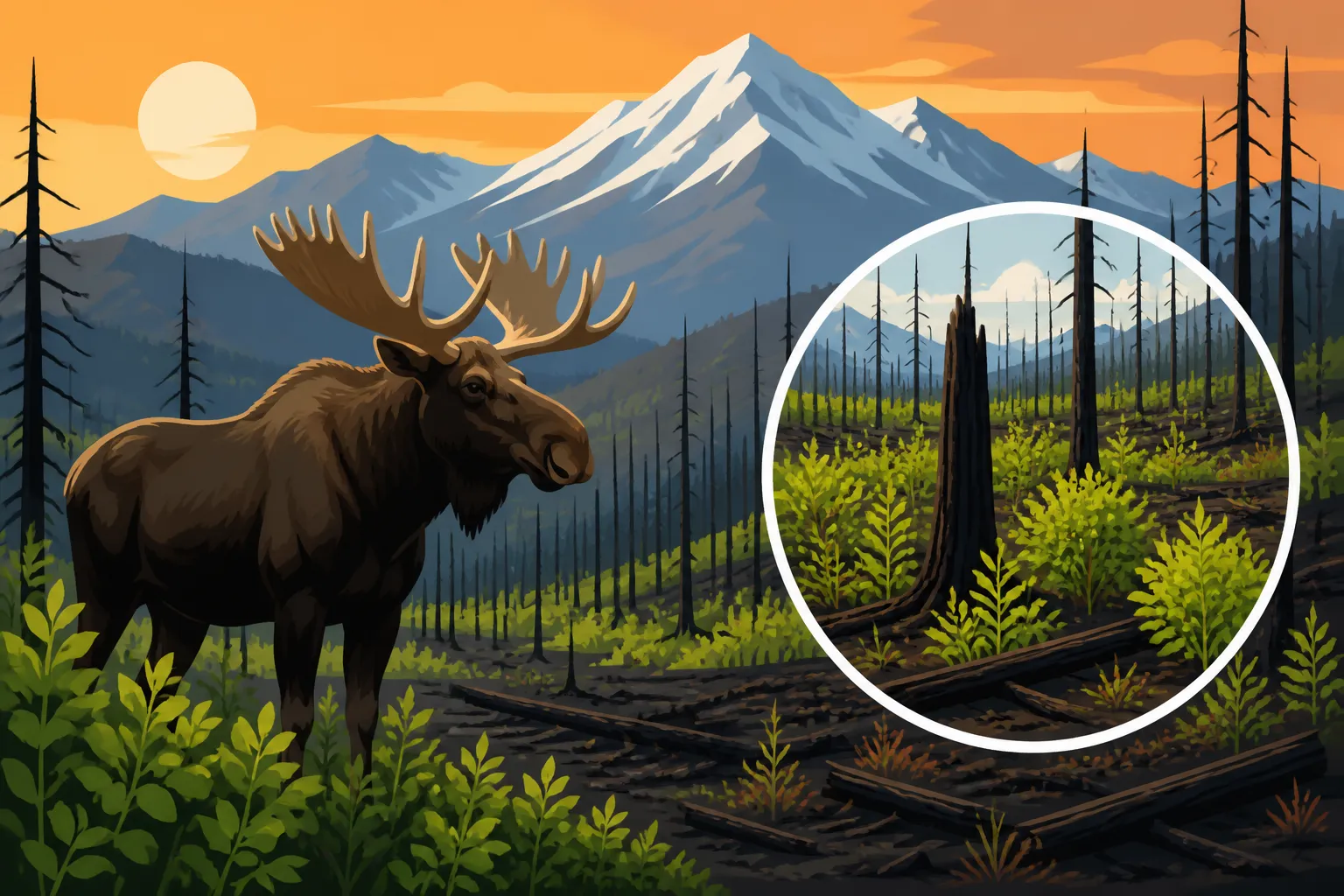
In the early stages, often within the first few years after a fire, you'll see a surge of herbaceous plants and pioneering shrubs. This is when fast-growing species like fireweed, bluejoint grass, and various willows begin to establish themselves. These are incredibly important for moose, providing easily accessible, highly nutritious browse. As the burn ages, typically between 5 and 20 years, these shrubs mature, forming dense thickets. This "shrub-sapling" stage is often considered the peak of moose habitat, offering not only abundant food but also increasing cover as the young trees like aspen, birch, and willow grow taller. The sheer volume of palatable browse makes these areas magnets for moose.
Beyond 20 years, as the deciduous trees continue to grow, they might start to shade out some of the understory browse, and conifer regeneration can begin to take hold. This transitions the burn into a "pole-timber" or even "young forest" stage. While still valuable, the quality of browse can start to decline as it becomes less accessible and less nutritious due to increased lignification. However, the edges where these mature burns meet unburnt forest, or where different age classes of burns intersect, can become particularly productive, creating mosaics of diverse habitat. Learning to identify these stages, perhaps by using satellite imagery on a platform like GoHunt, can dramatically increase your scouting efficiency.
The Role of Fire in Alaska's Boreal Forest
Fire isn't just a random destructive force in Alaska; it's a vital natural process that has shaped the boreal forest for millennia. Without periodic wildfires, the landscape would eventually become dominated by dense, mature spruce forests. While these forests provide some resources, they are generally less productive for moose than the diverse, early successional habitats created by fire.
Spruce forests, with their deep shade and acidic soils, tend to suppress understory growth. The browse available to moose in these older forests is often sparse and less nutritious. Fires reset this ecological clock, clearing out the old growth, mineralizing the soil, and creating openings for sunlight. This allows a flush of deciduous shrubs and trees – primarily willow, birch, and aspen – to germinate and thrive. These are the staple foods for moose, providing the high-energy, protein-rich forage they need to grow large bodies and antlers. By understanding that fire is a natural rejuvenator, not just a destroyer, we can better appreciate why moose are drawn to these seemingly devastated areas. It's a testament to the resilience of nature and the adaptive strategies of these incredible animals.
Moose Forage and Nutritional Needs in Post-Fire Landscapes
Moose are creatures of habit and opportunity, and post-fire landscapes provide a smorgasbord of their favorite foods. The unique conditions created by fire lead to an explosion of highly nutritious browse that moose simply can't resist. It’s a powerful magnet drawing them in, and understanding what they’re eating and why will help you predict where they’ll be.
Willow and Aspen Dominance
Immediately following a fire, one of the most remarkable transformations is the rapid recolonization by deciduous species, especially willow and aspen. These plants are often dormant in the soil as seeds or have root systems that can survive the heat of a fire. Once the canopy is gone and sunlight floods the forest floor, they explode in growth. You'll see dense stands of young willows and aspen shoots emerge, sometimes covering vast areas within just a few years.
This new growth isn't just abundant; it's incredibly nutritious. Young shoots and twigs are highly palatable and digestible for moose, packed with essential proteins and minerals crucial for their immense body size and rapid antler growth. In contrast, older, lignified browse from mature forests is much harder to digest and offers fewer nutrients. This makes the willow and aspen thickets of burn scars a primary buffet for moose, drawing them away from less productive areas. They literally follow their stomachs to these areas, sometimes traveling considerable distances to get there.
Nutritional Value of Young Growth
The quality of forage for a moose is paramount, especially during the summer and early fall when they are packing on weight and bulls are growing their antlers. The young, succulent growth in burn scars offers a nutritional profile that is hard to beat. It's rich in crude protein, which is vital for muscle development and antler growth, and contains lower levels of secondary compounds that can make older plants less palatable.
Think of it like this: a human prefers a tender, fresh salad over tough, old greens. Moose are no different. The tender shoots and leaves of regenerating willows, birches, and aspens are easily consumed and efficiently converted into energy and body mass. This high-quality diet translates directly into healthier, larger moose, which is why you often find some of the biggest bulls thriving in areas with extensive, well-aged burn scars. This nutritional bounty helps them survive harsh Alaskan winters and ensures robust reproduction.
Seasonal Foraging Patterns
Moose don't just eat the same things all year; their diet shifts seasonally, and burn scars play a crucial role in these patterns. In spring and summer, the early green-up in burn scars provides an immediate source of fresh browse. Moose will graze on forbs and young shoots as soon as they emerge, taking advantage of the rapidly available nutrients. This is a critical period for calves to grow and for cows to recover from calving.
As fall approaches and the rut kicks in, bulls will still be feeding heavily to maintain energy reserves, though their focus might shift slightly. They'll continue to browse on the woody stems of willows and aspens, sometimes stripping bark off young trees. Even into winter, if snow depths aren't prohibitive, moose can continue to utilize burn scars. The dense stands of woody browse often protrude above moderate snowfalls, providing accessible food when other areas are buried. This sustained availability of quality forage across multiple seasons makes burn scars exceptionally valuable year-round habitats. Knowing these patterns helps you anticipate where they might be at different times of the hunting season.
Locating Moose in Different Stages of Burn Regeneration
Finding moose in a burn scar isn't just about showing up; it's about understanding which stage of regeneration they prefer and adapting your tactics accordingly. Each phase of post-fire regrowth presents different challenges and opportunities for hunters. Before heading out, utilizing mapping tools to identify burn perimeters and their ages can be a huge advantage. Scouting a Unit From Satellite Imagery Before You Fly can give you a crucial leg up.
Early Stage (1-5 years post-fire)
In the immediate aftermath of a fire, the landscape is very open, with minimal cover. You'll primarily see charred stumps, fallen timber, and a low carpet of pioneering plants and young shrub shoots. While moose might not use these areas for bedding due to the lack of cover, they will certainly move through them to feed, especially if there's a good flush of young willow or fireweed. These areas are excellent for spotting moose at long distances.
The key here is glassing. With the lack of tall vegetation, you can often see for miles. Get to a high point, set up your tripod, and spend hours meticulously sweeping the landscape. Moose will often be visible moving between patches of slightly taller regrowth, or even just standing out against the blackened ground. During the early September rut, a bull might be traveling through these open areas looking for cows. If you're on a backpack hunt, these early burn areas can offer surprisingly easy travel compared to dense, unburnt timber, though watch out for snags and soft ash. When considering Alaska Moose Hunting Tactics for the September Rut, remember that early burns can be excellent for spotting travel corridors.
Mid-Stage (5-20 years post-fire)
This is often the sweet spot for moose hunting in burn scars. During this phase, the willow, birch, and aspen have grown into dense, shoulder-high to head-high thickets. This provides abundant browse and crucial cover, making these areas ideal for both feeding and bedding. Moose feel secure in these dense stands, and bulls will often hold up in them, especially during the rut.
Hunting these mid-stage burns requires a different approach. While glassing is still important, the dense vegetation means you'll need to focus on pockets of open ground, edges, and slight elevation changes where moose might be visible. These are fantastic areas for calling, as the dense cover makes a bull feel secure approaching your calls. You might not see him until he's right on top of you, which adds to the excitement and challenge. Using a scapula to rake or a specialized cow call can be incredibly effective here. Remember, Calling Bull Moose During the Alaska Rut often works best when you can draw them out of thick cover. This is also where understanding Willow Flats Versus Spruce for Bull Moose becomes critical, as moose will almost always favor the browse-rich willow flats of a mid-stage burn.
Late Stage (20+ years and mature forest interfaces)
As a burn scar matures beyond 20 years, some of the deciduous growth can start to "grow out" of a moose's reach, and conifers may begin to re-establish, creating more shade. While these areas might not hold the same high density of moose as mid-stage burns, they still offer valuable habitat, especially at their edges. The interface between an older burn and a patch of unburnt mature forest, or the transition zone between different ages of burns, creates diverse habitat mosaics that moose love.
These interfaces offer a blend of browse from the burn and the thermal and security cover of the unburnt timber. Moose might feed heavily in the older burn during cooler parts of the day or at night, then retreat into the denser, unburnt timber to bed down. Hunting these areas requires focusing on these transition zones, looking for trails, rubs, and fresh sign where moose move between cover and feed. It's about finding the subtle seams in the landscape. Furthermore, when considering Old Burns and Where Moose Feed in Them, remember that even very old burns can continue to offer some forage, especially if they have areas that regenerate slower or have specific microclimates conducive to browse.
Hunting Strategies for Burn Scar Habitats
Hunting in burn scars demands a flexible and adaptable strategy. What works in one stage might be ineffective in another. The key is to leverage the unique characteristics of these landscapes, from their open visibility to their dense cover, to put yourself in a position for success.
Glassing and Scouting Techniques
Burn scars, especially those in their early and mid-stages, offer unparalleled opportunities for glassing. Unlike dense timber, where seeing game is a constant challenge, burn scars often open up vast panoramas. This means investing in quality optics – a good spotting scope and a solid tripod are non-negotiable. Don't just scan; grid the landscape systematically, looking for any anomaly: a dark shape against the charred ground, a flicker of antler, or the tell-tale horizontal line of a moose's back against a sea of vertical stems. Often, the animal you're looking for will blend in surprisingly well.
Before you even step into the field, use digital mapping tools like those offered by GoHunt to identify potential burn scars, their perimeters, and their estimated ages. Look for areas with varied topography – benches, saddles, and small ridges within the burn can concentrate moose. Also, pay attention to proximity to water sources or unburnt timber patches, as these can serve as travel corridors or bedding areas. When you're physically scouting, look for tracks in the ash, fresh rubs on regenerating trees, and disturbed browse, which indicate recent moose activity. This pre-hunt preparation and in-field observation are crucial for success.
Calling Strategies in Open Burns
While many hunters associate moose calling with dense timber, it can be incredibly effective in burn scars, especially during the rut. The trick is to adapt your calling strategy to the more open environment. In early-stage burns with little cover, a bull might be hesitant to cross a large, exposed area to your call. Here, it's often better to use subtle cow calls to pique their interest and try to intercept them as they naturally move through the area.
In mid-stage burns with dense, head-high willows, calling becomes exceptionally potent. The thick cover makes a bull feel secure enough to approach, sometimes charging in quite aggressively. Mix cow calls with bull grunts and the distinctive sound of antler-on-brush raking. This simulates a realistic scenario: a bull challenging another bull near a receptive cow. Be prepared for a close encounter; a bull might emerge from the thicket much sooner than you expect. Positioning yourself for a shot, perhaps on a slight rise or at an advantageous opening, is critical. Remember, how to use a Moose Scapula for Raking can be a game-changer when calling in these dense regenerating areas.
Approach and Stalking Tactics
Once you've spotted a moose, or if you're still-hunting through a promising burn, your approach and stalking tactics need to be meticulous. In open, early-stage burns, closing the distance can be incredibly challenging due to limited cover. You'll need to use any available terrain features – small draws, rises, or even patches of taller regenerating shrubs – to conceal your movement. Move slowly, deliberately, and constantly check the wind. A rangefinder is crucial for confirming distances in open country where judging distance can be difficult.
In mid-stage burns, where cover is abundant, stalking can be both easier and harder. Easier because you have more concealment; harder because visibility is greatly reduced. Sound becomes your biggest enemy and ally. Listen for the rustle of moose moving through the brush, the snap of a twig, or the groan of a bull. Move against the wind, using the dense vegetation to muffle your footsteps. Be mindful of loose ash and charred debris that can crunch loudly underfoot. Often, the best approach is a slow, methodical still-hunt, moving a few steps, then pausing to listen and scan. Patience is your most valuable asset here.
Challenges and Considerations When Hunting Burn Scars
Hunting burn scars isn't without its unique set of challenges. While they offer fantastic opportunities, neglecting these considerations can quickly turn a promising hunt into a frustrating, or even dangerous, experience. Proper preparation and realistic expectations are key.
Visibility and Terrain Navigation
While early-stage burns offer incredible long-range visibility for spotting game, this also means you are incredibly visible. Stalking in these open areas requires extreme caution and patience, using every dip and rise in the terrain for concealment. Conversely, mid-stage burns, with their dense, regenerating brush, can drastically reduce visibility for both hunter and hunted. A bull might be just yards away, completely obscured by willows.
Navigating these areas can be arduous. The ground can be uneven, littered with fallen, partially burned timber (snags and downed trees), and hidden stumps. This makes for slow going and increases the risk of trips and falls. Ash can also create soft, unstable footing, especially in deeper pockets. This isn't like walking on a manicured trail. It's a rugged environment that demands sturdy boots, trekking poles, and constant awareness of your surroundings. It's often more demanding than hunting in a mature forest due to the unpredictable footing and variable cover. This also impacts packing out your prize; Quartering a Bull Moose Alone in the Field and then navigating treacherous terrain with a heavy load is a monumental task.
Ash, Char, and Equipment Wear
Hunting in burn scars means dealing with ash and char. This isn't just a minor inconvenience; it can have significant impacts on your gear and comfort. Ash can get into everything – zippers, scope turrets, and rifle actions, leading to grit and potential malfunctions if not properly cleaned. Your clothing will inevitably get blackened, and the fine particulate matter can irritate eyes and lungs, especially on windy days.
This environment is tough on gear. Boots and gaiters will take a beating from sharp, charred branches and abrasive ash. Rain gear can become stained and less effective if pores get clogged with soot. Your rifle needs more frequent cleaning to ensure reliability. Even your pack frame can suffer from constant abrasion. Before heading out, ensure your gear is robust and consider bringing extra cleaning supplies for optics and firearms. The cumulative effect of ash and char can be a real nuisance, so preparing for it mentally and practically is essential.
Water Sources and Cooler Temperatures
One often-overlooked aspect of burn scars is their potential impact on microclimates and water availability. After a severe fire, the loss of canopy cover means the ground is exposed to more direct sunlight, potentially leading to increased evaporation. While many burns will still have plenty of water from precipitation or underlying permafrost, some areas can become surprisingly dry, making reliable water sources scarcer than in unburnt forests. Plan your water strategy carefully, especially on extended hunts, and always carry a water filter.
Additionally, the lack of tree cover can lead to greater temperature swings. Days might feel warmer due to direct sun, but nights can be significantly colder as heat radiates quickly without a insulating canopy. This can also affect how meat cools after a kill. In a burn scar, with open air circulation, a carcass might cool more rapidly than in a dense forest, which is good for preservation, but also means you need to be prepared for colder nights yourself. When considering Hanging Meat in Warm September Weather, the open nature of a burn scar can actually be a benefit for initial cooling, but you still need to ensure adequate airflow and protection from scavengers. Being aware of these temperature fluctuations is crucial for staying comfortable and safe in the field.
Conservation and Future Outlook for Burn Scars
Understanding the dynamic nature of burn scars also involves looking at their long-term role in the ecosystem and how changing conditions might affect them. These aren't static landscapes, and their future health directly impacts Alaska's moose populations.
Regeneration and Long-term Habitat Quality
The process of regeneration in a burn scar is a testament to the resilience of nature. Over decades, a landscape that was once charred and seemingly desolate transforms into a mosaic of vibrant new growth. This succession ensures a continuous supply of prime moose habitat across the broader landscape. However, the exact trajectory of regeneration can vary based on the intensity of the fire, the pre-fire vegetation, soil conditions, and subsequent weather patterns.
A healthy burn scar, one that regenerates vigorously with a diverse mix of palatable deciduous browse, can support robust moose populations for 20-30 years or more. After this period, as coniferous trees grow and shade out the understory, the area's value as primary moose feeding ground might decline, but it continues to contribute to the overall habitat mosaic, offering cover and diverse plant communities. This natural cycle of fire, regeneration, and eventual maturation is essential for maintaining the overall health and productivity of the boreal forest ecosystem and its resident wildlife.
Impact of Climate Change on Fire Regimes
Climate change is undeniably altering Alaska's fire regimes, and this has significant implications for moose habitat. Warmer temperatures, particularly in spring and summer, are leading to longer and more intense fire seasons. This can result in larger, more frequent, and more severe fires. While fire is natural, an increase in severity or frequency could shift the balance.
Excessively large fires might create habitat patches that are too vast, making it difficult for moose to find adequate unburnt cover nearby. More frequent fires in the same area might prevent full regeneration, potentially leading to a shift in vegetation composition that is less favorable for moose. Alternatively, some models suggest that increased fire activity could initially expand optimal moose habitat, especially in areas where dense spruce forests currently dominate. It's a complex interaction, and scientists are still studying the long-term effects. Hunters need to stay informed about these trends, as they will undoubtedly influence where moose thrive in the coming decades.
Management Implications for Moose Populations
For wildlife managers, understanding the role of fire in moose ecology is critical for effective conservation and hunting management. They use this knowledge to predict moose population movements, assess habitat quality, and set hunting quotas. In some cases, controlled burns might even be considered to mimic natural fire regimes and create new patches of high-quality moose habitat where natural fires have been suppressed.
As hunters, our understanding of these dynamics, combined with tools like those provided by GoHunt for historical fire mapping, allows us to make more informed decisions about where and how we hunt. It encourages us to look beyond the immediate appearance of a burn scar and see its ecological potential. By recognizing the critical connection between fire and moose habitat, we not only become more effective hunters but also more informed stewards of Alaska's wild places. This deep appreciation for the landscape and its processes is what truly defines an Alaskan hunter.
Disclaimer
Hunting in Alaska involves inherent risks, including but not limited to adverse weather conditions, dangerous wildlife encounters, and rugged terrain. This guide is for informational purposes only and does not substitute for thorough personal research, preparation, or adherence to all Alaska Department of Fish and Game regulations. Always prioritize safety and responsible hunting practices.