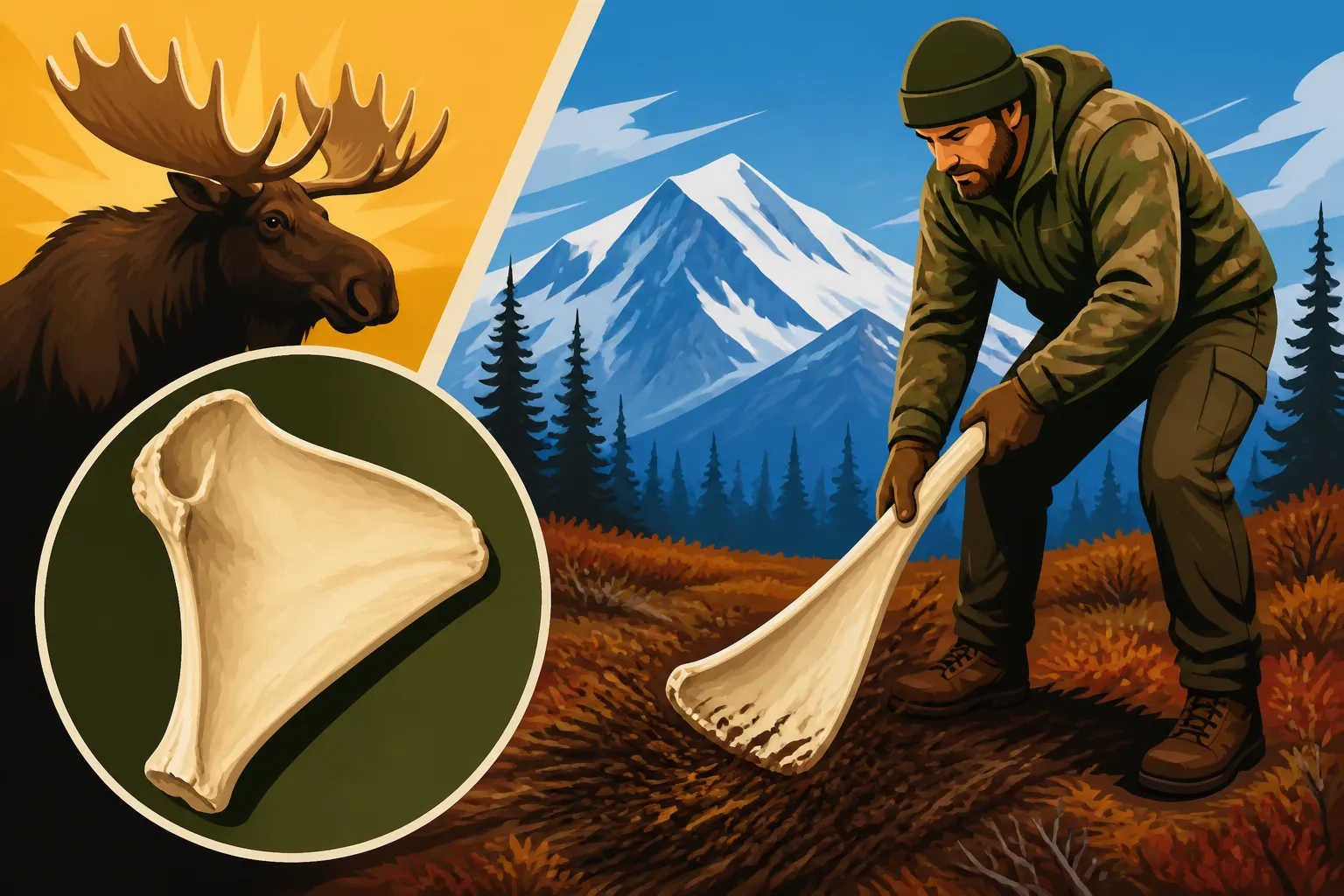
How to Use a Moose Scapula for Raking
When you're out in the vastness of Alaska, trying to entice a massive bull moose into range, silence can be your worst enemy. Many hunters struggle with creating truly convincing sounds that cut through the immense wilderness and speak directly to a bull's competitive instincts. This comprehensive guide is designed to walk you through the precise techniques of using a moose scapula for raking, transforming you into a more effective and successful moose caller.
The Raw Power of a Moose Scapula in Calling
There's something uniquely primal and effective about using a real moose scapula to call in a bull. In a world full of manufactured calls, the raw, earthy sound of bone on brush and the sheer visual impact it creates can be the game-changer that makes a wary bull commit. It’s about more than just making noise; it’s about speaking the bull’s language with absolute authenticity.
Why Authenticity Matters to a Bull Moose
Think about it: a bull moose spends its life hearing the sounds of other moose. Their ears are tuned to the subtle nuances of bone against willow, the crack of a branch under a heavy hoof, the distinctive groan of a mature bull. A plastic paddle or a synthetic grunt tube might get a bull's attention, but a real scapula, especially when used correctly, can tap into something deeper – a sense of genuine presence. When you replicate the sound of a real bull raking his antlers, it instantly adds credibility to your calling efforts. This isn't just theory; it's born from countless hours of observation in the field. Bulls are highly attuned to their environment, and any sound that feels "off" can quickly put them on high alert. The dense, resonant sound of a bone scapula simply vibrates differently, more naturally, than synthetic materials, fooling even the most cautious old bull into thinking another moose is nearby. This authenticity is a crucial component when you're working a remote drainage, hoping to bring a monarch out of the timber.
Simulating a Bull's Dominance and Frustration
Raking isn't just about making noise; it's about conveying a message. When a bull moose rakes his antlers on brush, he's doing it for several reasons: to clean velvet, to scent-mark territory, and crucially, to display dominance and frustration. It's a visual and auditory declaration of his presence and his intentions. By skillfully using a scapula, you're mimicking this exact behavior. You’re telling other bulls in the area, "I'm here, I'm big, and I'm ready to fight for cows." This can be an incredibly potent attractant during the rut, especially when combined with realistic vocalizations. It's not uncommon for a mature bull, especially one that might be slightly inferior, to avoid a direct challenge. But if he hears another bull aggressively raking and then a challenging grunt, it can often ignite his territorial instincts, drawing him in for a closer look or even a confrontation. Successfully luring a bull requires an understanding of their social dynamics, and raking provides a direct line into their competitive nature. It’s part of the comprehensive strategy for Calling Bull Moose During the Alaska Rut, tapping into their deepest instincts.
Finding and Preparing Your Raking Tool
Before you can unleash the power of the scapula, you need the right tool. While some hunters might opt for commercially available plastic paddles, there’s a distinct satisfaction and effectiveness that comes from using a real moose scapula. It feels right, it sounds right, and it adds an extra layer of connection to the hunt.
Recovering a Scapula in the Field
The ultimate authentic scapula comes from a bull you or a fellow hunter has successfully harvested. This creates a full-circle experience, using a piece of the very animal you're pursuing to attract its kin. If you've been fortunate enough to harvest a moose, especially a big bull, remember the importance of Quartering a Bull Moose Alone in the Field with care, and consider salvaging one of its shoulder blades. The scapula is located in the upper foreleg region, a large, flat, somewhat triangular bone. After harvesting, simply remove the meat and connective tissue from around the bone. This might involve some scraping and boiling, or even just leaving it exposed to the elements for a time if feasible, though you'll want to ensure it's clean and odor-free before taking it home.
Once you have the bone, thorough cleaning is essential. Scrape off any remaining meat or connective tissue, then submerge it in water (with a bit of dish soap or hydrogen peroxide for sanitization) and boil it until it’s thoroughly clean. You want a sterile, odor-free bone that won't attract scavengers or taint your camp. After boiling, let it dry completely in the sun. Some hunters prefer to drill a small hole in one end to attach a cord, making it easier to carry and preventing it from being lost in the brush. Remember, this isn't just a prop; it's a valuable piece of equipment.
Choosing and Modifying a Scapula for Best Sound
Not all moose scapulas are created equal, and finding the right one can make a difference in the quality of your raking sounds. Look for a scapula that has a good, solid feel – not too thin or brittle. Larger scapulas generally produce a deeper, more resonant sound, which can imitate a larger, more mature bull. However, portability is also a consideration; you don't want something so cumbersome it hinders your movement.
Once you have a clean scapula, you might consider minor modifications to enhance its effectiveness. The edges can sometimes be a bit sharp or uneven. Use a file or sandpaper to smooth down any particularly rough spots, especially along the broader, flatter edge that will make contact with brush. This isn't just for comfort; it ensures a consistent, less "snaggy" sound. Some hunters even experiment with slightly rounding specific edges to create different scraping textures against various types of vegetation. The goal is to create a versatile tool that can mimic both the light tickle of antlers on small saplings and the heavy, aggressive grind on thicker branches. When you're assessing potential hunting areas, services like GoHunt can provide detailed topographical maps where you can identify patches of willow and alder – prime raking habitat – helping you plan your approach for optimal sound production.
Mastering the Art of Raking in the Field
Raking with a scapula is not just a random thrashing of brush; it's a nuanced performance. To be truly effective, you need to understand the subtle movements, the timing, and the intensity that will convince a bull you're another moose, not just a human making noise.
Mimicking Natural Sounds: The Rake and Break
The core of effective raking lies in observing and imitating actual moose behavior. Picture a bull in the rut: he’ll rake his antlers on small trees, saplings, and brush, often tearing at them, sometimes even breaking off branches. Your scapula is your antler, and the brush around you is your canvas.
Start with small, quick rakes on pliable willow or alder bushes. Use the broad, flat part of the scapula, dragging it along the branches with varying pressure. This creates a scraping, rubbing sound that mimics the main beams of antlers. Then, integrate the "break." This is crucial. Find a dead branch, ideally one that’s still attached but brittle enough to snap cleanly, and break it with the scapula, or even your boot. The sharp crack of a breaking branch is a powerful sound in the woods and immediately signals a large animal moving with force. Don't be afraid to get a little aggressive. Think about the size and power of a bull moose; their raking isn't dainty. It’s deliberate and impactful. Vary the intensity and duration. Sometimes it's a short, aggressive burst; other times, a longer, more drawn-out scrape. The key is to make it sound natural. It shouldn't be constant; mimic the pauses and intensity changes of a real bull.
Strategic Timing and Intensity for Maximum Impact
Timing and intensity are everything when it comes to raking. A poorly timed or overdone raking sequence can blow your hunt as quickly as a good one can bring a bull charging in. When should you rake?
Generally, raking is best employed when you're trying to coax in a bull that's "hung up" – meaning he's heard your vocal calls (like a Cow Calls That Pull Bulls Out of Willows or a deep grunt) but is hesitant to fully commit and show himself. The raking provides that extra layer of stimulation, suggesting a rival bull might be moving in on the action. It can also be effective as a starting call if you're blind calling into new territory, letting any nearby bulls know there's a competitor around before you introduce cow vocalizations.
The intensity should match the perceived aggression you want to convey. If you've just heard a distant grunt, a softer, more tentative rake might be appropriate, signaling a bull moving in. If a bull has responded aggressively to your calls, you might match his intensity with a more furious, branch-breaking display. Be mindful of the surrounding environment; if you're in an area with sparse cover, over-raking might give away your position too easily. Conversely, in dense timber, more aggressive raking and branch breaking might be necessary to penetrate the thick canopy and get a bull's attention. Always be ready for a rapid response. A bull coming to raking might be looking for a fight, so ensure you have clear shooting lanes and a good understanding of Shooting Positions on Alaska Tundra and Sidehills.
Integrating Scapula Raking into Your Calling Sequence
Raking a scapula is rarely a standalone act; its true power is unlocked when skillfully combined with other vocalizations and environmental cues. It’s about creating a compelling narrative that draws a bull into your trap.
Combining Raking with Vocalizations
The most effective moose calling strategies weave together several elements. After you've established your presence with some initial raking, consider following up with cow calls or bull grunts. A common and highly effective sequence might start with a series of aggressive rakes and branch breaks, followed by a few challenging bull grunts, and then perhaps a subtle, pleading cow call. This tells a story: a dominant bull is raking, challenging others, and has attracted a cow. This scenario is incredibly tempting for a bull seeking to breed or assert dominance.
Experiment with the order and frequency. Sometimes, a series of short, sharp rakes after a grunt tube call can make the vocalization seem more urgent and immediate. Other times, leading with a plaintive cow call, and then introducing aggressive raking once you get a response, can convey a sense of a bull moving in on a cow. The key is to listen to the bull’s responses and adapt. If he grunts back aggressively, match his tone with more intense raking. If he seems hesitant, soften your approach, perhaps using gentler rakes and more inviting cow calls. Remember that while a scapula is excellent for raking, you'll still need to master Best Moose Call Sequence for the Early Rut to round out your repertoire.
Setting the Scene for an Approaching Bull
Beyond the sounds themselves, the visual aspect and environmental context are vital. When you're raking, try to do it behind natural cover that obscures your actual position. This creates an illusion. A bull might hear the aggressive raking and grunts, but struggle to pinpoint the exact location, making him more likely to circle downwind or approach cautiously, giving you the advantage. Use the natural landscape to your benefit. For example, if you're calling from a slight rise overlooking a willow flat, rake on the edge of that rise. This suggests a bull might be just over the crest.
Think about how a bull would move and interact with the brush. Don't just rake randomly; target bushes that look like they could actually have antlers rubbed on them. Snap a dead branch that might realistically break under a moose's weight. Services like GoHunt are invaluable for pre-scouting, allowing you to identify these strategic locations from satellite imagery before you even set foot in the field. You can mark potential raking thickets, escape routes for the bull, and shooting lanes. This advanced planning, combined with realistic calling, greatly increases your chances. Remember, the goal is to make the bull believe what he hears and sees (or doesn't quite see) is entirely natural. By painting a convincing picture, both acoustically and visually, you increase the likelihood of bringing that bull right into your lap, whether he’s a massive brute or one you need to Field Judging a Legal Bull Under Alaska Antler Rules very carefully.
| Raking Scenario | Raking Technique | Vocalization to Pair With | Intended Message to Bull | Expected Bull Response |
|---|---|---|---|---|
| Initial Call (Blind) | Moderate, consistent rakes on small saplings | Soft, drawn-out bull grunts | "Another bull is here, looking for action." | Distant grunt, cautious approach, or no response |
| Responsive Bull (Distant) | Aggressive rakes, emphasize branch breaks | Challenging bull grunts, then cow calls | "I'm a dominant bull, and I have a cow." | Closer grunts, possible visual approach |
| Hung-Up Bull (Close) | Soft, intermittent rakes, light branch scrapes | Soft cow calls, subtle grunts | "I'm here with a cow, but I'm not overly aggressive." | Curiosity, slow approach, circling downwind |
| Post-Fight Scenario | Furious, loud rakes, multiple branch breaks | Deep, guttural grunts | "I just had a fight, and I'm still agitated." | Aggressive charge, or cautious observation |
| Bulls Not Answering | Intense, drawn-out raking with long pauses | Infrequent, deep bull grunts | "I'm a big bull, and I'm very active." | Can sometimes spark a response when all else fails |
Disclaimer
Hunting in Alaska carries inherent risks, including extreme weather, dangerous wildlife encounters, and remote terrain. The information provided in this guide is for educational purposes only and should not replace professional guidance, thorough preparation, or adherence to all Alaska Department of Fish and Game regulations. Always prioritize safety, carry appropriate emergency equipment, and inform others of your hunt plan.