Calling Wolves Off a Winter Kill
The frustration of spotting a wolf pack working a fresh kill, knowing how wary they are, is something every Alaska hunter can relate to. These animals are incredibly intelligent, masters of survival, and convincing them to leave a guaranteed meal for a distant call can feel like an impossible task. This guide will walk you through the nuances of calling wolves off a winter kill site, offering strategies and insights to increase your chances of success.
Understanding Wolf Behavior Around a Winter Kill
Wolves are opportunistic predators, and a winter kill, whether it's their own downed game or a scavenging opportunity from another predator's leftovers, represents a vital lifeline in the harsh Alaska wilderness. Their behavior around such a site is a complex mix of urgency, caution, and territoriality. Understanding these dynamics is the first step to developing an effective calling strategy.
Why Winter Kills are Prime Locations
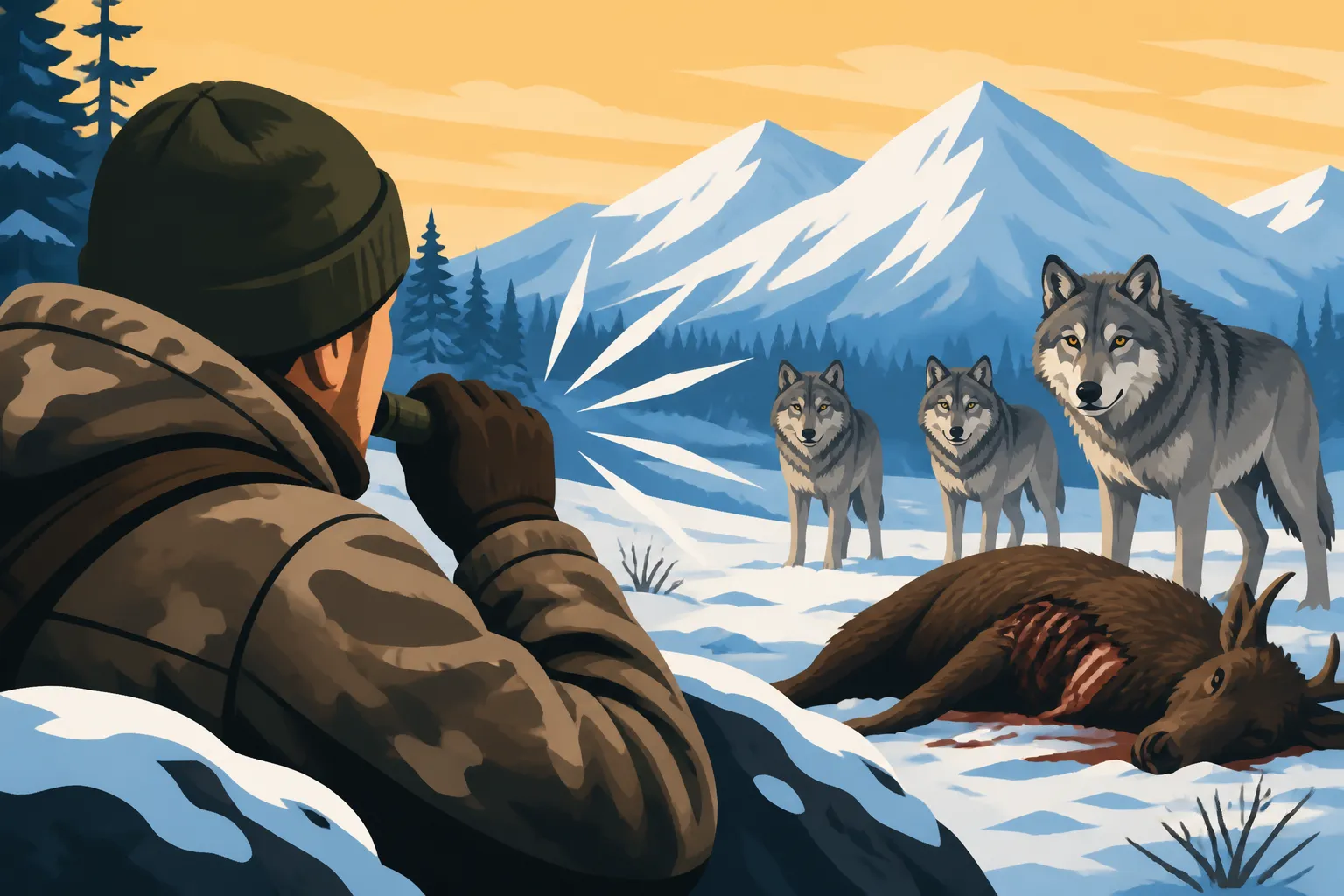
In the deep snows and frigid temperatures of an Alaska winter, food sources become scarce and energy demands are immense. A fresh kill isn't just a meal; it's survival. Wolves will work tirelessly to consume as much as possible, often guarding the site fiercely. This inherent dedication to the food source is precisely why calling them off can be so challenging, but also why it presents a unique opportunity. They are bound to the location, making them potentially more responsive to calls that suggest either easy prey or a threat to their established meal. A large carcass, like a moose or caribou, can sustain a pack for days, sometimes even weeks, making the area around it a hotspot of wolf activity. If you've scouted a location and found signs of a recent kill, you've already found a high-odds starting point.
Reading the Signs of a Fresh Kill
Before you even think about setting up a call, you need to be a detective. What kind of kill is it? How fresh? Who made it? Look for tracks in the snow leading to and from the carcass. Fresh tracks mean recent activity. Scat around the perimeter can tell you if it's been a long-term feeding site. Examine the carcass itself – is it partially consumed, or has it been heavily fed upon? A frozen, intact carcass might mean it's an older find, or that the wolves haven't been on it long. Fresh blood, internal organs scattered nearby, or pieces of hide pulled away are all indicators of a recent kill. Also, pay attention to aerial indicators; ravens and magpies circling or congregated can often lead you directly to a kill site. Knowing the freshness and the type of animal killed (moose, caribou, etc.) helps you understand how committed the wolves are to that particular meal and what might draw them away.
Wolf Pack Dynamics and Hierarchy
A wolf pack is a highly organized social unit, and their behavior around a kill reflects this structure. There will often be a dominant pair, and others in the pack will feed based on their social standing. When feeding, some wolves might act as sentries, staying alert to their surroundings while others feed. They are constantly aware of potential threats from other predators, like a brown bear, or competing wolf packs. This inherent vigilance is why approaching a kill site requires extreme stealth and an acute understanding of wind direction. You're not just dealing with one animal; you're dealing with a collective intelligence. If you observe the dynamics from afar, you might even notice patterns in their feeding and resting habits that can inform your calling intervals and approach. Understanding Wolf Pack Sizes in Interior Alaska can give you a better idea of how many eyes and ears you're up against.
Essential Gear and Setup for Calling Wolves
Hunting wolves, especially when trying to lure them away from a kill, demands a well-thought-out gear list. These aren't animals that forgive mistakes, and being unprepared can quickly turn a promising opportunity into a frustrating bust.
Optics and Observation Tools
You absolutely cannot overstate the importance of quality optics when wolf hunting. Wolves are masters of camouflage, and they can appear and disappear as if by magic. High-power binoculars (10×42 or 12×50) are essential for scanning vast expanses of snow-covered terrain. Even better, a good spotting scope (20-60x or higher) on a stable tripod allows you to pick apart distant tree lines, scan slopes, and confirm activity around a kill site without alerting the animals. You'll want to glass methodically, using techniques similar to Glassing Grids That Cover a Whole Basin, paying close attention to any movement, even the slightest flick of a tail or an ear. Many seasoned hunters rely on brands like Zeiss, Swarovski, or Kowa for their clarity and low-light performance, which is crucial in the dim light of an Alaska winter day. Websites like GoHunt often feature reviews and comparisons of top-tier optics, guiding hunters toward the best choices for discerning distant movement.
Effective Call Types
This is where the art and science of wolf hunting truly come into play. You'll likely need a combination of calls to be effective.
- Electronic Calls: These are arguably the most versatile and effective tools. Brands like Foxpro and Lucky Duck offer a wide array of wolf-specific sounds, including pup distress, lone howls, challenge howls, and even rabbit or deer distress calls that might pique a wolf's interest if they're not fully committed to the kill. The ability to control volume and switch sounds remotely is a huge advantage. Position the call away from your hiding spot to draw attention away from yourself.
- Mouth Calls: While electronic calls are great, mouth calls give you a level of authenticity and nuance that can be hard to replicate. A diaphragm howler or open-reed distress call can perfectly mimic a lonesome howl or a wounded animal. These are excellent for softer, initial calls or for adding variety to an electronic sequence. They also offer a backup if electronics fail in the cold.
- Scent Lures: While not a "call" in the auditory sense, scent lures can be a powerful attractant. Predator urine (coyote, fox, or even wolf) or glandular lures can create the illusion of another animal in the area, adding another layer to your deception. Deploy these downwind from your calling position, away from your immediate area.
Concealment and Scent Control
Wolves have an incredible sense of smell and eyesight. Your concealment needs to be absolute.
- White Camouflage: In a snowy landscape, white outerwear is non-negotiable. Break up your silhouette with natural shadows, snowdrifts, or sparse vegetation. A full white suit, including face mask and gloves, is ideal.
- Natural Cover: Always use the terrain to your advantage. A rise, a thicket of spruce, or a rocky outcrop can provide the cover you need. Remember to position yourself so you have a clear shooting lane while remaining hidden.
- Wind Direction: This is perhaps the most critical factor. Always approach and set up downwind from the kill site. If a wolf catches your scent, your hunt is over before it even begins. Use a wind checker constantly to confirm conditions. Even a slight shift in wind can betray your position.
- Scent Control: While nearly impossible to eliminate entirely, minimize human odor as much as possible. Wash hunting clothes in scent-free detergent, store them in airtight bags, and avoid strong-smelling foods, colognes, or tobacco before and during the hunt. Some hunters even wear rubber boots to minimize scent transfer while walking.
Calling Strategies for Winter Kill Sites
Successfully calling wolves off a winter kill is an exercise in patience, observation, and adaptability. There's no single magic sequence, but rather a blend of art and science that evolves with each situation.
Approaching the Kill Site Undetected
Before you even think about calling, your approach needs to be flawless. Wolves are incredibly perceptive. Plan your route carefully, taking into account terrain, wind, and potential bedding areas.
You should always maintain a downwind approach to prevent your scent from reaching the wolves. Walk slowly, deliberately, and quietly. Avoid making unnatural movements or sounds. Use natural terrain features, such as ridges, ravines, or dense timber, to shield your movement. If possible, use tracks from other animals, like a moose, to mask your own. Remember, the wolves are already on high alert around their food source, so any perceived threat will send them packing. Finding a good, concealed position that offers a clear view of the kill site and potential approach lanes for the wolves is paramount. Consider setting up far enough away (e.g., 400-800 yards) that you can observe their patterns and test the waters with soft calls without immediately tipping your hand.
Initial Calling Sequences and Testing the Waters
Once you're in position, resist the urge to immediately blast a loud call. Start subtly. Wolves are smart; if a loud, aggressive call comes from too close, it might signal a trap or a dominant wolf, prompting them to move away.
Begin with soft, plaintive pup whines or short, inquisitive howls. These sounds can trigger a territorial response or make them curious about a potential intruder or an easy meal. Play these calls for short durations (30-60 seconds), then wait. Patience is key here. Wait at least 10-15 minutes, scanning continuously with your optics. They might approach silently, using cover, trying to determine what made the sound. If you get no response, try a short series of rabbit or deer distress calls. These are universal prey sounds that might trigger a wolf's predatory instinct, especially if they are not completely full. Keep the volume low at first, gradually increasing it if you don't get a reaction. Your goal is to intrigue them, not spook them.
Aggressive Calling and Patience
If the initial, softer calls don't elicit a response, it's time to escalate. This is where you might incorporate more aggressive sounds or longer calling sequences.
- Challenge Howls: A series of loud, drawn-out howls, especially with an electronic call that can mimic multiple wolves, can sometimes challenge a pack's dominance or make them believe another pack is moving in on their territory. This can prompt them to investigate or even come in aggressively to defend their kill.
- Distress Sequences: Longer, more intense sequences of wounded animal cries (deer, elk, or even a desperate coyote) might convince a hungry wolf that an easy meal is to be had, one less guarded than their current, likely frozen, carcass.
- Volume and Duration: Increase the volume and the length of your calling sequences. Instead of 30-second bursts, try 1-2 minute sequences. After each sequence, go back to absolute silence and scan. Wolves have an uncanny ability to materialize out of nowhere.
Remember the cardinal rule of predator calling: Patience. Wolves are often slow to respond, circling downwind for scent checks, or approaching cautiously. You might call for 20-30 minutes, wait an hour, and then call again. Some successful hunts have involved hours of calling and waiting. Don't give up too soon. Persistence, combined with strategic use of calls, is often what seals the deal. Sometimes, the most frustrating part is not getting a response after what feels like endless calling, but those are the moments you truly need to dig deep and commit to the long game. This methodical approach can also be beneficial when you're Calling Bull Moose During the Alaska Rut, albeit with different vocalizations.
| Call Type | Primary Purpose | Best Use Scenario | Potential Risk |
|---|---|---|---|
| Pup Whine/Distress | Curiosity, maternal instinct (if a lone female) | Initial soft calls, luring wary wolves | May not be aggressive enough for feeding wolves |
| Lone Howl | Announce presence, challenge, locate other wolves | Testing for distant responses, challenging | Can attract unwanted attention (other hunters) |
| Challenge Howl | Provoke territorial response, assert dominance | After soft calls fail, when a pack is present | Can spook extremely wary or subordinate wolves |
| Prey Distress | Simulate easy meal (rabbit, deer) | Universal attractant, when wolves are hungry | Wolves might be suspicious if overused |
| Whimpers/Growls | Mimic interaction, add realism | Subtle additions to sequences, close-range luring | Requires realistic execution |
Decoys and Visual Stimulants
Sometimes, an auditory call isn't enough; you need a visual element to seal the deal.
- Motion Decoys: A simple flag or a fur-covered motion decoy can draw the eye of an approaching wolf, giving it a focal point and distracting it from your hidden position. These are especially effective when combined with distress calls, mimicking a struggling animal.
- Realistic Decoys: Some hunters use full-body wolf decoys to simulate an intruder, hoping to provoke a territorial response. These require careful placement and consideration of wind and approach angles.
- Scent Control: As always, ensure any decoys or visual aids are free of human scent.
Remember, the goal of a decoy is to add realism and confidence to your calling setup. A wolf that sees a visual confirmation of the sound it's hearing is much more likely to commit to an approach.
Post-Call Considerations and Ethics
Successfully calling in a wolf is a fantastic achievement, but the hunt isn't over until you've ethically dispatched the animal and handled the aftermath responsibly.
Ethical Hunting Practices
When hunting any animal in Alaska, ethical practices are paramount. This means ensuring a quick, humane kill. Practice your shooting skills regularly, especially in cold weather with bulky clothing. Know your rifle's capabilities and your own limitations for shooting distances. A Rifle Choice for Alaska Brown Bear Country might also be applicable for wolf hunting, especially if you anticipate longer shots or need a heavier caliber for dense brush. Once a wolf is down, approach cautiously; sometimes, they can be resilient.
Always respect bag limits and season dates. Wolves are typically found across Alaska, and regulations can vary by game management unit. Ensure you have the proper licenses and tags, and understand all reporting requirements. The aim is to be a responsible conservationist, contributing to healthy wildlife populations through ethical hunting.
Safety in Wolf Country
Hunting wolves, especially around a kill site, means you're operating in prime predator territory.
- Other Predators: While wolves are formidable, remember that you could also encounter brown bears or black bears, even in winter, especially if the kill is large or relatively fresh. Be constantly aware of your surroundings, scan frequently, and consider carrying bear spray and a powerful sidearm. Knowing how to react at a Working a Kill Site in Grizzly Country is essential.
- Harsh Weather: Alaska winters are unforgiving. Hypothermia is a real threat. Dress in layers, carry extra warm clothing, and have a reliable shelter plan. Ensure your vehicle or base camp is well-stocked for unexpected delays.
- Solo Hunting: If you're hunting alone, inform someone of your detailed hunt plan, including your intended route and check-in times. Devices like an InReach or satellite phone are non-negotiable for InReach Check-In Schedules for Solo Alaska Hunts.
Staying safe is always more important than bagging an animal.
Retrieval and Reporting
Once you've successfully harvested a wolf, the work continues.
- Salvage Requirements: While moose and caribou have strict meat salvage requirements in Alaska, wolves typically do not. However, you should always check the latest Alaska Department of Fish and Game regulations for the specific unit you're hunting in. If you plan to salvage the hide for tanning, ensure you know proper Cape and Skull Care for a Brown Bear Hide, as similar principles apply to wolves.
- Reporting: Some wolf hunts require reporting. Always consult the current regulations booklet or the ADF&G website. Missing reporting deadlines can result in fines or penalties.
- Meat Handling: While wolf meat is not typically consumed, if you decide to take it, proper hygiene and cooling are critical, similar to Meat Care in 50-Degree September Weather. Regardless, ensuring the kill site is left clean and respectful is part of being a responsible hunter.
Hunting wolves is a challenging, yet rewarding experience that tests your woodsmanship and patience. By understanding their behavior, meticulously preparing your gear, and employing thoughtful calling strategies, you can significantly improve your chances of success in the vast and beautiful landscape of Alaska.
Disclaimer
Hunting in Alaska carries inherent risks and requires adherence to all state and federal regulations. This guide provides general information and should not replace official sources or professional advice. Always consult the most current Alaska Department of Fish and Game regulations and ensure you have the necessary licenses and permits before engaging in any hunting activity. Safety should always be your top priority.