Wolf Pack Sizes in Interior Alaska
If you've ever spent time hunting in the vast, unforgiving wilderness of Interior Alaska, you know there's an almost mythical presence that commands respect: the wolf. Trying to understand these elusive predators, especially when it comes to their social structures and how many individuals make up a pack, can feel like chasing a ghost in the taiga. It's not just a matter of curiosity; knowing about wolf pack sizes can profoundly impact your hunting strategies, your understanding of local game populations, and even your personal safety. This guide aims to pull back the curtain on the complexities of wolf pack dynamics in Interior Alaska, offering a deeply realistic look at what drives their numbers and how that knowledge can serve you in the field.
Understanding the Dynamics of Wolf Packs in Interior Alaska
The wolf, Canis lupus, exists as a cornerstone predator in the ecosystems of Interior Alaska. Their social structure is incredibly sophisticated, far more complex than simple predator-prey dynamics might suggest. When we talk about "pack size," we're not just counting bodies; we're talking about a living, breathing, adaptive unit that constantly changes in response to its environment. This fluidity makes them a fascinating, if sometimes frustrating, subject for study and observation. Hunters who want to succeed in areas with active wolf populations, or simply appreciate the wilderness around them, need to grasp these core dynamics.
The Alpha Pair and Social Hierarchy
At the heart of every stable wolf pack in Interior Alaska is the breeding pair, often referred to as the "alpha male" and "alpha female." These two are typically the oldest and most experienced wolves in the group, and they are the primary, if not sole, reproducers. It's a common misconception, often popularized by early captive wolf studies, that these "alphas" achieve their status through aggressive dominance contests. In reality, in wild packs, the alpha pair usually earns their position simply by being the parents of the other pack members, who are typically their offspring from previous years. This family unit is the glue that holds the pack together. They make the critical decisions: where to hunt, when to move, and how to defend their territory. Observing the lead wolves' behavior can tell you a lot about the pack's overall health and intentions.
The hierarchy extends beyond the alpha pair, though it's less about rigid dominance and more about roles and relationships within the family. Older offspring might act as "aunts" or "uncles" to younger pups, assisting with hunting, teaching, and den defense. There can be a clear pecking order, particularly around food, but it's often established through subtle cues and displays of confidence rather than constant aggression. Wolves are incredibly cooperative, and this structure allows for efficient hunting, successful raising of young, and defense against rivals. When you're out in the field and hear a chorus of howls, you're listening to this complex family communicating, defining their space, and affirming their bonds.
Breeding Success and Pup Survival
The ultimate determinant of a wolf pack's size and long-term viability is its breeding success and, crucially, the survival of its pups. Wolves typically breed in late winter, usually February or March in Interior Alaska, with pups born about 63 days later in remote dens. A litter can range from one to eleven pups, but a typical litter often falls in the four to six range. These tiny, vulnerable pups represent the future of the pack, and their early weeks are critical. The entire pack contributes to their care, bringing food back to the den, guarding them from predators like bears, and teaching them essential survival skills.
However, the odds are stacked against young wolves. Pup mortality rates can be incredibly high, especially in the first year. Harsh Interior Alaska winters, scarcity of prey, disease, and predation (even from other wolves or bears) can decimate a litter. Only a fraction of pups born will survive to adulthood and eventually disperse to form their own packs. A pack that has a successful breeding season and high pup survival will naturally see an increase in its numbers by late summer and fall, which is often when hunters are most active. Conversely, a pack that loses most of its young will remain smaller or even shrink. This annual cycle of birth, survival, and loss is a core reason why wolf pack sizes are so dynamic and rarely static from one season to the next.
Factors Influencing Wolf Pack Size in Interior Alaska
The "average" wolf pack size in Interior Alaska is a bit of a moving target, simply because so many variables constantly push and pull at a pack's numbers. Unlike some species, wolves aren't constrained by a fixed social structure that dictates how many individuals can be together. Instead, their pack size is a direct reflection of the land's capacity to support them. Understanding these factors is key to interpreting what you might see in the field, whether it’s a lone wolf, a small family group, or a large, cohesive hunting unit.
Prey Availability and Density
By far, the most significant factor influencing wolf pack size in Interior Alaska is the availability and density of their primary prey animals. Wolves are obligate carnivores, and a thriving pack needs a consistent supply of meat. In Interior Alaska, this usually means moose and caribou, although Dall sheep, beaver, snowshoe hare, and even smaller game contribute to their diet when larger prey is scarce. A rich, abundant prey base allows a pack to grow larger, as there's enough food to support more mouths, including successful litters of pups.
Conversely, in areas where prey populations are low or declining, wolf packs tend to be smaller. A smaller pack requires less food, making it more sustainable in lean times. When food becomes extremely scarce, large packs can even fragment, with individuals or smaller groups splitting off to find new hunting grounds or attempting to survive independently. This phenomenon illustrates the direct link between the health of herbivore populations and the structure of wolf societies. Hunters who track things like Moose Versus Caribou Meat Comparison can often infer a lot about the local wolf populations simply by understanding what their main food source is doing.
Consider, for instance, a particularly robust moose population in a region of Interior Alaska, perhaps in a recovering burn area with ample browse. Here, you might find wolf packs of 10-15 individuals, sometimes even larger. These larger packs can take down bigger, healthier adult moose more efficiently, leading to consistent food supplies for all members. On the flip side, in an area where caribou numbers have dipped, perhaps due to migratory shifts or a hard winter, you'd be more likely to encounter smaller packs of 3-6 wolves, relying on more opportunistic hunting or smaller game to get by.
Habitat Type and Human Presence
The type of habitat a wolf pack occupies also plays a crucial role in its size and behavior. Interior Alaska offers a mosaic of environments, from dense boreal forests to open tundra, and each presents different opportunities and challenges for wolves. In dense, timbered areas, hunting can be more challenging for wolves, as large prey can use the cover to their advantage. Packs in these environments might operate in slightly smaller, more agile units. Open tundra, on the other hand, can allow for larger packs to work together more effectively, using coordinated drives and ambushes over vast sightlines.
Human presence introduces another layer of complexity. Areas closer to human settlements, roads, or active trapping and hunting zones often correlate with smaller wolf pack sizes. Wolves are intelligent and adapt to human activity. Increased hunting or trapping pressure, especially during Alaska Wolf Trapping Versus Hunting Seasons, can reduce pack numbers directly. Wolves in these areas might also learn to be more wary, making them harder to observe or hunt. Conversely, in remote, roadless wilderness areas where human interference is minimal, packs often have the opportunity to grow larger and exhibit more natural behaviors without constant disruption. This is why tools like those offered by GoHunt, which provide detailed mapping and land ownership data, can be invaluable for understanding potential human impacts on wolf territories you might be scouting.
Disease and Interspecies Competition
Like all wildlife populations, wolves are susceptible to diseases and parasites that can impact their health and numbers. Distemper, parvovirus, and rabies are common wolf diseases that can sweep through a population, especially in denser areas, leading to significant mortality, particularly among pups. Sarcoptic mange, a parasitic skin infection, can also weaken wolves, making them more vulnerable to starvation and harsh weather. A severe outbreak can dramatically reduce pack size, sometimes even wiping out an entire localized population.
Furthermore, while wolves are apex predators, they still face competition and occasional conflict with other large carnivores. Brown bears and black bears, for instance, frequently scavenge wolf kills, sometimes even displacing wolves from their fresh meat. While direct conflict leading to wolf mortality from bears is less common, it does happen, especially during denning season when bears might pose a threat to pups. Other predators like wolverines can also be a nuisance, stealing cached food. These interspecies dynamics, though often subtle, contribute to the overall pressures on a wolf pack, influencing how many individuals a territory can realistically sustain and how they acquire and defend their food resources.
Territorial Behavior and Pack Cohesion
Wolves are intensely territorial animals, and the size and stability of a pack are intrinsically linked to its ability to define and defend its home range. This isn't just about claiming a space; it's about securing the resources – primarily prey – necessary for the pack's survival and reproductive success. For a hunter, recognizing signs of wolf territoriality can provide clues about their presence, their numbers, and even their recent movements.
Scent Marking and Boundary Patrols
A wolf pack's territory in Interior Alaska can span hundreds, even thousands, of square miles, depending on prey density and habitat. Within this vast area, wolves establish and maintain boundaries through a sophisticated system of communication. Scent marking is paramount. Wolves frequently urinate and defecate, and also scratch the ground, leaving behind distinct scent signals that convey information about their presence, reproductive status, and ownership of the area. These "scent posts" are often found along trails, ridgelines, and major game routes, effectively acting as invisible fences.
Beyond scent, howling plays a crucial role. A pack's coordinated howl is not just a call to fellow pack members; it's a declaration of ownership to neighboring packs. The sheer volume and complexity of a large pack's howl can deter smaller, weaker packs from encroaching. Regular patrols along these territorial boundaries ensure that the scent marks are fresh and that any incursions by rival packs are quickly detected. For the observant hunter, finding numerous fresh wolf tracks, scat, or hearing frequent howling in a specific area is a strong indicator of an active, potentially large, resident pack. These territorial behaviors directly reflect the pack's confidence and numerical strength; a larger, more established pack is generally more assertive in its territorial claims.
Inter-Pack Encounters and Conflicts
While scent marking and howling are often enough to maintain separation, direct inter-pack encounters are an inevitable part of wolf life, especially where territories overlap or prey is concentrated. These conflicts can range from tense stand-offs and ritualized displays of aggression to full-blown, often fatal, battles. The outcome of such an encounter is heavily influenced by the respective sizes and strengths of the packs involved. A larger, healthier pack typically has the advantage, able to drive off or even kill members of a smaller, weaker rival.
These clashes are not without risk for the victors either; even a dominant pack can suffer injuries or fatalities during a territorial dispute. Such losses can temporarily reduce pack size, affecting its hunting efficiency and future breeding success. For hunters and wildlife observers, finding evidence of these conflicts – such as wolf carcasses with bite marks, or intense territorial marking in a contested zone – offers a stark reminder of the harsh realities of wolf survival. These violent interactions underscore the critical importance of sufficient pack size for territorial defense, especially in prime hunting grounds where multiple packs might compete for access to resources. This constant pressure to defend territory and resources helps regulate Wolf Pack Sizes in Interior Alaska, ensuring that only the fittest and most cohesive groups thrive.
Impact of Pack Size on Hunting Strategies
For hunters, understanding wolf pack size isn't just academic; it has very real implications for how you plan and execute your hunt in Interior Alaska. The presence and dynamics of local wolf packs can dictate everything from where you set up camp to how you approach calling techniques. Ignoring these factors is akin to hunting blind.
Hunting Pressure and Wolf Response
Wolves are incredibly intelligent and adaptive creatures, and they quickly learn to associate human activity with danger, especially hunting pressure. In areas that experience consistent hunting pressure, whether from humans pursuing big game or specifically targeting wolves, the local packs tend to become more nocturnal and wary. They might shift their movements to avoid commonly used trails or roads, and their denning sites will be in more remote, inaccessible locations. A large, established pack might initially be more resilient to pressure, but sustained hunting or trapping can break it down into smaller, more cautious units.
Smaller packs, or lone wolves that have been displaced, often exhibit even greater stealth and caution, making them incredibly difficult to locate. If you're targeting species like moose or caribou, understanding how wolves respond to pressure in a given unit can inform your own movements. For example, if you know a particular area has seen heavy wolf hunting, expecting to see wolves during daylight hours near popular access points might be unrealistic. Conversely, areas with little human interference might have packs that are less wary, though still inherently cautious. This understanding is critical, whether you're interested in Wolf Hunting Over a Winter Kill Site or just trying to keep your moose kill from becoming a wolf buffet.
Solo Hunters Versus Larger Packs
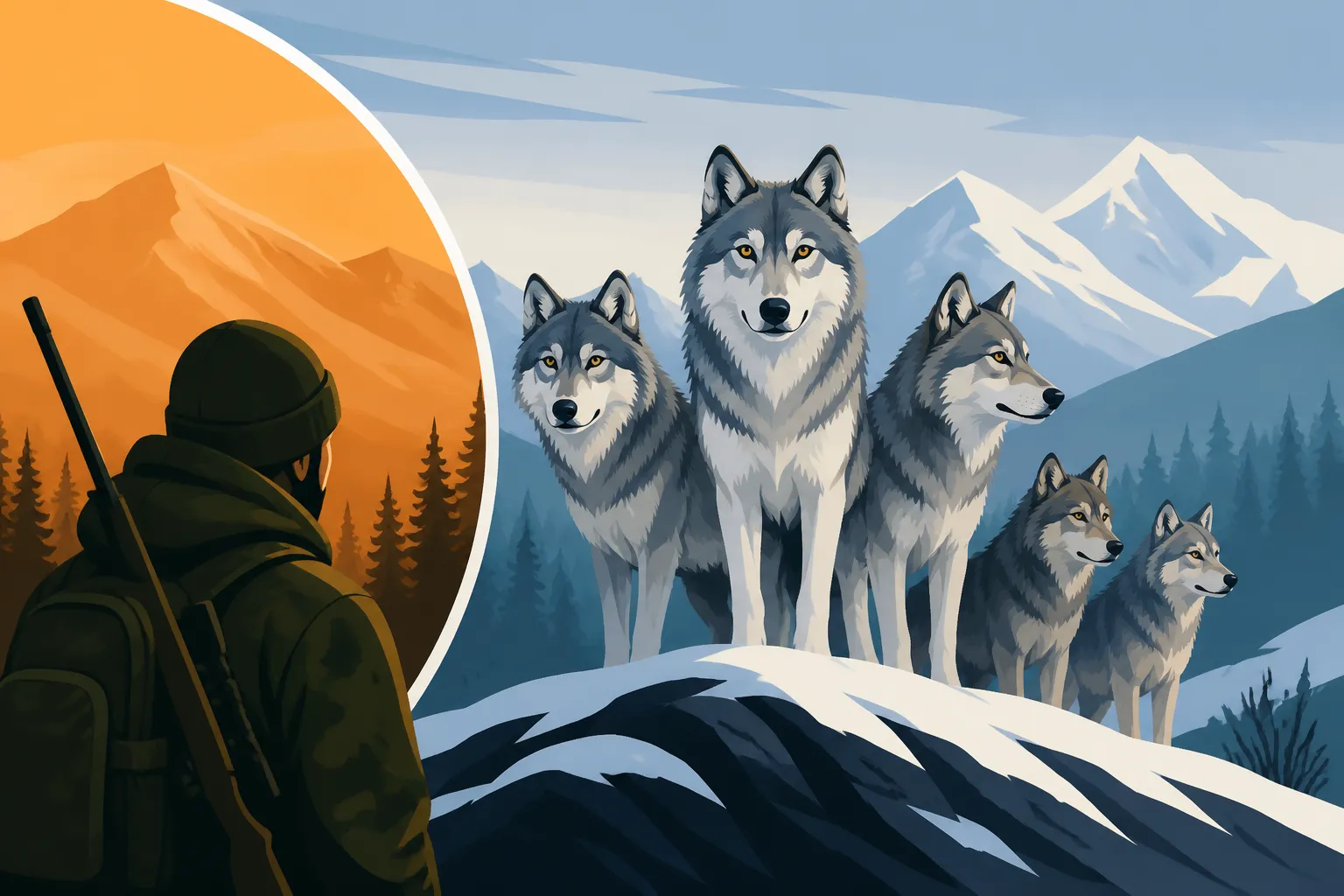
The difference between encountering a lone wolf and a full pack is immense, and for a solo hunter, this distinction can be a matter of safety and strategy. A lone wolf, while still a powerful predator, is generally more focused on its own survival and might be more inclined to avoid human contact. They're often dispersing young wolves seeking new territory or older individuals that have left a pack. However, a full pack, especially a large, cohesive one, represents a different challenge entirely. Their combined intelligence and cooperative hunting methods make them formidable.
When you're a solo hunter in wolf country, particularly with a fresh kill down, the presence of a pack can quickly escalate into a tense situation. They are highly efficient at detecting kills and are not easily deterred by a single person, especially if they are hungry. Knowing that you're in an area known for larger packs might prompt you to take extra precautions, such as setting up a more robust bear fence setup at a meat cache or having a clear strategy for Bear Safety While Butchering a Kill in Alaska. In contrast, if you know the local packs are small or fragmented, your immediate threat assessment might be slightly different. This isn't to say wolves are inherently dangerous to humans—attacks are exceedingly rare—but their opportunistic nature around a downed animal is something every hunter must consider.
Ethical Considerations for Wolf Hunters
For those specifically pursuing wolves, pack size brings distinct ethical considerations to the forefront. Wolf hunting, especially in Interior Alaska, is a highly regulated activity, often with specific seasons and bag limits designed to manage populations sustainably. When you're out trying Predator Calling for Alaska Wolves and Wolverine, the ethical hunter recognizes the social structure of the animal they are pursuing. Breaking up a pack by removing too many key individuals, particularly the breeding pair, can have cascading effects on the remaining pack members, potentially leading to lower survival rates for pups or increased conflicts with neighboring packs.
This isn't just about legality; it's about responsible wildlife management and respecting the complex social fabric of these animals. Researching local regulations, understanding the typical pack dynamics of the area you're hunting, and perhaps using tools like GoHunt to analyze historical harvest data can all contribute to making informed, ethical decisions. The goal is to participate in regulated hunting while ensuring the long-term health and stability of the wolf populations, recognizing their vital role in the Alaskan wilderness.
Studying and Tracking Wolf Populations
Understanding wolf pack sizes and dynamics isn't just conjecture or anecdotal observation. Wildlife biologists and researchers employ a variety of methods to study these elusive predators, providing valuable data that informs hunting regulations and conservation efforts. For hunters, being aware of these methods can offer insight into the science behind the management decisions and how Wolf Pack Sizes in Interior Alaska are assessed.
Telemetry and Aerial Surveys
One of the most effective ways to track wolf packs and estimate their sizes is through telemetry and aerial surveys. Biologists capture and tranquilize individual wolves, fitting them with radio collars that emit signals or GPS collars that record location data. These collars allow researchers to track pack movements, identify territories, and often locate the entire pack for visual counts from the air. During winter, when wolves are easier to spot against the snow and often travel in cohesive units, aerial surveys are particularly efficient for counting pack members directly.
These long-term studies provide invaluable data on pack stability, dispersal rates, and annual changes in size. For instance, researchers can monitor a collared alpha female's reproductive success, tracking how many pups survive through their first year and contribute to the pack's growth. This scientific approach helps confirm the observed correlation between prey density and pack size and provides critical information for setting sustainable harvest quotas. The data gathered through telemetry and aerial surveys allows wildlife managers to make informed decisions that aim to balance predator and prey populations across vast regions of Interior Alaska.
Citizen Science and Hunter Observations
While scientific research provides foundational data, the sheer scale of Alaska means that citizen science and observations from hunters and trappers also play a surprisingly vital role in understanding wolf populations. Hunters, trappers, and outdoor enthusiasts spend countless hours in the wilderness, often in remote areas that researchers cannot regularly access. Their observations—everything from fresh track counts to sightings of full packs or even details about Wolf Coat Colors Across Alaska—can supplement official data.
Many state wildlife agencies encourage hunters to report wolf sightings or harvest information, contributing to a broader understanding of distribution and population trends. For example, a group of hunters reporting consistent sightings of a particular pack in a remote drainage, along with estimates of its size, can help confirm aerial survey data or highlight new areas of wolf activity. This collaborative approach between the scientific community and those who spend significant time in the field creates a more comprehensive picture of wolf dynamics, emphasizing that every pair of eyes in the backcountry contributes to the overall knowledge base.
Challenges and Misconceptions About Alaskan Wolf Packs
Despite decades of research and countless hours spent observing wolves, they remain one of the most misunderstood animals in North America. These challenges and common misconceptions often cloud public perception and can even influence management decisions or individual hunting attitudes. Addressing them directly is crucial for a realistic understanding of Wolf Pack Sizes in Interior Alaska and their role in the ecosystem.
"Alpha" Misconceptions and Pack Structure
Perhaps the most persistent misconception about wolves stems from early captive studies that suggested a rigid, dominance-based "alpha" hierarchy maintained through constant aggression. This has led to a popular image of a tyrannical alpha wolf constantly fighting to maintain its top position. However, as discussed earlier, wild wolf packs are far more akin to a human family unit. The "alpha pair" are simply the breeding parents, and the rest of the pack are their offspring from various years. Their leadership is based on experience, parental bonds, and the natural cohesion of a family, not perpetual combat.
This misunderstanding can lead to skewed perceptions about wolf behavior. For instance, the idea that killing an "alpha" male will cause chaos or improve hunting opportunities for ungulates is often an oversimplification. While removing a breeding individual certainly impacts a pack, the remaining adult wolves are often competent hunters and caregivers, and the pack structure can adapt or another breeding pair may emerge. The key takeaway is that wild wolf packs are not warring gangs but highly cooperative families where social roles are largely determined by age and kinship, an adaptation that maximizes the survival of the entire group in the harsh Alaskan environment.
The Role of Wolves in the Ecosystem
Another significant challenge is the ongoing debate and often polarized views regarding the role of wolves in the ecosystem. Some view wolves solely as competitors for game animals, responsible for declining moose or caribou populations, while others see them as vital top predators necessary for maintaining ecosystem health and balance. The reality, as is often the case in complex ecological systems, lies somewhere in between. Wolves do exert significant predation pressure on ungulate populations, and in some areas, particularly when prey is already stressed by other factors like harsh winters or habitat loss, this predation can contribute to declines. This is why understanding How Wolves Affect Moose Calf Survival is so important for wildlife managers.
However, wolves also play a crucial role in natural selection, often culling the weak, sick, and old from prey herds, which can ultimately lead to healthier, more robust populations. They prevent overgrazing, influence migratory patterns, and provide carrion for a host of scavengers. Their presence creates a dynamic equilibrium that shapes the entire food web. Managing wolf populations in Interior Alaska, therefore, isn't about eliminating them or letting them run unchecked; it's about carefully balancing their numbers with prey populations, considering human harvest, and aiming for a healthy, functioning ecosystem. This nuanced understanding moves beyond simplistic narratives to acknowledge the complex, indispensable role wolves play in the Alaskan wilderness.
| Factor Affecting Pack Size | Impact on Pack Size (General Tendency) | Notes for Interior Alaska |
|---|---|---|
| Prey Availability | High prey = Larger packs | Primary large prey are moose and caribou; localized abundance greatly influences numbers. |
| Prey Density | High density = Larger packs | Easier for packs to find and kill prey in dense areas, supporting more members. |
| Habitat Type | Open tundra = Larger packs (often) | Tundra allows for cooperative hunting of large herds; dense timber might favor smaller, more agile packs. |
| Human Presence | High presence = Smaller, warier packs | Hunting, trapping, and proximity to roads/settlements can reduce numbers and increase wariness. |
| Disease Outbreaks | Severe outbreak = Smaller packs | Distemper, parvovirus, and mange can cause significant mortality, especially in pups. |
| Interspecies Competition | High competition = Smaller packs | Bears competing for kills, or other predators vying for resources, can indirectly limit pack growth. |
| Territorial Conflicts | Frequent/intense = Variable, potentially smaller | Direct conflicts with rival packs can lead to injuries or fatalities, reducing pack size. |
| Breeding Success | High pup survival = Larger packs | The number of pups that survive their first year directly contributes to pack growth. |
Disclaimer
The information provided in this article is for educational and informational purposes only. Hunting regulations, wildlife populations, and environmental conditions in Alaska can change rapidly. Always consult the most current Alaska Department of Fish and Game regulations and local authorities before planning any hunting trip. Safety in the field is paramount, and understanding wildlife behavior is just one component of a responsible hunting experience.