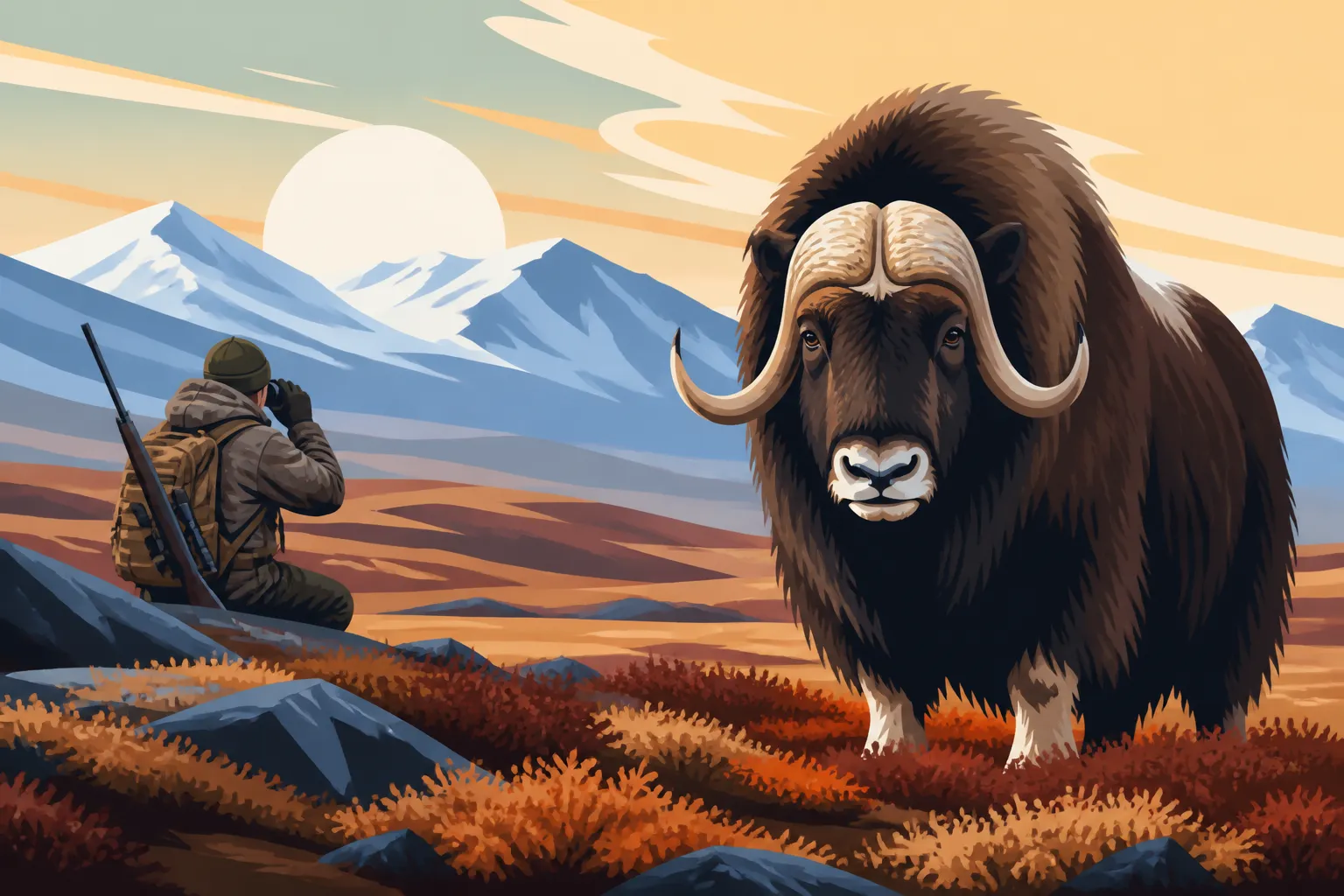
Muskox on the Seward Peninsula
Hunting the vast, remote stretches of Alaska is always a monumental undertaking, and pursuing muskox on the Seward Peninsula presents its own unique set of challenges. It's not just about drawing a tag; it's about understanding the land, the weather, and these incredible Arctic survivors. This guide will walk you through what it really means to chase muskox in this wild corner of Alaska, covering everything from the unique nature of the hunt to the intense logistical planning involved.
Understanding Muskox on the Seward Peninsula: History, Habitat, and Herd Dynamics
The Seward Peninsula, with its expansive tundra and challenging weather, is home to a robust population of muskox, beasts perfectly adapted to survive in harsh Arctic conditions. These shaggy, prehistoric-looking animals represent a unique hunting opportunity, far different from pursuing moose in the interior or sheep in the high mountains. Their presence on the Seward Peninsula is a testament to successful wildlife management, given that muskox were once extirpated from Alaska.
The Return of the Muskox
Muskox are not native to the Seward Peninsula in the way they are to some other parts of Alaska, such as Nunivak Island or the North Slope. The herds on the Seward Peninsula, much like those around Nelson Island, are the result of successful transplantation efforts. These efforts began in the mid-20th century to re-establish a species that had disappeared from the state. The animals adapted remarkably well to the vast, open tundra and coastal plain habitat, finding ample forage and relatively few natural predators that could effectively counter their unique defense strategies. This reintroduction has allowed a sustainable hunting program to flourish, giving hunters a rare chance to pursue a truly Arctic species.
What makes muskox on the Seward Peninsula particularly interesting is the sheer scale of the landscape they inhabit. Unlike the concentrated populations sometimes found on islands, the Seward Peninsula offers a more dispersed hunting experience, forcing hunters to cover vast distances and truly immerse themselves in the environment. Their habitat typically consists of wet sedge meadows, willow thickets, and rolling tundra, all of which provide both food and cover, though the concept of "cover" is relative on such an open landscape. They move freely across these areas, often following traditional routes or seeking out the best forage in response to changing conditions, much like caribou. For more on other herds, check out Muskox in Alaska: Nunivak, Nelson and the North Slope.
Herd Structure and Behavior on the Seward Peninsula
Muskox typically live in herds, ranging from small bachelor groups to larger mixed-sex aggregations. Understanding their social structure and behavior is key to a successful hunt. During much of the year, especially outside of the intense rut, these animals are relatively docile and primarily focused on foraging. Their primary defense mechanism, when threatened, is to form a defensive circle, presenting their formidable horns outwards. This makes them less flighty than a deer or caribou, but approaching them requires extreme caution and respect.
Bulls, particularly older, mature bulls, can be quite large, weighing in excess of 800 pounds. Spotting a mature bull with desirable horns requires patience and keen observation, especially given their dark, shaggy coats against the often muted tundra backdrop. The rut, typically in late summer and early fall, sees bulls becoming more aggressive, fighting for breeding rights. These clashes are spectacular displays of power and can occasionally break up the tight defensive formations. However, on the Seward Peninsula, many hunts occur outside this peak rutting period, meaning hunters will often encounter more cohesive herds. Learning about general muskox behavior can really help, so you might find Muskox Herd Structure and Rutting Bulls a good resource.
It's also worth noting the unique winter adaptations of muskox. Their incredibly dense undercoat, known as qiviut, provides unparalleled insulation, allowing them to withstand the brutal Arctic winters. This remarkable fiber is shed annually, and understanding its role in their survival underscores the resilience of these animals. If you're fascinated by this, Muskox Qiviut and Winter Survival dives deeper into it.
Hunting Muskox on the Seward Peninsula: Permits, Seasons, and Access
Hunting muskox on the Seward Peninsula is not a walk-up affair. It demands meticulous planning, an understanding of complex regulations, and often a significant investment of time and resources. Unlike some general season hunts for other species, muskox opportunities are tightly managed through drawing permits or registration hunts to ensure sustainable populations.
The Drawing Permit System and What It Means
For non-residents and often for residents, obtaining a muskox tag for the Seward Peninsula usually means navigating Alaska's drawing permit system. This system is designed to allocate a limited number of tags for specific hunt areas (Game Management Units) and species. The Seward Peninsula falls into specific GMUs that are designated for muskox hunting. You don't just buy a tag over the counter; you apply for a chance to draw one. This process involves researching hunt numbers, understanding application deadlines, and waiting anxiously for results. Platforms like GoHunt are invaluable for many hunters in analyzing draw odds and strategizing their applications, providing a hub for information that can feel overwhelming when pulled from various official sources.
The application period typically falls between November and December, with results announced in February. This long lead time means you need to plan your hunt years in advance if you're hoping to draw a tag for a specific year. Missing deadlines or misunderstanding the nuances of the application can easily derail your dream hunt before it even begins. Remember, each hunt number has its own odds, which fluctuate based on applicant numbers and available permits. This makes every application a strategic decision. For a broader overview of how these permits work in Alaska, consider reading Alaska Harvest Tickets, Registration Permits and Draw Permits.
Seasonal Considerations and Hunt Periods
Muskox hunts on the Seward Peninsula can occur in both fall and winter periods, depending on the specific hunt unit and permit type. Fall hunts, typically in September and October, offer more daylight, potentially milder temperatures, and often less snow, making travel a bit easier. However, the animals might be more dispersed, and the terrain can be boggy. Winter hunts, on the other hand, usually take place from November through March. These hunts are physically demanding, with extreme cold, short daylight hours, and deep snow posing significant challenges. However, the snow can make tracking easier, and muskox may be more concentrated in certain areas. Also, travel via snow machine can be an option in winter, which is often not feasible in the fall.
Regardless of the season, weather on the Seward Peninsula is notoriously unpredictable and can change rapidly. Whiteouts, blizzards, and severe winds are common, especially in winter. This means your hunting timeline needs flexibility, and your gear choices must be absolutely bombproof. Hunters must be prepared for delays, hunkering down, and navigating in challenging conditions. The actual hunt periods for muskox across Alaska can vary significantly, so learning about Alaska Muskox Fall and Winter Hunt Periods can provide useful context, but always double-check the specific regulations for your drawn permit.
Accessing the Seward Peninsula Hunting Grounds
Getting to the muskox hunting grounds on the Seward Peninsula is an adventure in itself. The region is vast and largely roadless, meaning most hunters rely on air charters or snow machines for access. Small bush planes are the lifeblood of transport in remote Alaska. You'll likely fly into a village or small airstrip on the peninsula, and from there, a smaller air taxi might drop you off closer to your intended hunting area. These flights are heavily dependent on weather and can be costly. When planning, you'll need to factor in potential delays due to weather, as well as weight restrictions for gear and meat.
Some areas might be accessible via ATV trails during drier parts of the fall, but these are limited and often require local knowledge. In winter, snow machines become the primary mode of overland travel. Regardless of your chosen method, understanding the specific land status of your hunt area is critical. The Seward Peninsula includes state, federal, and Native Corporation lands, each with its own access rules. Always verify public access, and if you plan to cross or hunt on Native lands, you must secure appropriate permits well in advance. Resources like GoHunt sometimes provide mapping overlays that can help distinguish land ownership, but direct contact with land managers is always the best approach. Exploring Fly-In Hunting Areas Across Interior Alaska can give you a better idea of what to expect regarding remote access.
Planning Your Seward Peninsula Muskox Hunt: Logistics and Gear
A successful muskox hunt on the Seward Peninsula is built on the bedrock of meticulous logistical planning and having the right gear. This isn't a trip where you can just wing it; every detail, from your communication plan to the insulation in your boots, needs careful consideration.
Choosing Your Outfitter or Going DIY
For non-residents, Alaska law typically requires a guide for certain big game species, including muskox, or hunting with a second-degree relative. Even if not legally required (always check current regulations!), many hunters opt for a guided hunt or a transporter drop-off service due to the extreme remoteness and the specialized knowledge required for this unique environment.
- Guided Hunts: A registered Alaska guide-outfitter will handle most of the logistics, including transportation, camp setup, food, and in-field guidance. This is often the most expensive option but provides the highest level of support and expertise. The guide's experience in reading the tundra, understanding muskox movements, and navigating the unpredictable weather is invaluable. If you're considering this, delving into Hiring an Alaska Registered Guide-Outfitter is a good starting point, and for specific costs, Alaska Guided Mountain Goat Hunt Pricing can give you a general idea of guided hunt expenses for a similar, challenging species.
- Transporter Drop-Offs: An air taxi or transporter can fly you and your gear into a remote location and pick you up at a predetermined time. You are responsible for all other aspects of the hunt—navigation, camp, food, and field processing. This is a more budget-friendly option than a fully guided hunt but requires extensive experience in Arctic wilderness survival and hunting. Understanding what transporters legally can and cannot do is crucial; Alaska Transporters and What They Legally Provide explains this clearly.
- DIY Hunt: For residents, a true DIY hunt might be possible, but it demands an extraordinary level of preparation, self-sufficiency, and physical endurance. This would involve managing all transportation, camp, and recovery on your own.
Regardless of your choice, securing your air charter well in advance is paramount, as good pilots and outfitters book up quickly. Be prepared for extra costs associated with weather delays, additional flights for meat retrieval, and potential weight overages.
Essential Gear for Arctic Conditions
The Seward Peninsula demands top-tier gear, especially for late fall or winter hunts. Your life can literally depend on it.
Clothing System: Layering is critical. Think moisture-wicking base layers (wool or synthetics), insulating mid-layers (fleece or puffies), and a bombproof outer shell (waterproof and windproof). Over-pants and a heavy parka are essential for glassing or stationary periods in cold weather.
Footwear: Insulated, waterproof boots are non-negotiable. Look for boots rated for extreme cold and ensure they are well-broken in. Overshoes or military surplus "bunny boots" are often favored for extreme winter conditions. Carry extra socks (wool!) and an insulated sleeping bag designed for sub-zero temperatures.
Shelter: A sturdy, four-season tent capable of withstanding high winds and heavy snow loads is essential. A reliable stove (white gas or propane) for cooking and melting snow for water is also critical.
Navigation: GPS with pre-loaded maps and satellite imagery, a physical map, and a compass are all necessities. Always have backup power sources for your electronics. Remember that batteries drain quickly in the cold. You'll want to review GPS Battery Life in Cold Camps.
Communication: A satellite communication device (e.g., InReach or Spot device) is absolutely vital for checking in with loved ones, coordinating with your air taxi, and emergency situations. Cell service is non-existent in most of these remote areas. Creating a Signal Devices and Check-In Plans for Solo Alaska Hunts is crucial.
Hunting Gear: A reliable rifle chambered for large game (e.g., .30-06, .300 Win Mag, .338 Win Mag) with quality optics. Binoculars and a spotting scope are essential for finding and field judging muskox in the vast open tundra. Consider Rifle Calibers for Coastal Brown Bear for ideas on robust calibers.
Field Processing & Recovery: Heavy-duty game bags, a sturdy knife, a portable game hoist (if hunting with multiple people and a way to anchor it), and a means to pack out meat are vital. Muskox are large animals, and packing them out will be a significant physical challenge. If you are packing out an entire animal, learning about Backpack Hunting in Alaska: Gear Weight and Meat Loads will be very useful.
Table: Key Gear Considerations for a Seward Peninsula Muskox Hunt
| Category | Essential Items | Winter Additions | Why It Matters |
|---|---|---|---|
| Clothing | Layered system: wicking base, mid-insulation, waterproof/windproof outer | Heavy parka, insulated over-pants, insulated mittens/gloves, balaclava | Extreme cold, wind, and moisture protection is paramount. |
| Footwear | Insulated, waterproof boots | "Bunny boots" or extreme cold-rated boots, insulated boot liners, extra wool socks | Frostbite is a real danger; wet or cold feet will ruin your hunt. |
| Shelter | 4-season tent, durable stakes/tie-downs, repair kit | Stove (white gas/propane), extra fuel, snow shovel | Withstands high winds/snow, provides warmth and cooking ability. |
| Navigation | GPS (offline maps), physical map, compass, spare batteries | – | Staying found in featureless tundra, especially in whiteouts. |
| Communication | Satellite communicator (InReach, Spot), VHF radio (if with guide/transporter) | – | Emergency contact, check-ins, air taxi coordination. |
| Hunting | Rifle (.30-06+, .300 WM, .338 WM), quality optics, binos, spotting scope | – | Effective and ethical harvest of a large, tough animal; finding game at distance. |
| Survival | First-aid kit, fire starter, emergency shelter, repair kit | Emergency stove, high-calorie food, bivy sack | Self-sufficiency in remote, harsh environments. |
| Field Prep | Sharp knife, heavy-duty game bags, sharpening stone, rope | – | Proper meat care and transport, especially for a large carcass. |
Field Tactics for Seward Peninsula Muskox
Hunting muskox on the Seward Peninsula is less about stealthily slipping through timber and more about vast, open country observation, strategic movement, and an understanding of herd dynamics. The sheer scale of the landscape and the animals' unique defensive strategy dictate the tactics you'll employ.
Spotting and Stalking on Open Tundra
The Seward Peninsula is largely treeless tundra, meaning glassing is your primary tool for finding muskox. You'll spend hours, if not days, behind binoculars and a spotting scope, meticulously scanning vast expanses. High points, even subtle rises in the terrain, become invaluable vantage points. The dark, shaggy coats of muskox can blend surprisingly well with distant shadows or rock outcrops, so patience is key. Setting up a high-quality tripod and using a systematic grid search pattern will maximize your chances. Learning to read the subtle nuances of Glassing Grids That Cover a Whole Basin can make a huge difference in your success.
Once you spot a herd, the next challenge is to identify a legal bull and plan your approach. Field judging muskox for age and horn size can be tricky, especially at a distance. Look for animals with larger body mass, thicker horn boss (the solid part of the horn on the forehead), and a wider, heavier curl. Keep in mind that older bulls often exhibit signs of wear and tear, including broken or "broomed" horn tips, which can affect their overall appearance but not necessarily their legality or desirability.
The stalk itself requires extreme patience and an intimate understanding of wind direction and topography. Muskox have excellent senses of smell and hearing, though their eyesight, while good, might be their weakest link in a truly open setting. Use any available cover—low ridges, creek beds, dense willow patches—to get within ethical shooting range. This often means long, slow crawls or circuitous routes that take hours. The wind is your absolute master; a single wrong gust can send your scent directly to the herd, making them uneasy or even causing them to run.
Approaching the Herd and Shot Placement
Muskox are unique in their defensive strategy. When alarmed or threatened, they often form a tight circle, heads out, with the calves and cows protected in the center. This formation is incredibly effective against predators like wolves. For a hunter, this presents a unique challenge: getting an ethical shot on a specific animal without disturbing the entire herd, and often, without exposing yourself unnecessarily.
Your guide (if you have one) will be crucial in navigating this situation. If hunting unguided, extreme caution is warranted. Never approach directly or recklessly. Take your time, assess the herd's behavior, and look for an opportunity when a legal bull might be slightly separated or facing in a way that offers a clear, ethical shot. Shot placement is critical on muskox due to their heavy build, thick hide, and dense musculature. A broadside shot, aiming for the vitals behind the shoulder, is generally preferred. Be prepared for follow-up shots, as these animals are incredibly tough.
After the shot, do not immediately rush the animal. Give it time, observe its reaction, and approach cautiously. Even a mortally wounded muskox can be dangerous. Once down, the work begins. Quartering a muskox in the field is a major undertaking, especially in cold, windy conditions. You'll need to remove all edible meat according to Alaska's salvage laws, which is a significant amount for such a large animal. Alaska Moose Meat Salvage Requirements outlines the general principles for large game, which apply here. Proper caping for a trophy mount also requires skill and care, particularly around the head and neck.
Bear Safety and Arctic Awareness
While the Seward Peninsula is primarily known for muskox and caribou, it is also bear country. Both black bears and interior grizzlies (brown bears) inhabit parts of the region. Though muskox are formidable, they are not immune to bear predation, and a kill site will attract scavengers. Practicing robust Bear Safety While Butchering a Kill in Alaska is not just good practice, it's essential for survival.
Always carry bear spray, and many hunters opt for a large-caliber sidearm or shotgun with slugs as a backup. When working on a kill, always have at least one person on watch. Be aware of your surroundings, especially during low light or when visibility is poor due to weather. Hang food and meat out of reach of bears, and keep a clean camp. Beyond bears, simply being aware of the extreme Arctic environment is paramount. Hypothermia, frostbite, and getting lost in whiteout conditions are ever-present dangers. Always inform someone of your detailed hunt plan and check-in schedule, a critical step for any remote Alaska adventure. Leaving a Trip Plan With a Contact is a small step that can save lives.
Disclaimer
This article is for general informational purposes only and does not constitute professional advice. Laws, prices and regulations vary by location and change over time. Consult a qualified professional for guidance on your specific situation.