Nunivak Island Muskox Transplant History
Trying to understand where certain game animals exist in Alaska, especially those with unique histories like muskox, can feel like trying to piece together a puzzle with half the pieces missing. Many hunters might see "muskox" on a list of Alaska game and wonder how these arctic giants ended up thriving in places like Nunivak Island, a remote spot far off the mainland coast. This guide will walk you through the incredible story of the muskox reintroduction to Nunivak, exploring the history, the challenges, and the lasting impact that made these animals a sustainable hunting opportunity in this remote corner of Alaska.
The Vanishing Giants: Alaska's Muskox Before Reintroduction
It's hard to imagine, but for a long period, Alaska was devoid of muskox. These shaggy, prehistoric-looking animals, so emblematic of the Arctic, were once a natural part of Alaska's diverse wildlife tapestry. Their story is one of dramatic disappearance and incredible return, a testament to both human impact and dedicated conservation efforts. For many generations, the Alaskan landscape felt a profound emptiness without the distinctive presence of these ancient beasts.
A Past Landscape Without Muskox
Archaeological evidence and historical accounts confirm that muskox once roamed widely across the northern and western parts of Alaska. They were part of the megafauna that defined the Ice Age, built to withstand the harshest conditions on Earth. Imagine vast tundras where woolly mammoths, caribou, and muskox all grazed side-by-side, creating a vibrant ecosystem. However, this natural balance was eventually disrupted, and the muskox populations began a slow but steady decline. It wasn't an overnight collapse, but a gradual fading from the Alaskan picture.
The Forces Behind Their Disappearance
Several factors contributed to the disappearance of muskox from Alaska by the early 20th century. Overhunting by early explorers, whalers, and settlers played a significant role. These animals, with their impressive size and tendency to stand their ground when threatened (forming a defensive circle), made them relatively easy targets for hunters seeking meat and hides. When combined with natural pressures like severe weather events, changing climate patterns that affected their forage, and disease, the muskox population simply couldn't sustain itself. The last known wild muskox in Alaska was reportedly seen around the turn of the century, leaving behind a stark void in the Arctic ecosystem. It became a cautionary tale of how quickly even the most robust species could vanish under compounding pressures.
Why Reintroduction Became Necessary
The absence of muskox from their native range was deeply felt by conservationists and wildlife biologists. These animals weren't just a part of the ecological fabric; they held cultural significance for many Indigenous communities and represented a unique piece of North American natural heritage. The idea of bringing them back wasn't just about species preservation; it was about restoring a lost piece of the wild, allowing the tundra to once again hum with the life and resilience of these magnificent creatures. Without human intervention, it was clear that natural recolonization from other parts of their range, like Greenland or Canada, was highly unlikely due to geographic barriers and the limited mobility of isolated populations. This set the stage for one of Alaska's most ambitious and successful wildlife reintroduction projects.
Pioneering Reintroduction: The Vision for Nunivak Island
With the last wild muskox gone from Alaska, the dream of seeing them return began to take shape in the minds of early conservationists. This wasn't just a romantic notion; it was a scientifically-driven endeavor to rectify a historical loss and enrich the state's incredible biodiversity. The challenge was immense: where to find suitable animals, and perhaps more critically, where in Alaska could they truly thrive again without facing the same threats that led to their initial demise?
Scouting the Perfect Home: Why Nunivak Island?
The search for a suitable reintroduction site was meticulous. Biologists and wildlife managers needed a location that offered ample forage, minimal predation pressure, and enough isolation to protect a nascent herd. Nunivak Island quickly emerged as an ideal candidate. This large, remote island, situated in the Bering Sea off Alaska's western coast, presented a near-perfect sanctuary. It boasts vast expanses of tundra, rich with grasses, sedges, and willow—the primary diet of muskox. Crucially, the island lacked major predators like wolves or large brown bears, which could decimate a vulnerable, newly established herd. Its remoteness also meant fewer human disturbances, providing a vital buffer for the animals to establish themselves. The island’s unique blend of isolation and abundant habitat made it the prime location for this ambitious conservation project, a place where muskox could truly thrive once more. You can learn more about where muskox live today by looking into Muskox in Alaska: Nunivak, Nelson and the North Slope.
Sourcing the Ancestral Stock: A Journey from Greenland
Once Nunivak Island was identified, the next hurdle was finding the muskox themselves. The solution came from Greenland. In the early to mid-1930s, a determined effort was made to capture a small number of muskox calves from East Greenland, where healthy populations still existed. Imagine the logistics of such an undertaking in that era: challenging arctic expeditions, careful capture techniques, and then the long, arduous journey by ship across the North Atlantic, through the Panama Canal, and up the Pacific coast to Seattle, before finally reaching Alaska. These were precious cargo, the genetic hope for an entire species' return to a lost land. The resilience of those pioneering animals, and the dedication of the people who transported them, is a foundational part of Nunivak's muskox story.
Setting the Stage for Success: Early Management Goals
The initial reintroduction wasn't just about dropping animals off and hoping for the best. It involved careful planning and management goals aimed at ensuring the long-term viability of the new herd. The primary objective was to establish a self-sustaining population that could eventually grow large enough to serve as a source for further transplants to other historic ranges in Alaska. This required continuous monitoring of the animals' health, reproduction rates, and their interaction with the new environment. The project sought to understand their foraging habits, social structures, and overall adaptability to Nunivak’s specific conditions. These early years were critical for laying the groundwork, ensuring that the dream of bringing muskox back to Alaska didn't just become a fleeting moment, but a lasting legacy.
The Nunivak Island Transplant: A Case Study in Success
The reintroduction of muskox to Nunivak Island stands as one of the most remarkable conservation successes in Alaska's history. What started as a daring experiment blossomed into a thriving population, proving that with careful planning and dedicated effort, lost species can indeed be brought back to their ancestral lands. It's a story that continues to inspire, showcasing the power of human ingenuity when applied to wildlife restoration.
From a Few Calves to a Flourishing Herd
The initial transplants, comprising a handful of calves brought from Greenland, were a monumental undertaking. These young animals faced enormous challenges adapting to a new environment, new forage, and the inherent stress of relocation. However, the chosen habitat on Nunivak proved to be exactly what they needed. With abundant, high-quality forage and the absence of significant predators, the muskox population began to grow steadily. The island acted as a natural sanctuary, allowing the animals to reproduce and establish stable social structures. Over the decades, those few calves multiplied into hundreds, and eventually, thousands, filling the tundra with their distinctive presence and re-establishing an important ecological link. This incredible growth allowed the herd to quickly become a robust and healthy population, far surpassing initial expectations.
Becoming a Source Population for Alaska
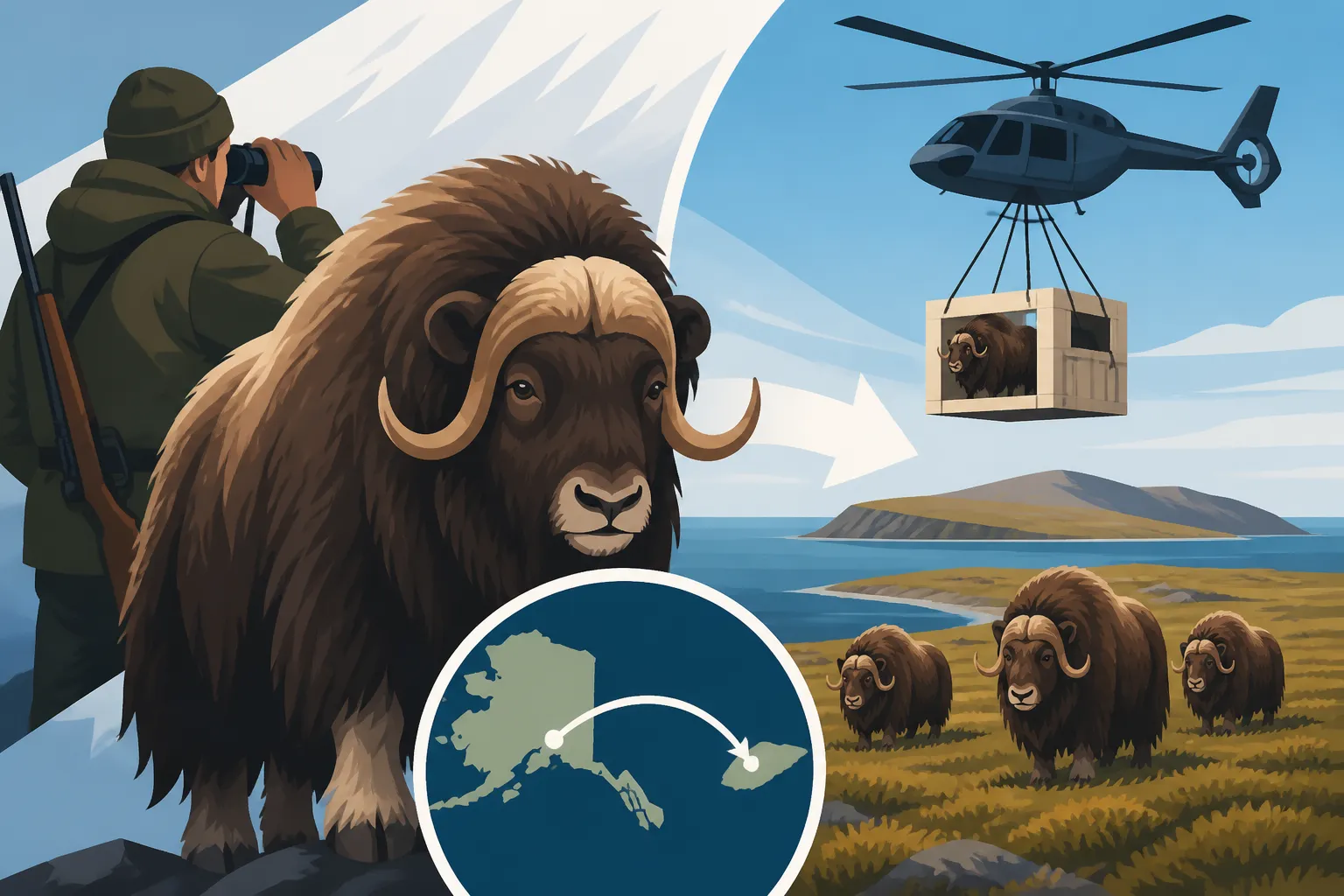
One of the most profound achievements of the Nunivak muskox project was its role in subsequent reintroductions across Alaska. As the Nunivak herd flourished, it reached a point where it could sustain removals without impacting its long-term health. This meant that Nunivak Island became the genetic wellspring for bringing muskox back to other parts of their historic range in mainland Alaska, such as the Seward Peninsula and areas of the Arctic Slope. Imagine the logistics of capturing live muskox from a thriving island herd and transporting them to entirely new landscapes—it was a testament to the success of the initial Nunivak project. These subsequent transplants, all originating from Nunivak, further solidified the muskox's return to Alaska, creating multiple, geographically diverse herds. If you're looking to understand the broader picture of where muskox are found today, searching for resources like Muskox on the Seward Peninsula can give you an idea of the reach of these efforts.
Ecological and Cultural Reconnection
The re-establishment of muskox on Nunivak Island had far-reaching impacts beyond just population numbers. Ecologically, these heavy grazers play a vital role in shaping tundra ecosystems. Their grazing patterns influence vegetation composition, and their presence contributes to the overall health and biodiversity of the island. Culturally, the return of muskox reconnected the native communities of Nunivak Island with a species that had been absent for generations. The animals became a renewed source of traditional food, hides, and qiviut (their incredibly warm underwool), weaving back into the fabric of local subsistence practices and cultural identity. For those interested in understanding how a species like this thrives in its environment, exploring Muskox Qiviut and Winter Survival can provide great insight into their adaptations. This successful transplant wasn't just a biological victory; it was a deeply meaningful cultural restoration.
From Restoration to Sustainable Hunting: The Legacy of Nunivak's Muskox
The success of the Nunivak Island muskox reintroduction eventually led to a new phase in their management: sustainable hunting. This transition from a protected, recovering population to a managed game species is a critical indicator of a healthy, thriving herd. For hunters, it represents a unique opportunity to pursue one of Alaska's most iconic and challenging game animals, a testament to decades of careful conservation.
Managing for Sustainability: Draw Permits and Quotas
Once the Nunivak herd reached a robust and stable population, wildlife managers, in collaboration with local communities, began to implement controlled hunting seasons. This wasn't a sudden decision, but a carefully considered step based on decades of data demonstrating the herd's health and reproductive capacity. To ensure sustainability and allocate limited opportunities fairly, Alaska employs a draw permit system for muskox. This means hunters must apply in advance, often years ahead, for a chance to draw one of the highly coveted permits. The number of permits issued each year is strictly controlled by quotas, which are set based on population surveys, health assessments, and management objectives. For hunters, this translates into low odds, but also the assurance that each hunt contributes to the long-term health of the species. It’s a hunt where you really have to plan ahead and know your application strategies; a resource like GoHunt can be invaluable for researching historical draw odds and unit information to maximize your chances.
A Unique Hunting Opportunity
Hunting muskox on Nunivak Island offers an experience unlike almost any other in Alaska. The terrain is largely flat, expansive tundra, often windswept and challenging to navigate, especially for those unfamiliar with the island's unique landscape. The hunt itself typically involves considerable walking or ATV travel across vast distances, often in harsh weather. Muskox are known for their defensive posture, forming a tight circle when approached, which can make ethical shot placement a critical consideration. Hunters often find themselves in awe of these ancient animals, feeling a deep connection to the history of their reintroduction and the challenging environment they call home. It's a true test of grit, patience, and respect for the animal and its habitat. Understanding the specific regulations for Nunivak Island Muskox Hunt Unit is paramount before planning such a trip.
Economic and Community Impact
The establishment of a sustainable muskox hunt on Nunivak Island has had a positive impact on the local community. While the island is remote, it draws a small number of permitted hunters each year, many of whom rely on local air taxis, guides, and services, injecting valuable economic activity into the region. Furthermore, the ability for local residents to participate in subsistence hunts for muskox helps to maintain traditional lifeways and provides a crucial source of protein. This careful balance between controlled harvest and community benefit is a hallmark of successful wildlife management in Alaska. The success of the Nunivak muskox stands as a powerful example of how conservation, thoughtful management, and community engagement can restore a species and create lasting opportunities, enriching both the natural world and human experience. If you’re ever considering applying for one of these incredible hunts, checking out the application process details, perhaps through GoHunt's resources, is a smart first step.
The Long-Term Vision for Alaska's Muskox
The legacy of the Nunivak Island muskox transplant continues to shape Alaska's wildlife management. It serves as a blueprint for other reintroduction efforts and a constant reminder of the importance of habitat protection and scientific management. While the Nunivak herd remains a cornerstone, other herds across Alaska, stemming from these early successes, are also managed for health and sustainable harvest. Understanding these populations, their unique challenges, and the opportunities they present for hunters is an ongoing endeavor. Just like knowing the history of Are Alaska Bison Wild or Transplanted? helps understand those opportunities, grasping the story of Nunivak's muskox explains much about hunting them today. The lessons learned from Nunivak continue to inform how we approach managing other critical species, ensuring that Alaska's wildlife heritage thrives for generations to come.
| Year Range | Event / Phase | Description |
|---|---|---|
| Early 1900s | Near Extinction | Muskox wiped out from Alaska by early 20th century due to hunting and climate impacts, leaving an ecological void. |
| Mid-1930s | Initial Transplants Begin | First small groups of muskox calves, sourced from Greenland, are carefully transported and released onto Nunivak Island. |
| Mid-1900s | Population Establishment & Growth | The Nunivak herd begins to thrive and expand significantly, benefiting from abundant forage and a lack of major predators on the isolated island. |
| Late 1960s-1970s | Source for Further Transplants | Nunivak's booming population allows it to become a crucial source for reintroducing muskox to other historical ranges across mainland Alaska. |
| Present Day | Managed Hunt & Stable Population | The herd is now healthy and managed through highly sought-after draw permits, supporting both subsistence and trophy hunting opportunities. |
Disclaimer
This article is for general informational purposes only and does not constitute professional advice. Laws, prices and regulations vary by location and change over time. Consult a qualified professional for guidance on your specific situation.