Spruce Grouse Behavior in the Interior
Many hunters in Alaska’s interior find themselves laser-focused on the pursuit of big game, often overlooking the abundant opportunities for small game that can make a backcountry trip even more rewarding. Spruce grouse, in particular, are frequently encountered but rarely understood, leading to missed chances or inefficient hunting. This guide will delve into the fascinating behavior of spruce grouse in Alaska's interior, helping you recognize their habits, understand their habitat, and effectively hunt them to supplement your camp larder or simply enjoy the unique challenge of upland bird hunting in the Last Frontier.
Understanding the Spruce Grouse in Alaska's Interior
The spruce grouse (Falcipennis canadensis) is a captivating resident of Alaska's vast coniferous forests, often referred to by locals as the "fool hen" due to its often-tame demeanor. However, this nickname belies a creature perfectly adapted to its environment, with specific behaviors that dictate its survival and, by extension, how hunters can successfully find it. While they might seem like a simple bird, understanding their world unlocks a different layer of the Alaskan wilderness experience.
Identifying Spruce Grouse
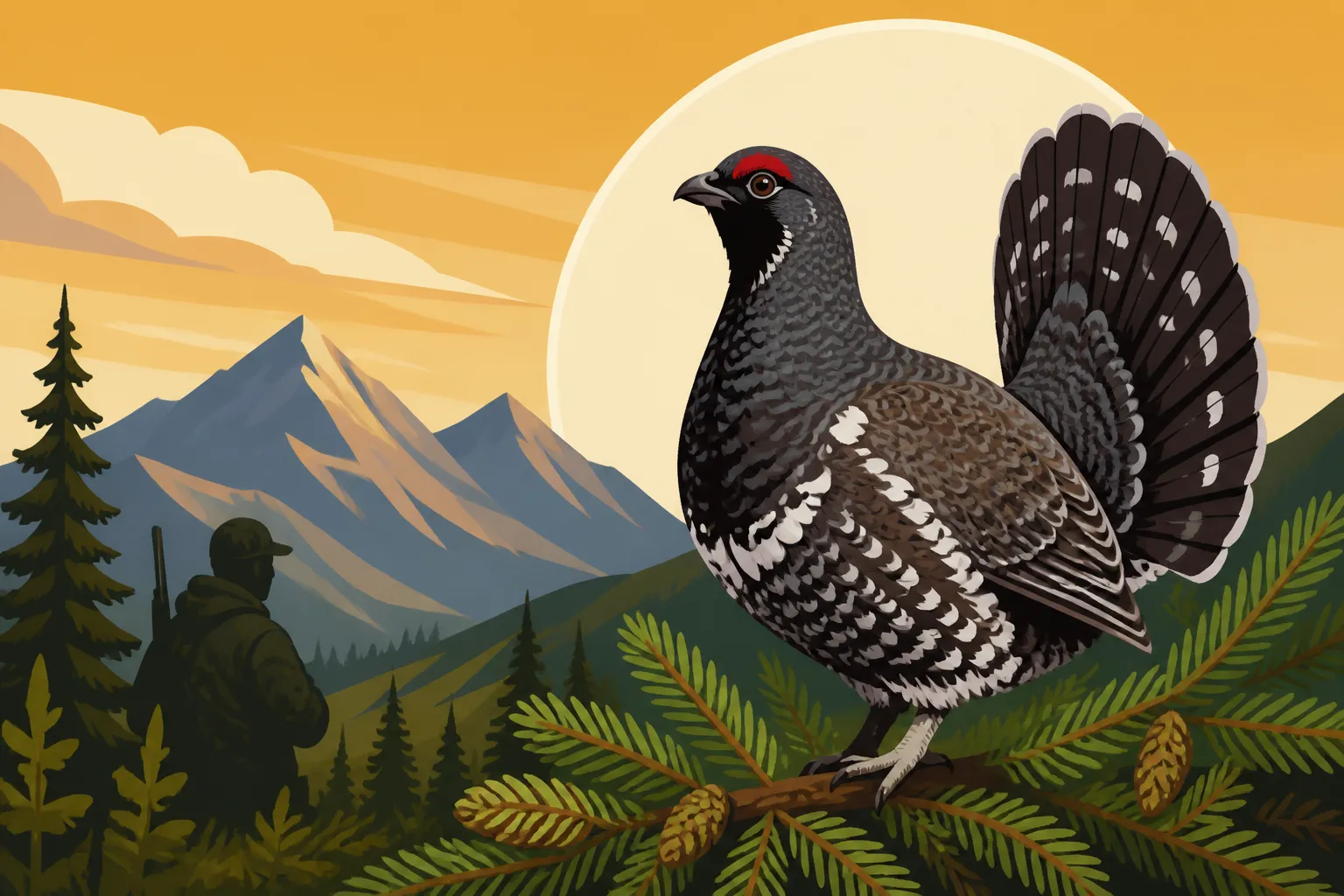
Recognizing a spruce grouse is usually straightforward, though variations exist. Adult males are particularly striking with their dark, barred plumage, a distinctive red comb above the eye during breeding season, and a black bib bordered by white. Females and juveniles are typically mottled brown and black, providing excellent camouflage against the forest floor and tree bark. They are a medium-sized grouse, larger than a robin but smaller than a ruffed grouse, with a relatively short tail. The key distinguishing feature is their habitat preference; if you're deep in dense spruce or pine forests in interior Alaska, and you see a grouse that fits this description, chances are you’ve found a spruce grouse. Their robust build and preference for walking or short, explosive flights rather than sustained flight are also good indicators.
You might encounter them perched motionless on a low branch, often blending perfectly with their surroundings. Sometimes, their presence is only given away by their sudden, drumming flight or a quiet rustle in the underbrush. Unlike some other upland birds, they don't typically explode into a long, noisy flight unless seriously startled, which is part of their "fool hen" reputation. Being able to quickly and accurately identify them is the first step in successful hunting, ensuring you're targeting the correct species and not accidentally flushing a protected bird.
Preferred Habitat and Forage
Spruce grouse are creatures of the boreal forest, and their habitat preference is right there in their name. In interior Alaska, you'll find them predominantly in mature or mixed spruce and fir forests, especially those with dense understories of willow, alder, or blueberry bushes. They thrive in areas where spruce, pine, and tamarack are abundant, as these trees provide both cover and their primary food source. Think of those vast, dark timber patches that make you feel like you're stepping into an ancient, quiet world – that's often prime spruce grouse country. While they might venture into more open areas or the edges of recent burns, their core existence is tied to the coniferous canopy. Old Burns and Where Moose Feed in Them can also hold grouse if enough spruce remains for cover.
Their diet is largely composed of conifer needles, particularly spruce and pine, which are available year-round. This is a critical point for hunters: because their food source is so consistent, they don't need to range widely like birds that rely on seasonal berries or grains. In summer and fall, they'll supplement this with berries, mushrooms, and insects, but conifer needles remain their staple, especially in winter. This dietary preference means that once you find a pocket of suitable habitat, you're likely to find grouse there consistently, year after year, as long as the habitat remains intact.
Daily and Seasonal Movements
Spruce grouse generally aren't known for extensive daily migrations or long-distance movements. Their daily routine is often a quiet affair, focused on foraging, dusting, and resting within a relatively small home range. They typically move from feeding areas to resting or roosting sites, rarely venturing far from dense cover. This makes them somewhat predictable, a boon for the observant hunter. In the early morning and late afternoon, you'll often find them actively feeding, either on the ground picking at berries and insects or higher in the trees stripping needles. Midday usually sees them resting in dense cover, perhaps dusting themselves in a sunny patch of dry dirt.
Seasonally, their movements are also quite limited. During the breeding season in spring and early summer, males establish territories, and both sexes are more vocal and active. As fall approaches, their diet shifts more heavily towards conifer needles, and they become even more intimately associated with dense spruce stands. Winter sees them burrowing into snow for warmth during extreme cold, or simply roosting deep in the thickest evergreens, conserving energy. Unlike migratory birds or even some other upland species, you won't find spruce grouse changing their entire range dramatically with the seasons; instead, they adapt their behavior within their established coniferous domain. Understanding this helps narrow down where to focus your efforts. Many hunters targeting larger game during the fall rut often encounter grouse, making for good camp meat. Waterfowl and Ptarmigan as Camp Meat is a good example of how small game can enhance a remote hunt.
Key Behavioral Traits for Hunters
Hunting spruce grouse isn't just about walking through the woods; it's about understanding and anticipating their responses to their environment, including you, the hunter. Their unique behavioral quirks are what make them both accessible and, at times, surprisingly elusive.
The "Fool Hen" Reputation and Its Nuances
The moniker "fool hen" is widely used for spruce grouse, and for good reason. They are famously unconcerned by human presence, often allowing hunters to approach within feet, sometimes even pecking at their boots. This fearlessness is believed to be an evolutionary trait stemming from a lack of significant ground predators in their dense, remote habitats, or perhaps an adaptation that encourages hiding rather than fleeing. Instead of flying off at the first sign of danger, they tend to freeze, relying on their camouflage to blend into the shadows and branches. This behavior often catches inexperienced hunters by surprise, as they might walk right past a bird perched silently just off the trail.
However, calling them simply "foolish" is a disservice. While they might not flush wildly, they are masters of stealth. A spruce grouse that freezes will often move silently to the other side of a tree trunk as you pass, or simply remain absolutely still, melting into the background. The challenge isn't always in getting close, but in spotting them before they spot you, or rather, before they successfully hide from you. They are masters of concealment. Their reputation means that even a novice can often get a shot, but a truly skilled grouse hunter knows how to systematically work an area to find these camouflaged birds before they disappear entirely.
Drumming and Display Behaviors
While not as dramatic or far-carrying as a ruffed grouse's drumming, male spruce grouse do engage in their own forms of display, particularly during the breeding season. The male's drumming is much quieter, produced by rapid wing beats against the air or his chest, creating a low, muffled thumping sound that doesn't carry far. You're more likely to hear it when you're already quite close, deep in their spruce domain. This display is primarily for attracting mates and proclaiming territory, and it's accompanied by visual displays where the male fans his tail, struts, and inflates his red combs above his eyes.
Understanding these subtle behaviors can be a game-changer for early-season hunters. If you hear a faint drumming, you know a male is likely nearby. While not a calling tactic in the same way you might call a moose, being aware of these sounds helps confirm you're in active grouse territory. During the fall hunting season, these displays are far less common, as the breeding season has passed. However, knowing that they can be vocal, even if subtly, adds another layer to tracking their presence. When planning a hunt, resources like GoHunt can help you review maps to identify likely drumming areas (like dense stands of spruce) within your chosen GMU.
Reaction to Predators and Hunters
The spruce grouse's primary defensive mechanism against predators, whether a fox, hawk, or human, is stillness and camouflage. When disturbed, their first instinct is typically to freeze. If that fails, they make a short, explosive flight, usually for only a few dozen yards, often landing in the dense cover of another spruce tree, high enough to be out of immediate reach but still within sight. This short flight is why they can be tricky; they don't fly off for miles, but they do put distance between themselves and the immediate threat, often becoming even harder to spot in their new location.
When hunting, this means a few things. First, movement and noise are your enemies if you want to get close to a frozen bird. A slow, deliberate pace, punctuated by stops to scan the trees and ground ahead, is often more effective than crashing through the brush. Second, if you flush a bird, mark where it lands. Many times, it will simply perch and hold again, giving you a second chance. However, they can be surprisingly adept at using the terrain and vegetation to their advantage, disappearing behind a thick bough or into a cluster of saplings. Knowing this behavior, a hunter can anticipate their short flights and potentially set up for a follow-up shot. Shooting Grouse Along a Pack Trail is a perfect example of opportunistic hunting when you encounter these birds during a larger hunt.
Hunting Strategies Based on Behavior
Successfully hunting spruce grouse isn't about brute force; it's about subtlety, patience, and adapting your approach to their predictable yet evasive habits. Whether you're actively targeting them or opportunistically taking them during a big game hunt, a few strategies stand out.
Still-Hunting in Spruce Stands
Still-hunting is perhaps the most effective method for spruce grouse. This involves moving slowly and deliberately through their preferred habitat, pausing frequently to scan the trees and ground for any sign of movement or the tell-tale shape of a grouse. Their camouflage is superb, and they will often stand stock-still, blending perfectly with bark and needles. You're not looking for a bird flying up; you're looking for a motionless lump on a branch, or a slight flicker of an eye. The key is to cover ground quietly, using your eyes and ears more than your legs.
Focus on areas with mixed age timber, especially where mature spruce provides good cover and younger growth offers berries or other ground forage. Pay close attention to the lower branches of spruce trees and the ground cover nearby. A pair of binoculars can be surprisingly useful for picking out birds that have frozen in the upper canopy. When you spot one, approach slowly and steadily. Often, they will let you get quite close before making a move, if they move at all. This technique is also excellent for enjoying the solitude of the Alaskan forest and can often lead to encounters with other small game or even big game animals. Spruce Grouse Behavior in the Interior is all about understanding their preferred hiding places.
Using Dogs or Flushers
While not as common for spruce grouse as for pheasants or ruffed grouse, a well-trained dog can be an incredible asset. A pointing dog will lock up when it scents a bird, allowing you to walk in for the flush and shot. Even a flushing dog can be effective, though you’ll need quick reflexes as the bird will often burst from cover without warning. The trick with dogs and spruce grouse is managing the dog's enthusiasm versus the grouse's tendency to hold tight. A dog that ranges too wide or is too boisterous might push birds out of an area before you're ready.
If you don't have a trained bird dog, sometimes a hunting partner acting as a "flusher" can work. One person moves through the thickest cover, trying to push birds out, while the other walks alongside, slightly ahead, ready for a shot. This can be particularly effective in areas where the spruce is so dense that spotting a frozen bird is nearly impossible. This strategy also forces the grouse to make that short, explosive flight, offering a moving target rather than a stationary one. Remember, you can use Shooting Small Game With a Big Game Rifle if you don't have a dedicated small game firearm, though a .22 or shotgun is ideal for grouse.
Late Season Tactics and Winter Roosts
As the interior winter deepens, spruce grouse behavior adapts to the harsh conditions, offering different hunting opportunities. Their diet becomes almost exclusively conifer needles, meaning they will be found in the densest spruce stands where this food source is readily available and provides maximum thermal cover. They often utilize snow burrows for roosting, especially during extremely cold temperatures, diving into soft snow to create insulated pockets overnight. This behavior makes them incredibly difficult to find when they're not actively feeding.
During mild winter days, or when snow cover is less profound, they might still be found scratching on the ground for any remaining berries or insects, but their primary activity will revolve around the spruce canopy. Focus your late-season efforts on the thickest, darkest stands of spruce, especially those with southern exposures that might catch a bit more sun. Tracks in the snow can give away their presence, leading you to their feeding or roosting areas. Scouting tools available through GoHunt can assist in identifying these dense spruce areas before you even step foot in the field, making your winter hunting more efficient.
Conservation and Ethical Hunting Considerations
While spruce grouse are relatively common across their range in Alaska, ethical hunting practices and an understanding of their role in the ecosystem are paramount. Responsible hunting ensures healthy populations for future generations and maintains the balance of the wild.
Bag Limits and Responsible Harvesting
Like all game species in Alaska, spruce grouse are managed with specific bag limits and possession limits, which vary by game management unit (GMU) and season. It's crucial to consult the most current Alaska Department of Fish and Game (ADF&G) regulations booklet before heading into the field. These regulations are designed to prevent overharvesting and ensure sustainable populations. For instance, in many areas, the daily bag limit for grouse (including spruce, ruffed, and sharp-tailed) might be 15 birds, with a possession limit of 30. Always confirm these numbers for your specific hunting area.
Responsible harvesting also means making ethical shots. Given the "fool hen" nature, it's often easy to get very close to these birds. This offers an excellent opportunity for clean, humane shots, whether with a small-caliber rifle, a shotgun, or even a bow. Avoid taking more than you can reasonably consume or properly care for, and always ensure you're within legal limits. Remember, grouse meat is delicious, often considered a delicacy, and contributes to the subsistence aspect of an Alaskan hunt. Knowing Alaska Harvest Tickets, Registration Permits and Draw Permits are required for big game, remember that small game also has licensing requirements.
Impact of Habitat Changes
Spruce grouse populations are inextricably linked to the health and distribution of coniferous forests. Habitat alteration, primarily through logging, wildfire, or industrial development, can significantly impact their numbers. While some forest disturbances, like certain types of fire, can initially create new forage opportunities, extensive clearcutting or conversion of spruce forests to other land uses can be detrimental. They rely on dense, mature spruce for cover, roosting, and their primary food source.
Hunters often have a vested interest in habitat conservation. Supporting sustainable forestry practices, advocating for wilderness protection, and understanding the effects of habitat changes are all ways to contribute. For instance, when using a tool like GoHunt to scout potential hunting areas, you might observe historical burn scars or logging activity. Understanding how these changes affect grouse populations over time can inform your hunting strategy and foster a deeper appreciation for the delicate balance of the boreal ecosystem.
The Role of Small Game in the Ecosystem
Spruce grouse, despite their unassuming size, play an important role in the interior Alaskan ecosystem. They are a prey species for various predators, including goshawks, owls, coyotes, martens, and lynx. Their consumption of conifer needles and berries helps in seed dispersal and the overall cycling of nutrients within the forest environment. Their presence is an indicator of a healthy, intact boreal forest.
For the hunter, pursuing small game like spruce grouse offers a different kind of connection to the land. It hones your observational skills, teaches you about subtle animal behaviors, and provides a direct link to the food chain. It's not just about the harvest; it's about appreciating the small wonders of the wilderness. They provide excellent camp meat, particularly when on extended hunts for other species, offering a fresh meal that can be cooked over an open fire. Meat Yield From an Alaska Caribou is one thing, but a handful of grouse can still provide a good meal. By respecting these birds and their habitat, we ensure that they continue to thrive, enriching the Alaskan wilderness for generations to come.
| Characteristic | Male Spruce Grouse | Female Spruce Grouse |
|---|---|---|
| Plumage | Dark, barred, black bib, white border | Mottled brown and black, camouflaged |
| Head Features | Red comb above eye (breeding season) | No prominent red comb |
| Size | Medium-sized, slightly larger than female | Medium-sized, slightly smaller than male |
| Habitat Focus | Dense spruce/pine forests, year-round | Dense spruce/pine forests, year-round |
| Behavior when Seen | Tends to freeze, relies on camouflage | Tends to freeze, relies on camouflage |
| Vocalization | Low drumming, subtle display (breeding) | Quieter, less active displays |
| Primary Diet | Conifer needles (spruce, pine), berries, insects | Conifer needles (spruce, pine), berries, insects |
Disclaimer
This article is for general informational purposes only and does not constitute professional advice. Laws, prices and regulations vary by location and change over time. Consult a qualified professional for guidance on your specific situation.