Shooting Small Game With a Big Game Rifle
When you're out in the Alaskan bush, miles from anywhere, the thought of carrying a separate .22 or shotgun just for ptarmigan or rabbits often feels like a cruel joke. Every ounce in your pack feels like a pound, and the logistical nightmare of managing two primary firearms can be a real headache. This guide is all about tackling that common dilemma: how to effectively, and ethically, use your big game rifle for opportunistic small game to put some much-needed camp meat in the pot without blowing it to smithereens.
The Temptation and Challenges of a Single Rifle for All Game
Let's be honest, the appeal of bringing just one rifle on an Alaska hunt is immense. You're already hauling a substantial firearm for moose, caribou, or bear, along with ammunition, optics, and all the other essentials for survival in rugged terrain. The idea of adding another weapon, even a lightweight one, often gets dismissed the moment you start packing your backpack. Every ounce counts, especially when you're contemplating a Backpack Hunting in Alaska: Gear Weight and Meat Loads. It’s a pragmatic decision borne out of necessity.
However, using a powerful big game rifle, like a .30-06 Springfield or a .300 Winchester Magnum, on something as delicate as a ptarmigan or a snowshoe hare presents its own set of significant challenges. The most obvious, and often frustrating, issue is projectile choice. Most big game hunting ammunition is designed to expand rapidly and transfer maximum energy into large animals, ensuring a quick, humane kill. When applied to small game, this translates to devastating hydrostatic shock and massive tissue damage, often rendering the animal inedible or leaving little more than scattered feathers or fur. It's a common lament around campfires, seeing a perfectly good rabbit vaporized by a bullet meant for a bull moose.
Another hurdle is the ethical consideration. No hunter wants to waste meat, and destroying a potential meal through poor bullet choice feels fundamentally wrong. There's also the noise factor; a big game rifle shot will echo through the mountains, potentially alerting larger game to your presence, which might be detrimental if you're stalking a prime bull or a watchful ram. You have to weigh the immediate benefit of camp meat against the potential disruption to your primary hunt. The balance is delicate, and often requires careful planning and a bit of ingenuity.
Choosing the Right Bullet for Minimal Meat Damage
This is where the rubber meets the road, or rather, where the bullet meets the bird. Standard big game hunting ammunition, with its aggressive expansion characteristics, is generally a terrible choice for small game. It's designed for maximum energy transfer and tissue destruction to anchor a large animal quickly. For small game, you need the exact opposite: minimal expansion and maximum retention of the projectile's integrity.
One popular approach is to use full metal jacket (FMJ) bullets. These bullets are designed for deep penetration with very little expansion. While they might pass completely through a small animal, leaving two small holes, the lack of significant expansion means less hydrostatic shock and less overall destruction of the surrounding tissue. You'll still get a clean kill, but with far more salvageable meat. The downside? FMJs are not always readily available for all big game calibers, and some hunters feel they are less ethical for big game due to potential over-penetration without sufficient energy transfer. However, for a quick ptarmigan at 50 yards, they can be a game-changer.
Another excellent option, if your rifle's twist rate and your budget allow, is to use varmint-specific bullets. While designed for larger varmints like coyotes, these bullets in big game calibers (like a light, frangible .308 bullet) are built for rapid, almost explosive expansion on impact. The idea here is that they disintegrate upon hitting small game, dumping all their energy very quickly within the animal, but ideally without exiting or causing massive through-and-through damage. Brands like Nosler Varmageddon or Hornady V-MAX offer projectiles that are much lighter than typical big game bullets, often in the 110-125 grain range for .30 caliber rifles. The key is their construction: a thin jacket and a large hollow point or polymer tip designed for violent fragmentation. This means the energy is expended almost entirely within the small animal, minimizing exit wounds and preventing the "spray" effect of a heavy-jacketed, expanding big game bullet. You still need to place your shot carefully, perhaps aiming for the head or neck to preserve the breast meat.
| Bullet Type | Design for Small Game | Pros | Cons | Best Use Case |
|---|---|---|---|---|
| Full Metal Jacket (FMJ) | Minimal expansion | Clean pass-through, low meat damage | Less effective on big game; potential for over-penetration | Headshots on ptarmigan, grouse; clean kills |
| Varmint (e.g., V-MAX) | Rapid, explosive expansion | Energy dumped inside, no exit wound | Requires precise shot placement; may not be legal for all game in all areas | Body shots on small birds and mammals; fragile targets |
| Standard Hunting (Soft Point/Boattail) | Controlled expansion | Readily available, accurate | Severe meat damage; often leaves little salvageable meat | Avoid for small game; designed for large animals |
When you're packing for a remote trip, consider a small box of these specialized small game bullets alongside your primary big game ammunition. It’s a minor weight increase that can pay huge dividends in camp meals. Always verify local regulations, of course, as some hunting areas have specific rules about bullet types.
Mastering Trajectory and Point of Impact with Different Loads
Switching between ammunition types, even within the same caliber, is rarely a "set it and forget it" affair. Your big game rifle, sighted in for a heavy, high-velocity bullet, will likely shoot a much lighter, small game-specific bullet to a different point of impact. This is a critical factor you absolutely must account for, especially if you're trying to take a grouse off a branch or a hare in the willows.
The lighter varmint bullets, with their potentially higher muzzle velocity but lower ballistic coefficient, will have a different trajectory curve than your heavy big game bullets. At close ranges, say out to 50 or 75 yards, the difference might be negligible enough for a kill shot on a large small game animal like a beaver or a porcupine. However, for head-shooting a ptarmigan at 25 yards, even an inch or two of vertical shift can mean a clean miss or, worse, a crippling shot. This means you need to practice. A lot.
Before you even step foot in a bush plane, you need to understand how your rifle performs with these different loads. Dedicate range time to shooting both your big game and your small game ammunition. If you typically zero your rifle for your big game load at 200 yards, find out where your small game load impacts at 25, 50, and 75 yards. You'll likely find it shoots either high or low. The key is to know precisely how much high or low.
Many modern scopes with custom turrets or reticles with multiple aim points can make this easier. You could, for instance, zero your scope for your primary big game load, and then use a known holdover or holdunder point on your reticle for your small game load at typical distances. Apps like the GoHunt ballistics calculator can be invaluable here, allowing you to input your specific bullet data, rifle twist, and environmental conditions to get a very accurate idea of holdovers. Remember that elevation and temperature in Alaska will influence trajectory, so practicing in conditions as close to your hunting environment as possible is ideal.
When you're actually in the field and considering a shot at small game, take a moment to assess the distance. If you're used to shooting at 200 yards, a grouse at 30 yards can feel deceptively close. Adjust your aim point based on your practiced knowledge. Often, a simple head or neck shot, even with a slight holdover/under, is the most effective way to harvest small game with minimal meat loss. This precision aiming is crucial for Shooting Grouse Along a Pack Trail and other small game opportunities that arise.
Ethical Considerations and Legal Realities
Beyond the practicalities of bullet choice and trajectory, there are significant ethical and legal considerations when using a big game rifle for small game in Alaska. Hunters pride themselves on ethical harvesting, and ensuring a quick, humane death is paramount, regardless of the size of the animal.
Ethically, the primary concern is wanton waste. As mentioned, a poorly chosen big game bullet can obliterate small game, making it impossible to salvage any meat. The goal of taking small game opportunistically is usually to supplement your diet with fresh camp meat, and if you can't eat it, you shouldn't shoot it. This ties back directly to bullet selection and shot placement. Aiming for a head or neck shot is almost always preferred for smaller creatures to maximize meat recovery. It also prevents the agony of a gut-shot animal struggling away, which is anathema to any ethical hunter.
Legally, Alaska has very clear regulations, but generally, there are no restrictions on using a big game rifle for small game, provided you adhere to species-specific season dates and bag limits. For instance, you can absolutely shoot ptarmigan or snowshoe hare with your .30-06 during their open seasons. However, the critical distinction comes with specific rules for certain game types. You wouldn't use a big game rifle for migratory waterfowl without ensuring you're using non-toxic shot, which means a rifle is out of the question for ducks and geese. Always consult the current Alaska Department of Fish and Game regulations for the specific Game Management Unit (GMU) you are hunting in to ensure you are compliant. These regulations often outline what counts as edible meat and what constitutes wanton waste, which is particularly relevant when you're thinking about Alaska Moose Meat Salvage Requirements and similar rules for other species, even small ones.
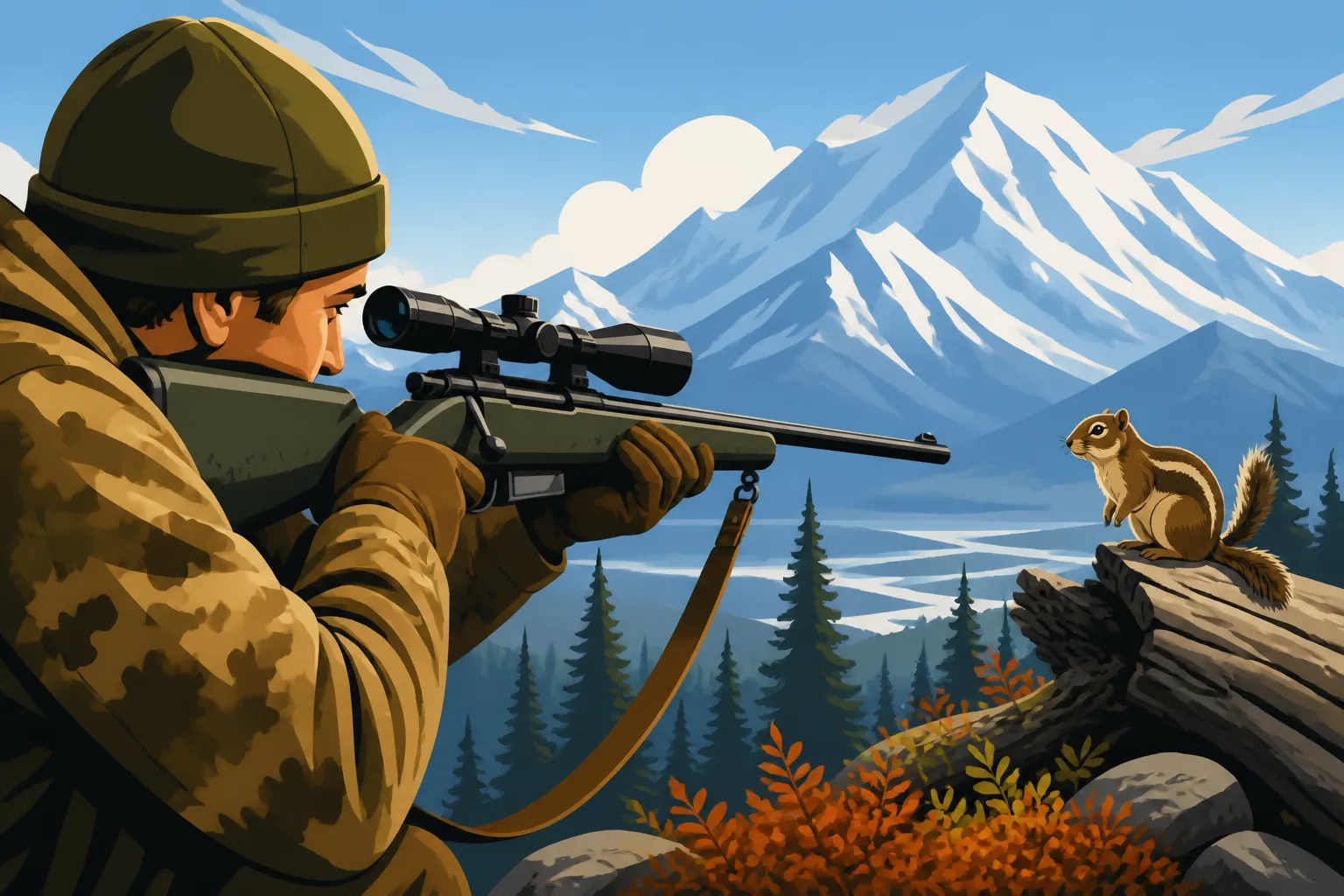
Another subtle but important point is the potential disturbance to larger game. The concussive blast of a .300 Win Mag is undeniably loud. If you're in an area where you're actively calling moose or stalking caribou, a rifle shot at a squirrel could spook your primary target. Many hunters opt to carry a .22 pistol or a small survival shotgun for this very reason, but if you're committed to the one-rifle philosophy, you need to weigh this cost carefully. Sometimes, letting that ptarmigan walk might be the smarter play if a trophy bull is nearby.
Ultimately, using your big game rifle for small game is a trade-off. It’s a compromise born from the realities of remote Alaska hunting and the desire for fresh sustenance. With the right ammunition, diligent practice, and a strong ethical compass, it’s a perfectly viable strategy for adding valuable protein to your camp menu. From keeping your spirits up with fresh meat to the quiet satisfaction of making a difficult shot, knowing how to do it right can truly enhance your overall hunting experience. Remember, every little bit of skill and preparation you bring to the field makes you a more effective and responsible hunter in this wild country.
Disclaimer
The information provided in this guide is for informational purposes only and is not a substitute for professional advice. Always consult the official regulations set forth by the Alaska Department of Fish and Game and any federal land management agencies before engaging in any hunting activities. Hunting involves inherent risks, and it is the responsibility of each individual to ensure their own safety and comply with all applicable laws and regulations.