Shooting Grouse Along a Pack Trail
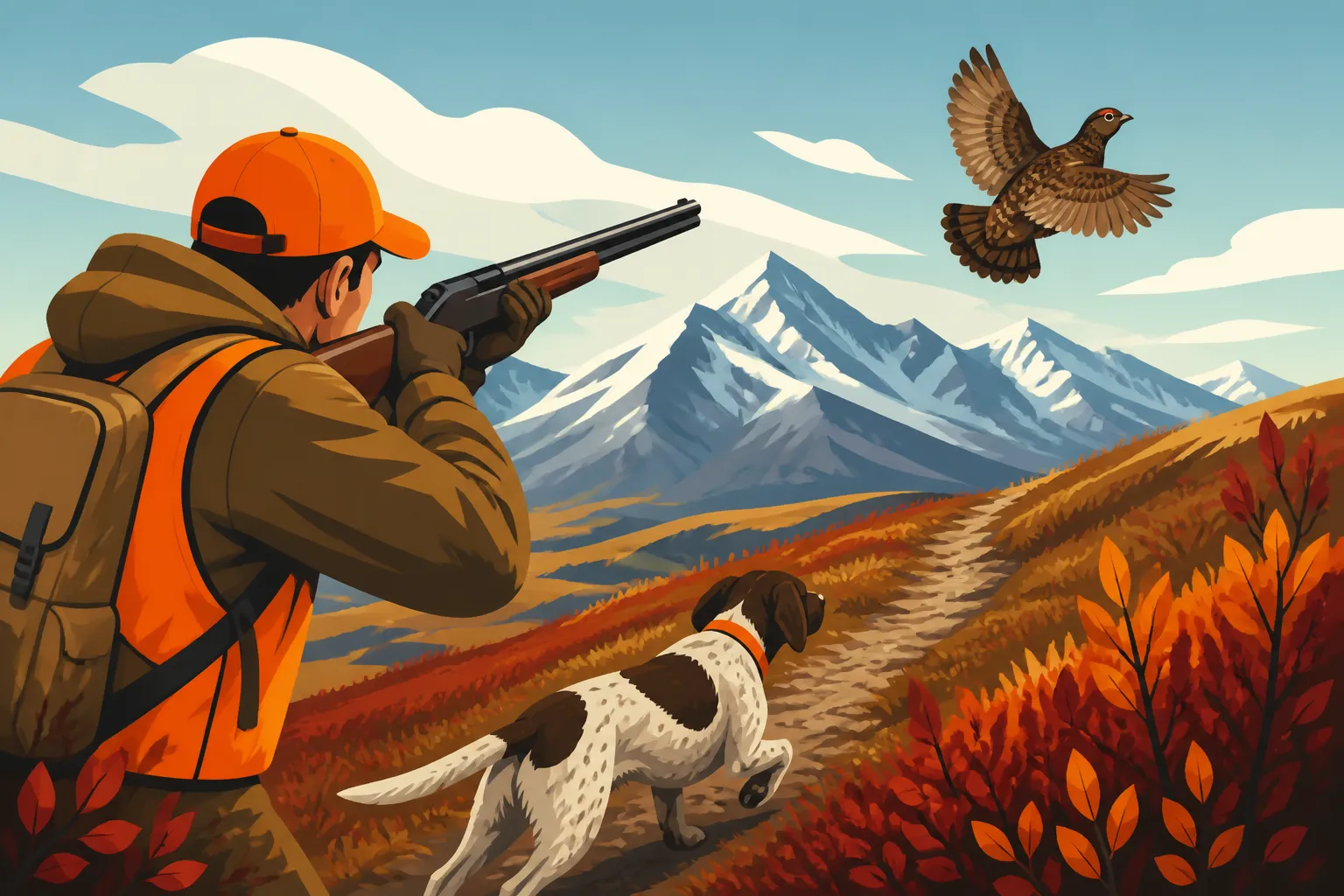
It’s a familiar scenario for many of us on an Alaska hunt: you’re humping it down a pack trail, focused on moose or sheep, when suddenly a ptarmigan or spruce grouse flushes, or maybe just stands there, practically posing. Your stomach rumbles at the thought of fresh camp meat, but you’re holding a magnum rifle, not a scattergun. This guide is all about navigating that delightful dilemma, helping you understand the regulations, gear up appropriately, and effectively harvest these delicious small game birds to enhance your wilderness experience without compromising your primary hunt.
Understanding Alaska's Grouse Species and Regulations
When you're out in the vastness of Alaska, the opportunity to supplement your backcountry diet with a grouse or ptarmigan can be a real morale booster. But before you even think about shouldering your rifle, it’s absolutely essential to know what you’re looking at and what the local rules are. Alaska has incredibly diverse ecosystems, and with that comes variations in species and regulations, even for small game.
Identifying Ptarmigan and Spruce Grouse
In Alaska, when people talk about "grouse," they're usually referring to one of a few key species. The most common you'll encounter along pack trails or in the open country are the three species of ptarmigan: Willow, Rock, and White-tailed. These birds are famous for their seasonal plumage changes, turning stark white in winter to blend with the snow, and mottled brown in summer. Willow ptarmigan are often found in willow thickets and tundras, especially common in river bottoms or alpine fringes, while Rock ptarmigan prefer rockier, higher elevation terrain. White-tailed ptarmigan are less common in general hunting areas and tend to stick to the highest alpine reaches. Encountering a flock of white-phased ptarmigan against a dark backdrop of spruce can be a truly striking sight.
Then there's the Spruce Grouse, sometimes affectionately called the "fool hen" because of its remarkable tameness. These birds are almost exclusively found in forested areas, particularly dense spruce and pine stands, often blending in so perfectly with the forest floor you might step on one before seeing it. They don't change plumage as dramatically as ptarmigan, remaining dark and camouflaged year-round. They're known for holding incredibly tight, often allowing a hunter to get within a few feet, making them an easy target if you have the right equipment. Knowing which species you're looking at isn't usually critical for legality, as small game regulations are often broad, but it certainly adds to the enjoyment and understanding of your surroundings.
Legalities of Small Game Hunting During Big Game Seasons
This is where many hunters get hung up: "Can I even hunt small game while I'm out for moose?" The answer is almost always yes, provided you have the appropriate license and are adhering to the specific regulations for the area you're in. Small game seasons in Alaska are generally very liberal, often running year-round or for many months, and bag limits are usually generous, if not unlimited for some species. However, just because the season is open doesn't mean you can disregard other rules.
You absolutely need a valid Alaska hunting license. This isn't just for big game; it covers small game too. Non-residents will need to purchase the appropriate license, which can be found by consulting the Alaska Department of Fish and Game (ADF&G) regulations or through online resources like GoHunt, which often compile this information for easy access. It's crucial to consult the current year's hunting regulations booklet, as rules, seasons, and bag limits can change annually or even by emergency order. Pay close attention to the specific Game Management Unit (GMU) you are hunting in, as even within a general region, different units can have slightly varied rules. For instance, some areas might have specific limitations on shooting near roads or trails, which would directly impact shooting grouse along a pack trail. Always verify the daily and possession limits for the species you intend to harvest. Generally, these limits are high enough that taking a few for camp meat won't be an issue, but it's good practice to know. Remember, responsible hunting means knowing and following all regulations, not just the big game ones. This also extends to where you can actually shoot. Be aware of any controlled use areas or no-shooting zones that might overlap with your hunting grounds.
Gear Considerations for Opportunistic Grouse Hunting
The conundrum of grouse hunting on a big game trip often boils down to gear. You’re already loaded down with a heavy pack, a big game rifle, and all the essentials for an extended stay in the wilderness. Adding another firearm might seem counterintuitive, but there are ways to approach this without breaking your back. The goal is to be prepared without being overburdened.
Choosing the Right Firearm and Ammunition
This is perhaps the biggest debate among hunters looking to capitalize on grouse opportunities. Do you use your big game rifle, or do you carry a dedicated small game weapon?
Let's be realistic: if you're out for moose or bear, you're likely carrying a .30-06, .300 Win Mag, or something even larger. While these calibers are certainly lethal to a grouse, they come with significant drawbacks. The primary issue is meat damage. A high-powered rifle bullet, designed to expand and transfer massive energy to large animals, will absolutely obliterate a small bird. You'll often be left with very little edible meat, turning a potential meal into a messy waste. Imagine trying to salvage a bird hit by a .338 Lapua Magnum – it's often not pretty. The second drawback is noise. Firing a magnum rifle, especially in a quiet forest, is an explosive event. Not only is it incredibly loud for your ears (always wear hearing protection if you're doing this regularly, even in the field), but it can also spook any big game within earshot for miles. If you've been meticulously stalking a bull moose, a sudden rifle shot for a grouse could send him packing. However, sometimes it's your only option, and if you're truly desperate for camp meat and a grouse presents a perfect headshot at close range, it might be worth the trade-off. Focus on headshots only if using a large caliber, to minimize damage and keep the noise down to a single, quick shot. We've all been there, and sometimes a grouse is just too tempting to pass up, even if it means Shooting Small Game With a Big Game Rifle.
A much better solution, if weight allows, is a dedicated small game firearm. A compact .22LR rifle, especially a takedown model, is ideal. These are lightweight, quiet, and use inexpensive ammunition that causes minimal meat damage. A single headshot from a .22LR will humanely dispatch a grouse, leaving the rest of the bird intact for a tasty meal. The Ruger 10/22 Takedown is a popular choice, fitting easily into a backpack. Carrying a small box of .22LR rounds adds negligible weight. Similarly, a small gauge shotgun (.410 or 20 gauge) is excellent, especially if the grouse are flushing. However, shotguns and their shells add more bulk and weight than a .22LR. Some hunters even carry a pistol in .22LR for this purpose, offering a very compact option. The key is to weigh the pros and cons against your primary hunt's demands. If you're on a float hunt where Packraft Weight Versus Load Capacity is a constant concern, adding a separate firearm might be pushing it. But for a vehicle-based hunt or a shorter backpack trip, it’s a strong consideration.
| Firearm Type | Pros | Cons | Ideal Scenario |
|---|---|---|---|
| Big Game Rifle | Always on hand; no extra gear needed | High meat damage; very loud; spooks big game | Last resort; perfect close-range headshot only; desperation |
| .22LR Rifle | Minimal meat damage; quiet; lightweight; accurate | Requires carrying extra firearm and ammo; slower follow-up | Best overall; for deliberate grouse hunting off the trail; close, sitting shots |
| Small Gauge Shotgun | Effective for flushing birds; moderate meat damage | Heavier than .22LR; bulkier ammo; louder than .22LR | Grouse are jumpy; slightly more meat damage than .22LR but less than big game rifle |
Essential Accessories for Grouse Hunting
Beyond the firearm, a few other accessories can make your opportunistic grouse hunt more efficient. First and foremost, a sharp knife is crucial for field dressing. You'll want to breast out the birds quickly to cool the meat, especially in warmer early September weather. Speaking of cooling, small game bags, or even zip-top plastic bags, are invaluable for protecting the meat from dirt and flies as you carry it back to camp. Keeping these birds cool is important, just as it is when Hanging Meat in Warm September Weather for big game.
A small game vest or even just a dedicated pocket in your pack can make it easier to retrieve birds and store them temporarily. Some hunters might carry a compact sling for their secondary firearm, allowing them to keep it readily accessible without constantly holding it. Headlamps are always essential in Alaska, not just for big game but for any activity that might extend into the fading light, like field dressing a late-evening grouse. Resources like GoHunt often have curated gear lists based on different hunting scenarios in Alaska, which can be helpful for identifying compact, multi-use items that fit your specific hunt plan. Even something as simple as a small roll of butcher string can be handy for hanging birds or securing them in a pack.
Field Techniques for Spotting and Harvesting Grouse
Successfully adding grouse to your dinner plate while on a big game hunt isn't just about having the right gear; it's about knowing how to find them, approach them, and dispatch them efficiently and ethically. It's a different rhythm than big game hunting, often requiring a quick shift in focus and a quiet approach.
Approaching Grouse on the Trail
Grouse behavior can vary wildly depending on the species, the time of year, and even individual birds. Spruce grouse, as mentioned, are notoriously "tame." You might literally walk right past one on a log before it flinches, often allowing you to get within a few feet. Ptarmigan, especially those in more open country or near popular trails, can be a bit warier, often flushing with an explosive burst of wings when you get within 20-30 yards. The key is observation and a calm, deliberate approach.
When you spot a grouse, whether it's sitting on a log, dusting itself in the trail, or feeding along the edge, pause. Don't make any sudden movements. If it's a spruce grouse, you might simply walk closer, unshouldering your .22 and taking a careful headshot. If it's a ptarmigan that's a bit more skittish, try to use any available cover – a rise in the trail, a clump of willows – to close the distance. Move slowly, deliberately, and quietly. Sometimes, if a bird flushes into a nearby tree, it might hold tight, allowing you another chance. If it flies off into the distance, let it go; pushing too hard could disrupt your primary big game hunt. Remember, these are opportunistic encounters. Don't compromise your big game strategy for a small bird. If you're with a partner, one hunter can act as a blocker or spotter, helping to track a bird that flushes. Always be mindful of your surroundings; while focused on a grouse, don't forget you're still in potentially active bear country, so maintain situational awareness, especially if you're in an area where Working a Kill Site in Grizzly Country is a regular concern.
Minimizing Meat Damage and Maximizing Yield
The goal of harvesting grouse is usually to enjoy them as camp meat, so minimizing damage is paramount. This is where your choice of firearm truly comes into play. If you're using a .22LR, a headshot is always the preferred option. It ensures a quick, humane kill and leaves the delicious breast and leg meat completely intact. Take your time to get a steady rest, perhaps using a trekking pole or kneeling, and aim for the head or upper neck. The small projectile creates a clean hole with no wasted meat.
With a shotgun, especially if grouse are flushing, you'll be aiming for the body. Use lighter loads, such as #6 or #7.5 birdshot, to reduce the chance of excessive penetration and lead shot fragments in the meat. The spread of the shot pattern will increase your chances of hitting a fast-flying bird. While there will be some pellet damage, it's generally manageable, and the breast meat will still be very salvageable. If you're stuck with your big game rifle, and you absolutely must take a grouse, the headshot becomes even more critical. Aim for the smallest target and pray for a clean miss of the body. Even a small piece of lead fragmenting from a high-power bullet can ruin a meal, so precision is key. Waterfowl and Ptarmigan as Camp Meat are truly a delicacy in the field, so taking care in their harvest pays off directly in your camp kitchen.
Quick Field Dressing for Fresh Camp Meat
Once harvested, quick field dressing is essential to preserve the quality of the meat. In the backcountry, you don't need to do a full gutting like you would a deer. For grouse, the most common and efficient method is to breast them out. Simply pluck the breast feathers, make an incision down the keel bone, and carefully separate the breast meat from the bone and ribs. You can usually get two nice fillets this way. If you want the legs, remove them as well, though they are much smaller.
Once you have the meat, wipe it clean with a bit of snow or a damp cloth – avoid washing if possible, especially if you'll be packing it for a while, as moisture can promote bacterial growth. Place the meat in a small game bag or a clean plastic bag to protect it. Keeping the meat cool is critical, especially on warmer days. If you're on a multi-day hike, consider putting the meat against your water bladder to utilize the cold water. If you happen to be near a cold stream, a quick dip in a sealed bag can help drop the temperature. For extended hunts, especially when meat care is paramount, having Game Bags That Breathe in Coastal Rain can be a lifesaver, allowing air circulation while protecting the meat. Get it back to camp as soon as feasible and cook it fresh over your camp stove or a small fire. There's nothing quite like fresh grouse cooked in butter and garlic after a long day of humping a pack.
Integrating Grouse Into Your Alaska Hunt Experience
Hunting in Alaska is about more than just the big game animal you're pursuing; it's about the entire wilderness experience. Opportunistic grouse hunting can significantly enrich that experience, offering moments of connection with the smaller creatures of the wild and providing tangible benefits to your camp life.
The Value of Camp Meat in Remote Alaska
Let's be honest, freeze-dried meals, while essential for their weight and convenience, can get monotonous after a few days in the backcountry. Fresh meat, even just a couple of grouse breasts, can be a game-changer for morale and nutrition. It provides a welcome break from the routine and a taste of the wild that is genuinely earned. Imagine the satisfaction of cooking fresh grouse over a tiny stove after a long, grueling day of chasing sheep up an Alaskan ridge. It's not just food; it's an experience. This is especially true on longer trips where rationing is crucial and every bit of sustenance counts. If you're in a situation where Water Sources at a High Spike Camp are scarce and you're carefully managing your dehydrated food, adding fresh protein is a significant bonus.
Beyond the culinary aspect, hunting small game keeps your skills sharp. It's an opportunity for a quick, ethical shot, reinforcing good marksmanship even when your primary focus is on bigger quarry. It also encourages a deeper appreciation for the smaller details of the ecosystem, forcing you to slow down and observe the world around you, not just the large tracts of land where big game might be found. This adds a layer of depth to your hunt that extends beyond the pursuit of a trophy.
Balancing Big Game Focus with Opportunistic Small Game
While the prospect of fresh camp meat is enticing, it's vital to remember your primary objective. If you've spent days or weeks planning for an Alaska Moose Hunting Tactics for the September Rut or a Spot-and-Stalk Dall Sheep Hunting Above Alaska Timberline, you don't want to jeopardize that by getting sidetracked by a grouse. There's a fine line between seizing an opportunity and allowing a distraction to derail your main hunt.
The key is discretion and judgment. If you're actively stalking big game, or in an area where big game is known to be bedded, firing a shot at a grouse is almost certainly a bad idea. The noise will carry, potentially alerting your quarry and sending them to parts unknown. However, if you're on a long pack-out after a successful kill, or moving between drainages during a less critical period, a quick stop for a grouse might be perfectly acceptable. Similarly, if you're taking a rest, or establishing a spike camp, and a grouse presents itself, it can be a quick and easy harvest. Many hunters find that resources like GoHunt, which provide detailed maps and overlays, help them understand game movement patterns. This information can assist in deciding whether a small game opportunity is truly low-impact or a potential deterrent to your main hunt. Always prioritize your big game objectives. Grouse are a bonus, not the main event. It's about enhancing the experience, not compromising it. When planning your trips, considering how to navigate and manage your movements, especially if you're relying on tools like Downloading Offline Maps Before a Fly-In for navigation, can help you make these on-the-fly decisions effectively.
Disclaimer
Hunting in Alaska involves inherent risks. This guide provides general information and recommendations. It is your responsibility to thoroughly understand and comply with all current Alaska hunting regulations, obtain necessary licenses and permits, and prioritize safety in the field. Conditions can change rapidly, and personal preparation is paramount.