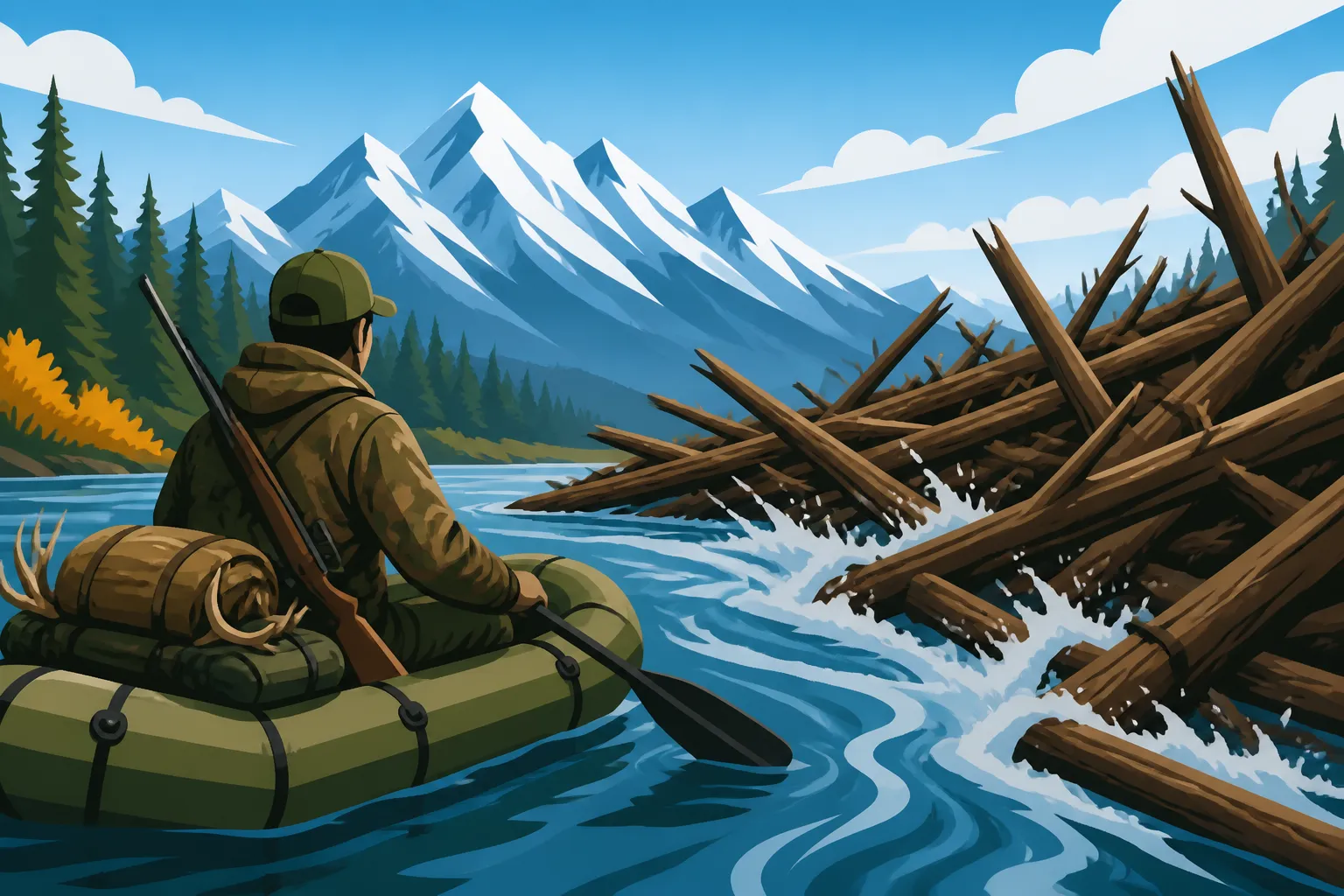
Sweepers and Log Jams on a Hunting Float
Floating Alaska's wild rivers on a hunting trip offers unparalleled adventure, but it also means facing serious hazards, chief among them sweepers and log jams. These seemingly static river obstacles can quickly become dynamic traps, capsizing rafts, destroying critical gear, and turning a planned excursion into a perilous ordeal. This guide will help you understand what sweepers and log jams are, how to spot them well in advance, and the essential strategies to navigate these dangers on an Alaskan float hunt.
Understanding the River's Traps: Sweepers and Log Jams Defined
Alaska's vast and wild river systems are constantly changing, especially with seasonal snowmelt and heavy rains. This dynamic environment means that what might have been clear passage last year could be a choked bottleneck this year. Understanding the distinct nature of sweepers and log jams is the first step toward mitigating their risks. They are not merely "fallen trees" but formidable, often hidden, forces.
What are Sweepers?
Sweepers are essentially trees or large branches that have fallen into the river but remain partially anchored to the bank, typically by their root systems or other debris. The danger with sweepers lies in their position: they are usually submerged just enough, or angled perfectly, to catch your raft or boat as the current pushes you. The river's force, combined with the immovable object of the sweeper, can easily pull your craft underneath, "sweeping" everything off or overturning it completely. Imagine a giant, submerged rake extending from the bank, waiting to snag anything in its path. In many cases, only the leafy top or a few branches might be visible, giving a false sense of their true size and the unseen underwater structure. They create powerful eddies and strainers that can pin a boat or even a person against them, making escape incredibly difficult.
What are Log Jams?
Log jams, on the other hand, are massive accumulations of trees, branches, and other debris that completely block or significantly narrow a river channel. These are often created over time as countless pieces of wood are carried downstream and snag on existing obstacles, eventually forming an impenetrable barrier. While a sweeper is a single, anchored threat, a log jam is a chaotic, multi-layered wall of timber. They often span the entire width of a smaller river or form substantial blockages in larger ones. Approaching a log jam often means encountering powerful hydraulics, turbulent water, and unpredictable currents that can pull your raft directly into the snarled mass. The sheer volume and weight of the material mean that if you get caught in one, there is almost no way to escape without significant damage or loss. These can sometimes be identified on satellite imagery during your planning phase, especially if they are long-standing features.
Why Alaskan Rivers are Prone to These Hazards
Alaskan rivers are particularly susceptible to sweepers and log jams due to a combination of natural factors. First, the vast boreal forests and coastal rainforests mean there's an abundant supply of timber along riverbanks. When riverbanks erode, or high winds fell trees, these massive trunks and root wads often end up in the water. Second, Alaska experiences extreme hydrological events. Spring breakup, with its immense rush of meltwater, can scour banks, move huge amounts of debris, and create new channels, dropping trees directly into the current. Flash floods from heavy summer rains can further exacerbate this, turning placid streams into raging torrents capable of uprooting mature trees. Finally, the remote nature of many Alaskan rivers means there's little human intervention to clear these hazards, allowing them to accumulate and persist for years, even decades. This natural process is just part of the wild character of a true Alaskan float hunt, which is why diligent preparation, like reviewing aerial photos on platforms like GoHunt, is so critical before you ever launch your raft.
Reading the Water: Identifying Dangers Before They Become Problems
The key to surviving sweepers and log jams isn't about brute force or luck; it's about anticipation and intelligent decision-making, long before you ever get too close. This involves a multi-pronged approach, starting with your pre-trip planning and extending to constant vigilance while on the water. Many incidents occur because hunters become complacent or are simply not looking for the subtle signs of danger.
Pre-Trip Research and Satellite Imagery
Before your boots even hit the gravel, an immense amount of risk mitigation can be done from the comfort of your home. Detailed pre-trip research is non-negotiable for any Alaskan float hunt. Start by studying maps and current satellite imagery. Tools like Google Earth or dedicated hunting map apps, perhaps even those integrated with services like GoHunt, offer invaluable perspective. Look for areas where the river channel narrows significantly, areas with extensive timber on the banks, or sections where the river makes sharp bends. These are prime locations for sweepers and log jams to form. Look for unnatural lines across the river that might indicate a blockage. While satellite images are not real-time, they can reveal long-standing jams or give you an idea of the river's character. Pay attention to reports from other hunters who have floated the same river, if available. Contacting local Fish and Game offices or air taxi operators for current river conditions can also provide crucial intelligence. When you're Choosing a Float Hunt River by Water Level and Length, this early research is paramount.
On-the-Water Indicators and Red Flags
Once you're on the river, your vigilance must be absolute and unwavering. Train your eyes to read the water ahead, not just a few boat lengths, but as far as you can see around bends and down straightaways.
Key Indicators of Sweepers:
- Surface Disturbances: Look for ripples, eddies, or boils in unexpected places, especially near banks where the current seems to be pushing unnaturally. This could indicate a submerged obstacle.
- Downstream V's: If you see a "V" shape in the current with the point downstream, it usually means water is flowing around an obstacle, potentially a sweeper's submerged trunk or root system.
- Visible Debris: Even small branches or foam accumulating in one spot near the bank can indicate a larger sweeper just below the surface.
- Stagnant Water Near Current: If the main current suddenly seems to avoid a section of the bank where trees are, it’s a strong sign of a sweeper.
Key Indicators of Log Jams:
- Abrupt Change in River Sound: As you approach a log jam, the sound of the river might change, becoming a dull roar or a gurgle as water is forced through or over the obstruction.
- Horizon Line: If you're on a relatively flat stretch of river and suddenly lose sight of the water ahead, it could be dropping over a log jam, creating a "horizon line" effect. This demands immediate attention.
- Accumulation of Debris: Long before you see the main jam, you'll start to see increasing amounts of floating debris – branches, logs, foam – carried by the current toward the choke point.
- Unnatural Flow Patterns: The current might accelerate dramatically as it approaches a jam, or it might become highly turbulent with standing waves, hydraulics, and boils as water is funneled through small openings.
Constantly scan both banks, especially on the outside of bends where erosion and fallen trees are more common. Keep your head on a swivel, and if anything looks even slightly out of place, treat it as a potential hazard until you can confirm otherwise.
The Importance of Constant Vigilance
It's easy to get distracted on an Alaskan float hunt. The breathtaking scenery, the excitement of spotting game, or simply the rhythm of paddling can draw your focus away from the critical task of navigating the river. However, this is precisely when accidents happen. Assign one person in the raft to be the primary lookout, constantly scanning the river ahead, while another handles navigation or paddling. Rotate this role if necessary to combat fatigue. Discuss potential hazards with your partners as soon as you spot anything suspicious. Remember, the faster the current, the less time you have to react, making early detection paramount. Think of it as always having your hunting binoculars on the water, not just looking for game, but looking for danger. When you're Float Hunting Alaska Rivers for Moose and Caribou, this focused attention is critical for more than just finding an animal.
Strategic Navigation: Safe Passage and Evasion Techniques
Once you've identified a potential sweeper or log jam, the next step is strategic navigation. This isn't just about steering your raft; it's about making calculated decisions that prioritize safety above all else. Sometimes, the safest path is not through the water at all.
Maneuvering Around Sweepers
If you spot a sweeper, your primary goal is to avoid it completely. Here's how:
- Identify the Safe Channel: Often, there's a clear path on the opposite side of the river from the sweeper, or a narrow channel along the bank it's rooted to, but clear of its main structure.
- Paddle Hard and Early: As soon as you see a sweeper, begin paddling aggressively to move your raft away from the danger zone. Don't wait until you're close. The current is often strongest near sweepers, so you need to be proactive and powerful with your strokes. If you're using a large raft for a moose hunt, like what's discussed in Raft Size for a Two-Hunter Moose Float, you'll need coordinated effort.
- Angle Your Raft: Angle your raft to direct its momentum away from the sweeper. If you're using oars, powerful ferry strokes are essential to move laterally across the current.
- Avoid the Strainer Effect: Never allow your raft to be pushed sideways into a sweeper. This is the classic "strainer" scenario where the boat is pinned, and water flows through it, often causing a capsize and pinning people against the debris. If it looks like you might get pushed into the sweeper, try to turn your bow towards it so that the strongest part of your boat hits first, giving you a chance to push off.
- Look for Back Eddies: Sometimes, a small back eddy might form upstream of a sweeper, offering a temporary safe haven where you can pause, assess, and then paddle out into the main current on the safe side.
Approaching and Assessing Log Jams
Log jams present a different, often more severe, challenge. Unlike sweepers, which you can usually paddle around, log jams often block the entire river.
- Stop Well Upstream: As soon as you confirm a log jam, pull over to a safe eddy or River Gravel Bars That Work as Landing Strips well upstream, giving yourself ample time and distance to assess the situation without being pulled into the hazard.
- Scout Thoroughly: From your safe vantage point, carefully scout the jam. Can you see a clear passage? Is there a narrow channel that seems navigable? Often, what looks like a passage from afar is a trap up close, filled with churning water and hidden snags. Use binoculars or even walk along the bank if possible for a better view. Remember, currents can be deceptive.
- Consider All Options:
- Portage: More often than not, the safest option for a log jam is to portage – physically carry or drag your raft and gear around the obstruction. This is laborious, especially if you've already had success and are Loading a Bull Moose Into a Raft, but it’s infinitely safer than risking your life and gear.
- "Line" the Raft: If the jam is short and the banks are accessible, you might be able to "line" your raft. This involves guiding it with ropes from shore, carefully maneuvering it through a small, clear channel while remaining on solid ground. This requires careful coordination and a clear understanding of the current.
- Turn Back: In extreme cases, if the jam is too extensive to portage, and no safe passage exists, the only truly safe option might be to turn back. This is a tough decision, especially on a time-sensitive hunting trip, but survival always takes precedence. Your initial research with tools like GoHunt and checking current conditions should ideally prevent this, but nature is unpredictable.
When to Portage or Turn Back
Making the call to portage or turn back can be one of the hardest decisions on a float hunt. It’s often physically demanding, time-consuming, and can feel like admitting defeat. However, experienced Alaskan hunters know that it's a sign of wisdom, not weakness.
- Err on the Side of Caution: If there's any doubt about the safety of a passage, choose to portage. The effort of carrying your gear for a few hundred yards pales in comparison to the consequences of a capsized raft in cold, swift water. This is particularly true in areas where cell service is non-existent, making Signal Devices and Check-In Plans for Solo Alaska Hunts even more critical.
- Assess Consequences: Think about the "worst-case scenario." If you attempt to run a questionable channel and fail, what are the potential outcomes? Loss of gear, injury, hypothermia, or even death. A successful hunting trip means getting home safely, meat or no meat.
- Time vs. Safety: While you might have a Setting a Take-Out Date With Your Pilot and feel pressured by a schedule, delaying by a day to safely portage is a small price to pay. Explain the situation to your air taxi if necessary. They understand the unpredictable nature of Alaskan rivers.
Emergency Response: What to Do When Things Go Wrong
Despite the best planning and careful navigation, accidents can happen. A sudden shift in current, an unseen snag, or even human error can lead to an encounter with a sweeper or log jam. Knowing how to react in these critical moments can be the difference between a close call and a true disaster.
Immediate Actions After an Encounter
If your raft collides with a sweeper or gets pulled into a jam:
- Stay Calm (as much as possible): Panic is your enemy. Take a deep breath and focus on immediate survival.
- Stay with the Raft (initially): Unless the raft is actively trapping you or is clearly going to disintegrate, staying with it provides flotation and a visible target for rescuers. Grab onto safety ropes or any secure part of the raft.
- Protect Yourself: If you're going into the water, try to assume the "swimmer's position" – on your back, feet downstream, knees bent, arms out to fend off obstacles. This helps you push off rocks and keeps your head above water.
- Prioritize Safety Gear: If you're going overboard, try to grab anything essential like a throw bag if it's within reach, or a paddle to help maneuver. Crucially, ensure your personal flotation device (PFD) is properly secured and worn.
Self-Rescue and Partner Rescue
In the remote wilderness of Alaska, you are often your own first responder.
- Self-Rescue: If you're in the water, try to swim aggressively towards the nearest shore, especially if it's clear of more sweepers or strainers. If the current is too strong, focus on getting to an eddy or backwater where the flow is calmer. Use the "swimmer's position" to fend off rocks and debris. Try to avoid standing in fast-moving water, as your foot can get trapped, leading to a "foot entrapment" which is incredibly dangerous.
- Partner Rescue: If a partner goes overboard, immediate action is paramount.
- Throw Bag: The fastest and most effective rescue tool is a throw bag. Practice using it often before your trip. Throw the rope past the person, allowing them to grab the rope as it sweeps towards them.
- Reach/Wade/Row: If the person is close to shore and the current isn't too strong, try to reach them with a paddle or branch, or wade out if safe. If you're still in the raft, maneuver carefully to them, but don't put your own boat at risk if the area is still hazardous.
- Talk and Reassure: Maintain verbal contact with the person in the water, offering clear instructions and reassurance.
- No Heroics: Do not put yourself in danger if you are not properly trained or equipped. A live rescuer is better than two victims.
Post-Incident Priorities and Survival
Once everyone is safely out of the water, the work isn't over.
- Account for Everyone and Gear: First, confirm everyone is safe and uninjured. Then, quickly assess what gear was lost or damaged. If critical items like a tent, sleeping bags, or food are gone, your survival situation changes dramatically.
- Warm Up Immediately: Hypothermia is a severe risk in Alaska's cold waters. Get out of wet clothes, into dry layers, and establish shelter. Start a fire if possible. Having a "dry bag" with emergency clothes and a survival kit immediately accessible is non-negotiable.
- Assess Damage and Options: Can the raft be repaired? Can you continue the float? If not, you may need to initiate your Emergency Evacuation Plans in Remote Alaska. This is where your satellite communicator, like an InReach, becomes your lifeline.
- Signal for Help: Use your satellite messenger (e.g., Garmin InReach), satellite phone, or other signal devices to alert your pre-arranged contacts or initiate an SOS. Provide your exact location, the nature of the emergency, and the number of people involved. Ensure you've downloaded Downloading Offline Maps Before a Fly-In so you have accurate coordinates.
- Re-evaluate the Hunt: Be realistic. If vital gear is lost, or if the morale and safety of the party are compromised, ending the hunt early might be the only responsible choice. Remember, the game will still be there next year.
The Alaskan wilderness is beautiful but unforgiving. By understanding the real dangers of sweepers and log jams, diligently preparing, staying vigilant, and knowing how to respond, you dramatically increase your chances of a safe and successful float hunting adventure.
| Hazard Type | Description | Primary Danger | On-Water Indicators | Mitigation Strategy |
|---|---|---|---|---|
| Sweeper | Partially submerged tree anchored to bank | Pinning, capsizing, drowning | Surface ripples, downstream 'V's, foam lines near bank | Early detection, paddle aggressively away, ferry strokes |
| Log Jam | Mass accumulation of logs blocking channel | Entrapment, violent hydraulics, impassable | Horizon line, changed river sound, significant debris accumulation | Pull over early, scout, portage, or turn back |
| Strainer | Obstacle allowing water but not objects to pass through | Pinning, drowning (common with sweepers) | Water flowing through an obstacle, not around | Avoid at all costs; aim bow if collision unavoidable |
| Eddy Line | Boundary between main current and eddy | Disorientation, loss of control | Visible line of bubbles/debris, sudden change in speed | Cross perpendicular, paddle hard through line |
Disclaimer
The information provided in this guide is for general informational purposes only and is not a substitute for professional training, personal experience, or local knowledge. Hunting in Alaska carries inherent risks, and river conditions can change rapidly. Always exercise extreme caution, seek professional instruction for river navigation and safety, and consult current Alaska Department of Fish and Game regulations and local conditions before embarking on any hunting trip. Your safety is your responsibility.