Loading a Bull Moose Into a Raft
You’ve done it. After days of glassing, patient calling, and a successful stalk, that massive bull moose is finally on the ground. The adrenaline rush is incredible, but quickly, a new, daunting challenge sets in: how on earth are you going to get this absolute mountain of meat, bone, and antler into your raft and down the river? This guide is here to demystify the process, transforming what feels like an impossible feat into a series of manageable, strategic steps to get your hard-earned harvest safely to your take-out point.
Pre-Raft Preparation: Making the Moose Manageable
The sheer size of an Alaska-Yukon bull moose is truly awe-inspiring, easily weighing over a thousand pounds. Trying to load a whole animal into a raft is not just impractical; it’s genuinely dangerous. The first, and most crucial, step is to break down the animal into smaller, more manageable pieces that can be safely transported. This process begins the moment the animal is down.
Quartering the Moose for Easier Handling
Before you even think about the raft, you absolutely must quarter the moose. There’s no getting around it. A whole moose is simply too heavy, too awkward, and too large to maneuver into any raft, no matter its size. The goal here is to reduce the animal to its primary muscle groups and bone sections, typically the four quarters, the backstraps, tenderloins, neck meat, and rib meat. Many hunters opt to bone out the meat in the field, leaving the heavy bones behind, which significantly reduces the overall weight you need to haul. This is especially vital when considering a remote float hunt where every pound counts and you might be Quartering a Bull Moose Alone in the Field.
Start by removing the two front quarters, then the two hind quarters. These will still be substantial, often weighing 100 to 200 pounds each, but they are infinitely more manageable than the entire animal. After removing the quarters, work on the backstraps, which run along the spine, and the tenderloins inside the cavity. Don’t forget the valuable neck meat and any edible rib meat. Every pound of salvageable meat needs to be taken, adhering to Alaska’s game salvage laws, which is part of Packing Out Meat in Alaska: The Salvage Law Hunters Must Follow. As you separate these sections, immediately place them into breathable game bags. This not only keeps the meat clean but also allows it to cool, which is critical in the field.
Strategic Placement Near the Water's Edge
Once the moose is quartered and bagged, the next hurdle is getting those heavy bags from the kill site to the water's edge where your raft awaits. Dragging hundreds of pounds of meat through brush, over uneven tundra, or across soft ground is exhausting and time-consuming. Look for the path of least resistance. If you have a tarp or a plastic sled, this is the time to use it. A sturdy tarp can be loaded with several quarters and pulled, distributing the weight and making the drag far easier than trying to carry individual bags.
When you reach the riverbank, choose a spot that offers a gentle slope and clear access to the water. Avoid steep, muddy banks or areas choked with dense willows, which will only make the loading process more difficult and precarious. The ideal spot will have a firm, somewhat level approach to the water, allowing you to position the raft parallel to the bank without it being swept away by the current. If you’re scouting your Choosing a Float Hunt River by Water Level and Length ahead of time, keep an eye out for these optimal loading areas as potential camp or kill sites.
Gear Check: What You'll Need Beyond the Basics
Successfully loading a moose into a raft requires more than just brute strength; it demands the right tools and foresight. Beyond your quartering kit, a few specialized items will make this job significantly safer and more efficient. High-quality ropes and cam straps are paramount. Forget flimsy bungee cords; you need heavy-duty straps designed to secure significant weight. These will be used not only for loading but also for lashing your precious cargo down for the duration of your float.
A strong, durable tarp (preferably heavy-duty vinyl or similar material) is invaluable. It can act as a sled to drag quarters to the river and then serve as a protective barrier inside the raft, keeping your meat clean and preventing punctures to the raft's floor. Extra game bags are always a good idea, as are heavy-duty contractor bags to layer over your game bags for added protection from rain or splashes once loaded. A small block and tackle system, while adding weight, can be a game-changer for moving extremely heavy quarters or raising them slightly for easier loading, especially if you’re working solo or with limited help. Platforms like GoHunt often offer gear lists tailored for such expeditions, emphasizing robust and reliable equipment.
The Art of Loading: Techniques for Heavy Loads
With your moose quartered and moved to the water's edge, the real work of loading begins. This is where strategy and teamwork (if you have it) come into play. Rushing this stage can lead to injury, damage to your raft, or even loss of meat. Take your time, plan your moves, and work methodically.
The Lever and Slide Method
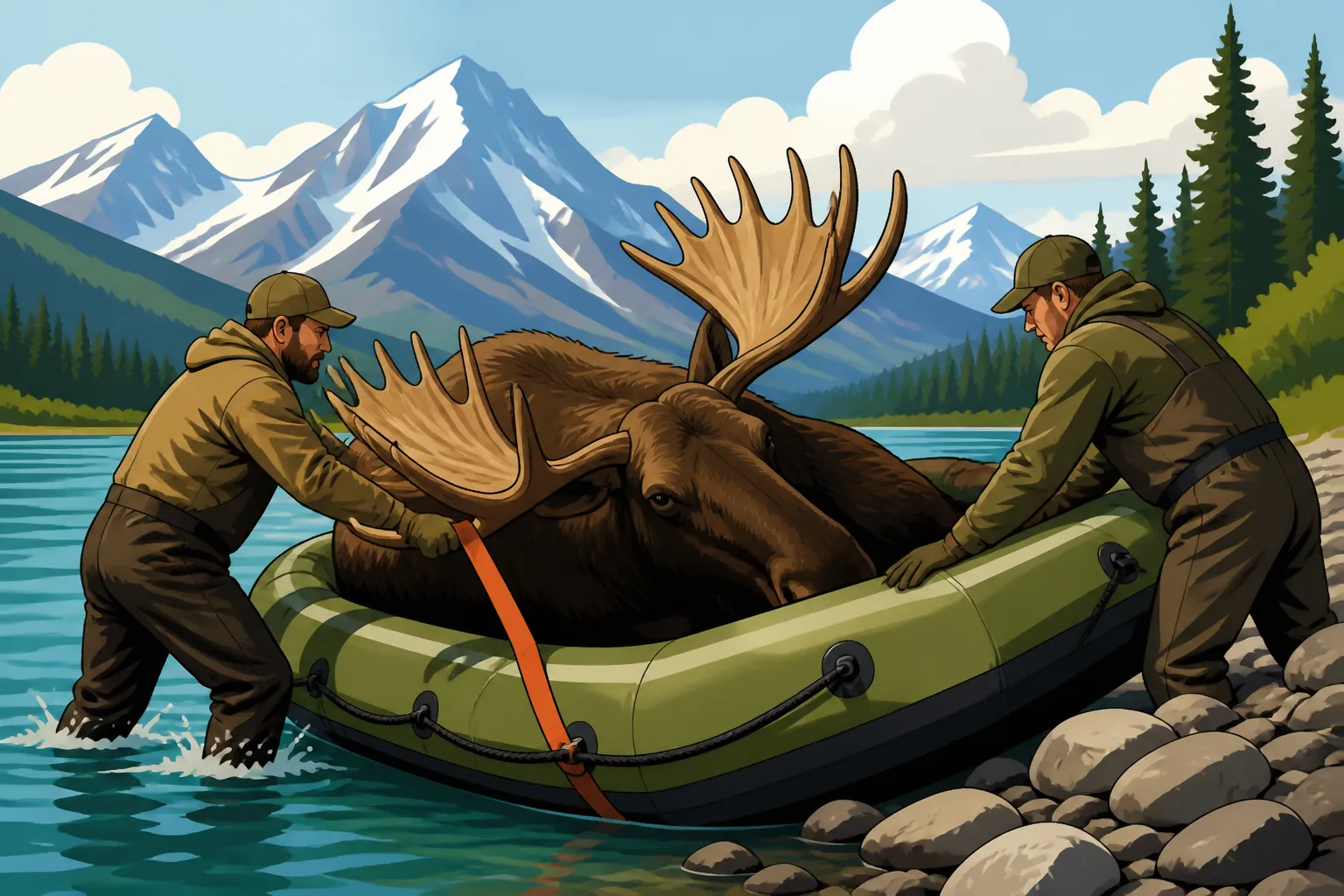
The most effective way to load heavy, awkward quarters into a raft is to use the environment and basic physics to your advantage. This is the "lever and slide" method. First, position your raft so it’s as close to the bank as possible, ideally with a slight incline from the bank into the raft. If you have a larger raft size for a two-hunter moose float, the wider beam offers more stability, but the principles remain the same. Take your heaviest quarters first. Using a piece of driftwood, a sturdy paddle, or even another log as a ramp or fulcrum, carefully slide each quarter into the raft.
This often involves one person pushing from the bank while another guides and pulls from inside the raft. For particularly heavy pieces, use a small rope or strap looped around the quarter to help pull it. The goal is a controlled slide, minimizing lifting as much as possible. If you’re solo, you might have to get into the water or use your body weight more creatively to leverage the quarters. Remember to take your time; a sudden shift could easily dump a quarter back into the river or unbalance your raft.
Distributing Weight Evenly
Once the quarters are in the raft, proper weight distribution is absolutely critical for safe navigation. A raft loaded poorly will be unstable, difficult to steer, and prone to capsizing, especially in currents or rapids. Start by placing the heaviest quarters low and centered in the raft. Think of it like a pyramid: heavy on the bottom, lighter on top. If you have multiple hunters, try to distribute their gear and personal weight to counteract the moose's weight.
Antlers and the head, if you're taking them, can be particularly awkward. They are often best placed in the bow or stern, securely lashed down, ensuring they don't impede your paddling or rowing. Keep the raft's centerline as balanced as possible from side to side and front to back. A well-distributed load will feel more stable, glide through the water better, and respond more predictably to your steering inputs. Ignoring this step is a recipe for a very stressful, potentially dangerous, float hunt.
Securing the Load for River Travel
After painstakingly loading every piece of your moose, the last thing you want is for it to shift or, worse, go overboard while you’re navigating the river. This is where your cam straps and ropes become your best friends. Every quarter, every piece of antler, and all your gear must be securely lashed down to the raft's D-rings or internal attachment points. Use multiple straps for large items, crisscrossing them for maximum stability.
Consider layering your items, with meat bags at the bottom, protected by tarps or dry bags, then potentially lighter gear on top. This also helps with Meat Care in 50-Degree September Weather by keeping the meat off the floor and potentially allowing air circulation if using breathable game bags. Cover the entire load with a large tarp to protect it from rain, sun, and any splashes from the river. A well-secured load won't just prevent loss; it will maintain the raft's stability, making for a much safer and more enjoyable journey downriver. Don't skip this step – it could literally save your hunt.
Post-Load Considerations: Safety and River Navigation
With your moose securely loaded, the character of your raft will change dramatically. What was once a nimble vessel might now feel like a sluggish barge. Understanding these changes and planning for potential hazards is paramount for a safe and successful journey.
Managing Raft Handling with a Heavy Load
The moment you push off the bank with a bull moose in your raft, you'll notice a significant difference in its performance. The raft will sit much lower in the water, increasing its draft. This means areas you previously floated over effortlessly might now snag the bottom. Your maneuverability will be greatly reduced; turning will be slower, and accelerating or stopping will require considerably more effort. This added weight also makes the raft more susceptible to currents and wind, demanding constant attention and stronger paddling or rowing.
It’s crucial to anticipate these changes. If you’re used to running lighter loads, give yourself time to adapt to the new feel of the heavily laden raft. Practice a few turns and stops in calm water before entering any challenging sections. Your raft will have a different inertia, meaning it will resist changes in motion more. This increased mass can be an advantage in some ways, making it more stable against small waves, but it can also be a liability if you need to react quickly to an obstacle. Being aware of these handling differences is the first step in safely navigating your way out.
Contingency Planning for River Hazards
Floating a river in Alaska, even without a moose, comes with inherent risks. Adding hundreds of pounds of cargo only amplifies these. You must be hyper-vigilant for river hazards like Sweepers and Log Jams on a Hunting Float, submerged rocks, and braided channels. The reduced maneuverability of a loaded raft means you need to identify and react to these dangers much earlier. Scout ahead, read the water carefully, and don't hesitate to pull over and scout sections on foot if you're unsure.
What if you hit an obstacle or, worst-case scenario, capsize? While you've gone to great lengths to secure your load, a severe incident could still dislodge parts of it. Having a plan for emergency scenarios is vital. This includes having a throw bag readily accessible, knowing how to self-rescue or assist a swimming partner, and understanding how to recover gear or meat from the river. Remember that the cold water can quickly lead to hypothermia, so swift, decisive action is critical. Being prepared for the worst allows you to focus on enjoying the journey with your hard-earned harvest.
Meat Care Once Aboard
While the river might seem like a cool environment, meat care doesn't stop once the moose is in the raft. Direct sunlight, prolonged exposure to rain, and immersion in water can all compromise your hard-earned meat. Even with Hanging Meat in Warm September Weather being a past concern, you now have new challenges. Ensure all meat is in high-quality game bags. These breathable bags, especially those made from synthetic materials like those often recommended on GoHunt, are excellent for allowing air circulation and wicking away moisture, particularly the Game Bags That Breathe in Coastal Rain.
Layering with tarps can help protect the meat from direct sun exposure, which can heat the meat rapidly. If the weather is warm, splashing river water on the game bags can aid evaporative cooling, but be careful not to let the meat become waterlogged. Continuous immersion in water should be avoided, as it can cause bacterial growth and taint the meat. Throughout your float, periodically check your load to ensure everything remains secure and the meat is staying as cool and dry as possible, mitigating any risk of spoilage before you reach your final destination.
| Moose Quarter | Approximate Weight (lbs) | Optimal Raft Placement | Securing Method | Important Considerations |
|---|---|---|---|---|
| Front Quarter | 100-150 | Mid-ship, low & centered | Cam Straps | Crucial for fore-aft balance; place first |
| Hind Quarter | 150-200 | Mid-ship, low & centered | Cam Straps | Heaviest parts; distribute evenly |
| Backstraps/Trim | 50-75 | Inside dry bags, secured | Rope/Straps | Protect from water; secondary placement |
| Head/Cape | 50-100 | Bow or Stern | Heavy-duty Rope | Avoid obstructing view/paddling |
| Ribs/Neck Meat | Variable | Fill gaps, along sides | Cam Straps | Keep low, use to stabilize other items |
Disclaimer
Hunting in Alaska involves inherent risks. The information provided in this guide is for informational purposes only and should not be considered a substitute for professional instruction, thorough preparation, or adherence to all state and federal regulations. Always prioritize safety, carry appropriate emergency equipment, and be prepared for rapidly changing weather and challenging conditions.