Which Species Alaska’s Airborne Rule Exempts
Navigating Alaska's hunting regulations can feel like trying to find your way through a dense alder thicket – confusing, full of twists, and often frustrating, especially when it comes to air travel. One of the most common head-scratchers for hunters, particularly those flying into remote areas, is the infamous "Same-Day-Airborne" rule. This guide is here to untangle that knot, specifically addressing which species are mercifully exempt from this restriction, so you can plan your next Alaskan adventure with clarity and confidence.
Understanding Alaska's Same-Day-Airborne Rule
Before we dive into what's exempt, it's really important to grasp the core of the Same-Day-Airborne rule. It's a fundamental part of fair chase ethics here in Alaska, designed to prevent hunters from using aircraft to unfairly spot or pursue big game. Essentially, it means you can't hunt certain big game animals on the same day you've been airborne in a fixed-wing aircraft.
The Core Prohibition: Why You Can't Hunt the Same Day You Fly
The Alaska Board of Game implemented this rule decades ago, primarily to maintain the spirit of fair chase. Imagine the advantage a hunter would have if they could fly low over terrain, spot a trophy bull moose, land, and immediately start hunting. It removes the challenge, the grit, and a lot of what makes Alaskan hunting so special and demanding. The rule applies from midnight to midnight. This means if your foot leaves the ground in a plane at 11:59 PM, you cannot hunt applicable big game until 12:00 AM two days later. It's not about how far you flew or if you saw game; it's simply about having been airborne in a fixed-wing aircraft within that 24-hour window.
This regulation isn't just about preventing direct aerial spotting and shooting. It's also about preventing "same-day scouting" from the air, which many consider an unfair advantage. A pilot could drop you off, fly around for an hour to spot game, and then radio coordinates back to you. The rule aims to eliminate that kind of logistical edge, ensuring hunters rely on their boots, binoculars, and wilderness skills once they're on the ground. For anyone planning a remote hunt, understanding Alaska's Same-Day-Airborne Rule and What It Bans is crucial for staying legal and ethical.
Defining "Same-Day" and "Airborne" in the Regulations
Let's break down the wording because this is where a lot of hunters get tripped up. "Same-day" refers to the regulatory day, which runs from 12:00 AM to 11:59 PM. If you fly at any point during that day, you cannot hunt species subject to the rule until the next calendar day. It's a hard and fast rule, not a flexible "24-hour clock" from your landing time.
"Airborne" specifically refers to being a passenger in a fixed-wing aircraft. This means bush planes like Super Cubs, Cessnas, Beavers, or Caravans, which are the workhorses of Alaskan access. Interestingly, helicopters are generally exempt from this specific rule when used for transport, primarily because their operational costs and availability make them far less common for general hunting access. However, using a helicopter for anything that could be construed as "spotting and then pursuing" would still likely fall under broader fair chase principles and could be illegal. The intent is to level the playing field, and aircraft, particularly fixed-wing, were seen as providing too significant an advantage if their use wasn't restricted for immediate hunting. This also highlights why choosing a Float Hunting Alaska Rivers for Moose and Caribou setup might involve different logistical considerations compared to a purely land-based fly-in hunt.
The Species That Are Exempt: Understanding the Exceptions
Now for the good news! While the Same-Day-Airborne rule casts a wide net over most popular big game species, there are indeed a few notable exceptions. These exemptions exist for various reasons, often tied to species management, population dynamics, or the nature of their habitat and hunting methods.
Specific Big Game Exemptions: Who Gets a Pass?
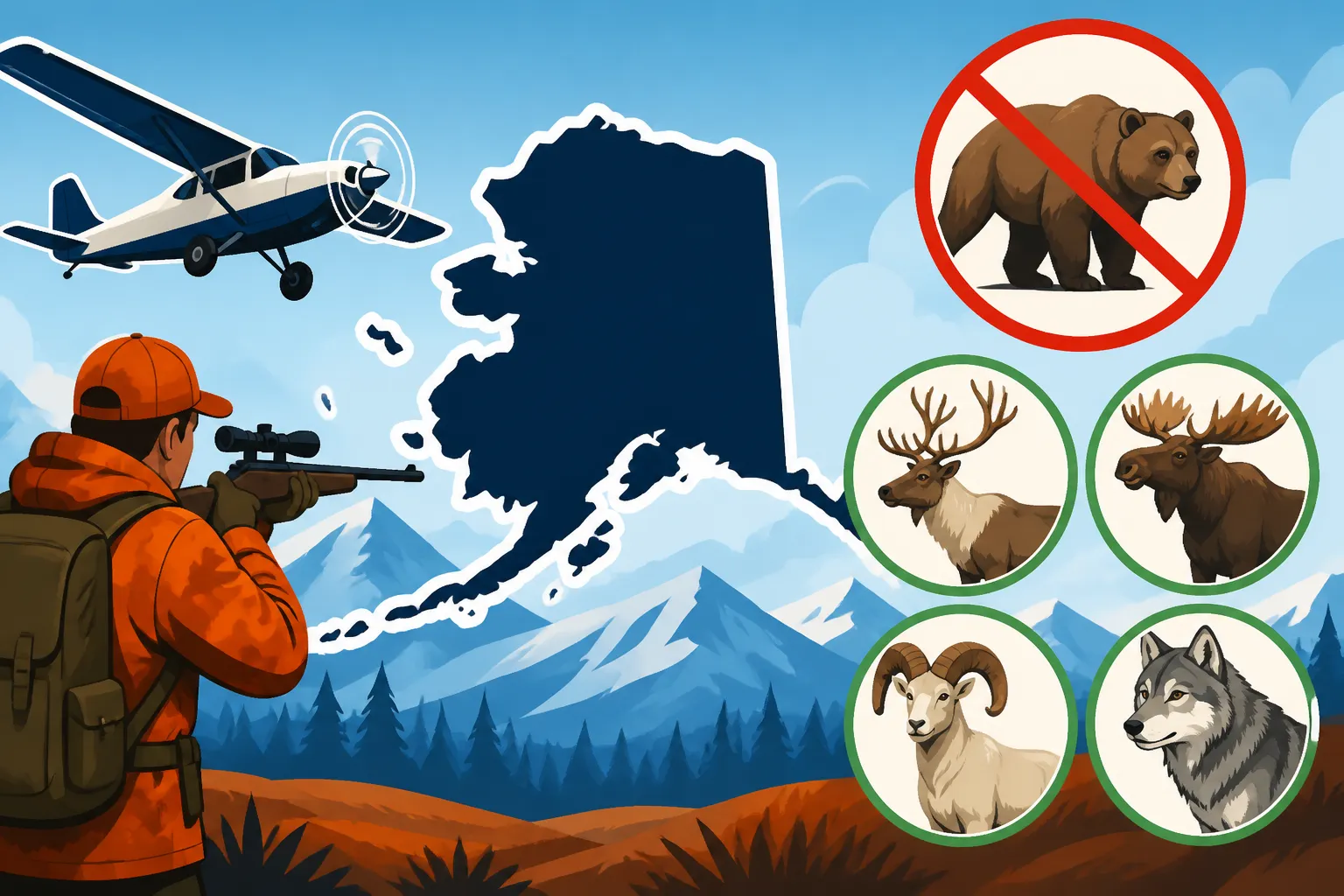
The species that are exempt from the Same-Day-Airborne restriction for nonresidents (and residents, of course) are:
- Black Bear: This is perhaps the most significant exemption for many hunters. You can fly into a remote area and hunt black bears on the same day. This is often leveraged by hunters participating in spring or fall black bear hunts, particularly in areas accessible by floatplane or wheeled bush plane. The liberal seasons and bag limits for black bears, combined with this airborne exemption, make them a popular target for fly-in trips. You can find more details on Alaska Black Bear Seasons and Bag Limits when planning your hunt.
- Wolf: Another prime predator, wolves are also exempt. This often aligns with predator management strategies in certain areas. Hunters can fly into prime wolf country and begin their hunt immediately, which is particularly useful for capitalizing on transient packs or specific scenarios like Wolf Hunting Over a Winter Kill Site.
- Wolverine: Similar to wolves, wolverines are usually included in the predator exemptions. These elusive animals are tough to hunt, and the airborne rule exemption can provide a marginal increase in opportunity, allowing hunters to maximize their time in remote areas.
- Sitka Black-tailed Deer: Found primarily in Southeast Alaska's coastal rainforests and on Kodiak and Afognak Islands, Sitka black-tailed deer are another species you can hunt on the same day you fly. This makes perfect sense given that many deer hunts involve boat-based or floatplane access to remote beaches and bays. Hunters can fly directly to a cove, unload, and start hunting the shoreline or pushing into the timber. If you're planning a trip to the archipelago, learning about Hunting Sitka Blacktail Deer in the Alpine Before Snow can be valuable for timing your hunt.
- Mountain Goat: These incredible animals inhabit some of Alaska's most rugged and remote alpine terrain. Mountain goat hunts often involve flying into glacial valleys or remote high country, and thankfully, the airborne rule does not apply. This exemption facilitates access to their challenging habitat and recognizes that spotting these animals often requires intensive glassing and arduous climbs, regardless of air travel. Understanding Alaska Mountain Goats in Coastal Cliff Country is key to a successful hunt.
It's critical to remember that this list is dynamic based on regulatory changes. Always consult the most current Alaska hunting regulations booklet or the ADF&G website before planning your hunt, as rules can and do change. Organizations like GoHunt are also excellent resources for staying updated on specific unit regulations and exceptions.
Small Game and Waterfowl Exemptions: The Unrestricted
Beyond the big game species, it's worth noting that the Same-Day-Airborne rule never applies to small game, furbearers, or waterfowl. This means if you're flying into a remote lake for duck hunting, setting snares for hare, or looking for ptarmigan, you can absolutely begin hunting or trapping on the same day you arrive by plane.
This makes multi-species trips a bit more flexible. You might fly into a remote area for a moose hunt (which would be subject to the rule), but still be able to hunt grouse or ptarmigan for camp meat on your arrival day. This provides a great way to put some fresh protein in the pot and keep your hunting skills sharp while waiting for the moose restriction to lift. Just ensure you have the appropriate licenses and stamps for small game and waterfowl.
Why These Exemptions Exist: The Logic Behind the Law
The Alaska Department of Fish and Game (ADF&G) and the Alaska Board of Game don't create these exemptions on a whim. There's usually a clear rationale rooted in species management goals, population health, and sometimes, even historical hunting practices. It’s not about favoring one hunter over another, but about sustainable management of Alaska’s diverse wildlife.
Management Goals for Exempted Species
One of the primary drivers for these exemptions is often related to management objectives. For species like black bears, wolves, and wolverines, Alaska sometimes has more liberal hunting regulations compared to other big game. These species can be managed more aggressively for various reasons, including predator control to benefit ungulate populations (like moose or caribou) or simply because their populations are robust and widespread.
For instance, black bears are abundant across much of Alaska, and their populations are generally healthy. Allowing same-day airborne hunting doesn't significantly impact their overall numbers in a negative way; in fact, it can sometimes contribute to management efforts by increasing harvest opportunities in remote areas that are otherwise difficult to access. Similarly, wolves and wolverines are often considered furbearers or predators, and increasing hunting pressure on them can be a management tool. This makes planning a hunt through services like GoHunt more straightforward for these species.
Accessibility and Traditional Harvest Considerations
For other exempted species, like Sitka black-tailed deer and mountain goats, the exemptions often stem from a combination of their habitat and traditional access methods.
Sitka black-tailed deer, particularly in Southeast Alaska, are heavily hunted by boat or floatplane. Many hunting areas are islands or remote coastal strips reachable only by water or air. Requiring a 24-hour wait period for these hunts would significantly reduce opportunity and create logistical nightmares for hunters trying to maximize their time in a region where weather delays are common. The exemption acknowledges this reality, allowing hunters to access prime deer country and begin hunting efficiently. You can imagine the challenges of Packing a Deer Off a Beach at Low Tide, and adding an arbitrary waiting period would only complicate things further.
Mountain goats, on the other hand, live in some of the most inaccessible, unforgiving terrain imaginable. While aircraft are used to get hunters to the vicinity of goat country, the actual hunt still involves immense physical effort, often days of climbing, and navigating extremely dangerous landscapes. The advantage gained by an airborne drop-off is quickly negated by the sheer difficulty of the hunt itself. The exemption here recognizes that even with air access, a mountain goat hunt remains an exceptionally challenging fair chase endeavor that tests the limits of any hunter's endurance and skill. The ability to begin the hike immediately after landing is a practical necessity for maximizing short weather windows in the high country.
Practical Implications for Hunters: Planning Your Exempt Hunts
Knowing which species are exempt isn't just a regulatory trivia fact; it directly impacts how you plan and execute your Alaskan hunting adventures. These exemptions can offer significant advantages, allowing for more efficient use of your precious time and resources.
Strategic Planning for Fly-In Black Bear and Wolf Hunts
The black bear and wolf exemptions are game-changers for many fly-in hunts. Without the "same-day" restriction, you can literally step out of the bush plane, set up camp, and begin hunting within hours. This is especially valuable in the spring or fall when daylight hours are either extremely long or rapidly diminishing. For example, if you fly into an interior Alaska burn scar during late spring, you can immediately begin glassing for bears feeding on new growth or scout for wolf sign. This flexibility allows for a much more dynamic hunting strategy.
Consider a scenario where you've hired an air taxi for a drop camp. For species subject to the rule, you'd land, set up camp, and then have to wait a full calendar day before you could even shoulder your rifle for a serious hunt. For black bears or wolves, however, that entire waiting period is eliminated. You can start actively hunting right away, increasing your odds in what are often challenging hunts anyway. This makes the logistical planning with your air transporter, especially regarding topics like Fly-In Hunting: Working With an Alaska Transporter Pilot, much smoother. Companies like GoHunt can help identify prime areas for these types of hunts.
Combining Exempt Species with Other Hunts
These exemptions also open up possibilities for combination hunts that wouldn't be feasible otherwise. Imagine you're on a multi-day fly-in hunt for a non-exempt species like moose or caribou. You arrive on Day 1, set up camp, and scout. For the primary target, you'd have to wait until Day 2 to hunt. However, because black bears, wolves, deer, and goats are exempt, you could actively hunt one of those species on your arrival day.
For example, you could fly into a remote lake in Southeast Alaska for a moose hunt. On your arrival day, while the moose are off-limits, you could spend the afternoon still-hunting for Sitka black-tailed deer along the shorelines or even set up a predator call for wolves. This allows you to fill your time productively, potentially harvesting a different animal and making the most of every moment of your trip. Just be mindful of all other regulations, including season dates, bag limits, and specific unit rules.
Staying Legal and Informed
Even with these exemptions, staying legal in Alaska hunting requires diligence. The regulations can be complex and are subject to change by the Board of Game. Here are a few tips:
- Read the Regulations Annually: Always get the most current Alaska Hunting Regulations booklet. Don't rely on last year's knowledge or hearsay. Rules, seasons, and exceptions can be modified.
- Consult ADF&G Directly: If you have any doubt whatsoever about the Same-Day-Airborne rule or any other regulation, contact the Alaska Department of Fish and Game directly. Their wildlife troopers and biologists are there to help clarify the law.
- Use Reputable Resources: Beyond the official channels, resources like GoHunt or experienced outfitters and transporters can offer practical advice. However, always cross-reference with official ADF&G sources.
- Understand Local Rules: Some Game Management Units (GMUs) or specific areas may have additional restrictions or nuances that apply. For instance, specific Controlled Use Areas might have their own unique air access rules.
- Plan for Contingencies: Weather delays are a constant factor in Alaska. If your flight is delayed, it can push back your hunt start date, even for exempt species, if it impacts other logistics. Always build extra days into your schedule. For those planning a remote adventure, understanding Signal Devices and Check-In Plans for Solo Alaska Hunts is critical.
By carefully understanding which species Alaska's airborne rule exempts, you can optimize your hunting plans, leverage the flexibility these exemptions offer, and ensure you're always hunting legally and ethically in the Last Frontier. It makes those highly anticipated fly-in hunts for black bears, wolves, deer, or goats even more appealing, allowing you to hit the ground running, quite literally.
General Disclaimer
The information provided in this guide is for general informational purposes only and does not constitute legal advice. Hunting regulations in Alaska are complex and subject to change. Always consult the most current Alaska Department of Fish and Game regulations booklet, speak directly with ADF&G officials, or contact a licensed Alaska guide or transporter for the most accurate and up-to-date information before planning or engaging in any hunting activities. Hunters are solely responsible for understanding and adhering to all applicable laws and regulations.