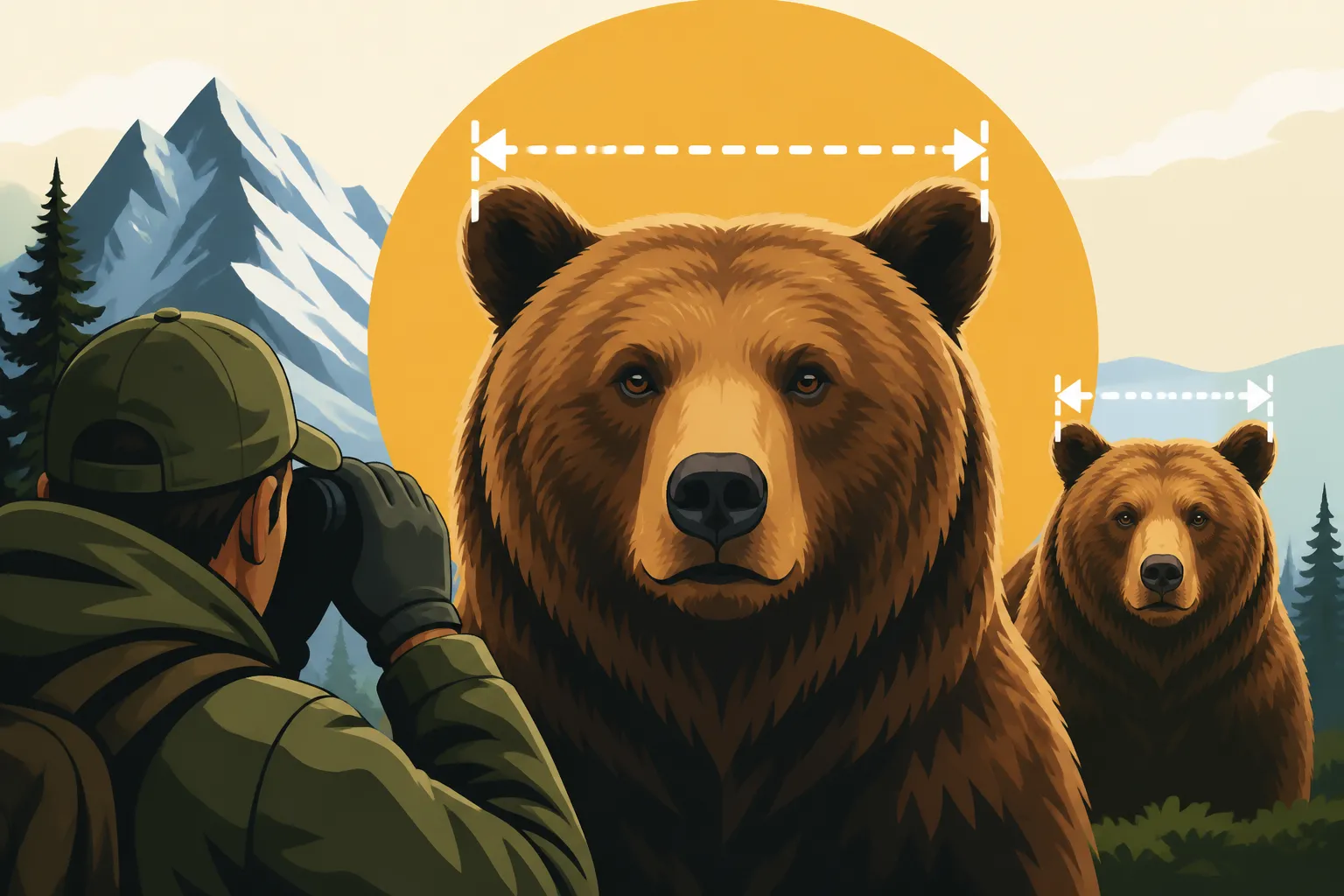
Judging Bear Size by Ear Spread
The vastness of Alaska and the sheer excitement of a bear encounter can make field judging an absolute nightmare for even seasoned hunters. You're trying to quickly assess a magnificent animal against a backdrop of endless wilderness, often with your heart pounding, and the consequences of a mistake can be severe. This guide is here to walk you through one of the most reliable methods for telling a truly big bear from one that just looks big: judging bear size by ear spread, helping you make confident, ethical decisions in the field.
The Challenge of Field Judging Alaska Bears
There's a reason the phrase "ground shrinkage" is so prevalent in hunting circles, and nowhere is it more true than with bears in Alaska. These animals are powerful, majestic, and notoriously difficult to size up accurately in their natural environment.
Why Size Deception is So Common
The primary culprit for misjudging bear size is often a combination of factors. First, the sheer scale of the Alaskan landscape can play tricks on your eyes. A bear that looks massive against a small clump of alders can suddenly appear quite average when it steps into a vast open tundra or against a towering mountain. Without familiar objects for scale, your brain struggles to process depth and size. Add in the rush of adrenaline when you spot a potential trophy, and your perception can become even more skewed. That heart-pounding excitement can lead to hasty decisions, making an average bear seem like a giant.
Moreover, bears have a way of filling space. A bear standing in dense cover or partially obscured by brush can appear much stockier and larger than it actually is. They can also look significantly different depending on their posture – a bear standing tall might seem immense, but when it drops to all fours to feed or move through thicket, its true body dimensions become clearer. The distinct differences between a coastal brown bear and an interior grizzly also contribute to the challenge, as their average sizes and builds can vary greatly, even though genetically they are the same animal. If you're looking to understand the nuances, our article on Brown Bear Versus Grizzly: The Same Animal goes into great detail.
The Importance of a Legal Bear
Beyond the desire for a trophy, accurately judging bear size is paramount for legal and ethical hunting in Alaska. Many hunting regulations are in place to protect specific segments of the population, especially sows (females) with cubs. Shooting a sow with cubs, or a sub-legal bear, can lead to stiff penalties, fines, and even the loss of hunting privileges. It's a serious matter. Understanding Sow and Cub Family Breakup Timing is crucial, as you want to avoid any bear that might still have dependent offspring, even if they aren't visible at the moment.
The goal isn't just to shoot any bear, but to shoot the right bear – one that is legal, mature, and contributes positively to the overall management of the population. A well-executed hunt involves patience and a thorough assessment of the animal before the shot. This is where mastering indicators like ear spread becomes invaluable. It allows you to quickly filter out smaller bears and potential sows, focusing your efforts on larger, mature boars (males) that are typically the target for trophy hunters and are less critical to herd recruitment.
Understanding Ear-to-Ear Spread as a Key Indicator
When you're staring through your binoculars at a bear across a vast drainage, trying to figure out if it's the one you've been dreaming of, the relationship between its ears and the rest of its head is a critical visual cue. It's often called the "cookie cutter" test for good reason.
The "Cookie Cutter" Test
Imagine a large, old boar. These animals, particularly coastal brown bears or big interior grizzlies, have massive skulls. As a bear ages and grows, its skull continues to develop, becoming broader and more blocky, especially across the forehead and jaw. What's interesting is that their ears, while they do grow, don't scale up proportionally in size compared to the skull. So, on a truly large, mature bear, the ears will appear relatively small and set wide apart on the sides of that immense head. They look almost like little "mouse ears" perched on the sides of a bowling ball.
Conversely, a younger or less mature bear, or often a sow, will have a skull that hasn't reached its full growth potential. Their heads tend to be narrower and more triangular. On these bears, the ears will appear much larger in proportion to the head, and they'll seem to sit closer together, often right on top of the skull. Think of it like a cookie cutter: a small cookie cutter on a huge piece of dough is like small ears on a big bear. A large cookie cutter on a small piece of dough is like big ears on a small bear. This visual distinction is one of the quickest ways to separate a potential trophy from a younger animal or a sow. When you're making snap decisions, especially when Glassing at First Light Versus Midday when light conditions are tricky, this proportional comparison is often the first thing to key in on.
Differentiating Boars from Sows by Head Shape
While ear spread is critical, it ties directly into the overall head shape, which provides further clues for Boar Versus Sow Identification in the Field. Mature boars typically possess a head that is distinctly wider and blockier. Their jowls might sag, and they often have a pronounced "Roman nose" profile. The ears on these big boars will not only appear small but also seem to be positioned far to the sides of the head, almost swallowed by the sheer width of the skull. This broad, powerful appearance signifies age and dominance.
Sows, on the other hand, generally have a more refined, delicate, and often triangular head shape. Their muzzles tend to be pointer, and their overall head profile is less massive. Consequently, their ears will appear larger in proportion to their narrower heads and will seem closer together, giving them a more "alert" or even "cute" look. This difference is often quite stark once you train your eye. It's not just about the absolute size of the ears, but their relationship to the cranial mass. For example, if you're trying to pick out a trophy while you're Glassing the Alaska Range: Finding Game Before You Move, this combination of head shape and ear placement will be one of your best indicators.
Considering Ear Position and Alertness
One crucial caveat to the ear spread rule is the bear's emotional state or alertness. A bear with its ears pinned back, perhaps feeling threatened or stalking prey, will naturally make its ears appear smaller and closer together, regardless of its actual size. Conversely, a bear with its ears perked forward, listening intently, might make them seem larger and more prominent.
It's vital to observe the bear for a sustained period to gauge its natural ear position. Don't make a judgment based on a fleeting glance. Look for moments when the bear is relaxed, perhaps feeding or walking casually, when its ears are in a neutral position. If you're constantly monitoring, you'll see how the ears move and can factor that into your assessment. If you're on a Spring Bear Hunting on South-Facing Snow Slides hunt, bears often emerge from dens sleepy and less agitated, which might give you a better chance to see them in a relaxed state. Patience is key here; a hurried decision based on an animal's temporary ear position could lead to a regrettable mistake.
Practical Application and Techniques in the Field
The theory is one thing, but applying these visual cues in the vast, often challenging Alaskan backcountry is another. It requires patience, skill, and the right tools.
Using Your Optics for Accurate Assessment
High-quality optics are your best friends when field judging bears. A good pair of binoculars (10x or 12x) is essential for initial spotting and closer inspection, but a spotting scope (20-60x or even higher power) mounted on a sturdy tripod is absolutely non-negotiable for accurate bear judging. The stability offered by a tripod allows you to maintain a steady image, observe the bear's subtle movements, and truly analyze its features over an extended period. This is especially important when you're trying to decipher details like ear spread or head shape from a mile away.
When using your optics, don't just zoom in and out frantically. Take your time. Find a comfortable position. Observe the bear from different angles if possible, and wait for it to move in a way that gives you clear views of its head and body. Zoom in to maximum power to study the ears and head. Then zoom out to observe the overall body proportions. Pay attention to how the bear carries its weight, the thickness of its legs, and the depth of its chest. These details, combined with the ear spread, paint a more complete picture. Whether you're targeting Alaska Mountain Goats in Coastal Cliff Country or a brown bear, patience with optics is universal.
Finding Reference Points
This is where Alaskan hunting gets particularly tough. Unlike hunting deer in a treestand with known distances to various trees, the open, expansive terrain often lacks reliable reference points. However, every little bit helps. Look for natural objects near the bear that you can use for scale: a small rock, a distinct bush, a patch of snow. Even if you don't know the exact size of the reference, it can still help you compare the bear to itself. For instance, "Is the bear's head wider than that small spruce tree?"
If you're hunting with a partner, have them stand up briefly at a known distance from you, and then compare the bear's perceived size to your partner. This gives you a human-sized reference to work with. Remember that shadows can also play tricks, so try to assess the bear in consistent lighting conditions. Using a rangefinder to get an accurate distance to the bear and any nearby objects can also help you mentally adjust for perspective. These techniques become second nature when you learn Glassing the Alaska Range: Finding Game Before You Move and other remote hunting skills.
The GoHunt Method and Other Resources
In today's digital age, hunters have access to incredible resources that can bolster their field judging skills long before they set foot in the field. Platforms like GoHunt offer a wealth of information, including articles, forums, and sometimes even video tutorials specifically designed to help hunters prepare. You might find comparative photos of bears taken in similar terrain, side-by-side images of large boars versus average sows, or detailed breakdowns of how different guides interpret specific indicators. Many hunters in the GoHunt community share their experiences and tips, which can be invaluable for learning what to look for.
Beyond GoHunt, dedicated hunting websites, books on bear hunting, and even YouTube channels often feature segments on field judging. The key is to study these resources critically. Look for examples that emphasize the ear-to-head ratio, shoulder mass, and overall body dimensions. The more visual examples you absorb and analyze, the better equipped you'll be when that moment of truth arrives. Practice by watching wildlife documentaries or even local zoo bears, focusing on these specific characteristics. This preparatory work, combined with practical experience, will sharpen your eye considerably.
Combining Indicators for a Confident Shot
No single indicator, not even ear spread, should be used in isolation when judging a bear. It's about building a comprehensive picture by combining multiple visual cues.
Here's a quick checklist of indicators to consider:
- Ear-to-Head Ratio: As discussed, small, widely set ears on a large, blocky head usually means a big boar.
- Overall Body Mass: Big bears are often deep-chested, with significant shoulder and neck musculature. Their belly might sag lower to the ground, especially when they walk. Think "barrel-chested."
- Legs vs. Body Depth: On a truly large bear, its legs will often appear shorter in proportion to its body. A smaller, younger bear often looks "leggy," with long, lanky legs relative to a shallower body.
- Gait and Movement: Big bears tend to move with a slower, more deliberate, almost lumbering gait. Younger bears are often more agile, quicker, and sometimes playful.
- Behavior: Lone bears are often boars. A bear with cubs is a sow and off-limits. If you see two bears together, pay close attention to their interaction. If one is significantly larger and dominant, it could be a boar.
- Head and Neck vs. Shoulders: On a big boar, the neck often looks thick and powerful, blending almost seamlessly into massive shoulders. On a sow or smaller bear, there's usually a more defined neck that tapers into less substantial shoulders.
- Swayback: Very old, large bears, particularly boars, sometimes develop a noticeable sway in their back. This isn't a guaranteed indicator, but combined with other signs, it can suggest an older animal.
By mentally running through this checklist and observing the bear for as long as possible, you increase your chances of making an accurate and ethical decision.
Avoiding Common Mistakes and Ethical Considerations
In the heat of the moment, it's easy to let excitement or impatience cloud your judgment. But ethical hunting, especially in Alaska, demands a disciplined approach.
The "Ground Shrinkage" Phenomenon
Every hunter knows the feeling: you walk up to your downed game, and suddenly it looks…smaller. This "ground shrinkage" is a very real psychological effect, and it's particularly pronounced with bears. What looked like a monster through your scope can appear surprisingly average once you're standing over it. This phenomenon underscores the importance of being hyper-critical in your field judging. If you think it's a "borderline" bear in your optics, it's almost certainly going to shrink on the ground.
To combat this, develop a strict mental checklist and stick to it. Don't let anticipation rush your decision. If you're not absolutely certain that the bear meets your criteria (and the legal requirements), it's always better to hold off. Remember, the regret of passing on a bear is far less than the regret and potential legal trouble of shooting a sub-legal animal or a sow with unseen cubs. For nonresidents, hunting a species like a brown bear requires a guide, and they will be instrumental in assisting with this critical decision, as their reputation is also on the line. Understanding the true Cost of a Guided Alaska Brown Bear Hunt includes paying for their expertise in these situations.
The "Waiting Game" and Patience
Patience is not just a virtue in Alaska hunting; it's a necessity. Bears are often on the move, and a quick glimpse might not give you all the information you need. You might see a bear in poor lighting, or obscured by brush, or in an awkward pose. Instead of rushing a shot, settle in and wait. The bear might eventually move into a clearing, turn broadside, or reveal its full head and body profile.
This "waiting game" can be agonizing, especially when you've invested so much time, money, and effort into your hunt. But it's essential for ethical hunting. Waiting for the right opportunity allows you to confirm all your judging indicators, ensure it's a clean and humane shot, and verify legality. If you're in an area where Rifle Choice for Alaska Brown Bear Country is critical due to dense cover, waiting for a clear shot path is even more vital. Also, remember that once you've made a kill, your work isn't over. Proper Bear Safety While Butchering a Kill in Alaska becomes your immediate next priority, followed by careful Cape Care for a Life-Size Bear Mount if you're preserving it.
When in Doubt, Pass
This is the golden rule of ethical bear hunting in Alaska: When in doubt, pass. It's a simple phrase, but incredibly powerful. There will be times when a bear just doesn't present enough information for a confident judgment. Its ears might look small, but its body seems too lanky. Or perhaps it's a great bear, but you just can't confirm it's not a sow with unseen cubs. In these moments, take a deep breath, lower your rifle, and let the bear walk.
There's no shame in passing on a questionable animal. In fact, it's a sign of a responsible and ethical hunter. Alaska is vast, and there will always be other opportunities. Prioritizing conservation and adherence to regulations over the urge to fill a tag is what truly defines a successful hunting experience in the Last Frontier. While trophy potential is certainly exciting, the true satisfaction comes from a hunt conducted with respect for the animal and the law, and that often means exercising restraint. Our article on Aging a Bear by Tooth Cementum highlights the scientific methods behind age determination, reinforcing why making the right call in the field matters for wildlife management.
| Feature | Mature Boar (Large Male) | Young Bear / Sow (Female) |
|---|---|---|
| Ear-to-Head Ratio | Ears appear small and wide-set on a massive, blocky head | Ears appear larger and closer together on a narrower, more triangular head |
| Head Shape | Broad, blocky, often with a "Roman nose" profile, large jowls | Narrower, more delicate, often triangular, pointer muzzle |
| Body Proportions | Deep-chested, barrel-like, legs often appear relatively short, heavy shoulders and neck | Lanky, "leggy" appearance, shallower body, less muscle definition |
| Movement | Slow, deliberate, lumbering gait | Quicker, more agile, sometimes playful |
| Belly Sag | Often has a noticeable sag, especially when walking | Belly typically tighter to the body |
| Swayback | Can develop a slight sway in the back (older bears) | Back typically straighter |
| Behavior | Often solitary, dominant presence | May be with cubs (sows), more cautious or nervous |
Disclaimer
Hunting in Alaska carries inherent risks, including but not limited to adverse weather, dangerous terrain, and encounters with wildlife. The information provided in this guide is for informational purposes only and is not a substitute for professional guidance, thorough preparation, or adherence to all Alaska Department of Fish and Game regulations. Always prioritize safety, legality, and ethical hunting practices. Conditions in the field can change rapidly, and hunters should be prepared for all eventualities.