Aging a Bear by Tooth Cementum
For Alaska hunters, understanding the age of the bear you’ve harvested goes beyond simple curiosity; it's a critical component of ethical hunting, trophy evaluation, and sound wildlife management. Trying to gauge a bear's age in the field, based on body size or skull characteristics, is notoriously challenging and often inaccurate. This guide will walk you through the definitive method for accurately aging a bear: through the scientific analysis of its teeth using cementum annuli.
Why Accurate Bear Aging Matters for Alaska Hunters
The vast wilderness of Alaska offers incredible opportunities to pursue brown bears and black bears, but with that privilege comes a responsibility to understand the animals we hunt. Knowing a bear's age, especially after the harvest, provides invaluable insight that can influence future hunting decisions and contribute to broader conservation efforts.
Ethical Harvesting and Management
When you’re out in the vast Alaskan backcountry, perhaps on a Alaska Brown Bear Spring and Fall Seasons hunt, making a snap judgment on an animal's age can be tough. Younger bears, especially sows, are crucial to the reproductive health of a population. Accidentally harvesting a young, breeding female can have a disproportionate impact on local bear numbers. By understanding the age of the bear you’ve taken, you contribute to a data set that helps wildlife managers ensure sustainable populations. It informs quotas and season structures, helping to preserve hunting opportunities for generations to come. This data helps the Alaska Department of Fish and Game make informed decisions, ensuring that trophy hunting aligns with the long-term health of the bear populations.
Moreover, if you're trying to selectively target older, mature boars, the cementum aging process can confirm if your field judgment was correct. This feedback loop is essential for refining your hunting skills and making more responsible choices in the future. It’s about seeking out those truly magnificent, older animals that have contributed their genes to the population, rather than simply taking the first legal bear you see.
Trophy Quality and Record Keeping
Let's face it, a significant part of the allure of hunting Alaska's bears is the chance at a truly impressive trophy. The size of a bear's skull is directly correlated with its age, particularly for boars. A large, mature male bear will typically have a much larger skull than a younger one, a factor that directly impacts its score in record-keeping systems like Boone and Crockett. For those pursuing Record Brown Bear Skulls From Alaska, knowing the definitive age of your bear adds another layer of appreciation to your achievement.
When you submit a tooth for aging, the result provides an undeniable, scientific confirmation of your trophy's age. This verifiable data enhances the story of your hunt and adds immense value to your mount, whether it’s a full-size rug or a skull plate. Imagine being able to tell the story of your hunt, not just with "it was a big bear," but with "this magnificent boar was 18 years old when I took him in Unit 9." That level of detail and accuracy makes the experience all the more rewarding. It’s not just about the numbers, but the deeper connection to the animal's life history.
Legal Requirements and Data Collection
Alaska has stringent requirements for bear harvest reporting and sealing, including specific information about your kill. While not always mandatory to submit a tooth for aging (it depends on the specific hunt unit and species), the data collected from harvested animals, including age, is crucial for scientific understanding. This information feeds into population models that help biologists monitor trends, assess health, and make critical management decisions.
For many managed hunts, particularly drawing permits, submitting a tooth is often required or strongly encouraged as part of the harvest report. Your contribution helps create a comprehensive picture of bear demographics across the state, from the coastal Alaska Brown Bears on the Coast Versus Interior Grizzlies to the interior grizzlies. Agencies like the Alaska Department of Fish and Game rely on this collective data to ensure that hunting seasons are set appropriately and that the bear resource remains healthy and robust. If you're planning a hunt using a tool like GoHunt, understanding these data collection requirements can be a part of your pre-hunt planning, making sure you're prepared for every step after the harvest.
The Science Behind Tooth Cementum Aging
So, how exactly do scientists figure out a bear's age from a tooth? It sounds a bit like magic, but it's pure, fascinating biology. This isn't something you can do at home with a magnifying glass; it's a specialized lab process that provides remarkable accuracy.
What is Cementum and Why Does it Matter?
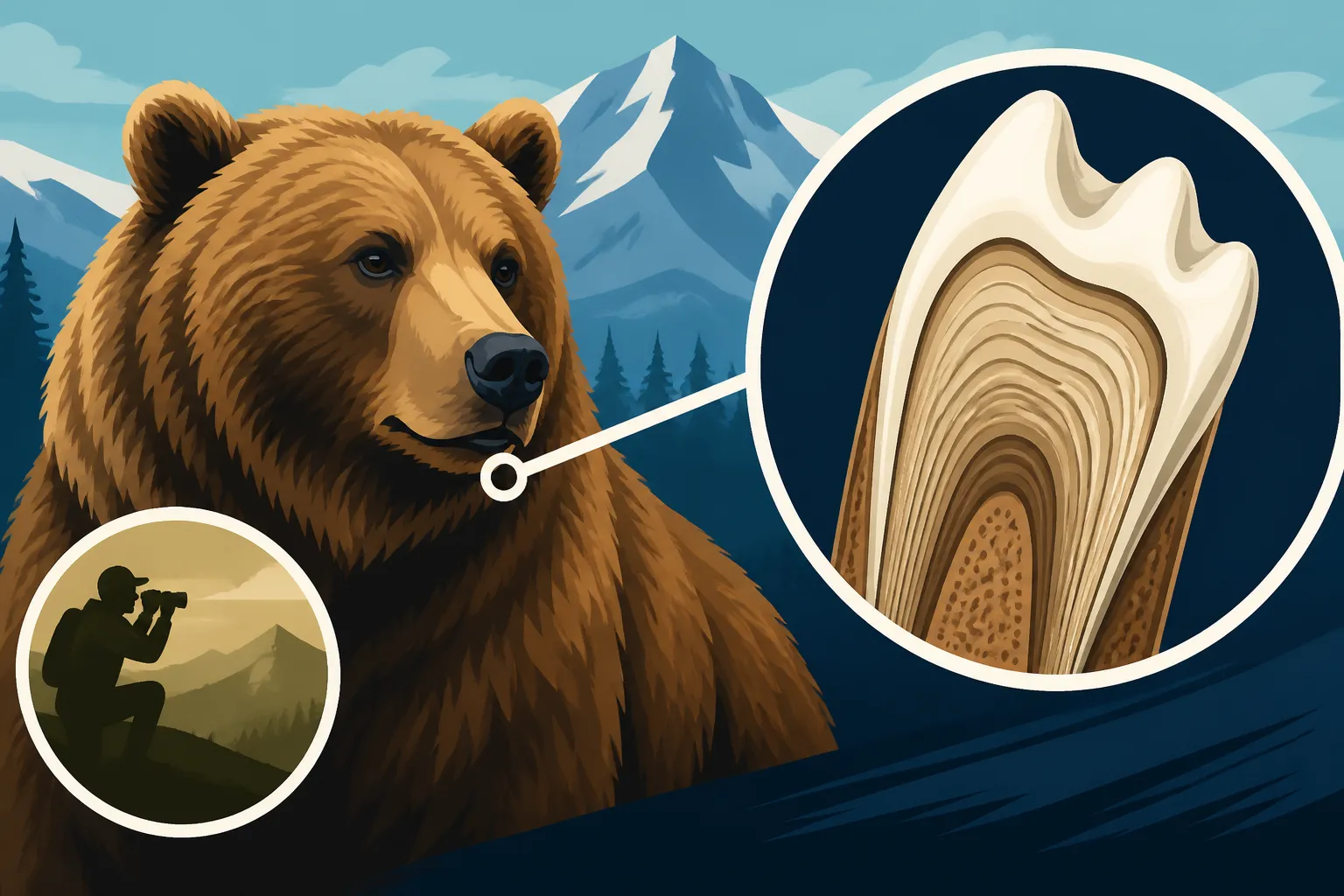
At its core, tooth cementum aging relies on a biological phenomenon very similar to how you'd count the rings on a tree. Cementum is a specialized bony tissue that covers the root of a tooth. Like a tree, an animal’s body deposits layers of this cementum throughout its life. However, these layers aren't uniform. During periods of rapid growth and abundant food (typically summer), the layers are wider and lighter. During leaner times, like the long, cold Alaskan winter when a bear is in its den or scarcely feeding, the layers are thinner and denser, appearing darker.
These alternating light and dark bands are called "annuli" (singular: annulus). Each complete pair of a light and dark band represents one year of the animal's life. This makes cementum an incredibly reliable biological clock, far more accurate than trying to estimate age based on tooth wear, which can vary wildly depending on diet and habitat. The precision of this method is why it's the gold standard for aging many mammal species, including all bears.
The Process: From Field to Lab
The journey of a bear tooth from the field to an age estimate is a detailed laboratory procedure. It begins with the hunter carefully extracting the correct tooth and ends with a trained technician meticulously counting microscopic rings.
- Extraction: The hunter carefully removes a tooth, usually a premolar or incisor, from the harvested bear's jaw. More on this in the practicalities section below.
- Cleaning and Preparation: Once in the lab, the tooth is thoroughly cleaned of any soft tissue and debris. It might then be decalcified, a process that softens the hard tissue, making it easier to section.
- Sectioning: This is a crucial step. The tooth is embedded in a resin block, then sliced into incredibly thin cross-sections, often just a few microns thick, using a microtome or a diamond saw. These sections are taken perpendicular to the long axis of the root.
- Staining: The thin sections are then stained with special dyes that highlight the different densities of the cementum layers, making the annuli rings more visible under a microscope.
- Microscopic Analysis: Finally, a highly skilled technician examines the stained sections under a powerful microscope. They identify and count the alternating light and dark bands, starting from the outermost layer and working inward, or vice-versa, to determine the total number of annuli, which directly corresponds to the bear's age in years. It's an art and a science, requiring expertise to differentiate true annuli from artifacts or false rings.
Reading the Annuli Rings
Imagine a miniature target, but instead of circles, you see a series of concentric bands. The technician learns to differentiate the clear, annual bands from any minor growth checks that might occur due to short-term stress or diet fluctuations. The darker, narrower bands represent periods of slow growth, typically winter, while the wider, lighter bands indicate faster growth during summer. By counting these pairs, the animal's age is determined with remarkable accuracy.
It's a testament to the sophistication of biological processes that such a detailed life history is recorded within a tiny tooth. This method eliminates much of the guesswork inherent in field aging and provides a concrete number that can be used for both personal records and scientific study. When you get that age back, it's not just a number; it's a window into the bear's entire life story.
Practicalities for the Alaska Hunter
Now that you understand the "why" and "how" of cementum aging, let's talk about what you, as an Alaska hunter, need to do in the field to ensure a successful tooth sample submission. This isn't difficult, but it requires careful attention to detail.
Which Tooth to Collect and How
The most commonly recommended teeth for cementum aging are the first premolar (P1) or an incisor. These teeth typically have a single root that provides clear, consistent cementum layers. Avoid molars if possible, as their multiple roots can make accurate sectioning and reading more challenging.
Here’s a basic guide for extracting a tooth:
- Identify the Tooth: Locate the small, peg-like premolar just behind the canine. If it’s missing or damaged, an incisor from the front of the jaw will also work.
- Clean the Area: Wipe away any blood or debris from around the tooth.
- Expose the Root (Optional but helpful): Carefully cut away gum tissue around the tooth to expose more of the root, making extraction easier.
- Use Appropriate Tools: A sturdy pair of pliers, or even a small screwdriver used as a lever, can work. Gently rock the tooth back and forth to loosen it from the socket. Avoid twisting, which can break the root. The goal is to get the entire tooth, root and all, intact.
- Careful Extraction: Apply steady, increasing pressure. You might hear a "pop" as the tooth comes free. Be patient and gentle; a broken root makes aging much harder.
- Alternative: If you're having trouble and plan on having the skull cleaned professionally (for example, if you're pursuing a Cape Care for a Life-Size Bear Mount), you can often remove a section of the jaw containing the tooth or simply leave the skull intact and let the taxidermist or processor extract it. Just make sure they know you need the tooth for aging and ask them to preserve it carefully.
Remember, the cleaner the extraction, the better the sample for the lab. And always handle the skull and teeth with care, especially if you plan to get it sealed as required by Alaska Sealing Requirements for Bear and Wolf Hides.
Preparing and Submitting the Tooth
Once you have the tooth, proper preparation and submission are crucial to ensure its integrity and accurate processing.
- Clean the Tooth: Gently remove any remaining tissue or blood from the tooth. A toothbrush and running water can work, but avoid harsh chemicals or excessive scrubbing that might damage the surface.
- Dry Thoroughly: Allow the tooth to air dry completely for several days. Moisture can lead to rot or mold, compromising the sample. Do not attempt to "speed-dry" it in an oven or microwave, as extreme heat can damage the tissue structure.
- Labeling is Key: This is perhaps the most critical step! In a small, sealable bag or envelope, include the following information clearly written with permanent marker:
- Hunter's Name
- Hunting License Number
- Species (Black Bear or Brown Bear)
- Sex of the Bear (Boar or Sow, which ties into Boar Versus Sow Identification in the Field)
- Date of Kill
- Game Management Unit (GMU) and specific location (e.g., river drainage, mountain range).
- Permit Number (if applicable)
- Packaging: Place the dried, labeled tooth into a small, sturdy container or a double-bagged, sealed plastic bag to prevent loss or damage during shipping.
- Submission: Check with the Alaska Department of Fish and Game (ADF&G) for their specific submission procedures. Many areas require harvest tickets or permits to be turned in with a tooth or part of the skull. You might mail it to a regional ADF&G office or deliver it in person. Some hunters choose to use private labs specializing in wildlife aging, especially if the state agency does not offer the service for your specific hunt or if you want a quicker turnaround. When looking up specific hunt units or regulations, online resources like GoHunt can often point you to the correct ADF&G contact information for submissions.
Understanding the Results and Limitations
After submitting your tooth, be prepared to wait. Cementum aging is a time-consuming process, and labs often have backlogs. It can take several weeks to many months to receive the results. When you do, you'll typically get a certificate or report stating the definitive age of your bear.
While highly accurate, cementum aging isn't without its very rare limitations:
- Tooth Damage: A poorly extracted or damaged tooth can make accurate sectioning and reading difficult or impossible.
- False Annuli: Occasionally, severe stress (e.g., extreme starvation, major injury) can cause a partial or "false" annulus to form. Experienced technicians are trained to identify and account for these.
- Resorption: In very old animals, some cementum layers might be reabsorbed by the body, leading to a slight underestimate of age, though this is rare and usually only by a year or two.
For the vast majority of samples, however, cementum aging provides a reliable and precise age that adds significant value to your harvest data and understanding of Alaska's magnificent bears. It's a small but important step that connects you even more deeply to the wild animals you pursue.
Comparing Bear Aging Methods
To help put cementum aging into perspective, here's a quick look at how it stacks up against other methods hunters might use to estimate a bear's age in the field.
| Method | Description | Pros | Cons | Accuracy |
|---|---|---|---|---|
| Tooth Cementum Annuli | Laboratory analysis of annual growth rings in tooth root cementum. | Most accurate and definitive method available. Provides exact age. | Requires tooth extraction and laboratory processing. Results take time. Not a field method. | Very High (Gold Standard) |
| Tooth Wear | Visual assessment of wear patterns on molar chewing surfaces. | Can be done in the field (post-harvest). No special tools needed. | Highly variable based on diet (abrasive vs. soft foods). Difficult for specific ages, better for broad classes (young, adult, old). | Low to Moderate (Rough estimate only) |
| Body Size & Mass | Estimating age based on overall size, weight, and muscling. | Can be done in the field (pre-harvest). No physical contact needed. | Highly variable due to genetics, food availability, and health. Difficult to distinguish mature adults from older bears. | Low (Often misleading) |
| Skull Morphology | Assessing skull characteristics like width, robustness, and sagittal crest development. | Can be done in the field (post-harvest). Provides some indication of maturity. | Varies by individual and species. Hard to judge accurately on a live animal. Better for sexing than aging. | Low to Moderate (Better for maturity than age) |
| Ear Size & Placement | Observing how large the ears appear relative to the head and their position. | Can be done on a live animal (pre-harvest). | Highly subjective, easily affected by angle, distance, and fur. More reliable for distinguishing cubs/yearlings. | Very Low (Commonly misleads hunters) |
This table clearly illustrates why cementum aging, while requiring a bit more effort on the hunter's part, provides an unparalleled level of accuracy that other field-based methods simply cannot match. It’s the definitive way to confirm the true age of the bear you’ve been fortunate enough to harvest.
Disclaimer
This article is for general informational purposes only and does not constitute professional advice. Laws, prices and regulations vary by location and change over time. Consult a qualified professional for guidance on your specific situation.