When Alaska Brown Bears Enter Dens
For anyone who has ever spent time hunting or even just recreating in Alaska's vast wilderness, there's a unique reverence and perhaps a touch of trepidation that comes with knowing you share that space with brown bears. Understanding their seasonal rhythms, especially when these magnificent animals decide it's time to retreat to their dens for the long winter, is not just fascinating—it's absolutely critical for safe and successful backcountry travel. This guide will delve deep into the complex factors that dictate when Alaska's brown bears seek their winter slumber, exploring the environmental cues, regional differences, and individual bear characteristics that influence their denning timeline.
The Rhythmic Cycle of Alaska Brown Bear Denning
The decision for an Alaska brown bear to enter its den is far more complex than simply feeling sleepy. It's a finely tuned biological process, driven by millennia of evolution, ensuring survival through the leanest months of the year. This annual retreat, often mistakenly called true hibernation, is actually a state of torpor, where the bear's body temperature, heart rate, and metabolic activity significantly decrease, but they can still be roused.
Understanding the Urge to Den: More Than Just Sleep
Before a brown bear ever thinks about denning, it enters a critical phase known as hyperphagia. This is an intense period of feeding, where bears consume vast quantities of food—berries, salmon, roots, carrion, and whatever else they can find—to pack on as much fat as possible. This accumulated fat is their sole energy source for the entire denning period, which can last anywhere from four to seven months, sometimes even longer. The urge to den is intrinsically linked to this energy reserve; a bear that hasn't successfully stored enough fat might struggle to survive the winter or could be forced to emerge early, facing scarce resources and increased vulnerability. It's a race against the calendar to fuel their physiological engine for an extended shutdown.
General Timelines: When Bears Start to Slow Down
While there's no single "denning day" for all Alaska brown bears, general patterns emerge based on location and environmental conditions. Broadly speaking, bears across most of Alaska begin to show signs of reduced activity and start heading towards their den sites from late September through November. For interior grizzlies, this often means a more punctual den entry as winter's chill bites earlier and harder. Coastal brown bears, with their access to lingering food sources like late salmon runs, might push their denning back a bit further into the fall. The earliest to den are typically pregnant sows, needing extra time and security for gestation, followed by sows with cubs. The last ones to commit to their dens are often the large, dominant boars, who may continue foraging or asserting their dominance well into late fall.
Factors Influencing Den Entry: A Complex Equation
Pinpointing the exact moment a specific brown bear will disappear into its winter home is challenging because so many variables are at play. It's a dynamic calculation based on location, weather, food availability, and even the bear's own personal circumstances.
Geographic Differences: Coastal Giants Versus Interior Grizzlies
Alaska is a vast state, and the differences between its ecosystems are profound, directly impacting when and how brown bears prepare for winter. The colossal coastal brown bears found along the Gulf of Alaska, the Alaska Peninsula, and islands like Kodiak are often quite distinct from their smaller, interior counterparts, the grizzlies. You can read more about how these incredible animals are related and differentiated in our piece, Brown Bear Versus Grizzly: The Same Animal.
Coastal bears benefit from incredibly rich food sources, most notably the annual salmon runs. These fish-filled rivers and streams provide an unparalleled calorie boost, allowing bears to gain immense amounts of fat quickly. When late salmon runs persist, these bears can often continue feeding well into late October, sometimes even November, delaying their need to den. In contrast, interior grizzlies, while formidable, don't typically have the same abundant, concentrated food sources. Their diet often consists of berries, roots, vegetation, small game, and scavenging on moose or caribou calves. This diet, while sufficient, requires more effort and is more susceptible to early winter conditions. Consequently, interior grizzlies often begin their denning process earlier, sometimes as early as late September, especially in higher elevations or more northern reaches where winter arrives sooner. If you're curious about their different sizes, we've explored Why Coastal Bears Outgrow Interior Grizzlies in depth.
Environmental Triggers: Temperature, Snow, and Food Scarcity
Beyond geography, the immediate environmental conditions provide crucial cues for den entry. A sharp drop in ambient temperature, particularly sustained cold, signals the approaching winter. Just as significant is the onset of snow. While a light dusting might not deter a bear still gorging on berries, heavy, accumulating snow can make foraging difficult, burying food sources and signaling a more permanent shift in seasons.
Consider a year with an early, heavy snowfall in the Alaska Range. Bears in these high-country areas, who might typically den in mid-October, could be pushed into their dens by late September or early October simply because their food sources become inaccessible. Conversely, an unusually mild fall with prolonged access to unfrozen ground or late-ripening berries might see bears delaying their denning until well into November. Weather isn't just about comfort; it's about survival. A late, strong salmon run, for instance, can keep bears active on the salmon streams, allowing them to accumulate additional critical fat reserves, delaying their den entry.
Individual Bear Characteristics: Age, Sex, and Reproductive Status
Not all bears den at the same time, even within the same region. A bear's individual circumstances play a huge role in its winter timeline.
- Pregnant Sows: These are almost always the first to den. A pregnant sow needs optimal conditions to ensure the survival of her unborn cubs. She'll seek out a secure, deep den site, often earlier than others, to ensure a calm and stable environment for gestation and the birth of her cubs in mid-winter. This early denning provides a critical head start on a safe birthing environment.
- Sows with Cubs-of-the-Year: Next in line are typically sows with their young cubs. These mothers have the added responsibility of protecting and nurturing their offspring, and a secure den offers the best chance of survival for the vulnerable cubs. They, too, will usually enter their dens earlier than solitary bears. The timing of when a sow's family unit might break up can also influence her individual denning habits in subsequent years; learn more in our article about Sow and Cub Family Breakup Timing.
- Subadult Bears: Younger, less experienced bears may den somewhat earlier than prime adult boars. They might not be as efficient at foraging, or they might be displaced from prime feeding areas by larger, more dominant bears, leading them to retreat earlier once food becomes scarce.
- Large Boars: Often the last to den, dominant male bears, especially those in prime physical condition, can afford to stay out longer. They might continue to patrol territories, search for any remaining food, or capitalize on late-season opportunities. Their sheer size and fat reserves allow them to push the limits of fall, sometimes remaining active even after the first significant snowfalls.
Using scouting tools like GoHunt can be invaluable here. By studying past hunt harvest data and looking at the types of bears harvested in specific units late in the season, hunters can gain insights into when different age and sex classes might be active or heading for dens in a particular area.
Pre-Denning Behavior: The Final Feast and Farewell to Fall
The period leading up to den entry is a flurry of activity, not a gradual winding down. Bears become intensely focused on one thing: eating as much as humanly possible to survive the coming lean months.
Hyperphagia and Fat Accumulation: The Race Against Winter
This is the peak of the bears' feeding frenzy. During hyperphagia, a brown bear can consume an astonishing amount of calories daily, gaining several pounds a day as it converts food into life-sustaining fat. For coastal bears, this means relentless fishing in salmon streams. For interior grizzlies, it's often a mad dash to consume every last berry, root, or carrion find. The success of this period directly dictates the length and safety of their denning. A bear that enters its den with insufficient fat reserves faces a much higher risk of not surviving the winter, or being forced to emerge early and dangerously underweight when resources are still sparse.
For hunters, observing this behavior can be critical. Bears are often less wary during hyperphagia, as their drive to feed overrides some caution. This can make them more predictable in terms of location (e.g., specific berry patches or salmon streams). Knowing when this critical feeding window occurs in your chosen hunting area can inform scouting efforts. While our current focus is on den entry, understanding the broader timeline of their annual cycle is crucial; consider checking out our related guide, Brown Bear Denning Timing in Alaska, for a comprehensive overview of their yearly patterns.
Seeking the Perfect Den Site: Instinct and Survival
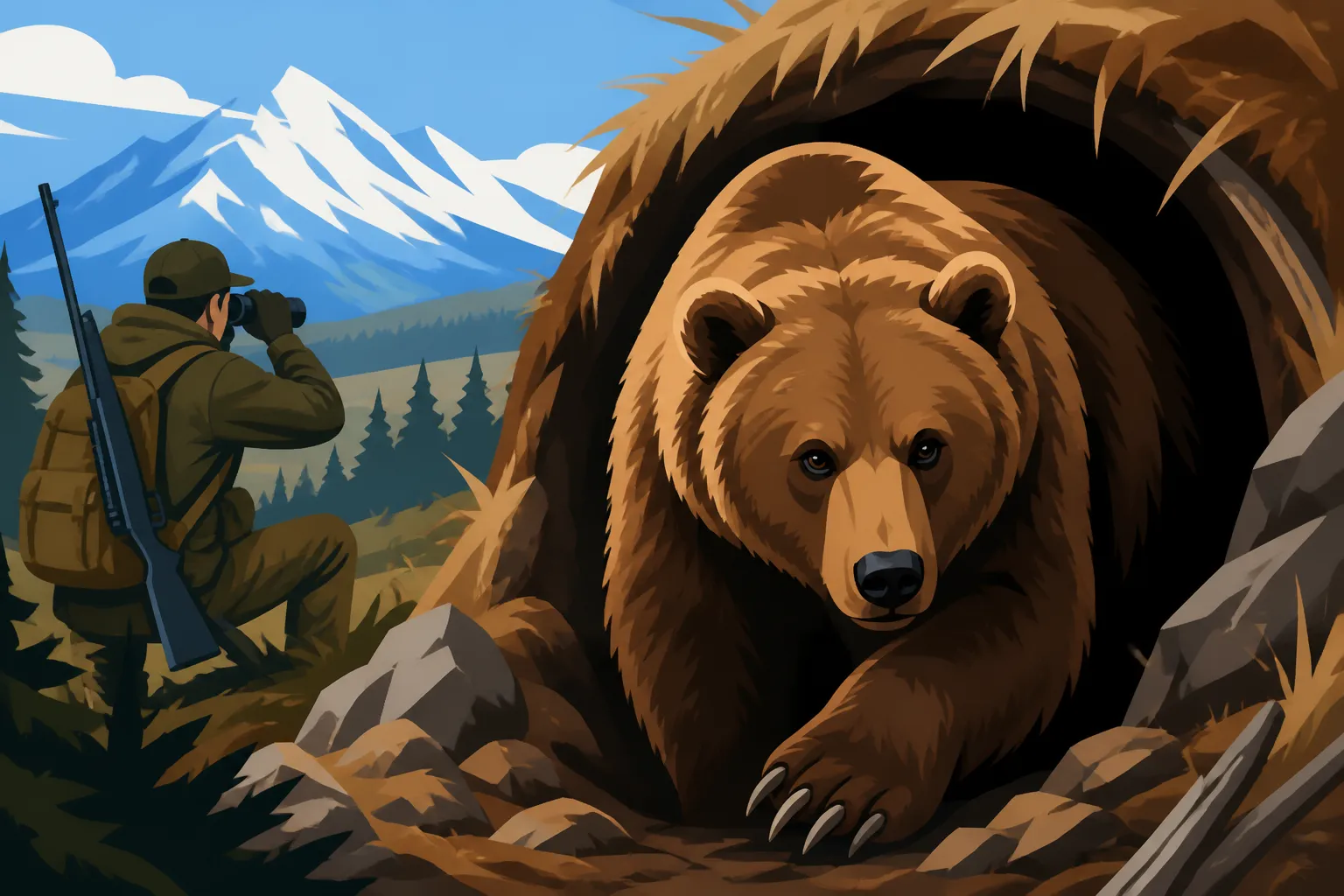
The choice of a den site is a matter of life and death for a brown bear. They seek locations that offer protection from predators (though adult bears have few), insulation from extreme cold, and stability against rockslides or avalanches. Common denning locations include:
- Steep Mountain Slopes: Often with northern or eastern exposures to maintain colder temperatures and deeper snowpack, which acts as insulation. The steepness provides drainage and makes the den harder for other animals to access.
- Dense Timber or Brush: Areas with thick vegetation can offer concealment and some protection from wind.
- Under Root Balls of Fallen Trees: A common and effective den site, providing a ready-made cavity and insulation.
- Snowdrifts: In some areas, bears might excavate a den directly into a deep snowdrift, using the snow itself for insulation.
The construction of the den varies. Some bears will dig extensive tunnels and chambers, while others might simply enlarge a natural cavity or hollow. They'll often line the den with insulating materials like moss, grass, or tree branches. Using a tool like GoHunt's satellite imagery can help identify prime denning habitat—steep, timbered slopes, deep gullies, or old growth stands that might hold large root balls—allowing hunters to better understand where bears might congregate in the late fall.
Regional Nuances in Denning: A Closer Look at Alaska's Diverse Habitats
Alaska is incredibly diverse, and this diversity profoundly shapes the brown bear's life cycle, including their denning habits.
Alaska Peninsula and Kodiak Island: Salmon-Rich Delays
On the Alaska Peninsula and Kodiak Island, the sheer abundance of salmon allows brown bears to delay denning later than almost anywhere else in the state. These coastal giants, which you can learn more about by reading Salmon Runs and Alaska Coastal Bear Size, will often stay on the streams as long as there's a salmon to be caught, sometimes well into November. The milder coastal climate also contributes to this later denning, as the harsh grip of winter doesn't descend as abruptly as it does in the interior. This means that hunters targeting these areas in late fall should still expect to encounter active bears. It's a key difference from their interior cousins, whose denning patterns are explored in Interior Grizzly Behavior Versus Coastal Brown Bears.
| Factor | Coastal Brown Bears (e.g., Kodiak, AK Peninsula) | Interior Grizzlies (e.g., Brooks Range, Interior) |
|---|---|---|
| Primary Food Sources | Salmon, berries, carrion | Berries, roots, small game, moose/caribou calves |
| Peak Den Entry Timing | Late October to Mid-November | Early October to Late October |
| Influence of Salmon Runs | Can delay den entry if runs are late/strong | Minimal direct influence |
| Influence of Early Snow | Less immediate impact due to coastal climate | Significant, often accelerates den entry |
| Individual Variation | Boars often later, sows with cubs earlier | Similar patterns, but overall earlier |
Interior and Arctic: Early Snow, Early Sleep
In the interior and arctic regions of Alaska, the arrival of winter is typically much more dramatic and unforgiving. Early snowfalls, often starting in September, quickly cover the berry patches and other vegetation that make up a large portion of the grizzly's diet. This rapid onset of winter creates a strong impetus for bears to den earlier. In areas like the Brooks Range or the higher elevations of the Alaska Range, bears might begin entering their dens in late September or early October.
For hunters in these areas, this means that while early season hunts might offer opportunities to find bears actively feeding, late October hunts often find many bears already in their dens. Understanding these regional differences is vital for planning successful hunts or even just safe backcountry trips. Knowing that a big boar might still be active, even after a heavy snow, means being prepared with appropriate gear and safety precautions, perhaps even bringing Rifle Calibers for Coastal Brown Bear for any potential encounter. And if you're out late season and find yourself with a successful harvest, remember to follow all procedures for Squaring a Brown Bear Hide and proper meat salvage. When you're thinking about a hunt, scouting tools like GoHunt can help you visualize the terrain and potential den sites in different regions, giving you a distinct advantage in predicting bear movements.
Ultimately, while there are general guidelines, a brown bear's decision to enter its den is a highly individualized and environmentally driven event. It's a testament to their incredible adaptability and survival instincts in one of the world's harshest environments. Keep this in mind when you're planning your own Alaska adventures, whether you're hoping to avoid them or looking for a specific type of bear, like trying to distinguish a Boar Versus Sow Identification in the Field for hunting purposes. Knowing when they finally hunker down for the winter is a key piece of the intricate puzzle that is Alaska's wilderness. Keep an eye out for our article on Spring Emergence Timing for Coastal Bears to complete your understanding of their annual cycle.
Disclaimer
This article is for general informational purposes only and does not constitute professional advice. Laws, prices and regulations vary by location and change over time. Consult a qualified professional for guidance on your specific situation.