Salmon Streams and Bear Body Weight
It’s a tale as old as time in Alaska: the bigger the bear, the closer it is to the ocean. Many hunters arriving in the Last Frontier are awestruck by the sheer size of some of our brown bears, especially those lumbering giants found along the coastlines. This incredible bulk isn't a random genetic lottery; it's a direct, undeniable consequence of an abundant and consistent food source, specifically the protein- and fat-rich bounty of salmon streams. This guide will walk you through the profound connection between these vital waterways and the impressive body weight of Alaska's coastal bears, helping you understand their behavior and prime locations.
The Annual Feast: Why Salmon Are So Critical for Bear Growth
Imagine a year-round grocery store, fully stocked, self-replenishing, and requiring minimal effort to access. For Alaska's coastal brown bears, productive salmon streams are precisely that. These annual migrations of fish are not just a meal; they are the caloric engine that drives the massive growth and survival of these incredible predators. Without the salmon, the bears simply wouldn't be able to achieve the incredible body weights that make them so iconic – and challenging – to hunt. It's a foundational element of their entire life cycle, impacting everything from cub survival to reproductive success.
The Nutritional Powerhouse of Salmon
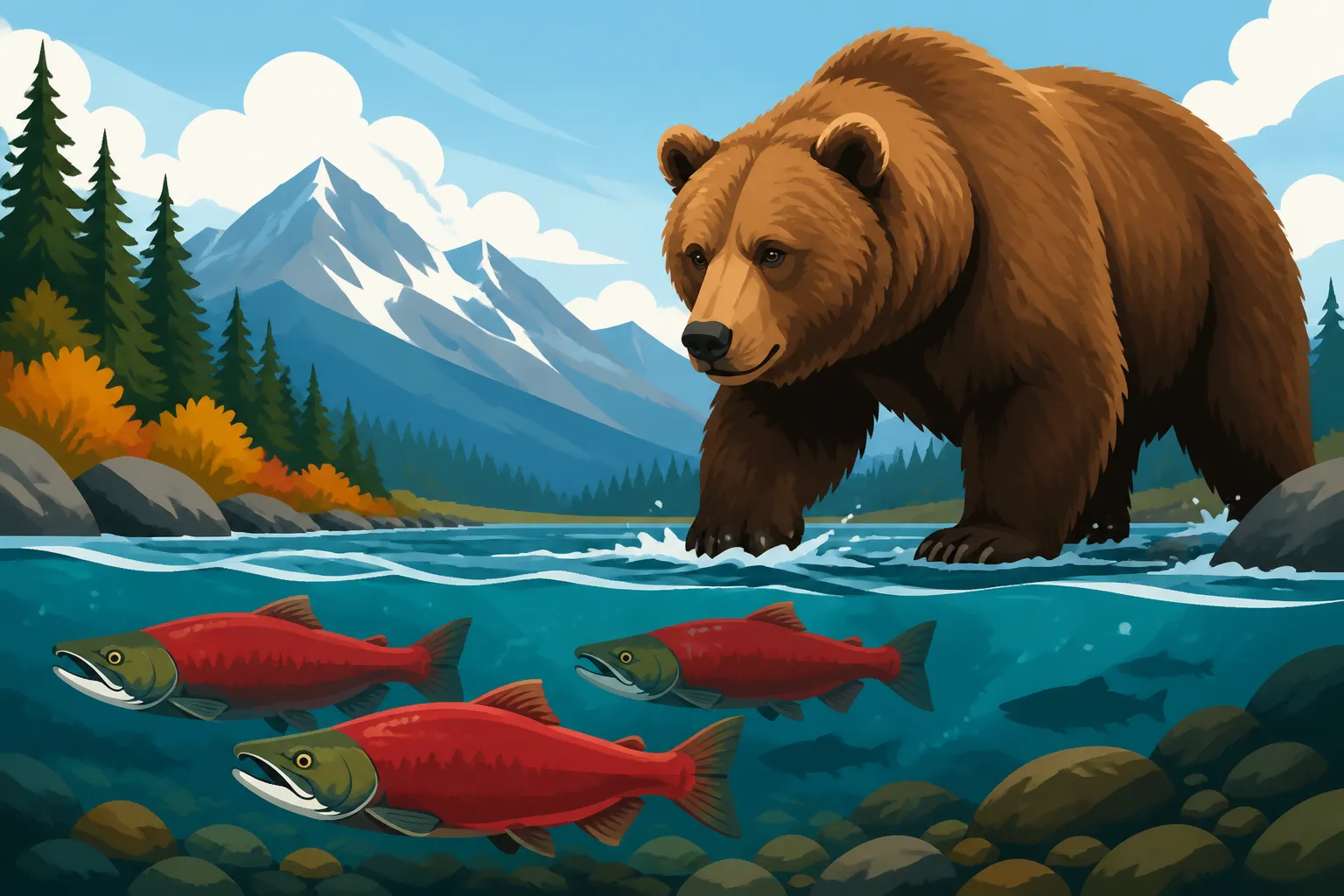
Salmon are, quite simply, an incredibly efficient package of energy. When a bear catches a salmon, especially during the peak of the run, it's not just getting protein for muscle development; it's getting an immense amount of fat. This fat is absolutely crucial for bears. They need to pack on hundreds, sometimes thousands, of pounds of it to sustain them through the long months of hibernation. Think about a sockeye salmon: it’s literally swimming upstream, having stored all its energy for spawning. That energy, in the form of rich, omega-3 laden fat, becomes prime fuel for a bear. Compare this to the lean meat of a moose or caribou, which, while valuable, doesn't offer the same concentrated caloric punch. Bears will often target the fattiest parts of a salmon – the brain, skin, and eggs – leaving the leaner meat for scavenging birds and smaller mammals.
This concentrated nutrient intake allows bears to grow larger, faster, and healthier than their interior counterparts. The sheer volume of salmon available in certain areas means that a bear can spend less energy hunting and more energy eating, leading to rapid weight gain throughout the summer and fall. It's not uncommon for a mature boar to consume dozens of salmon a day when the run is strong, turning himself into a walking tank of fat and muscle. This seasonal gorging is a biological imperative, directly influencing their ability to survive the lean winter months and emerge robust for the following spring.
Timing is Everything: The Salmon Spawning Cycles
Alaska isn't just about "salmon," singular. We have multiple species, each with its own preferred spawning habitat and, crucially for bears, its own distinct run timing. This staggered arrival of different salmon species (sockeye, pink, chum, coho, king) means that in areas with diverse river systems, bears can have access to a continuous stream of food for much of the summer and early fall. For example, sockeye might be running hot in July, followed by pink and chum in August, and then coho pushing upriver in September and even into October. This prolonged feast allows bears to maintain their intensive feeding strategy for months.
A bear that has access to rivers with multiple salmon species or rivers where the runs overlap significantly can put on weight at an astonishing rate. Imagine a bear working a stream in July for kings and sockeye, then moving to another system nearby when chum and pinks are thick in August. This strategic movement, often ingrained over generations, maximizes their caloric intake. Hunters need to understand these cycles, not just generally, but specifically for their chosen hunting unit, as bear concentrations will fluctuate dramatically with the ebb and flow of these spawning events. Knowing when a particular stream peaks with salmon can make all the difference in locating a trophy bear.
From Interior Grizzly to Coastal Giant: A Diet-Driven Transformation
It's a common point of discussion among hunters and biologists alike: the stark size difference between an interior grizzly and a coastal brown bear. While genetically the same species, the diets they subsist on create a dramatic divergence in their physical stature. Interior grizzlies, often found in places like the vast Alaska Range or the Brooks Range, rely heavily on a more varied diet of berries, roots, ground squirrels, and occasionally caribou or moose calves. These food sources are more scattered, require more energy to acquire, and generally offer less concentrated caloric value than salmon. As a result, interior grizzlies are typically smaller, leaner, and often have a more pronounced shoulder hump.
Coastal brown bears, particularly those found on the Alaska Peninsula or Kodiak Island, are the undisputed champions of size, and it's almost entirely due to their salmon-rich diet. These bears spend significant portions of their active season gorging on fish, putting on incredible amounts of weight. A prime example is What Makes Alaska Peninsula Bears So Large. The sheer volume of fish available in these regions allows them to grow into the behemoths that populate hunting legends and record books. When you compare an average boar from the interior to one from a prolific salmon drainage, the difference in body mass is often astounding. This isn't to say interior grizzlies aren't formidable, but the coastal brown bear, fueled by an endless buffet of salmon, simply has a biological advantage when it comes to packing on pounds. This ecological distinction is critical for understanding where to find truly massive bears, and hunters often target these salmon-rich areas specifically for their potential for record-class animals.
Reading the Landscape: Identifying Productive Salmon Streams
Finding a big coastal brown bear often means finding a productive salmon stream. But it’s not as simple as just looking for water on a map. You need to understand what makes a stream "productive" from a bear's perspective, and how to identify the tell-tale signs that bears are actively using it as a feeding ground. This blend of topographical understanding and fieldcraft is essential for successful bear hunting in these environments. It also helps with Boar Versus Sow Identification in the Field because boars tend to dominate the best fishing spots, especially during the rut.
Types of Streams and Their Bear Appeal
Not all salmon streams are created equal when it comes to attracting bears. Bears, like expert anglers, prefer certain conditions. Clear, relatively shallow streams with numerous gravel beds are ideal for salmon spawning, and therefore, ideal for bears. These areas allow bears to easily spot and ambush fish. Deep, fast-moving rivers or glacial rivers choked with silt might have salmon, but they can be much harder for bears to fish effectively. Look for braided river systems, areas with numerous small feeder creeks, or the mouths of smaller rivers where they meet larger bodies of water. These "choke points" are natural gathering spots for salmon, and therefore, for bears.
Consider the terrain around the stream as well. Bears prefer streams that offer nearby cover, such as dense alder thickets or spruce forests, for bedding down between feeding sessions. They also need escape routes and areas where they can cache kills away from other bears or scavengers. A stream running through open tundra might have salmon, but if it lacks good cover, bears might simply pass through rather than establish a long-term feeding pattern there. Analyzing these elements, perhaps through detailed topographic maps or even satellite imagery (which you can often find integrated into platforms like GoHunt), can give you a significant advantage in identifying prime bear country.
Signs of Bear Activity Near Salmon Waters
Once you’ve identified a promising salmon stream, the next step is to look for tangible evidence of bear activity. This goes beyond just fresh tracks, though those are certainly a welcome sight. Bears leave a treasure trove of clues when they’re actively feeding on salmon. Look for "bear trails" – worn paths leading from the streambank up into the cover, often littered with fish remains. Scat will be abundant, often purple and chunky from berries in early summer, transitioning to distinctively fishy-smelling scat full of salmon scales later in the season. These scat piles can be massive, indicating a truly gorging bear.
Keep an eye out for excavated areas along the bank or under submerged logs, where bears might be digging for cached salmon or even just turning over rocks in shallower water to find fish. You might find partially eaten salmon carcasses, often missing the head, skin, or roe – the fattiest bits. In areas where bears are plentiful, you'll see a lot of evidence of their selective feeding. You might even spot "bear trees" where bears have rubbed or bitten the bark, marking their territory. During early fall, especially near the end of the salmon run, you might find fresh Cape Care for a Life-Size Bear Mount and even a Squaring a Brown Bear Hide. These signs are your confirmation that bears are not just passing through, but actively living and feeding on that particular stream system.
Hunter Considerations: Applying This Knowledge in the Field
Understanding the salmon-bear connection isn't just academic; it's vital for a successful and safe Alaska brown bear hunt. From planning your approach to executing the shot and handling your trophy, this ecological knowledge directly informs every decision you make in bear country. When you're dreaming of an animal that rivals How Heavy Alaska Peninsula Brown Bears Get, these insights are paramount.
Locating Bears Based on Salmon Availability
Your hunting strategy should hinge on the salmon runs. If you're hunting early in the season, say late August, you'll want to focus on streams where later-running salmon species like coho are still pushing upriver. If it's earlier, in July or early August, you'd target king or sockeye strongholds. Information on specific run timings for various rivers can sometimes be found through local Fish and Game offices or through online resources like those curated by GoHunt, which often compile data to help hunters make informed decisions. Bears will congregate heavily around these prime fishing spots. This means focusing your glassing efforts on river bends, shallow riffles, and confluences where salmon are naturally bottlenecked.
Remember that a bear's behavior around a salmon stream is predictable. They will often arrive at the stream, feed for a period, then retreat to nearby cover to digest and rest before returning. This creates opportunities for patient hunters who can set up in a strategic position, observe the patterns, and wait for a boar to emerge from the timber or come down to the water. Understanding these daily movements, dictated by their feeding cycle, is key to intercepting a mature bear. Pay attention to the wind, as bears have an incredible sense of smell, especially when salmon scents are wafting through the air.
Ethical Considerations: Ensuring Meat Salvage and Respect
Hunting in high-density bear country, especially near salmon streams, comes with significant ethical responsibilities. One of the most important is ensuring complete meat salvage. With so much natural food available, bears can sometimes be selective, but as a hunter, you are obligated to take all edible meat. This means having a plan for processing and packing out your animal quickly. This can be a challenge if you're alone, so bringing a capable partner is always a good idea. Consider the challenges of Bear Safety While Butchering a Kill in Alaska, especially if other bears are attracted to the fresh kill.
Furthermore, hunting near salmon streams means being incredibly mindful of your impact on the environment and the other bears. Ensure you have a clear shot, avoid wounding an animal, and always prioritize quick, clean kills. The last thing you want is a wounded bear disappearing into dense cover near a salmon-rich area, where retrieval becomes difficult and potentially dangerous. Plan your stalk carefully, understand shot angles, and be prepared for swift follow-up if necessary. This commitment to ethical hunting practices not only respects the animal but also ensures the integrity of the hunting tradition in Alaska's unique ecosystems.
Bear Safety in High-Density Salmon Zones
Let’s be real, going into an area where bears are actively gorging on salmon means you are entering their dining room, and they can be very possessive of their food. Coastal brown bears are not inherently aggressive towards humans, but a feeding bear, particularly a large boar defending a prime fishing spot, or a sow with cubs, can be dangerous. Always carry appropriate bear defense, whether that's a powerful firearm (knowing your Rifle Choice for Alaska Brown Bear Country is paramount) or bear spray, and know how to use it effectively. Practice drawing and firing your chosen defense rapidly.
Beyond carrying defensive tools, your best safety measure is situational awareness. Make noise as you travel, especially through thick brush, to avoid surprising a bear. Scan frequently with binoculars, not just for game, but for any signs of bears in the vicinity. Pay attention to fresh tracks, scat, and recent kills. If you see a bear fishing a stream, give it a wide berth. If you harvest a bear, process the animal quickly and efficiently, and be prepared for other bears to show up, attracted by the scent. Remember that bears, particularly in salmon country, have different Brown Bear Denning Timing in Alaska and Spring Emergence Timing for Coastal Bears, so their activity levels will vary seasonally. Always hunt with a partner if possible, and have a clear communication and evacuation plan. Being prepared and respectful of their territory is key to a safe and successful hunt.
Disclaimer
This article is for general informational purposes only and does not constitute professional advice. Laws, prices and regulations vary by location and change over time. Consult a qualified professional for guidance on your specific situation.