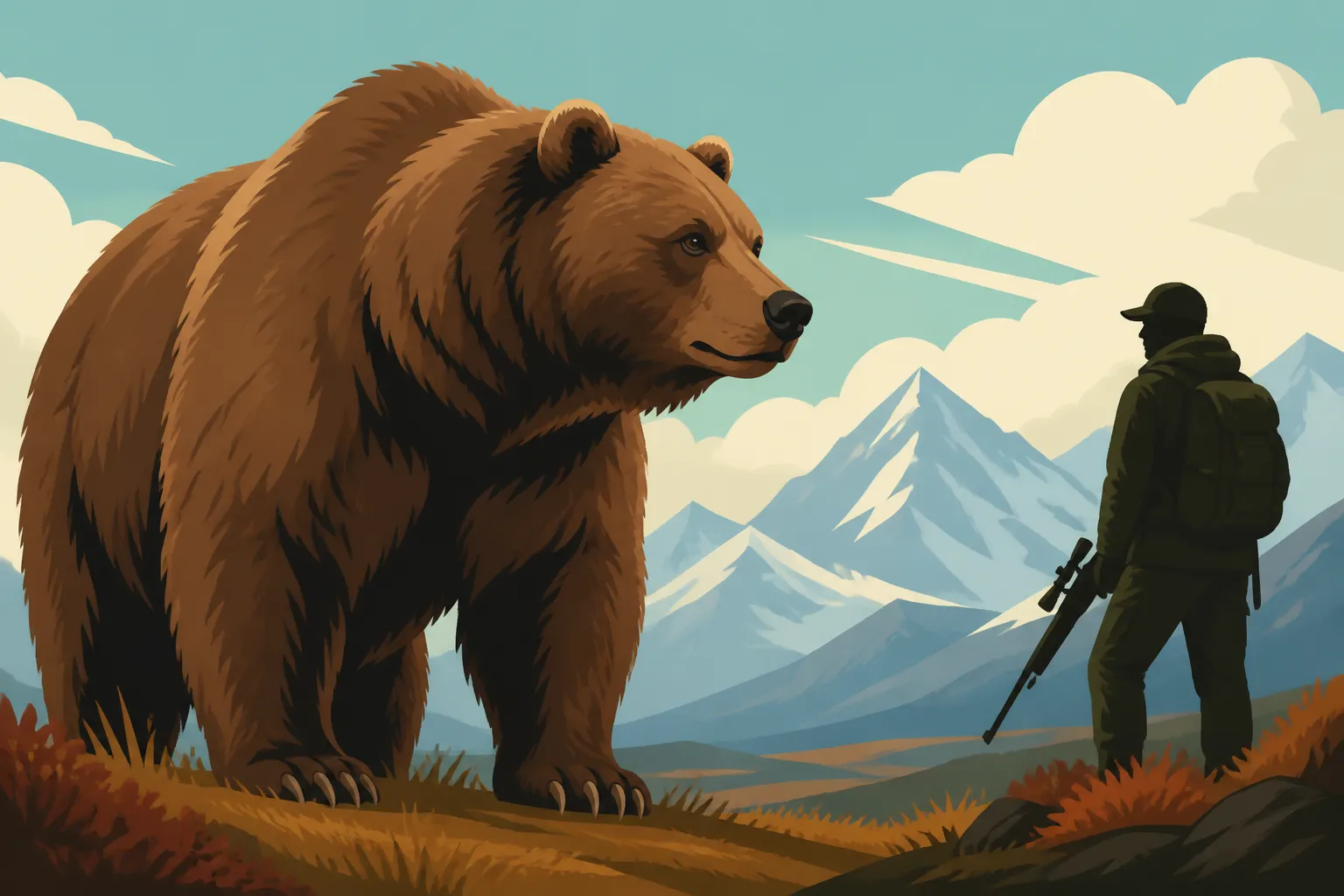
How Heavy Alaska Peninsula Brown Bears Get
Many hunters planning an Alaska adventure wrestle with visualizing the sheer scale of a brown bear, especially those legendary giants found on the Alaska Peninsula. Underestimating their mass can lead to inadequate gear, poor recovery planning, or even dangerous situations in the field. This guide aims to pull back the curtain on just how heavy these magnificent predators can get, providing realistic expectations and practical insights for anyone venturing into their domain.
The Genetic and Environmental Edge of Alaska Peninsula Bears
The Alaska Peninsula is renowned for producing some of the largest brown bears on Earth, a fact that isn't just happenstance but a confluence of genetics, abundant food resources, and a relatively long growing season. These aren't just big bears; they are often titans that dwarf their interior grizzly cousins. If you've ever read about a massive bear taken in Alaska, chances are it came from the coast.
What truly sets the Alaska Peninsula brown bears apart is their incredible access to protein and fat, primarily through the region's prolific salmon runs. Imagine a buffet that runs for months, filled with energy-rich fish. These bears gorge themselves, packing on hundreds of pounds of fat that allow them to grow to immense sizes and survive the long winter hibernation. This dietary advantage is a key reason why you see such a stark difference in body mass between coastal bears and those living further inland, a topic explored further in our article, Alaska Brown Bears on the Coast Versus Interior Grizzlies. The consistent availability of food means younger bears can grow faster, and older bears can maintain their massive frames, continuing to add bulk year after year. It's a prime example of environment directly shaping physical attributes.
The milder coastal climate also plays a role, allowing for a longer active feeding period compared to the harsher, shorter seasons of the interior. This extended period of activity translates directly into more time for foraging and less time spent in a den. When comparing these animals to other North American bear species, the Alaska Peninsula brown bears consistently sit at the top of the weight class, often surpassing even Kodiak bears in sheer body mass, though Kodiak bears might have a slight edge in skull size. This unique combination of factors has, over millennia, evolved a subspecies built for immense size and power.
Understanding Average Weights and Record Breakers
When we talk about "average" for Alaska Peninsula brown bears, it's a different ballpark than most other bear populations. A mature boar (male bear) from this region can easily weigh between 800 to 1,200 pounds, with some exceptional individuals pushing well beyond that. Sows (female bears), while generally smaller than boars, are still incredibly substantial animals, often weighing 400 to 700 pounds. These aren't just numbers on a page; visualizing an animal that weighs half a ton or more can be challenging until you see one in the flesh. For hunters, this translates to an entirely different set of challenges for recovery and meat handling.
Record-breaking bears are, of course, the outliers, but they illustrate the upper limits of what these animals can achieve. While specific weights are often estimated in the field and hard to verify precisely, there are numerous accounts of bears estimated at 1,500 pounds or more. These colossal specimens are typically older, dominant boars that have had years of prime feeding and successful breeding. Their massive frames are a testament to their survival skills and the richness of their habitat. Imagine a bear so large that its head alone is the size of a small tree stump, and its paw print could cover a dinner plate. These are the kinds of animals that inspire awe and a healthy respect. Resources like GoHunt often highlight the potential for encountering such giants in these prime units.
It's important to differentiate between official record measurements and anecdotal estimates. Boone and Crockett records, for example, focus on skull size rather than live weight, providing a standardized way to compare trophy quality. However, the skull size directly correlates with the overall body size of the bear. A bear with a record-book skull will almost certainly be an absolute monster in terms of weight and mass. Understanding these benchmarks helps hunters set realistic expectations, whether they're aiming for a trophy or simply want to experience the wilderness and harvest a magnificent animal.
Factors Influencing a Bear's Weight: Age, Sex, and Seasonal Fluctuations
A brown bear's weight isn't static; it's a dynamic figure that shifts significantly throughout its life and even across the seasons. This variability is crucial for hunters to understand when they're trying to Boar Versus Sow Identification in the Field and making ethical decisions.
Age and Maturity
Just like humans, bears continue to grow and put on weight as they mature. A young, two-year-old bear might weigh a mere 200-300 pounds, a fraction of its adult potential. As they reach prime adulthood, typically between 6 and 10 years old, they hit their peak growth and begin to maintain that massive size, often continuing to add bulk until they are quite old. An older, dominant boar often dictates the dynamics of an area, and its sheer size is a key part of that dominance. It’s not uncommon for these older animals to have seen many salmon seasons, enabling them to accumulate substantial fat reserves year after year. This long-term accumulation is a major contributor to how heavy Alaska Peninsula brown bears get.
Sex Differences
There's a significant size disparity between male (boar) and female (sow) brown bears. Boars are considerably larger and heavier than sows, often weighing 50% to 100% more. This sexual dimorphism is a survival strategy, allowing dominant boars to assert their position and compete for breeding rights. When field judging, distinguishing between a large sow and a medium-sized boar can be tricky, but understanding the typical weight ranges for each sex is a vital part of making an informed decision. A sow with cubs will also often be leaner from the demands of raising young, even if her frame is large.
Seasonal Weight Swings
The most dramatic fluctuations in a brown bear's weight occur seasonally. Bears enter their dens for winter hibernation after a period of hyperphagia, where they eat almost constantly to build up fat reserves. This is when they are at their heaviest, often carrying a thick layer of fat that can be several inches deep. For example, a bear that might weigh 1,000 pounds in late fall before denning could emerge in the Spring Emergence Timing for Coastal Bears weighing closer to 700-800 pounds, having lost a significant portion of its body mass during hibernation.
| Factor | Boar (Male) | Sow (Female) | Notes |
|---|---|---|---|
| Typical Adult Weight | 800 – 1,200 lbs (late season) | 400 – 700 lbs (late season) | Varies greatly by age, health, and food availability |
| Record Potential | 1,500+ lbs (estimated) | Less common to exceed 800 lbs | Exceptional individuals, hard to verify exact weight |
| Spring Weight | 600 – 900 lbs (post-hibernation) | 300 – 500 lbs (post-hibernation) | Significant weight loss during winter denning |
| Primary Food Source | Salmon, berries, vegetation, carrion | Salmon, berries, vegetation, carrion | Salmon availability is critical for massive size |
| Physical Markers | Blockier head, larger neck, broader shoulders | Smaller head, narrower neck, often leaner frame | Use multiple indicators for accurate field judging |
This table illustrates the broad differences, but it's important to remember that every bear is an individual. A big, old sow can sometimes appear larger than a young boar. That's where experience and careful observation, often aided by advanced scouting tools like those offered by GoHunt, become invaluable. The article Salmon Runs and Alaska Coastal Bear Size further details how vital these seasonal food sources are to a bear's bulk.
Implications for Hunters: Planning for the Reality of a Giant
Encountering, harvesting, and then processing a brown bear on the Alaska Peninsula is an endeavor unlike almost any other hunting experience. The immense weight of these animals dictates almost every aspect of planning and execution, from gear selection to extraction strategies. If you're considering a hunt in these prime brown bear areas, which you can learn more about in Hunting the Alaska Peninsula and Its Brown Bear Country, you need to be prepared for the realities of dealing with a truly massive animal.
Field Preparation and Gear
First and foremost, your rifle choice needs to be appropriate for an animal that can weigh over a thousand pounds and possesses incredible tenacity. Our guide on Rifle Choice for Alaska Brown Bear Country provides excellent insight into this. Beyond the firearm, think about the tools you'll need for butchering. You'll want sturdy knives, a sharpener, and perhaps a small hatchet or saw for breaking down the carcass. Game bags are absolutely critical, and not just any game bags. You'll need durable, breathable bags that can hold hundreds of pounds of meat and protect it from flies and other scavengers. Consider purchasing specialized bear bags that are larger and more robust than standard deer bags.
Packing out the meat and hide of a brown bear is a monumental task. A hide alone, with the skull and paws attached, can weigh 150-250 pounds, especially if it's wet. Add to that the mandatory salvageable meat (which includes the entire edible carcass under Alaska law, as explained in Packing Out Meat in Alaska: The Salvage Law Hunters Must Follow), and you're looking at multiple heavy loads. This requires multiple strong packers, or a very strategic plan for a bush plane pickup. If you're on a guided hunt, your outfitter will handle logistics, but if you're attempting a resident-unguided hunt with a kinship waiver, the onus is entirely on you and your party.
Handling and Preservation
Once the bear is down, the clock starts ticking, especially in warmer weather. Cooling the carcass quickly is paramount to prevent spoilage and ensure the quality of the meat. This means getting the hide off and the meat broken down as fast as possible. Our article Cape Care for a Life-Size Bear Mount and Squaring a Brown Bear Hide offer detailed steps on handling the trophy components. If you're dealing with a large boar, expect the hide to be thick and heavy, making skinning a strenuous chore.
Safety around the kill site is another critical consideration. The smell of a fresh kill, especially a large one, can attract other bears. Always be vigilant, keep bear spray and a firearm readily accessible, and work efficiently. Refer to Bear Safety While Butchering a Kill in Alaska for essential protocols. Moving the meat away from the gut pile, hanging it in sturdy game bags, and establishing a visible perimeter can help deter scavengers. If your pickup location is some distance away, caching meat and hide securely is vital. For those planning a guided experience, knowing the Cost of a Guided Alaska Brown Bear Hunt can help you budget for the necessary support and expertise in these situations.
The sheer volume of meat and hide means you need a plan for its transport from the field. This usually involves a bush plane making multiple trips, or carefully ferrying loads to a boat. The logistics are complex and often expensive, so factor this into your overall hunt budget and timeline. The heavy nature of these animals truly underscores the "trophy of a lifetime" reputation of an Alaska Peninsula brown bear hunt.
Disclaimer
This article is for general informational purposes only and does not constitute professional advice. Laws, prices and regulations vary by location and change over time. Consult a qualified professional for guidance on your specific situation.