Boar Versus Sow Identification in the Field
One of the most intense moments in Alaska hunting is coming face-to-face with a brown bear or grizzly. The sheer power and raw wildness are undeniable. But that heart-pounding encounter becomes incredibly complicated when you realize you have a critical decision to make: is that bear a boar or a sow? Misidentifying a sow, especially one with cubs nearby you haven't spotted, can lead to severe legal penalties, ethical missteps, and even dangerous situations. This guide is here to walk you through the nuances of field identification, helping you confidently distinguish between male and female bears before you ever consider making a move.
Why Field Identification Matters for Alaska Bear Hunters
Let's be honest, hunting any big game in Alaska carries a massive responsibility, but perhaps none more so than bear hunting. The stakes are high, not just for you and your hunting party, but for the conservation of these magnificent animals. Understanding the difference between a boar and a sow isn't just a matter of preference; it's a fundamental requirement rooted in law, ethics, and personal safety.
Legal Requirements and Ethical Hunting
The Alaska Department of Fish and Game has clear regulations designed to protect specific segments of the bear population, particularly sows with dependent cubs. These rules are in place to ensure the long-term health and stability of bear populations. If you mistakenly harvest a sow with cubs, even if you didn't see the cubs at the time, you could face significant fines, confiscation of your trophy, loss of hunting privileges, and even jail time. It's a serious offense, and ignorance of the law is never an excuse.
Beyond the legal ramifications, there's a deep ethical responsibility. As hunters, we are stewards of the wildlife we pursue. Taking a sow with cubs effectively orphans those young bears, severely reducing their chances of survival. This goes against every principle of fair chase and responsible hunting. It's why seasoned hunters will tell you that sometimes the hardest, but most important, shot is the one you don't take. When in doubt, let it walk. Always assume there could be cubs you haven't seen. This also underscores why extended observation is paramount, a topic we'll dive into later. For specific rules regarding this, make sure you're familiar with Sows With Cubs and the Legal Line in the regulations.
Safety Considerations and Understanding Bear Behavior
Understanding whether you're dealing with a boar or a sow also plays a crucial role in your personal safety in the field. Sows, especially those with cubs, are notoriously protective. Their maternal instincts are incredibly strong, and they can be highly aggressive if they perceive a threat to their young. While any bear can be dangerous, a sow defending her cubs is arguably one of the most volatile situations a hunter can face. Approaching a kill site or even just moving through thick brush where a sow might be bedded with cubs carries a different level of risk compared to encountering a lone boar.
Boars, while powerful and capable of aggression, generally exhibit different behavioral patterns. They are often more solitary, though they can be aggressive towards other bears, particularly during the breeding season. Knowing whether you're likely observing a boar or a sow can inform your approach, how much space you give the animal, and your overall bear safety protocols. For example, understanding how a bear might react near a kill site is crucial, which is why Bear Safety While Butchering a Kill in Alaska is such an important read. It's not just about what you shoot, but how you conduct yourself around these powerful creatures.
Key Physical Indicators for Sexing Bears in the Field
While no single characteristic is foolproof, especially with the variability found across different populations of bears, a combination of physical indicators can help you make a more educated guess about a bear's sex. Remember, patience and a good set of optics are your best friends here.
Size and Build: The General Rule, and Its Exceptions
Generally speaking, adult boars are larger and more heavily built than sows. Think of it like comparing a linebacker to a gymnast; both are strong, but one is built for mass and power. Boars tend to have broader shoulders, a thicker neck, and a more robust, "blocky" overall appearance. Their head will often seem disproportionately large for their body, especially compared to a sow. Sows, while still incredibly strong, often appear more "leggy" or streamlined, with a more proportionate head. Their body might be more evenly proportioned from front to back.
However, this is where the "general rule" gets tricky. A very large, old sow can easily rival a younger boar in size. And depending on the bear's nutritional plane, geographical location, and age, sizes can vary dramatically. For instance, the coastal brown bears on the Alaska Peninsula, known for their access to rich salmon runs, often grow to immense sizes, easily dwarfing interior grizzlies. This makes judging size alone a dangerous game. A smaller coastal boar might still be larger than a substantial interior sow. We often discuss Alaska Brown Bears on the Coast Versus Interior Grizzlies because their size difference can be so striking. Relying solely on "it looks big" is a recipe for error. You might be looking at a very impressive sow.
Head Shape and Facial Features
This is one of the most reliable indicators, assuming you get a good, clear look.
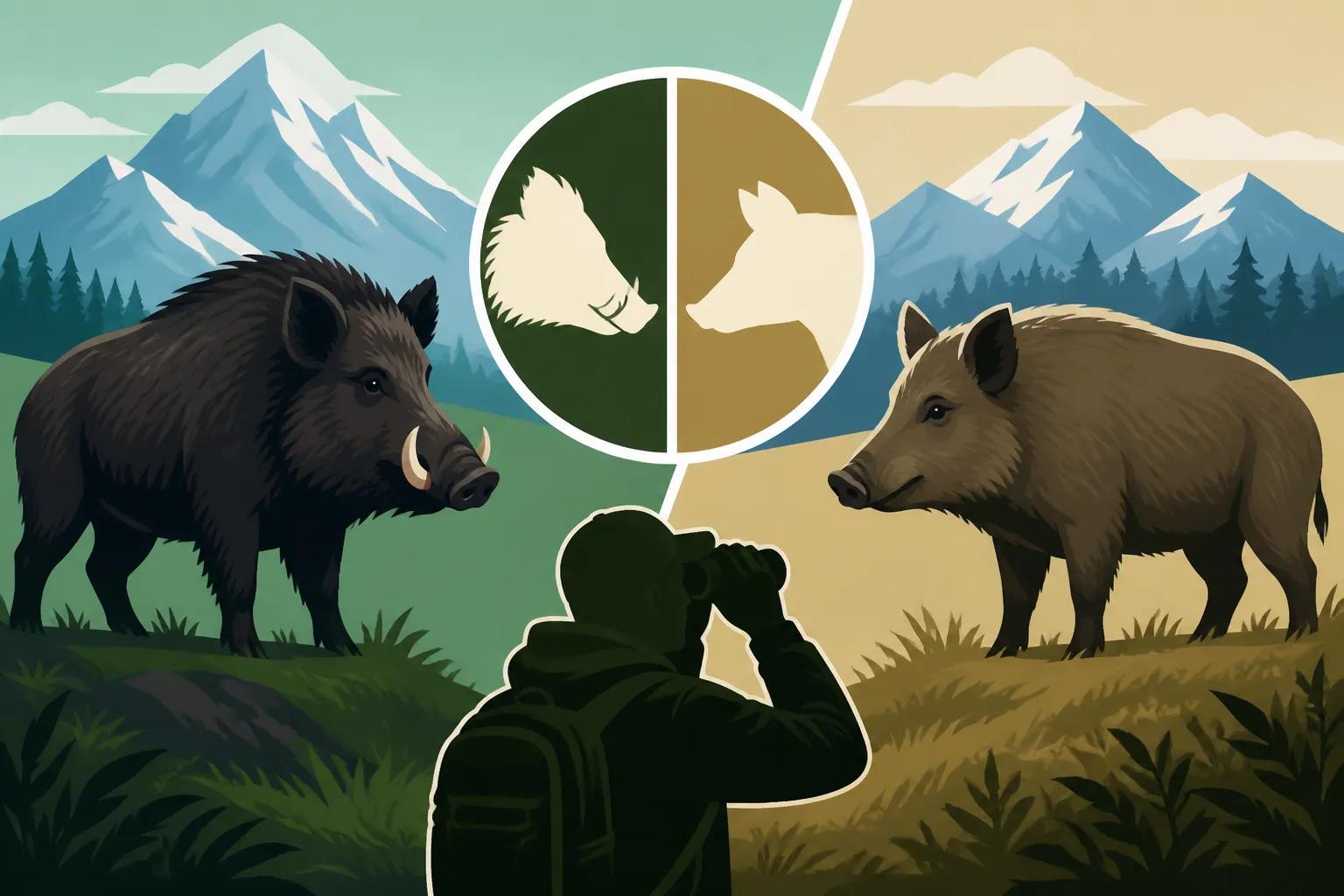
- Boars: Tend to have a broad, blocky head, often described as a "dinner plate" or "cereal bowl" head. Their snout might appear shorter and thicker, and their ears often look smaller relative to the size of their massive skull. The distance between their eyes often seems greater, contributing to that wide-set, imposing look.
- Sows: Usually have a more slender, refined head shape. Their snout might appear longer and more pointed, giving their face a more "dog-like" or "fox-like" appearance. Their ears often seem larger and more prominent compared to their head size.
Remember, this isn't always a dramatic difference, but a subtle one that becomes clearer with experience. Get out your spotting scope, even if it's just for a moment, and pay close attention to these details. Using tools like GoHunt to scout potential areas where you might find larger, older bears can also help you calibrate your expectations for what a mature boar's head might look like in a given unit.
Body Proportions and Gait
Looking at the bear's overall build and how it moves can offer additional clues.
- Boars: Often have a very distinct, powerful shoulder hump. Their front end seems much heavier and more muscular than their hindquarters. When they walk, they often have a powerful, somewhat lumbering gait, especially their front legs. Their hips may appear narrower than their shoulders.
- Sows: While still having a hump, it often appears less pronounced than a boar's. Their body can appear more balanced from front to back. If they are older and have had several litters of cubs, their hips might appear wider, giving them a slight pear shape, though this is not always evident. Their gait can be a bit more fluid and less heavy-footed than a boar's. Observing a bear's natural movement for an extended period, perhaps while it's foraging or walking along a game trail, can reveal these subtleties.
It's also worth noting the presence of nipples, though this is incredibly difficult to see in the field unless a sow is nursing and very close, or if her coat is thin or wet in that area. It's rarely a practical field identification tool, but it is a definitive one if you ever get that clear a view.
Behavioral Clues and Contextual Observation
Sometimes, a bear's actions can tell you more about its sex than its physical appearance alone. These behavioral cues, especially when combined with physical indicators, paint a much clearer picture.
Presence of Cubs: The Most Obvious, Yet Tricky Indicator
This is the ultimate, non-negotiable rule: If you see cubs, no matter the size or apparent independence, do not shoot the sow. Period. The tricky part is that cubs can be incredibly good at hiding. They might be bedded down in thick brush, behind a rise, or simply out of your direct line of sight. They might even be old enough to be at a distance from their mother, leading a less experienced hunter to believe the sow is solitary.
This is why prolonged observation is critical. Don't just watch a bear for five minutes and assume it's alone. Watch it for an hour, two hours, even half a day if necessary. See if it calls, if it looks around for something, if any smaller figures emerge from the timber. Sometimes, cubs are surprisingly independent, but they are still legally considered dependent on the sow until certain age thresholds are met, or until the sow clearly shows no maternal connection. For brown bears, cubs usually stay with the sow for at least two full years. A good resource for understanding this age limit and other rules is Sows With Cubs and the Legal Line.
Interactions with Other Bears
Observe how the bear you're watching interacts with other bears in the vicinity, if any.
- Boars: Especially during the breeding season (late spring into early summer), boars can be very aggressive towards other bears, particularly younger males and sows that aren't receptive to breeding. They often dominate food sources and territory. If you see a larger bear chasing off a smaller bear, it's often a good indication of a boar.
- Sows: Unless they have cubs, sows are often more tolerant or even submissive around larger boars, especially if they are smaller. If a sow has cubs, her protectiveness will manifest as extreme aggression towards any bear, including boars, that she perceives as a threat to her young. Infanticide by boars is a real danger to cubs, so sows are constantly on guard. Observing these dynamics requires patience and a good vantage point, like what you'd use for Glassing the Alaska Range: Finding Game Before You Move.
Tracks and Sign: Reading the Ground
While less definitive for immediate, real-time identification, interpreting tracks and other sign can give you valuable context about the bears in an area.
- Tracks: Boars generally leave larger, broader tracks, particularly their front paws. The pads of a boar's front paw might be noticeably wider. Their stride might also be longer. Sows, on the other hand, typically leave smaller, narrower tracks. If you find multiple sets of tracks of varying sizes moving together, it's a strong indicator of a sow with cubs.
- Scat and Rubs: While not directly indicative of sex, larger scat size can suggest a larger bear, which might be a boar. Rub trees, where bears scratch and rub, are used by both sexes, but a very high rub mark could suggest a tall, mature boar.
Learning to read the terrain for bear sign is a skill that develops over time. Tools like GoHunt can help you understand historical bear activity in certain areas, allowing you to anticipate what kind of sign you might encounter. This advanced scouting, combined with field observation, significantly improves your chances of successful identification.
Advanced Field Strategies for Confirmation
Once you've factored in physical traits and behavioral cues, there are still ways to confirm your identification or, at the very least, reduce your uncertainty before making a critical decision.
Extended Observation and Patience
We've touched on this already, but it cannot be overstated: patience is your greatest asset. Don't rush. The Alaska wilderness often demands you slow down and truly observe. Set up your spotting scope on a sturdy tripod and commit to watching that bear for as long as it takes. If you're backpacking, finding a good glassing knob and spending a few hours watching an area is time well spent, not wasted.
During this extended observation, look for patterns. Does the bear lie down? Does it get up and feed? Does it interact with its surroundings in any way that reveals hidden cubs or other tells? Bears can be surprisingly still for long periods, especially if they're bedded. What seemed like a lone bear might suddenly have cubs pop up from behind a bush after an hour of watching. This is also why understanding typical bear activity cycles, such as when they emerge during Spring Bear Hunting on South-Facing Snow Slides, can help you anticipate their movements and behavior.
Comparing with Known Landmarks or Objects
When judging size, it's incredibly hard to do in open country without a reference point. Our eyes often play tricks on us, especially in vast Alaskan landscapes where everything looks smaller at a distance. If possible, try to find a natural landmark near the bear—a rock, a fallen log, a distinctive bush. Use this as a mental ruler. As the bear moves, or if you can see it next to this landmark, it can help you calibrate your perception of its actual size.
Similarly, if you're observing tracks, try to find a stick or an object of known size to place next to the track for a clearer comparison. This kind of objective measurement, even if it's just mental, helps to overcome the subjective nature of judging animals in their natural habitat.
Digital Scouting and Planning
Before you even step foot in the field, modern digital scouting tools can give you a significant advantage. Platforms like GoHunt allow you to research specific game management units, analyze terrain, identify potential bear habitat, and even look at historical harvest data (where available). While it won't tell you the sex of an individual bear, it helps you understand the general bear population dynamics in an area. For instance, knowing if you're going into an area known for very large boars or an area with high cub survival rates can help you mentally prepare for what you're likely to encounter. This kind of pre-hunt intelligence, combined with knowledge of land status from resources like How to Check Alaska Land Status Before a Hunt, allows you to go into the field with a much stronger foundational understanding, making your real-time identification efforts more effective.
Ultimately, identifying a boar versus a sow in the field is a nuanced skill that blends observation, experience, and patience. There's no single trick that guarantees success, but by combining these physical and behavioral indicators, and by always erring on the side of caution, you'll not only increase your chances of a successful and legal hunt but also uphold the highest ethical standards of Alaska hunting.
| Characteristic | General Boar Traits | General Sow Traits | Caveats and Considerations |
|---|---|---|---|
| Size & Build | Larger, blockier, heavier set; broader shoulders/neck. | Often smaller, more slender, "leggy"; balanced proportions. | Young boars can be smaller than large sows. Coastal brown bears (What Makes Alaska Peninsula Bears So Large) are often much larger than interior grizzlies, so context matters. Never rely on size alone. |
| Head Shape | Broad, "dinner plate" face; thick, short snout; small-looking ears relative to skull. | Narrower, more "dog-like" or pointed face; longer snout; larger-looking ears relative to skull. | Requires clear, sustained observation. Head posture can affect appearance. |
| Shoulder Hump | Very prominent, muscular, often highest point of the body. | Less prominent, can be present but not as pronounced or "stacked" looking. | Nutritional status and age can affect hump size in both sexes. |
| Body Proportions | Front heavy, powerful shoulders; hips often appear narrower. | More evenly proportioned front to back; hips might appear wider, especially if they've had cubs. | Not always obvious. Best observed when the bear is walking or standing naturally. |
| Behavior | Solitary, potentially aggressive towards other bears (especially during rut). | Often accompanied by cubs (most critical indicator); defensive of young; can be tolerant or submissive if alone near larger boars. | ALWAYS assume cubs are present until proven otherwise. Cubs can be hidden, or at a distance. Extended observation is crucial. Never risk shooting a bear that might have cubs. |
| Tracks | Larger, broader front tracks; potentially longer stride. | Smaller, narrower tracks; if multiple tracks of varying sizes, strong indicator of sow with cubs. | Track size can vary with substrate. Requires experience to interpret reliably without direct comparison. |
| Other | May have scars from fighting. | Nipples (rarely visible in the field). | Observing for long periods, using quality optics, and noting interactions with other animals (or lack thereof) are vital for confirming any suspicions. Even then, doubt means passing on the animal. |
Disclaimer
This article is for general informational purposes only and does not constitute professional advice. Laws, prices and regulations vary by location and change over time. Consult a qualified professional for guidance on your specific situation.