How Big Alaska-Yukon Bull Moose Get
For anyone dreaming of an Alaska hunting adventure, the sheer scale of an Alaska-Yukon bull moose is often the stuff of legend. You hear stories, you see photos, and you start to wonder: just how big do these colossal creatures really get? The truth is, while some reach truly astounding sizes, there's a wide range, and understanding the factors that contribute to a bull's bulk and antler spread is key to appreciating what you might encounter in the wilds of the Last Frontier. This guide will walk you through the impressive dimensions of these iconic animals, from their body weight to their magnificent antlers, and help set realistic expectations for anyone heading into moose country.
The Colossal Alaska-Yukon Moose Defined
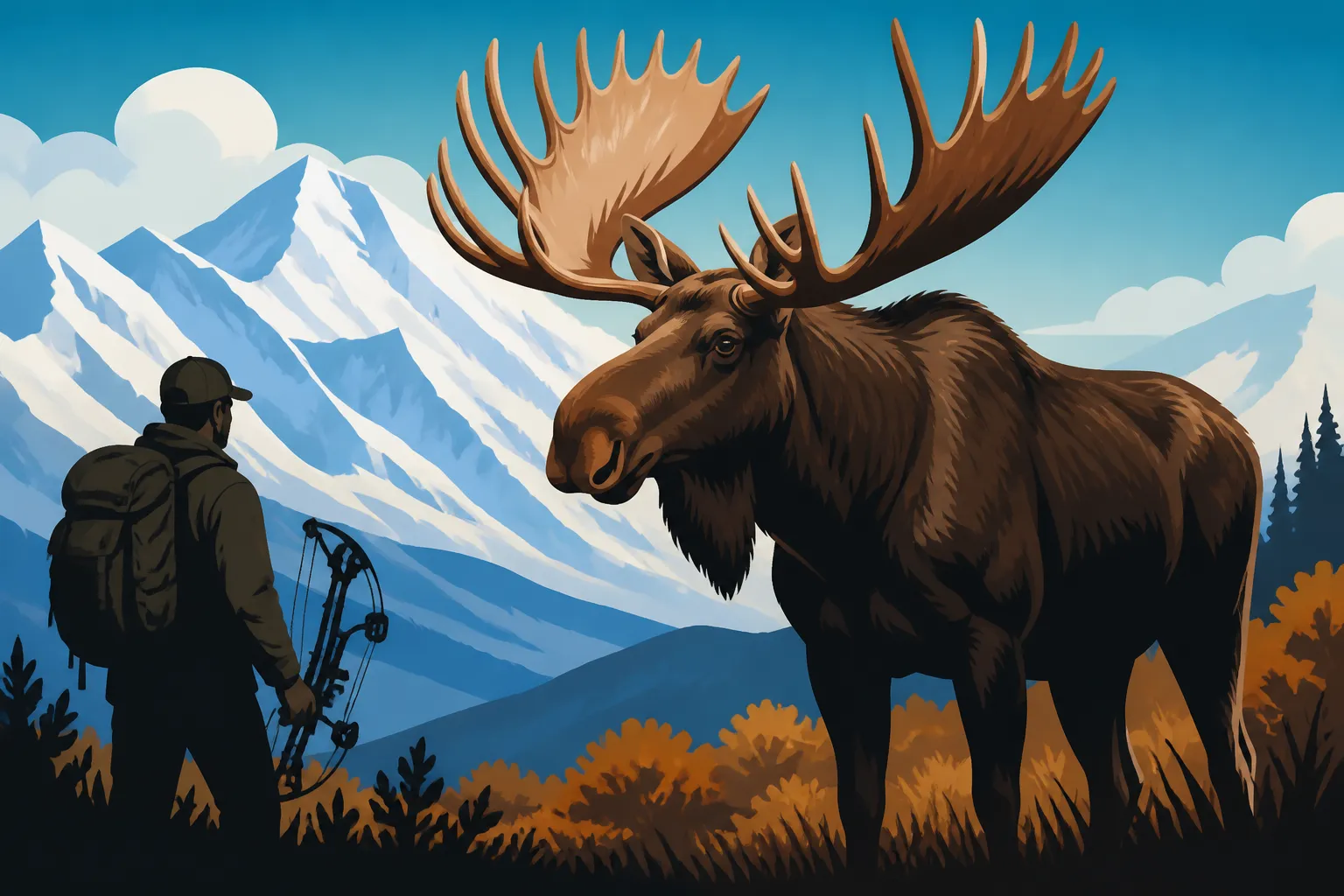
When we talk about "Alaska-Yukon moose," we're specifically referring to Alces alces gigas, the largest subspecies of moose in the world. These animals aren't just big; they are truly immense, a living testament to the vast, rich landscapes they inhabit across Alaska and parts of the Yukon Territory. This isn't your average whitetail or even an elk; a mature Alaska-Yukon bull moose stands head and shoulders, quite literally, above most other North American big game animals.
Historically, these moose have thrived in areas with abundant willow and birch browse, especially in the wake of wildfires that regenerate nutritious young growth. Their sheer size is an evolutionary adaptation to the harsh northern climate, allowing them to conserve heat and push through deep snow. Understanding their biology and habitat is the first step in grasping their impressive dimensions. For more on what contributes to their massive frames, you might be interested in Alaska-Yukon Moose Body Size and Antler Spread.
Factors Influencing Bull Moose Size
It's not just luck that makes some moose absolute giants. A combination of genetics, prime habitat, and simply living long enough all play crucial roles in how big an Alaska-Yukon bull moose will ultimately become. It's a complex dance between nature and time that produces those jaw-dropping specimens we all dream of seeing.
Genetic Potential and Regional Differences
Just like people, moose have genetic predispositions that influence their potential size. Some bloodlines simply produce larger animals with a greater capacity for antler growth. While you can't pick your bull based on its lineage in the wild, it's worth knowing that certain regions of Alaska are renowned for consistently producing larger animals due to these inherent genetic traits. These "hot spots" often correlate with areas that have historically had robust, healthy moose populations and excellent habitat.
Beyond genetics, general population health also plays a role. In areas where moose numbers are high and resources might be stretched, individual animals might not reach their maximum potential. Conversely, in areas with lower densities and abundant feed, moose often grow larger faster. This is part of the extensive research you can do through platforms like GoHunt, which helps hunters understand historical harvest data and regional trends, often indicating where larger animals are consistently found.
Habitat, Nutrition, and Age
A moose is only as good as its grocery store, and for an Alaska-Yukon bull, that means vast quantities of high-quality forage. Willows, birch, and aspen are staples, particularly the young, succulent growth found in regrowing burn areas or river bottoms. A bull that has access to rich, mineral-laden browse throughout its life, especially during the critical antler-growing months, will have the fuel needed to pack on body mass and grow impressive racks. The condition of Moose Habitat in Alaska Burn Scars after a fire, for example, can dramatically influence the size of bulls in the following years.
Age is arguably the most critical factor. A bull moose doesn't reach its peak antler size until it's typically between 7 and 10 years old. Younger bulls, even those with good genetics and diet, simply haven't had enough seasons to fully develop. A 3-year-old bull might look respectable, but a 9-year-old bull is often a completely different animal in terms of body mass and antler spread. Understanding What Moose Eat in a Ten-Year-Old Burn can also give you insights into how specific areas contribute to a bull's growth throughout its life. It's why patience, or hunting in areas where bulls have a chance to age, is so highly valued.
Measuring Moose Size: Antler Spread and Body Weight
When hunters talk about "how big" an Alaska-Yukon bull moose gets, they're typically referring to two primary metrics: antler spread and body weight. Both are impressive in their own right, and both contribute to the iconic image of these northern giants.
Antler Spread: The Hunter's Holy Grail
The antler spread is perhaps the most famous measure of a bull moose's grandeur. This is the widest distance between the outermost points of the antlers. For many hunters, the "50-inch spread" is the benchmark for a truly desirable bull, not just for the challenge but because it often signifies a mature, impressive animal. While the average spread for a mature bull might be closer to 55-65 inches, truly exceptional bulls can push 70, 75, or even 80 inches across. These are the giants that make the record books.
It's a common misconception that all large-bodied bulls have massive antlers. While body size and antler size are often correlated, a bull with a huge body might only have a decent rack, and vice versa. Variables like late-season antler damage, genetics, and even specific mineral deficiencies can impact the final spread. When in the field, knowing how to estimate Measuring a 50-Inch Spread Against Your Rifle can be a helpful trick, but nothing beats careful observation and good optics. You can delve deeper into Average Antler Spread on a Mature Alaska Bull for more context.
Body Weight: A Mountain of Meat
While antlers capture the imagination, the sheer body weight of an Alaska-Yukon bull moose is what truly sets it apart. These are not merely large deer; they are equine-sized animals that can easily exceed 1,000 pounds. A mature bull can weigh anywhere from 1,200 to 1,600 pounds, with exceptional individuals pushing towards 1,800 pounds or even a ton. Imagine that, a full ton of muscle, bone, and hide roaming the Alaskan wilderness!
This enormous body mass is what provides such an incredible amount of meat for sustenance. When you're successful, you're not just hauling out a trophy; you're dealing with hundreds of pounds of high-quality protein. This is where the reality of How Much Meat an Alaska Bull Moose Yields truly hits home, demanding significant effort and planning for packing it out. The weight of these animals makes every step of the recovery and butchering process a monumental task, often requiring multiple people and specialized equipment.
To give you a clearer picture, here's a general comparison:
| Characteristic | Young Bull (2-4 years) | Mature Bull (5-9 years) | Exceptional Bull (10+ years) |
|---|---|---|---|
| Approximate Age | 2-4 years | 5-9 years | 10+ years |
| Antler Spread | 20-40 inches | 55-70 inches | 70-85+ inches |
| Body Weight | 800-1,200 lbs | 1,200-1,600 lbs | 1,600-2,000+ lbs |
| Rack Shape | Paddle development just beginning, smaller points | Full paddles, multiple points, good mass | Very wide, deep paddles, many points, heavy mass |
| Field Impression | Noticeable, but often "leggy" and less bulky | Impressive, full-bodied, dominant presence | Truly immense, almost prehistoric, unmistakable |
Realistic Expectations and Field Judging Challenges
It's easy to get caught up in the images of monster moose dominating hunting magazines and social media feeds. We all dream of that 70-inch bull. But the reality of hunting in Alaska often involves managing expectations and understanding the incredible challenges of field judging these magnificent creatures in their natural environment.
The "Average" Bull Versus the Record Book
The truth is, not every mature bull you encounter will be a record-book contender. While Alaska is home to the largest moose, even an "average" mature bull is an astonishing animal. Many successful hunters take bulls in the 55- to 65-inch spread range, which are still incredibly impressive trophies and provide an immense amount of meat. Focusing solely on a massive spread can lead to passing up perfectly legal, mature, and fulfilling opportunities. Understanding Field Judging a Legal Bull Under Alaska Antler Rules is far more important than holding out for an unrealistic giant.
Remember, the vastness of Alaska means that you could be the only hunter to lay eyes on a particular bull for an entire season. Sometimes, the trophy isn't just about the numbers but the experience, the effort, and the hard-won success. Platforms like GoHunt can provide statistics on average harvest sizes in specific game management units, which helps temper expectations and provides valuable planning data.
Judging Under Pressure and Variable Conditions
One of the biggest frustrations for hunters is trying to accurately judge a bull moose in the field. Distance, light conditions, terrain, and the animal's movement all conspire against you. What looks like a 60-inch spread through binoculars at 400 yards at midday can shrink considerably when the bull steps into shadows or you get a closer look. The width of a moose's body, or even your rifle, can be a useful reference point for Measuring a 50-Inch Spread Against Your Rifle, but practice is key.
Furthermore, Alaska's antler restrictions often require careful observation of brow tines or specific paddle configurations, adding another layer of complexity. Rushing a judgment can lead to a missed opportunity or, worse, a violation. This is where patience, good quality optics, and sound glassing techniques really pay off. Learning to use a spotting scope effectively, similar to techniques described in Glassing the Alaska Range: Finding Game Before You Move, can be crucial for making an informed decision. The sheer scale of these animals can be deceptive, and taking your time to assess a bull fully before making a move is always the best approach.
Disclaimer
This article is for general informational purposes only and does not constitute professional advice. Laws, prices and regulations vary by location and change over time. Consult a qualified professional for guidance on your specific situation.