Brown Bear Versus Grizzly: The Same Animal
Many hunters planning their dream trip to Alaska often find themselves scratching their heads over a seemingly simple question: What's the real difference between a "brown bear" and a "grizzly"? It's a common point of confusion that can lead to misidentification, not to mention a lot of debate around the campfire. This comprehensive guide will clear up the mystery once and for all, helping you understand these magnificent creatures and their unique adaptations across Alaska's diverse landscapes.
The Taxonomy Tangle: Are They Really the Same Animal?
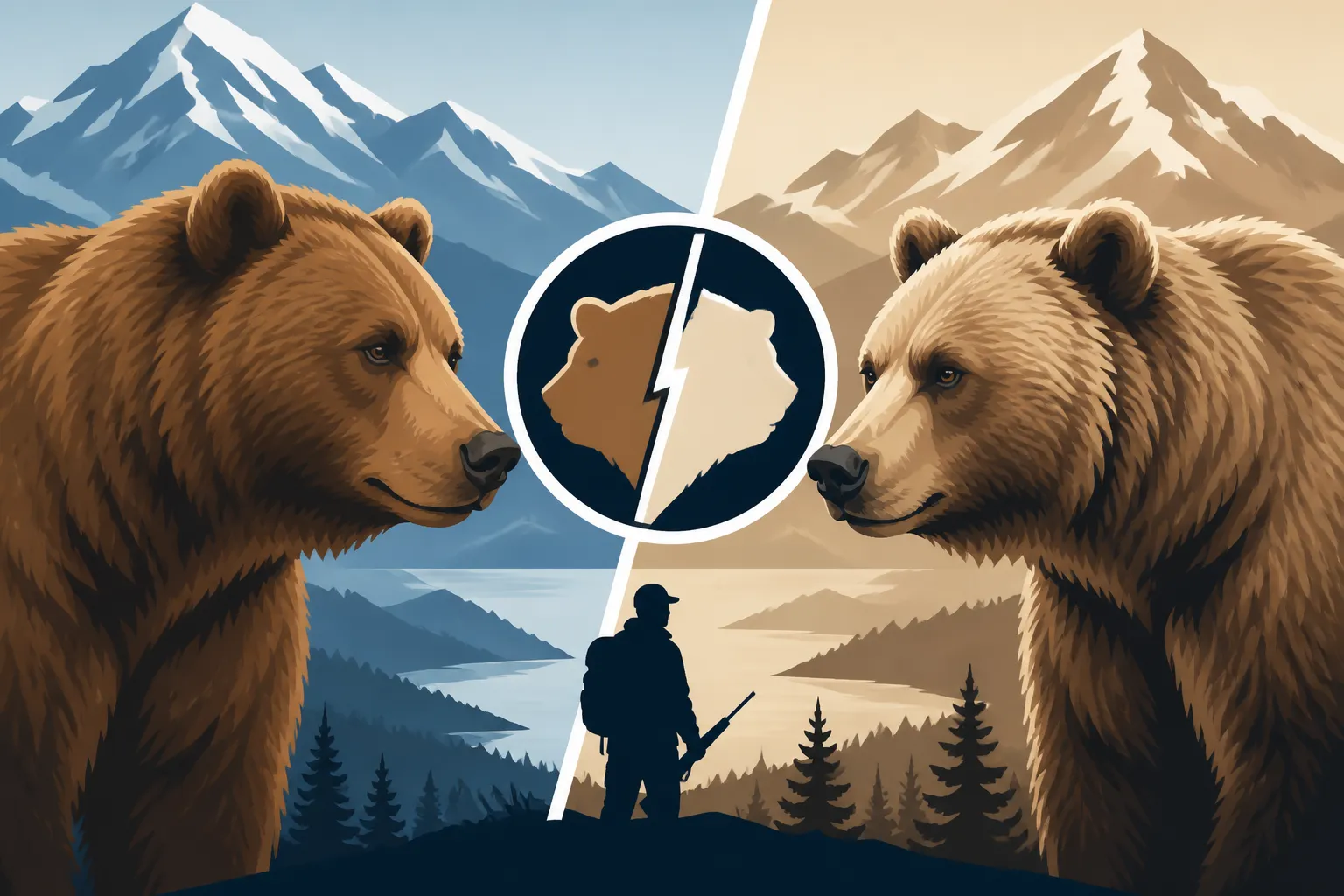
The confusion surrounding brown bears and grizzly bears is entirely understandable. You hear both terms thrown around, sometimes interchangeably, sometimes as if they're completely distinct species. It's a frustrating linguistic dance that can leave any hunter or wildlife enthusiast feeling a bit lost. But let's cut through the noise right now: from a biological standpoint, brown bears and grizzlies in North America are, in fact, the same species: Ursus arctos. The differences we perceive are primarily based on geography, diet, and the sheer scale of their environment.
One Species, Many Names
The scientific community recognizes all brown bears and grizzly bears in North America as one single species, Ursus arctos. The reason we have these two common names boils down to a historical classification system and, quite frankly, human observation. Early naturalists and settlers noticed that the bears living along the coastlines, with access to incredibly rich food sources like salmon, grew to immense sizes and often had darker, more uniform coats. They called these "brown bears." Conversely, bears living in the vast, rugged interior, far from the ocean's bounty, tended to be smaller, sometimes with lighter-tipped guard hairs that gave them a "grizzled" appearance. These were dubbed "grizzly bears."
It’s important to remember that these names were more descriptive of where the bears lived and what they ate than a strict genetic distinction. Imagine calling a large, well-fed deer in a lush agricultural valley a "field deer" and a smaller, leaner deer from a sparse mountain range a "mountain deer." They're both still white-tailed deer, but their environment has shaped their physical characteristics. The same principle applies to Ursus arctos in Alaska.
How Habitat Shapes Identity
The most significant factor influencing the perceived differences between brown bears and grizzlies is their habitat, particularly the availability and quality of their food sources. Alaska is a massive state with incredibly diverse ecosystems, and a bear's diet directly impacts its size, temperament, and even its coat color. This is why you'll see such a variation, even within the same species.
Along Alaska's expansive coastlines, from Southeast to the Alaska Peninsula and Kodiak Island, marine influence means an abundance of high-calorie foods. Salmon runs, in particular, are an absolute feast, providing bears with a protein and fat-rich diet that allows them to grow to prodigious sizes. They also forage on nutrient-dense sedges, clams dug from tidal flats, and carrion washed ashore. This consistent, rich food supply allows coastal bears to pack on hundreds of pounds, giving them a more robust, often larger appearance.
In contrast, the interior regions of Alaska, far from the marine bounty, present a different challenge. Here, bears must subsist on a more varied and often less calorie-dense diet. They consume berries, roots, grubs, small mammals like ground squirrels, and are opportunistic predators of moose or caribou calves. This necessitates covering vast amounts of territory to find enough food, resulting in a generally leaner build and a smaller average size. Their lives are often a constant search for sustenance across sparse tundras, mountain slopes, and boreal forests.
Coastal Giants: The Alaska Brown Bear
When people talk about the "Alaska brown bear," they're often envisioning the colossal bears found roaming the state's incredible coastal regions. These are truly magnificent animals, epitomizing raw power and the abundance of nature. Their sheer size and impressive presence are a direct reflection of the unique, nutrient-rich environments they inhabit.
Life Along the Salmon Streams
Picture a massive, shaggy bear standing mid-stream, powerfully swatting a silver salmon out of the water. This iconic image is the heart of what makes coastal brown bears so impressive. The anadromous salmon runs are an absolute game-changer for these animals. From late spring through fall, rivers and streams are teeming with salmon returning to spawn, offering a concentrated, high-energy food source unlike almost anything else on earth. Bears will gorge themselves, sometimes eating dozens of fish a day, building up critical fat reserves needed to survive the long winter denning period. If you want to dive deeper into why these bears get so big, exploring What Makes Alaska Peninsula Bears So Large can be incredibly insightful.
But it's not just salmon; coastal brown bears utilize a wide array of marine resources. They'll patrol beaches for carrion, dig for clams and other shellfish in tidal flats, and graze on nutrient-rich sedges that grow in coastal meadows. This diverse, calorie-rich buffet allows them to grow significantly larger than their interior counterparts. It's not uncommon for adult coastal boars to tip the scales well over 800 pounds, with some individuals pushing past 1,200 pounds in prime feeding areas like Kodiak Island (within Game Management Unit 8) or the famous Alaska Peninsula (particularly Unit 9). This consistent, abundant food supply contributes not only to their impressive body mass but also to their robust skull development and overall longevity.
Behavior and Territory
With such an abundant food supply concentrated in certain areas, coastal brown bears often exhibit different behavioral patterns. While still largely solitary animals, the sheer density of food can lead to higher concentrations of bears, especially around prime fishing streams. This means they might tolerate other bears more readily than interior grizzlies, though territorial disputes, particularly among dominant boars during the rut or around prime feeding spots, are still common. Their home ranges tend to be smaller, as they don't need to travel as extensively to find food.
Their dominance in these ecosystems is clear. They are the apex predators, and everything else in their environment adjusts accordingly. For hunters, this translates into a crucial need for heightened awareness and meticulous preparation, especially when field dressing a kill. The scent of fresh meat can attract bears from surprisingly far away, making vigilance and a solid safety plan absolutely non-negotiable. Understanding best practices for Bear Safety While Butchering a Kill in Alaska is paramount when operating in these areas. Tools like GoHunt can be invaluable for scouting specific areas and understanding historical bear activity, helping you prepare for these encounters.
Interior Wanderers: The Grizzly Bear
Stepping away from the coast and into Alaska's vast interior, you encounter the same species, Ursus arctos, but with a different set of adaptations and a distinct character that has earned them the moniker "grizzly." These bears are the ultimate survivors, hardened by a landscape that demands constant effort to thrive.
Surviving in the Tundra and Mountains
Unlike their coastal cousins who often feast on salmon, interior grizzlies face a much more varied and demanding diet. Their sustenance comes from a wider array of sources, requiring them to be truly omnivorous and opportunistic. Berries like blueberries, cranberries, and crowberries are a critical seasonal food source, especially in late summer and fall. They'll dig for roots, grubs, and even small rodents like arctic ground squirrels, which can make up a significant portion of their diet. They are also adept at preying on young moose or caribou calves, particularly during the spring when these vulnerable animals are born. If you're keen to understand the nuances, our article on Interior Grizzly Behavior Versus Coastal Brown Bears provides even more detail.
This leaner, more dispersed diet means interior grizzlies typically do not reach the immense sizes seen on the coast. While still incredibly powerful and dangerous, an interior grizzly boar might weigh between 400-800 pounds, a significant difference from their coastal relatives. They often appear leaner and more muscular, with a prominent shoulder hump and sometimes a dish-shaped face. Their fur also often exhibits the characteristic "grizzled" appearance – lighter tips on the guard hairs – which is where they get their common name. You'll find these hardy bears throughout the vast wilderness areas of interior Alaska, from the Tanana Flats (Unit 20A) to the rugged peaks of the Brooks Range (Unit 26).
Adaptations to a Leaner Landscape
Life for an interior grizzly is a testament to adaptability and resilience. Because food is less concentrated, these bears have evolved to cover immense territories, sometimes hundreds of square miles, in their continuous search for sustenance. This often leads to a more solitary existence compared to the higher densities observed in salmon-rich coastal areas. Their metabolism is finely tuned to extract every possible calorie from what they find, and they spend significant portions of their active season foraging.
The harsh interior winters also mean longer denning periods. Unlike coastal bears who might emerge earlier due to abundant spring sedges and early salmon runs, interior grizzlies often remain in their dens for extended durations, relying heavily on the fat reserves built during the shorter, but intense, feeding seasons. To learn more about this critical part of their life cycle, check out Brown Bear Denning Timing in Alaska. Their survival depends on their ability to efficiently utilize scarce resources and adapt to extreme seasonal changes, making them true wilderness icons.
Practical Implications for Hunters
For anyone venturing into Alaska's wild country, whether you're a hunter or just an outdoor enthusiast, understanding the nuances of these incredible animals is critical. While the terms "brown bear" and "grizzly" might technically refer to the same species, recognizing their regional differences can impact your preparation, safety, and even your hunting strategy.
Field Identification and Judging
Accurate identification is not just for bragging rights; it's often a matter of legal compliance and personal safety. While a biologist will tell you they're the same species, regulations often use the terms "brown bear" and "grizzly bear" to distinguish between coastal and interior populations, which can have different management strategies, seasons, and bag limits. When you're in the field, trying to discern a legal animal or simply understanding the potential size of a bear you encounter, generalizations can be tricky. A brown bear from the southern coast might appear much larger and darker than a grizzly from the central Interior, even if they're both mature boars.
Look for a prominent shoulder hump (more noticeable on grizzlies due to their stronger digging muscles) and a somewhat dished facial profile. However, these are generalities, and individual variation is immense. The true determinant of size often comes down to the skull and body mass, which can only be fully appreciated up close or after the fact when Squaring a Brown Bear Hide. Learning to differentiate between Boar Versus Sow Identification in the Field is also vital for ethical and legal hunting. Resources like GoHunt can provide invaluable mapping and historical data, helping you to research the specific characteristics and typical sizes of bears in the unit you plan to hunt, offering critical context before you even step foot in the field.
Gear, Tactics, and Safety Considerations
Regardless of whether you call it a brown bear or a grizzly, a large, carnivorous mammal with a formidable set of teeth and claws demands respect and thorough preparation. This means carrying adequate firepower for personal defense and ethical hunting. Generally, a .30-06 is considered a bare minimum for brown/grizzly bears, with many experienced hunters opting for larger calibers like a .338 Win Mag or .375 H&H, especially for the larger coastal animals. You can explore this further in our guide on Rifle Choice for Alaska Brown Bear Country.
Moreover, bear spray should be considered mandatory equipment in all Alaska bear country, regardless of species or location. It's often your first, best, and safest defense in a close encounter. Understanding the pros and cons of Bear Spray Versus Rifle at Close Range can literally save your life. Proper food storage in bear-resistant containers, making noise while hiking, and traveling in groups are also crucial safety measures. For non-resident hunters, it's also critical to remember that for brown/grizzly bears, you must be accompanied by an Alaska-licensed guide or a second-degree-of-kindred relative who is an Alaska resident. This is a strict regulation, and you can find more information on Alaska's Brown Bear, Sheep and Goat Guide Requirement.
Always consult current regulations for the specific Game Management Unit you plan to hunt, as seasons, bag limits, and methods of take can vary significantly. Utilizing advanced hunting planning platforms like GoHunt can make the complex process of researching draw odds, unit information, and season dates much more manageable, ensuring you're fully informed and prepared for your adventure in Alaska's bear country.
| Feature | Coastal Brown Bear | Interior Grizzly Bear |
|---|---|---|
| Scientific Name | Ursus arctos | Ursus arctos |
| Primary Habitat | Coastal regions, salmon-rich rivers | Interior mountains, tundra, boreal forest |
| Typical Diet | Salmon, marine mammals, berries, carrion, sedges | Berries, roots, small mammals, moose/caribou calves, carrion |
| Average Size | Often larger, heavier, can exceed 1,000 lbs | Generally smaller, leaner, rarely over 800 lbs |
| Coloration | Highly variable: blonde to dark brown, often darker | Highly variable: light to dark brown, often with "grizzled" tips |
| Denning Period | Typically shorter due to abundant food | Often longer, especially in northern interior |
Disclaimer
This article is for general informational purposes only and does not constitute professional advice. Laws, prices and regulations vary by location and change over time. Consult a qualified professional for guidance on your specific situation.