White-Tailed Ptarmigan in Alaska Alpine
For many hunters, the image of Alaska is all about colossal moose, massive brown bears, or majestic Dall sheep high on a mountain. But overlooking the smaller game up there, especially the hardy white-tailed ptarmigan, means missing out on some truly incredible experiences, not to mention a fantastic addition to the camp pot. Many folks struggle to even identify these feathered gems, let alone figure out how and where to hunt them in the vastness of the Alaskan alpine. This guide is here to help you understand the unique world of the white-tailed ptarmigan and equip you with the knowledge to pursue them successfully and ethically in Alaska's high country.
Understanding Alaska's Ptarmigan Species and Habitat
Alaska is home to three species of ptarmigan, each adapted to survive the harsh northern climate. While they all share the remarkable ability to change their plumage with the seasons, the white-tailed ptarmigan truly stands out due to its specific habitat and subtle differences. It's not just about what they look like in winter white; knowing their year-round characteristics and preferred terrain is key to finding them.
Differentiating White-Tailed Ptarmigan from Rock and Willow
When you're up in the vastness of the Alaska Range or the Chugach, it can be easy to mistake one ptarmigan for another, especially when they're in their camouflaged phases. However, there are some clear distinctions that will help you tell them apart. The most common ptarmigan in Alaska is the Willow Ptarmigan, which often favors denser willow thickets at lower elevations, particularly near river bottoms or brushy slopes. Rock Ptarmigan tend to occupy more open, rocky tundra and sub-alpine zones, often sharing some overlap with the Willow.
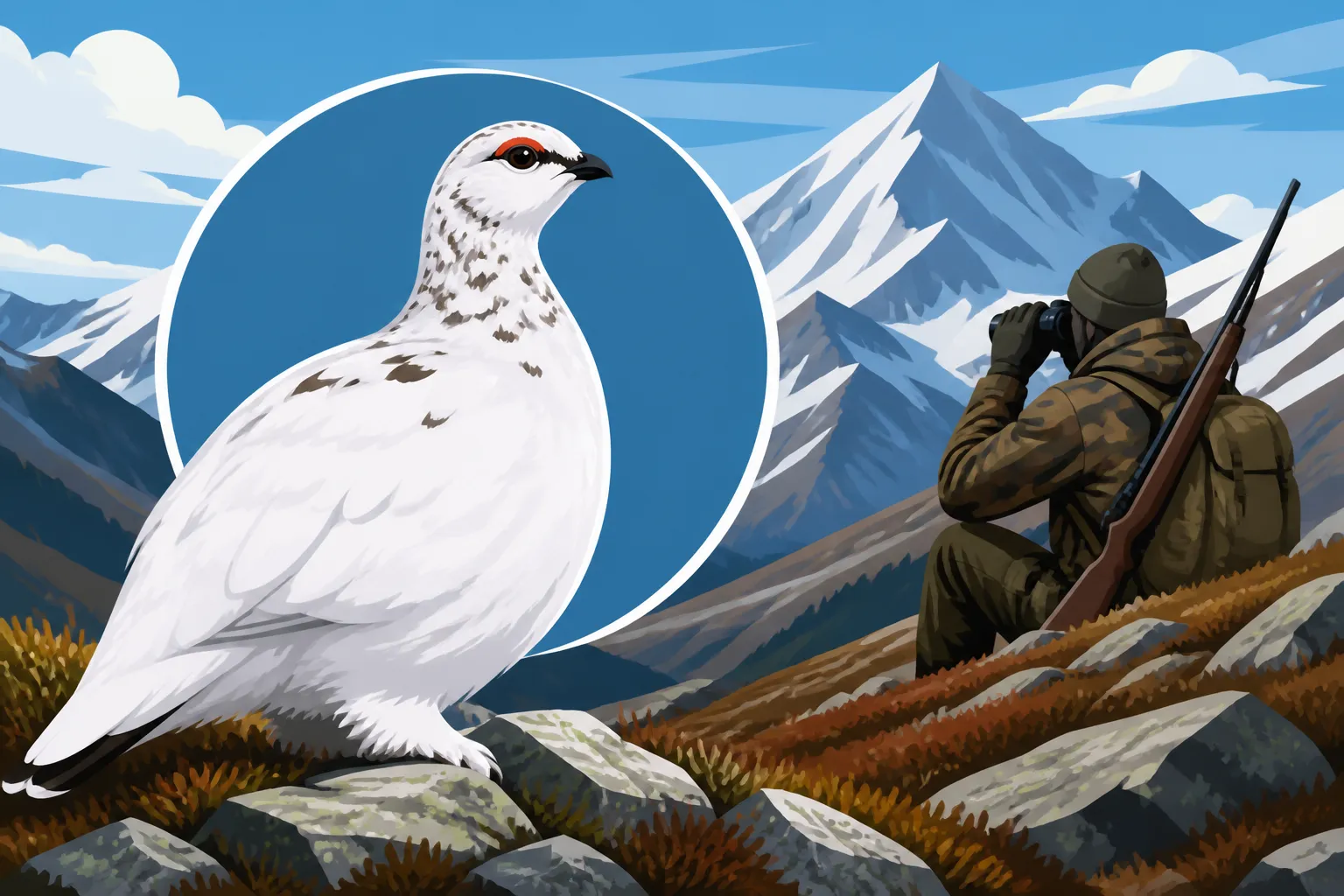
The white-tailed ptarmigan, on the other hand, is the smallest of the three and the only one that retains white tail feathers year-round. This is its definitive field mark, regardless of whether it's wearing its summer mottled brown or its winter pure white coat. Even in summer, when Willow and Rock ptarmigan will have dark tail feathers, the white-tail's will always be strikingly white. This unique characteristic is a reliable way to differentiate them, and it speaks to their preference for perpetually snowy or high-alpine environments where white camouflage is a year-round advantage. Willow Ptarmigan Versus Rock Ptarmigan dives deeper into the distinctions between those two common species.
Here's a quick comparison of the three ptarmigan species you might encounter in Alaska:
| Feature | White-Tailed Ptarmigan | Rock Ptarmigan | Willow Ptarmigan |
|---|---|---|---|
| Size | Smallest | Medium | Largest |
| Tail Feathers (Year-round) | Always White | Dark, with some white edges in winter | Always Dark |
| Habitat Preference | High alpine, rocky slopes, permanent snowfields | Open, rocky tundra, sub-alpine | Willow thickets, river bottoms, brushy slopes |
| Call | Soft clucking, often quiet | Raspy croak, cackles | Deep gobbling, cackles |
| Brow Comb (Males) | Small, often barely visible | Prominent, especially in spring | Very prominent, bright red in spring |
The Alpine World: Where White-Tails Thrive
White-tailed ptarmigan are truly creatures of the high alpine. We're talking about those windswept ridges, rocky cirques, and sparse tundra well above the timberline. While you might occasionally find them lower, especially during fall migrations or extreme weather, their bread and butter is the terrain that often looks barren to the untrained eye. This is where they find their preferred food sources: mountain avens, willow buds, lichens, and a variety of alpine forbs. They are incredibly hardy, digging into snow burrows to escape blizzards and foraging tirelessly in seemingly desolate landscapes.
To find white-tails, you need to think like a mountain goat. Look for areas with rockslides, scree fields, and rocky outcrops that offer both cover from aerial predators and access to sparse vegetation. They often hug the edges of permanent snowfields, even in late summer, where the cooler temperatures suit them. When you're glassing for Dall sheep or scouting for other alpine game, keep an eye out for these little white-feathered bursts against the rocks. Their camouflage is incredible, so a slow, methodical approach to glassing is often required. Remember, these birds aren't typically found in dense forests or even expansive, flat tundra. They prefer the broken, vertical world.
Hunting White-Tailed Ptarmigan: Tactics and Seasons
Hunting white-tailed ptarmigan can be an incredibly rewarding experience, offering a chance to explore some of Alaska's most breathtaking landscapes. Unlike chasing a bull moose through the lowlands, this hunt often involves significant elevation gain and requires a different set of skills and gear. It's less about brute force and more about patience, observation, and respect for the high country.
Best Times and Methods for Alpine Ptarmigan
The hunting seasons for ptarmigan in Alaska are generally long, often running from August 10th through late winter or early spring in many units. However, for white-tailed ptarmigan, the best time is often in the early fall, from late August through September. During this period, the weather can still be relatively mild, making the ascent into the alpine more manageable. The birds will be in their mottled brown plumage, blending in with the tundra, but they are often still in small coveys, making them easier to locate. As winter approaches and snow begins to accumulate, they'll transition to their pure white plumage, becoming incredibly difficult to spot against a snowy backdrop, though tracks can sometimes give them away.
When it comes to methods, a classic walk-up or "kick-out" style hunt works well. Unlike larger game, ptarmigan will often hold tight, allowing hunters to approach within shooting range before flushing. This makes for exciting, close-quarters wing shooting. However, given their alpine habitat, you'll spend a lot of time walking and climbing. Many hunters will combine a ptarmigan hunt with a bigger game pursuit, taking advantage of being in high country already. Waterfowl and Ptarmigan as Camp Meat is a great reference for preparing your harvest. You might be Shooting Grouse Along a Pack Trail with a small gauge shotgun, but for ptarmigan, you'll be off the beaten path.
For scouting, utilize binoculars and spotting scopes. Instead of just walking, spend time glassing likely areas – rocky slopes, the edges of snowfields, and areas with sparse, low-lying vegetation. Once you spot a bird or a covey, plan your approach carefully to get within shooting distance. Sometimes, the birds will simply run uphill if given the chance, so cutting them off or working above them can be effective. Dogs can be a huge asset for locating and flushing these camouflaged birds, especially if they are well-trained for mountain terrain and can handle the cold. Just make sure your dog is accustomed to the physical demands of an alpine hunt.
Essential Gear for High-Altitude Ptarmigan Hunts
Preparing for an alpine ptarmigan hunt means thinking about mountain travel as much as hunting. Your gear needs to prioritize comfort, safety, and efficiency in a harsh environment. This isn't a stroll through the park; it's a climb.
First and foremost, your footwear is critical. Sturdy, waterproof, ankle-supporting hiking boots are non-negotiable. You'll be traversing rocky scree, potentially wet tundra, and steep slopes. Good socks, designed for hiking, will prevent blisters. Layered clothing is also key. The alpine environment can swing from warm sunshine to freezing wind and snow in a matter of hours. Start with a moisture-wicking base layer, add an insulating mid-layer (fleece or puffy jacket), and top it with a waterproof and windproof outer shell. Don't forget a warm hat and gloves, even in early fall.
For the actual hunt, a lightweight shotgun (20 gauge or 12 gauge with light loads) is ideal. Consider smaller shot sizes, like 6 or 7.5, as ptarmigan are relatively small birds. You'll also want to carry enough shells, but be mindful of weight. A good backpack is essential for carrying your layers, water, snacks, first-aid kit, and any harvested birds. Navigation tools, like a reliable GPS unit with pre-loaded maps or a smartphone with offline mapping capabilities (and backup battery!), are crucial. Cell service is virtually non-existent in much of Alaska's alpine, so Alpine Navigation Without Cell Service is a skill you'll want to master. Many hunters use resources like GoHunt to research units and gain insight into terrain before they even leave home, downloading those critical offline maps.
Don't forget water. Even in cool weather, climbing at altitude can dehydrate you quickly. A water filter or purification tablets are smart to carry, as Water Sources at a High Spike Camp can be unreliable. Binoculars (8x or 10x) are indispensable for spotting birds from a distance and identifying suitable habitat. If you're combining this with a larger game hunt, you might already have a spotting scope, which can also be useful for distant ptarmigan. Some hunters might even be Shooting Small Game With a Big Game Rifle if opportunities arise, but for consistent ptarmigan hunting, a scattergun is preferred.
Regulations and Responsible Ptarmigan Hunting
Alaska has diverse hunting regulations, and even for small game like ptarmigan, it's vital to know the rules. Ethical hunting practices and proper meat care are just as important for a ptarmigan as they are for a moose. Respect for the resource and the land is paramount.
Navigating Alaska's Small Game Regulations
The Alaska Department of Fish and Game (ADF&G) publishes detailed hunting regulations annually, and it's your responsibility to be familiar with them for the specific Game Management Unit (GMU) you plan to hunt. Ptarmigan are generally classified as small game, and in most areas, they fall under a general hunting season that requires a valid Alaska hunting license. Unlike big game species that often require drawing permits or locking tags, ptarmigan typically do not. However, bag limits and possession limits are in place, and these can vary by GMU.
Always check the current regulations booklet for the precise dates, bag limits, and any special restrictions for your chosen area. Some areas might have specific limitations on weapon types or motorized access, even for small game. While the general seasons are long, local closures or emergency orders can occur, so staying informed is key. Tools like GoHunt can be invaluable for cross-referencing GMU boundaries with regulations and understanding the nuances of different hunting areas. Before heading out, consider reviewing topics like Downloading Offline Maps Before a Fly-In to ensure you have all relevant information at your fingertips, especially since cell service is often unreliable.
Ethical Considerations and Meat Care
Ethical hunting extends to small game just as much as it does to big game. The primary goal should always be a clean, humane kill and full utilization of the animal. Ptarmigan are delicious, and their meat is prized by those who know it. After a successful shot, immediately retrieve the bird. In the alpine, a bird can easily tumble down a scree slope or disappear into thick cover if not quickly collected.
Once retrieved, proper field care is essential, especially if you plan to keep the meat. In cooler alpine temperatures, you have a bit more leeway than in warmer lowlands, but it's still best to clean the birds as soon as possible. Pluck or breast out the birds, then remove the entrails. If you're a long way from camp, simply gutting them and allowing them to cool thoroughly will buy you time. Place the cleaned birds in breathable game bags to allow air circulation, preventing moisture buildup and spoilage.
If you're on a multi-day hunt, keeping the meat cool is paramount. Hang game bags in a shady, airy spot, away from direct sunlight and any potential predators. Hanging Meat in Warm September Weather details this for big game, but the principles apply to small game too. Consider taking a Two-Man Tent Weight for a Sheep Hunt that might offer enough space to keep game bags shaded. The alpine environment is often naturally cool, but sunny days can still heat things up. Remember, the goal is to enjoy the harvest, and that starts with careful attention in the field. Leave no trace, pack out all your casings and trash, and respect the fragile alpine ecosystem.
Disclaimer
This article is for general informational purposes only and does not constitute professional advice. Laws, prices and regulations vary by location and change over time. Consult a qualified professional for guidance on your specific situation.