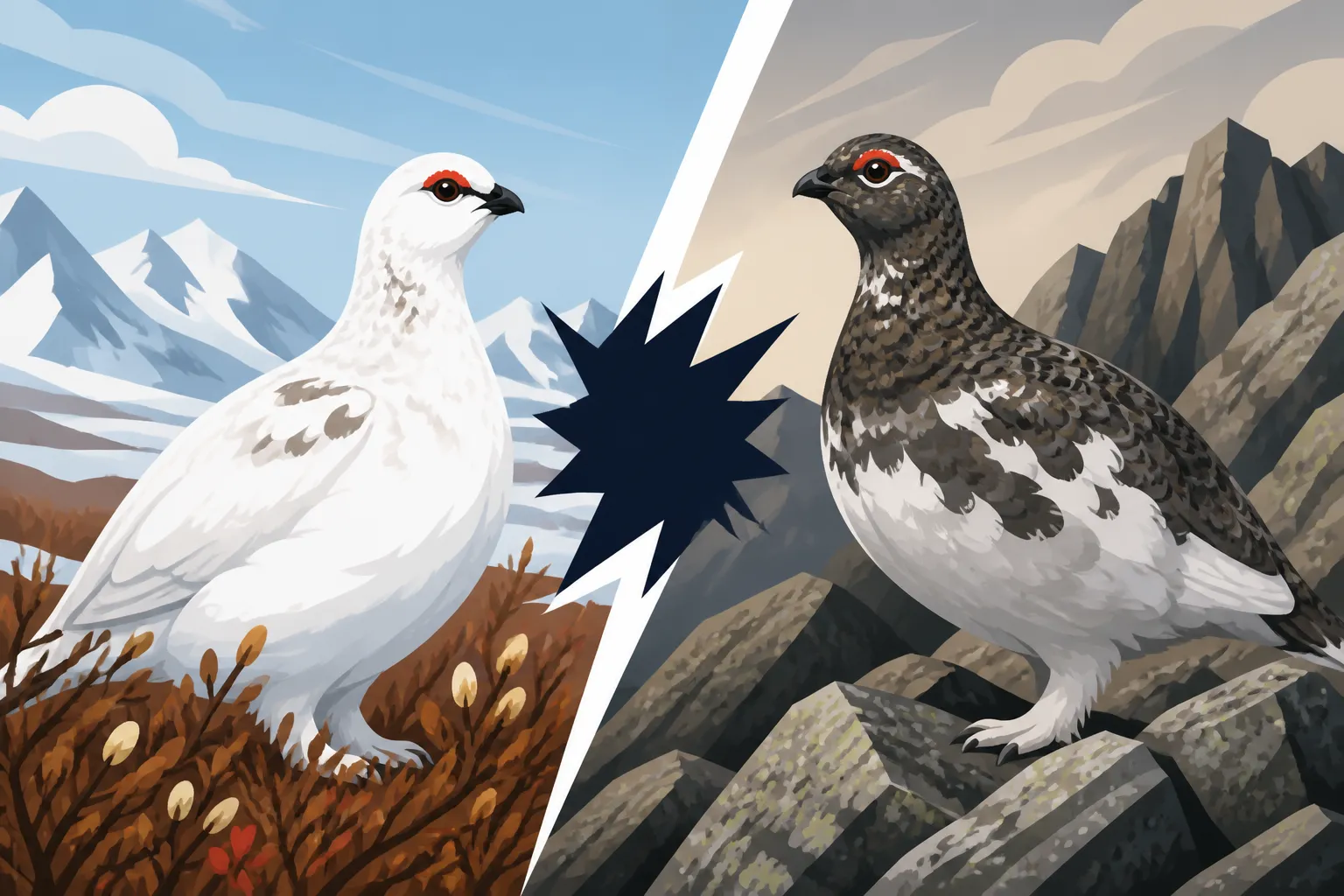
Willow Ptarmigan Versus Rock Ptarmigan
Hunting in Alaska often means focusing on the big game – the moose, the sheep, the bears. But for those of us who appreciate every opportunity the backcountry offers, the smaller game birds provide a unique challenge and a delicious reward. One common point of confusion for hunters new to the Alaska landscape, and even some seasoned veterans, is confidently distinguishing between the Willow Ptarmigan and the Rock Ptarmigan. This guide aims to clear up that confusion, offering practical tips and detailed comparisons so you can correctly identify these fascinating birds in the field, ensuring you're targeting the right species and appreciating the nuances of their wild existence.
Discerning Their Domains: Habitat and Geographical Distribution
Understanding where each ptarmigan species prefers to live is often the first, and sometimes most crucial, step in identifying them. While they can sometimes overlap, their core habitats are quite distinct, shaped by vegetation, elevation, and terrain.
The Low-Lying Willow World of the Willow Ptarmigan
The Willow Ptarmigan, as its name suggests, is a creature of the brushy lowlands and transitional zones. You'll find these birds in dense willow thickets that line river bottoms, sprawl across marshy tundras, and form the dense brush at and just below the timberline. They thrive in areas with plenty of cover, where they can duck into dense branches for protection from predators and the elements. Think of the sprawling, often soggy, valleys and rolling hillsides carpeted in waist-high brush – that's prime Willow Ptarmigan country. They often prefer areas with a mix of dwarf birch, alder, and, of course, various species of willow, providing both food and concealment.
Hunting Willow Ptarmigan often means trudging through this kind of dense, tangled vegetation. It's not a light hike; it's a push through brush that can grab your boots and whip you in the face. These birds rely on their camouflage and the thick cover to avoid detection, flushing close by with an explosive burst of wings that can startle even the most prepared hunter. If you're slogging through a recent burn area where willow has exploded in thick regrowth, you might be in their domain. This kind of environment is also often frequented by larger game, showing how interconnected these ecosystems are.
The High-Altitude Haven of the Rock Ptarmigan
In stark contrast, the Rock Ptarmigan is an inhabitant of the high country. You'll encounter these hardy birds on barren alpine ridges, vast scree slopes, rocky outcrops, and windswept plateaus far above the timberline. Their world is one of exposed rock and sparse, hardy vegetation – mosses, lichens, and low-growing alpine plants that cling to life in the harsh environment. They are perfectly adapted to blend into this rocky, often monochromatic landscape, their plumage mimicking the very stones they walk among.
Hunting Rock Ptarmigan typically involves strenuous climbs into rugged, unforgiving terrain. It's a game of glassing vast areas and then executing careful stalks across loose shale and steep slopes. These birds often hold tight, relying on their incredible camouflage against the rocks, only flushing when you're almost on top of them. If you're ascending a mountain in search of Dall sheep, navigating the high, rocky benches where they find their feed, there's a good chance you might encounter Rock Ptarmigan. They share these high-altitude domains with other iconic Alaska species that thrive in the sparse yet rich environment, often grazing on similar plants. Using a tool like GoHunt might show you terrain maps that highlight these distinct elevation bands, aiding in your pre-hunt scouting.
Overlapping Territories and Seasonal Shifts
While their preferred habitats are distinct, it's not always a clear-cut line. There are transition zones, often near the timberline, where both species can be found. Imagine a mountainside where the dense willow thins out and gives way to more scattered brush and then rocky scree slopes – here, you might encounter either bird. This is where identification becomes trickier, and paying close attention to other physical cues becomes paramount.
Both species also undertake seasonal movements, often driven by food availability and snow depth. Rock Ptarmigan, for instance, might move down to slightly lower elevations during severe winter weather to find more accessible forage, though they rarely descend into the dense willow bottoms favored by their cousins. Willow Ptarmigan, on the other hand, might push into higher alpine areas during the summer months if specific food sources are abundant there, but they generally prefer the cover of brush. These shifts can make mid-season identification challenging, as a bird found in an atypical location requires closer scrutiny. A detailed trip plan that notes these ecological boundaries can be invaluable, especially when you're navigating complex terrain without cell service.
Telling Them Apart: Key Physical Characteristics for Field ID
Beyond habitat, the most definitive way to tell Willow and Rock Ptarmigan apart is by their physical characteristics. While both species undergo dramatic seasonal plumage changes to adapt to the Alaskan environment, there are several key features to look for that will help you make a confident identification.
Plumage Puzzles: Seasonal Color Changes
Both Willow and Rock Ptarmigan are masters of camouflage, evolving to match their surroundings perfectly through seasonal changes in their feather coats. In winter, both species turn almost entirely snow white. This pure white plumage, often with a few dark feathers on the tail, makes them incredibly difficult to spot against a snow-covered landscape. It's during this time that many hunters find it hardest to tell them apart, as their overall appearance can be strikingly similar.
However, once the snow begins to recede and the ground cover emerges, their summer plumage offers clearer distinctions. The Willow Ptarmigan generally adopts a richer, browner, and more rufous (reddish-brown) coloration. Its body is often barred with darker brown patterns, but the overall impression is one of warmth and earthiness, blending perfectly with the reddish tones of early summer willow branches and tundra vegetation. The Rock Ptarmigan, by contrast, tends to have a greyer, more finely barred, and mottled summer plumage, often resembling the lichens and rocks of its high-alpine home. Its patterning is usually more intricate and "granite-like" than the Willow's broader brown bars. The real puzzle often comes during the transition periods in spring and fall, when birds are molting, displaying a blotchy mix of white and their summer colors. This makes a quick glance unreliable; you need to key in on more specific details.
The Bill and Eye Comb: Subtle Yet Crucial Clues
When you get a good look at a ptarmigan, either through binoculars or after a flush, focus on its head. The bill and the fleshy comb above the eye can provide critical identification markers.
The Willow Ptarmigan typically has a larger, stouter bill. Think of it as a robust bill, well-suited for nipping buds and shoots from woody vegetation. The red comb above the eye on male Willow Ptarmigan is also usually more prominent, especially during the breeding season. It's a noticeable fleshy growth that stands out against the surrounding feathers. These features, while subtle, are consistent and can be quite helpful. Imagine you're scanning a willow flat, and you spot a bird that’s mostly white but has a noticeably heavy bill and a distinct red comb – that's a strong indicator you're looking at a Willow Ptarmigan.
The Rock Ptarmigan, conversely, tends to have a smaller, daintier bill. It's a finer bill, better adapted for picking at smaller alpine berries, seeds, and insects among rocks. Its red comb, even on males, is generally less prominent and can often be harder to spot. It’s not as robust or flashy as the Willow Ptarmigan's. This difference in bill size reflects their dietary preferences and the types of vegetation available in their respective habitats. When glassing at first light versus midday, look for these subtle differences, as the light can play tricks on your eyes.
Tail Feathers and Size: The Definitive Tells
If you can get a glimpse of the bird in flight, or a clear view of its rear, the tail feathers are often the most definitive and reliable characteristic for identification, especially when plumage is transitional or light conditions are poor.
The Willow Ptarmigan has an entirely black tail. While the tips of the tail feathers might appear white when the bird is at rest, this is due to an overlay of white body feathers. When it flies, or if you can see the fanned tail, it will appear uniformly dark. This all-black tail is a key identifier. Willow Ptarmigan are also generally the larger of the two species, with a more robust body build, reflecting their more substantial diet in richer habitats.
The Rock Ptarmigan, on the other hand, has outer tail feathers that are black, but its central tail feathers are white, sometimes with a faint dark bar across them. This creates a distinctive white patch in the middle of a fanned tail that is quite noticeable in flight. This white central tail is often the "aha!" moment for many hunters trying to tell the two apart. Rock Ptarmigan are typically smaller and slightly more slender than their willow-dwelling cousins, a build that suits their existence in harsh, windswept alpine environments. This difference in tail pattern holds true across all seasons, even when the rest of their body is pure white.
Here's a quick comparison table to help you keep these key differences straight:
| Feature | Willow Ptarmigan | Rock Ptarmigan |
|---|---|---|
| Primary Habitat | Willow thickets, brushy tundra, river bottoms | Alpine ridges, rocky slopes, above timberline |
| Summer Plumage | Richer brown, rufous, broadly barred | Greyer, finely barred, mottled, lichen-like |
| Bill Size | Larger, stouter | Smaller, daintier |
| Eye Comb (Males) | More prominent, noticeable red | Less prominent, often subtle red |
| Tail Feathers | All black (tips often covered by white body feathers) | Outer black, central white (key identifier) |
| Body Size | Generally larger, more robust | Generally smaller, more slender |
Hunting Them in Alaska: Tactics and Regulations
Hunting ptarmigan in Alaska is an incredible experience, offering opportunities in diverse landscapes. Whether you're chasing them through dense willows or stalking them on an open mountainside, understanding the regulations and employing the right tactics will increase your success and enjoyment.
Seasons and Bag Limits: Knowing the Rules
One of the great things about ptarmigan hunting in Alaska is the relatively long seasons and generous bag limits. Generally, ptarmigan seasons run for many months, often from mid-August through March, providing ample opportunity through varying conditions. Daily bag limits are typically high, often around 10-20 birds per day, with possession limits usually double the daily. This allows for a good harvest for camp meat or to bring home.
However, it's absolutely crucial to remember that regulations can change by game management unit (GMU) and year. Always consult the current Alaska Department of Fish and Game (ADF&G) hunting regulations booklet or website before heading afield. A good resource, like GoHunt, can help keep track of these dynamic regulations. Even though the general ptarmigan rules are quite liberal, staying informed about specific unit nuances, such as Alaska Hunting Seasons and Tag Rules Explained, is your responsibility as a hunter. This is especially true if you plan to combine ptarmigan hunting with a big game hunt, as those regulations are often far more complex.
Preferred Hunting Methods: Flushing and Stalking
The best hunting method often depends on the species you're targeting and the terrain.
For Willow Ptarmigan, the game is often about flushing them from cover. Walking through dense willow thickets, especially along creeks or in natural travel corridors, is a common and effective tactic. These birds will hold tight, relying on their camouflage, until you're almost on top of them. Be ready for sudden flushes! Many hunters use pointing or flushing dogs for Willow Ptarmigan, as their ability to find hidden birds and retrieve them from the thick brush is invaluable. Without a dog, it's a slower process of systematically working through cover. A small-gauge shotgun (20 or 12 gauge) with light loads (7.5 or 6 shot) is ideal for these close-range, fast-flying shots.
Hunting Rock Ptarmigan is a different beast entirely. This often involves a spot-and-stalk approach in the open alpine. You'll spend a lot of time glassing ridges, scree slopes, and rocky benches with binoculars, searching for a tell-tale movement or a patch of feathers that looks out of place. Once spotted, a careful stalk is necessary to get within range. These birds are often more wary in their open environment, and a hasty approach will send them sailing over a ridge. A .22 caliber rimfire rifle can be very effective for Rock Ptarmigan, allowing for precise shots at longer distances without damaging much meat. If you're carrying a big game rifle, a small game adapter or simply being extremely selective with your shots is an option, although Shooting Small Game With a Big Game Rifle has its considerations. The key here is patience and keen observation, much like hunting for sheep in similar terrain, where Glassing Grids That Cover a Whole Basin can apply.
Gear Considerations for Ptarmigan Hunters
Your gear selection should reflect the demanding environments these birds inhabit. For hunting Willow Ptarmigan, especially in the soggy lowlands, waterproof boots are non-negotiable. Chest waders might even be advisable in some particularly wet areas. Durable brush pants will protect against the constant snagging of willows.
For Rock Ptarmigan, sturdy hiking boots with excellent ankle support are paramount for traversing rocky, uneven terrain. Layered clothing is crucial for both, as Alaska's weather can change dramatically in minutes, especially in the alpine. Binoculars are absolutely essential for spotting Rock Ptarmigan in their expansive habitat and for confirming identification of either species when plumage is tricky. A good pair of 10×42 binoculars can make all the difference. While not as gear-intensive as a full-blown big game hunt, planning your Backpack Hunting in Alaska: Gear Weight and Meat Loads should still include considerations for carrying out your birds and any necessary identification tools. Consider using detailed map layers on a platform like GoHunt to mark potential birding areas and plan your route effectively.
Ptarmigan on the Plate: Beyond the Hunt
After the hunt, the reward is often in the kitchen. Both Willow and Rock Ptarmigan are highly prized table fare in Alaska, offering lean, delicious meat that many hunters consider among the finest wild game.
Meat Quality and Preparation
Both species provide surprisingly good eating, but there can be subtle differences in their meat. Willow Ptarmigan meat is often described as slightly richer, with a more pronounced "gamey" flavor, likely due to their diet of willow buds and other woody vegetation. It's a dark meat, lean and robust. Rock Ptarmigan meat, while still dark and lean, can sometimes be milder in flavor, reflecting their more varied diet of alpine berries, seeds, and insects.
When preparing ptarmigan, simplicity often yields the best results. They are excellent roasted whole, pan-seared with herbs, or even added to stews or pot pies. Because the meat is so lean, care must be taken not to overcook it, as it can dry out quickly. Brining briefly or wrapping the breasts in bacon or pancetta can help retain moisture. Many hunters consider them a delicious addition to camp meals, offering a fresh protein source. Just like with Waterfowl and Ptarmigan as Camp Meat, a simple preparation over a fire can make for an unforgettable meal.
Field Care for the Best Results
Proper field care is essential to ensure the best possible meat quality. Like all game, ptarmigan should be cooled quickly, especially on warmer hunting days. If temperatures are mild, gutting the birds immediately after the kill will help them cool down faster. In colder weather, this might be less urgent, but it's still a good practice.
When it comes to plucking versus skinning, it's a matter of preference. Plucking retains the natural fat under the skin, which can add flavor and moisture during cooking, but it's a tedious task in the field. Skinning is much faster and cleaner but means you lose that protective layer. If you plan to pluck, doing it quickly while the bird is still warm can make the job easier. Carry some game bags, perhaps the kind that breathe in coastal rain, to protect your harvested birds during the pack out, keeping them clean and allowing air circulation. Ensure they are kept separate from any big game meat to avoid cross-contamination.
Disclaimer
This article is for general informational purposes only and does not constitute professional advice. Laws, prices and regulations vary by location and change over time. Consult a qualified professional for guidance on your specific situation.