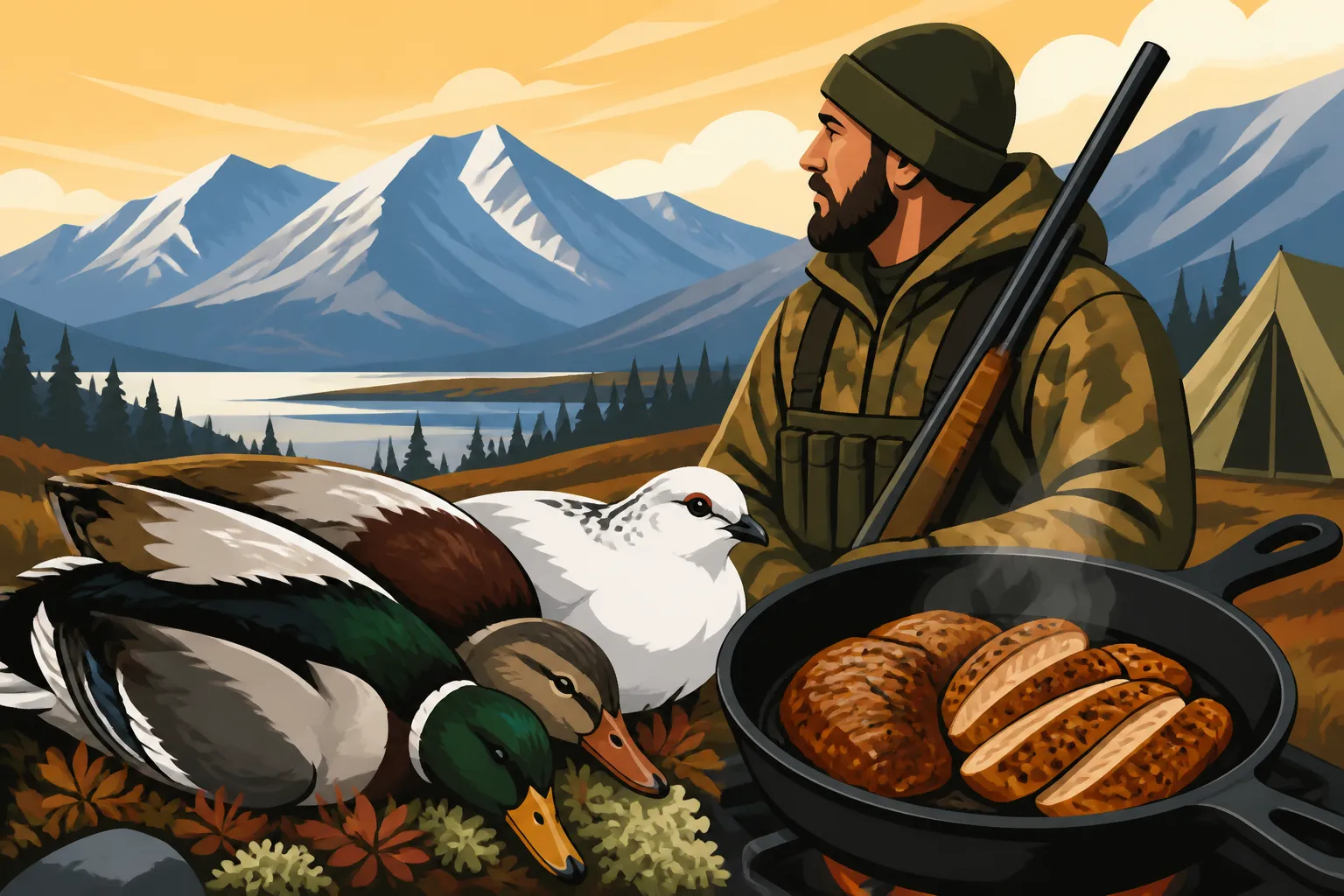
Waterfowl and Ptarmigan as Camp Meat
There’s nothing quite like the feeling of exhaustion after a long day of hunting in Alaska, especially when the big game hasn't materialized yet. It can be demoralizing, watching those miles add up with an empty pack, and the thought of another freeze-dried meal can really test your resolve. This guide is all about how you can turn those quiet moments in the field into opportunities for fresh, delicious camp meat, bringing a much-needed morale boost and a taste of the wild to your backcountry kitchen.
The Practicality of Foraging Small Game in Alaska
Hunting in Alaska is often about the pursuit of monumental animals – moose, caribou, sheep, bear. But the reality for many hunters is that these grand pursuits can involve long stretches of hard work with no guarantee of success. That’s where the often-overlooked world of small game hunting comes in, offering a practical solution to camp sustenance and a profound connection to the land.
Why Camp Meat Matters When Big Game is Scarce
Imagine you're deep in the Interior, miles from the nearest road, having spent a week glassing ridges for Dall sheep or calling for moose in the river bottoms. You've packed in a heavy load of freeze-dried meals, energy bars, and maybe a few luxuries, but the thrill of a successful big game harvest remains elusive. This is a common scenario, and it can be physically and mentally draining. The thought of constantly rehydrating meals, no matter how tasty they promise to be, can start to wear on you.
This is precisely where the ability to put some small game in the pot becomes invaluable. Not only does it supplement your carefully planned menu, but it shifts your mindset from perpetual hunger to proactive foraging. It means the difference between another monotonous meal and a genuinely fresh, wild protein source that lifts spirits and provides immediate gratification. It reminds you that even without a moose in the freezer, you’re still hunting, still providing, and still experiencing the bounty of Alaska. Plus, it can actually reduce the overall weight you need to pack in if you plan on supplementing your diet with small game.
The Mental and Physical Boost of Fresh Food
Beyond the practical caloric intake, there’s an undeniable psychological benefit to eating fresh meat in a remote camp. It’s a sensory experience: the smell of ptarmigan sizzling in a pan or the rich aroma of duck stewing over a fire after days of dried foods. This connection to the primal act of hunting and gathering, even on a smaller scale, reinforces your identity as a hunter. It combats the monotony of expedition meals and offers a taste of home, or at least a taste of real food.
Physically, the benefits are just as significant. Fresh game meat offers a different nutrient profile than processed rations, often providing readily available energy and a sense of satiety that a packet meal simply can't match. It can help maintain energy levels during physically demanding hunts, providing high-quality protein and essential fats. It's a morale booster that translates into sustained effort, sharper focus, and a more enjoyable overall hunting experience. This isn't just about survival; it’s about enriching the entire backcountry adventure.
Understanding Alaska's Waterfowl Opportunities
Alaska's vast and varied landscape, from coastal estuaries to inland tundras, provides incredible habitat for a diverse array of waterfowl. For the hunter willing to shift their focus for a few hours, these birds can offer a surprisingly abundant source of delicious camp meat.
Common Species and Their Habitats
When you're out hunting bigger game in Alaska, keep an eye—and an ear—out for the local waterfowl. You'll find ducks, geese, and swans in different habitats depending on the species and the season. Along the coastlines and in large river deltas, like those found during a float hunting Alaska rivers for moose and caribou expedition, you might encounter massive flocks of various sea ducks: harlequins, scoters, and oldsquaws (long-tailed ducks). Their rich, dark meat is distinctive and, prepared correctly, can be a camp delicacy. Further inland, especially around lakes, ponds, and slow-moving rivers, puddle ducks like mallards, pintails, and wigeon are common. Their meat tends to be milder and more versatile for cooking. Geese, such as Canada geese and specklebellies (greater white-fronted geese), are often found grazing in open areas near water or migrating overhead.
Each species has its preferred diet and habitat, which can influence the flavor of its meat. Sea ducks, for example, often feed on crustaceans and mollusks, giving their meat a stronger, sometimes "fishy" flavor that some hunters love and others find challenging. Puddle ducks, being more herbivorous, tend to have a milder taste. Being aware of these differences can help you manage your expectations and adjust your cooking methods accordingly.
Essential Gear for Waterfowl in the Backcountry
You don't need a full waterfowling spread to take advantage of these opportunities. Often, a minimalist approach is best for a big game hunter who isn't dedicating their entire trip to birds. Your primary big game rifle might be too powerful or inappropriate for small birds, but a compact, break-down shotgun or even a .22 rifle can be ideal for opportunistic encounters. If you're considering Shooting Small Game With a Big Game Rifle, be aware of trajectory and potential meat damage. A small gauge shotgun, like a 20 gauge or .410, can be surprisingly effective and light to carry. You'll also need to ensure you have the appropriate shells – typically smaller shot sizes like 4, 5, or 6.
Don't forget your legal requirements. In addition to your regular Alaska hunting license, you'll need federal and state waterfowl stamps. Understanding the specific Alaska Waterfowl Stamp Requirements is crucial before you even consider packing that shotgun. Waterproof binoculars are always a good idea for spotting birds, and a pair of lightweight hip waders or rubber boots can make retrieving downed birds in shallow water much easier and safer, especially if you're not planning to jump into icy Alaskan waters. A few basic game bags, like those useful for Game Bags That Breathe in Coastal Rain, can also be invaluable for keeping your birds clean and cool until you're ready to process them.
Ptarmigan: The High-Country Delicacy
While waterfowl often demand proximity to water, ptarmigan are the quintessential bird of Alaska's high country, offering a unique and often more accessible small game opportunity for hunters traversing alpine terrain.
Identifying Ptarmigan Species and Their Terrain
Alaska is home to three species of ptarmigan: Willow, Rock, and White-tailed. Each has its preferred habitat, but all share a remarkable camouflage that allows them to blend seamlessly into their surroundings, changing their plumage with the seasons. The Willow Ptarmigan, Alaska's state bird, is typically found in brushy tundra, willow thickets, and open forests, often at lower elevations or along the treeline. The Rock Ptarmigan prefers higher, rockier alpine tundra, often where you'd be glassing for Dall sheep. White-tailed Ptarmigan are the most alpine of the three, found exclusively above the treeline in rocky, open country, often on high ridges and mountain slopes. Knowing these preferences, which are also detailed in Ptarmigan Species Found in Alaska, can help you focus your efforts depending on the elevation and terrain you're hunting.
Identifying them can be a challenge due to their excellent camouflage, but their distinct calls and flushing behavior can give them away. In summer, they sport mottled brown plumage, blending with rocks and tundra. Come winter, they turn almost entirely white, making them incredibly difficult to spot against the snow. Observing their movements carefully, especially after a flush, is key to locating a covey or individual bird.
Stalking Tactics and Shot Placement
Ptarmigan are often called "fool hens" because they can hold incredibly tight, allowing a hunter to get surprisingly close. However, this doesn't mean they're always easy targets. When you're actively hiking through alpine country on a big game hunt, keep an eye on open areas, rock fields, and the edges of willow patches. If you spot one, often it's best to observe its behavior. Sometimes they'll sit tight, offering a stationary target. Other times, they'll flush, flying low and fast. This is where quick reflexes and a versatile firearm come into play.
For Shooting Grouse Along a Pack Trail or ptarmigan, a .22 rifle or a small gauge shotgun is ideal. If you're carrying a larger caliber rifle for moose or caribou, a headshot is often the only way to harvest a ptarmigan without ruining the delicate meat. This takes practice and precision, but the reward of an intact bird is worth the effort. Stalk slowly, use available cover, and always be prepared for a sudden flush. When they do flush, they often don't fly far, giving you a second chance if you move carefully. Remember to scan the area where they landed. When hunting in groups, a systematic approach through a ptarmigan-rich area can be highly effective, flushing birds for one another. Navigating this kind of terrain requires good awareness, especially when Alpine Navigation Without Cell Service is often the norm.
Legalities and Logistics of Small Game Hunting
Even when pursuing small game, the legal framework for hunting in Alaska is robust. It's not just about what you harvest, but how you acquire it. Understanding the regulations and having a plan for field care are crucial for a responsible and rewarding experience.
Licensing and Stamp Requirements
Before you even think about putting a ptarmigan or a duck in the game bag, you need to ensure all your paperwork is in order. Every hunter in Alaska, resident or nonresident, needs a valid Alaska hunting license. This is your fundamental pass to participate in the state’s rich hunting traditions. Beyond that, small game, particularly waterfowl, often have additional requirements. For ducks and geese, both a federal migratory bird hunting and conservation stamp (often called a "Duck Stamp") and an Alaska state waterfowl conservation stamp are mandatory. These stamps are not just permits; they contribute directly to habitat conservation efforts.
It's vital to remember that these regulations are non-negotiable. Wildlife troopers patrol remote areas, and ignorance of the law is no excuse. Always check the current Alaska Department of Fish and Game (ADF&G) regulations booklet, which provides a comprehensive overview of Alaska Hunting Seasons and Tag Rules Explained, bag limits, and specific stamp requirements for the area you're hunting. This information is usually readily available online or through services like GoHunt, which aggregates hunting regulations and data. Taking the time to understand these rules ensures your small game harvest is not only successful but also legal and ethical.
Field Care and Transport for Small Game
Once you’ve successfully harvested a bird, proper field care is paramount, especially in Alaska’s variable temperatures. Unlike big game, which might require extensive quartering, small game can often be breasted out quickly or even plucked whole. The goal is to cool the meat down as rapidly as possible to prevent spoilage. In cooler temperatures, simply placing the birds in a breathable game bag and hanging them in the shade can be sufficient. However, if the weather is warm, say Meat Care in 50-Degree September Weather, you'll need to be more diligent. Remove the entrails as soon as possible, especially if you plan to transport the bird whole.
For transport back to camp or out of the field, lightweight game bags are your best friend. They protect the meat from dirt, insects, and physical damage while allowing air circulation. If you're on a multi-day trip and have harvested several birds, consider a small, portable cooler or a method to keep them cold, especially if you're Backpack Hunting in Alaska: Gear Weight and Meat Loads and need to manage every ounce. Freezing them in camp, if you have that capability, is ideal for longer storage. Some hunters carry a small, insulated roll-top bag specifically for small game. The important thing is to have a plan for getting your birds from the field to the skillet in the best possible condition.
Cooking Your Camp Meat: Simple Backcountry Recipes
Bringing fresh meat into camp is only half the battle; knowing how to prepare it with minimal gear is the other. Backcountry cooking doesn't need to be gourmet, but with a few simple techniques, your waterfowl and ptarmigan can be the highlight of your expedition.
Waterfowl Prep: From Field to Pan
Waterfowl often gets a bad rap for being tough or "gamey," but much of this comes down to preparation. The key is to address the darker, richer meat and often higher fat content. After dispatching and cleaning, you have a few options: breasting out the bird (removing only the breast meat) or plucking it whole. For ducks and geese, breasting is common, as the legs and wings offer less meat relative to the effort. Remove any excess fat, especially the yellowish fat, as this can contribute to a stronger flavor.
A favorite camp method for waterfowl is to slice the breast meat into medallions, then quickly pan-sear them. Using a little butter or oil, cook them hot and fast to medium-rare. Overcooking waterfowl is the quickest way to make it tough and dry. Season simply with salt and pepper, or a dash of garlic powder if you have it. If you're feeling adventurous and have a pot, a slow simmer in a basic stew can work wonders, especially for older, tougher birds or those with a strong flavor. Pair it with wild rice or dehydrated potatoes for a hearty meal. Even a simple tin foil packet over the coals can produce surprisingly tender results.
Ptarmigan: A Quick and Easy Meal
Ptarmigan, with its delicate, light-colored meat, is often compared to chicken or grouse. It's typically milder in flavor than most waterfowl and extremely versatile for camp cooking. Because of its smaller size, breasting out is often the most practical approach. The legs also offer decent meat, making them worthwhile to process.
The easiest and most rewarding way to cook ptarmigan in camp is often a quick pan-fry. Heat a small amount of oil or butter in your lightweight camp skillet until shimmering, then add the ptarmigan breasts. They cook very quickly, often just a few minutes per side until golden brown and cooked through. Be careful not to overcook them, as they can dry out easily. Season with salt, pepper, and perhaps a pinch of any dried herbs you might carry, like thyme or rosemary. If you're on a solo hunt and only bag one or two, they make a perfect meal with a side of instant mashed potatoes or a quick ramen noodle dish. The light, subtle flavor of ptarmigan provides a fantastic contrast to the heavy, processed foods that dominate many backcountry menus. It’s a true taste of the Alaskan wilderness, and a fantastic reward for a successful day in the field, whether or not the big game cooperated.
Integrating Small Game into Your Main Hunt Strategy
Hunting small game in Alaska should never detract from your primary objective, but rather complement it. It's about finding those opportune moments and knowing when to prioritize a fresh meal over another mile of scouting.
When to Prioritize Small Game Over Big Game
This is where true backcountry wisdom comes into play. You didn't come to Alaska just to hunt ptarmigan, but you also don't want to burn out on freeze-dried meals while neglecting a readily available food source. Prioritizing small game makes sense when your primary objective has hit a lull. For example, if you've been socked in by weather for a day, or if you've reached a new camp early in the afternoon with plenty of daylight left, those are prime opportunities. Instead of just waiting, grab your .22 (or whatever small game firearm you're carrying) and spend an hour or two exploring the nearby willows or alpine slopes. This keeps you actively hunting, maintains your focus, and puts food on the table.
Another scenario is when morale is starting to dip due to a lack of big game sightings. A successful small game hunt, even for a few ptarmigan, can be an incredible boost to confidence and group spirit. It proves that you can still be successful and provides a much-needed break from the typical camp fare. This kind of flexibility is a hallmark of seasoned Alaskan hunters. Even if you're using a mapping tool like GoHunt to scout your larger game areas, pay attention to the potential small game habitat as well.
Balancing Time and Resources
The art of integrating small game into your hunt lies in efficient time management and resource allocation. You don't want to spend precious hours chasing ducks if you're on the tracks of a bull moose that's within reach. However, if those moose tracks lead to nowhere or the caribou herd has moved on, a short detour for small game might be a wise investment. Consider the amount of time required to harvest, process, and cook small game. For a single ptarmigan, this might be less than an hour from spotting to eating. For a few ducks, it might be a bit more involved.
Your gear also plays a role. If you packed a lightweight .22 rifle specifically for small game, you're already set. If you're relying on your heavy big game rifle, the effort of stalking close enough for a clean headshot, or the potential for meat damage, might make it less appealing. The balance is in recognizing when the return on investment (fresh food, morale boost) outweighs the effort and potential distraction from your main goal. For planning purposes, checking regulations and potential areas for small game on GoHunt before your trip can help you identify realistic opportunities and avoid wasting time in the field. Ultimately, having the option to put fresh meat on the table, no matter how small, adds a crucial layer of self-sufficiency and enjoyment to your grand Alaskan hunting adventure.
| Species | Typical Habitat | Primary Hunting Method | General Flavor Profile | Preparation Tip |
|---|---|---|---|---|
| Willow Ptarmigan | Brushy tundra, willow thickets | Stalking, opportunistic shots | Mild, similar to chicken/grouse | Pan-fry quickly; avoid overcooking |
| Rock Ptarmigan | High, rocky alpine tundra | Stalking, opportunistic shots | Mild, slightly richer than Willow | Pan-fry, or slow simmer in broth |
| White-tailed Ptarmigan | Highest alpine, rocky slopes | Stalking, opportunistic shots | Very mild, delicate | Gentle pan-fry, minimal seasoning |
| Puddle Ducks (Mallard, Pintail, Wigeon) | Inland lakes, ponds, slow rivers | Jump shooting, opportunistic shots | Milder, richer than chicken; some gamey notes | Pan-sear breast to medium-rare |
| Sea Ducks (Scoter, Harlequin, Oldsquaw) | Coastal estuaries, open ocean | Opportunistic shots (often from boat) | Stronger, richer, potentially "fishy" | Stew, marinades, or remove skin/fat |
| Geese (Canada, White-fronted) | Open fields near water, large rivers | Opportunistic shots | Rich, dark, flavorful | Slow roast, or thinly slice for stir-fry |
Disclaimer
Hunting in Alaska carries inherent risks, and conditions can change rapidly. Always prioritize safety, adhere to all state and federal regulations, and ensure you are properly equipped and trained for the challenges of backcountry travel and hunting. The information provided here is for general guidance and should not replace official regulations or professional advice.