Water Sources at a High Spike Camp
Finding reliable water in Alaska's high country when you're setting up a spike camp is one of those anxieties that can truly keep a hunter up at night. You're miles from civilization, probably already pushing your physical limits, and the thought of running dry or getting laid low by a nasty stomach bug from contaminated water is a legitimate concern. This comprehensive guide will walk you through everything you need to know about locating, treating, and managing your water supply in a high-elevation Alaskan spike camp, ensuring you stay hydrated and healthy.
Scouting and Identifying High-Country Water Sources
One of the most critical aspects of a successful Alaska spike camp hunt, especially high up in sheep or goat country, is knowing where your water is coming from long before you ever set foot on the mountain. Relying on chance is a recipe for disaster. This initial scouting and field identification of potential water sources is paramount.
Leveraging Satellite Imagery and Topographic Maps
Before you even pack your first piece of gear, you should be meticulously studying your hunting unit's terrain. Modern tools, like the mapping capabilities offered by platforms such as GoHunt, are incredibly powerful for identifying potential water sources. Look for drainages, cirques, and benches that might hold snowfields, glaciers, or small alpine tarns. Darker areas on satellite imagery, especially those with green vegetation, often indicate persistent moisture, which could mean a seep or spring. Pay close attention to contour lines; tight contours can mean steep terrain where water might rush off, while flatter benches or depressions could collect it. Understanding Reading Contour Lines for Sheep Benches will be invaluable here, as benches often hold those small, hidden water pockets. When you're undertaking Scouting a Unit From Satellite Imagery Before You Fly, mark all potential water sources as waypoints on your GPS. Don't just look for lakes; smaller, unnamed ponds or even persistent snow patches can be lifesavers.
Persistent Snowfields and Glaciers
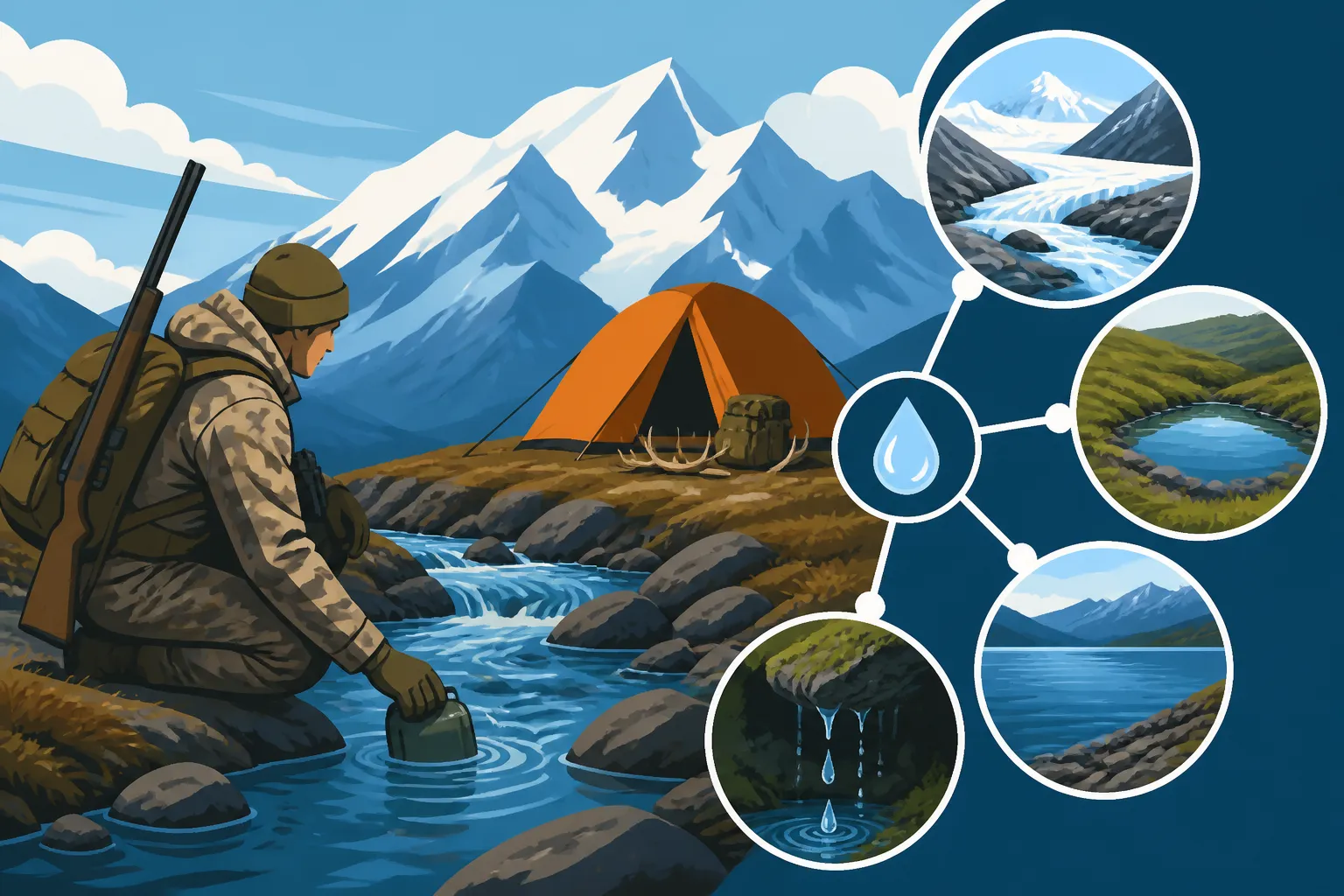
In many parts of Alaska's high country, especially early in the season, snowfields and glaciers are your most obvious water source. However, not all snow is created equal. Fresh, clean snow is ideal, but older, dirtier snow can contain dust, volcanic ash, and even microscopic organic matter that you don't want to ingest. When melting snow or ice, always prioritize the cleanest available. If possible, collect snow that hasn't been walked on or exposed to animal droppings. The downside to relying on snow and ice is the energy cost: you need fuel and time to melt it, which can be significant, especially if you're trying to rehydrate after a long day of glassing. Keep an eye out for areas where snow is actively melting, as the runoff will be cleaner and easier to collect than solid ice.
Alpine Tarns and Seeps
Small, high-elevation lakes, often called tarns, can be excellent water sources. The key is to assess their flow and overall health. A tarn with a visible inlet and outlet stream, even a tiny one, is generally preferable to a completely stagnant pond. Stagnant water is a prime breeding ground for bacteria, giardia, and other pathogens. Look for clear water, and avoid areas with excessive algae growth or visible sediment. Sometimes, the most reliable water in the high country isn't a lake at all, but a seep – a spot where groundwater slowly oozes out of the hillside. These are often marked by lusher, brighter green vegetation, even in otherwise rocky or sparse terrain. While glassing for game, keep an eye out for these green indicators. If you're on a mission, knowing how to approach Glassing the Alaska Range: Finding Game Before You Move can also help you spot these crucial patches of green. Seeps usually offer very clean, cold water, but their flow can be incredibly slow, making collection time-consuming.
Essential Water Treatment Methods for Spike Camps
Once you've located a water source, the next critical step is ensuring it's safe to drink. In Alaska's backcountry, especially in remote areas where wildlife is abundant, untreated water carries a high risk of pathogens like Giardia and Cryptosporidium. Never assume any backcountry water is safe to drink without treatment, no matter how pristine it looks.
Portable Water Filters and Purifiers
Modern portable water filters are a staple for most Alaska hunters. They come in various forms, from gravity filters to pump filters and squeeze filters. Brands like Sawyer and Katadyn offer robust options designed for backcountry use. Filters typically remove bacteria and protozoa (like Giardia) by physically blocking them. However, most filters do not remove viruses. For virus protection, you'll need a water purifier, which often uses a combination of filtration and chemical treatment, or a dedicated UV light purifier like a Steripen.
- Filters (e.g., Sawyer Squeeze, Katadyn BeFree): These are excellent for removing sediment, bacteria, and protozoa. They're lightweight and relatively fast. The main challenge in a cold spike camp is preventing them from freezing, which can damage the filter membrane and render them useless. Always store your filter in your sleeping bag at night or close to your body during the day when temperatures drop. Pre-filtering muddy water with a bandana can significantly extend the life and flow rate of your filter.
- Purifiers (e.g., MSR Guardian, Grayl GeoPress): These often offer a higher level of protection, removing viruses in addition to bacteria and protozoa. They tend to be heavier and more expensive than basic filters. Again, cold weather performance and potential freezing are concerns.
- UV Purifiers (e.g., Steripen): These use ultraviolet light to neutralize viruses, bacteria, and protozoa. They are fast but rely on batteries, so always pack spares, especially when considering GPS Battery Life in Cold Camps as well. They are also less effective in cloudy or silty water, requiring pre-filtering for optimal results.
Boiling Water
Boiling is arguably the most reliable method for purifying water in the backcountry, as it kills all common pathogens, including bacteria, viruses, and protozoa. The "rolling boil for one minute" rule is a solid standard at sea level, though at higher altitudes, boiling times should be slightly extended to account for lower atmospheric pressure. For instance, above 6,500 feet, you might want to boil for three minutes.
The primary drawback to boiling is the fuel consumption and the time it takes. In a remote spike camp, where every ounce of fuel counts, boiling all your drinking water can quickly deplete your supply. It also means you have to wait for the water to cool before you can drink it comfortably. However, if your filter fails or you run out of chemical tablets, boiling remains your ultimate backup plan. This is where a reliable stove and sufficient fuel are non-negotiable for an extended stay, making it a critical part of your overall Backpack Hunting in Alaska: Gear Weight and Meat Loads considerations.
Chemical Treatment
Water purification tablets or drops (such as iodine or chlorine dioxide) are lightweight, inexpensive, and effective against bacteria, viruses, and protozoa. They are an excellent emergency backup or a primary method if weight is a critical concern. The downsides include the waiting time (typically 30 minutes to 4 hours, depending on the product and water temperature), and some people dislike the taste, especially with iodine. Chlorine dioxide tablets, like those from Katadyn Micropur, are generally preferred for their better taste and broader spectrum of effectiveness. Ensure you have enough tablets for the duration of your trip, plus a few extra for contingencies.
Comparison of Water Treatment Methods
| Method | Pros | Cons | Effectiveness (Pathogens) | Cold Weather Performance | Weight/Bulk |
|---|---|---|---|---|---|
| Filters | Lightweight, fast, good taste | Doesn't remove viruses, can clog, freezes easily | Bacteria, Protozoa | Poor (freezes) | Low |
| Purifiers (Pump/Squeeze) | Removes viruses (some models), good flow | Heavier, more complex, can still freeze | Bacteria, Viruses, Protozoa | Moderate (can freeze) | Medium |
| UV Purifiers | Fast, no taste, effective against viruses | Requires batteries, ineffective in murky water, fragile | Bacteria, Viruses, Protozoa | Good (battery drain) | Low |
| Boiling | 100% effective, no special gear needed | High fuel consumption, slow, wait time for cooling | Bacteria, Viruses, Protozoa | Excellent (fuel dependent) | N/A (stove) |
| Chemical Tabs | Lightweight, compact, effective against viruses | Long wait time, taste can be an issue, cold slows action | Bacteria, Viruses, Protozoa | Good (action slows) | Very Low |
Water Management and Conservation in Remote Camps
Being in a high spike camp means every drop of water is precious. You don't have the luxury of a boundless supply, so smart management and conservation are key to staying comfortable and safe. This goes hand-in-hand with making sure your overall Setting Up a Spike Camp Above a Sheep Basin is efficient.
Efficient Collection Strategies
Collecting water in a spike camp requires deliberate effort. If you're melting snow, use a large pot or dedicated snow-melting bag to maximize efficiency. Pack snow tightly to minimize air pockets, which reduce heat transfer. If it's raining, rig a tarp or tent fly to channel water into a collection container. Even light rain can yield a surprising amount of water over time. Make sure your collection system is clean and free of contaminants. In some situations, especially if you have to hike a distance to a reliable source, carrying multiple collapsible water bladders (like Platypus or Cnoc Vecto) can allow you to haul a larger volume back to camp, reducing the frequency of trips. Remember that every gallon of water weighs over 8 pounds, a significant addition to your Backpack Hunting in Alaska: Gear Weight and Meat Loads.
Smart Storage and Protection from the Elements
Once collected and treated, water needs to be stored properly. Collapsible water bottles and bladders are ideal as they pack down small when empty. In cold conditions, protecting your water from freezing is vital. Keep your water bottles inside your tent, preferably in your sleeping bag with you at night. If you have a larger reservoir, insulate it with extra clothing or place it in a protected spot out of the wind. A partially frozen water bottle is a frustrating problem when you're thirsty. Consider using Nalgene bottles, which can withstand hot water without deforming, allowing you to fill them with warm treated water at night for both warmth and hydration.
Minimizing Usage and Maximizing Conservation
Every ounce counts, especially when you're in a Two-Man Tent Weight for a Sheep Hunt scenario where space and resources are limited.
- Cooking: Opt for dehydrated meals that require minimal water for rehydration. Avoid cooking methods that require a lot of rinsing or cleaning. If you're using water for dishes, use as little as possible and consider a "lick your plate clean" approach to save on scrubbing.
- Personal Hygiene: Forget long showers. A small amount of water on a bandana or sponge is all you need for basic personal hygiene. Focus on critical areas to stay clean enough to prevent chafing or skin issues. Pack wet wipes for quick cleanups.
- Pre-hydration: Hydrate thoroughly before strenuous activity, like a long stalk or a climb. This reduces the amount of water you need to carry or find while on the move, and ensures your body is operating efficiently.
- Repurposing Water: If you've boiled water for a meal, consider letting the leftover water cool and then use it for a warm drink later, rather than pouring it out.
Emergency Water Scenarios and Planning
Even with the best planning, things can go sideways in the Alaskan backcountry. Unexpected dry spells, gear failures, or getting disoriented can turn a minor inconvenience into a serious water crisis. This is where proactive emergency planning truly shines.
Planning for Unexpected Dry Spells
Alaska's weather is notoriously unpredictable. A reliable seep you scouted on satellite imagery might be a trickle or completely dry after an unusually dry spell, or conversely, be completely flooded and unusable after heavy rains. Always have a backup plan. This means identifying multiple potential water sources when Alpine Navigation Without Cell Service is your reality. If your primary source is dry, what's the next closest option? How much extra time and energy will it take to reach it?
Before leaving your primary water source, always fill all your containers. It’s better to carry a little extra weight for a short period than to be caught without water. If you discover a critical shortage, immediately re-evaluate your hunt plan. Pushing deeper into unknown territory without a confirmed water source is incredibly risky. GoHunt, with its detailed mapping capabilities, can help you identify alternate drainages or historical water points that might become your new target.
Improvised Water Collection and Survival Methods
In a true emergency, you might need to resort to less conventional methods.
- Melt Bags: These are simply sturdy, dark-colored bags that you fill with snow and hang in the sun. The solar radiation melts the snow into water. They are slow but require no fuel. You can improvise one with a heavy-duty trash bag or a spare dry bag.
- Solar Still: While more complicated to build and less efficient in cold, cloudy Alaska, a solar still can extract condensation from vegetation or moist ground. You dig a pit, place a cup in the center, cover it with plastic, and place a small rock to create a drip point. These are generally a last-ditch effort for very desperate situations.
- Dew Collection: In some conditions, early morning dew can be collected by wiping it from vegetation with a cloth and wringing it out. This is incredibly slow and yields minimal water but can buy you a few crucial ounces.
The Importance of Communication and Safety
If you find yourself in a dire water situation, especially in solo hunting scenarios, communicating your distress is paramount. Ensure you have working satellite communication devices like an InReach or satellite phone, and that your family or friends know your check-in schedule. A sudden lack of communication could signal a problem, and a dire water situation would certainly qualify. Reviewing your Signal Devices and Check-In Plans for Solo Alaska Hunts before every trip is not just a suggestion, it's a lifesaver. Being properly hydrated is also key to clear thinking and effective decision-making in an emergency situation. Don't let dehydration impair your judgment when you need it most.
Staying Hydrated in Cold Weather
It might seem counterintuitive, but dehydration is a significant risk in cold weather. The dry air, increased exertion while hiking in heavy gear, and the reduced sensation of thirst can lead to dangerously low fluid levels. Your body expends more energy to warm inhaled air, leading to more fluid loss. Keep sipping water throughout the day, even if you don't feel thirsty. Warm drinks like tea or soup are excellent for both hydration and warmth. Pack electrolyte tablets to replenish salts lost through sweat, which is still happening under all those layers.
Disclaimer
The information provided in this guide is for general informational purposes only and is not a substitute for professional training, experience, or judgment. Hunting in Alaska's backcountry carries inherent risks, including those related to water sources and purification. Always consult official Alaska Department of Fish and Game regulations, seek experienced guidance, and exercise extreme caution and personal responsibility when planning and executing a hunt.