Hair Snags in Alaska Bear Population Studies
Understanding the health and population of Alaska's iconic bear species—from the massive coastal brown bears to the elusive interior grizzlies and the diverse black bears—is a monumental task. The sheer vastness of our wild landscapes, coupled with the often solitary and secretive nature of bears, makes getting accurate counts incredibly challenging. But knowing these numbers is crucial for sustainable hunting seasons and effective conservation. This guide will dive deep into a surprisingly effective and non-invasive technique that biologists use to gather this vital information: hair snagging.
The Challenge of Counting Bears in Alaska's Wilds
When you picture an Alaskan wilderness, you probably imagine endless mountains, dense forests, and vast tundras stretching to the horizon. This breathtaking scale, while inspiring, presents a formidable hurdle for anyone trying to count its wild inhabitants. Bears, in particular, are not exactly known for lining up to be counted.
Why Traditional Counting Methods Fall Short
Imagine trying to count every individual bear across an area the size of a small state, an area with no roads, thick brush, and towering peaks. Traditional methods often struggle in these conditions. Aerial surveys, while useful for species that congregate or live in open terrain, become incredibly difficult for bears. They blend in remarkably well, spend time in thick cover, and don't necessarily move during daylight hours when planes can fly. Even direct observation, which works for smaller, more habituated populations, is nearly impossible in truly wild and expansive regions where bears might cross hundreds of square miles. Tracking individual animals with collars can provide valuable data, but it's expensive, invasive, and you can only collar a fraction of the population. The result is often an educated guess, leaving both wildlife managers and concerned hunters feeling a bit in the dark about the true numbers. We all want to make informed decisions about hunting pressure and conservation, and that requires solid data.
The Importance of Accurate Population Data
Why do we put so much effort into counting something as wild as a bear? It boils down to responsible management. For hunters, accurate population data directly informs season lengths, bag limits, and specific regulations in a given Game Management Unit. If managers don't know how many bears are out there, they risk over-harvesting a declining population or under-utilizing a healthy, growing one. Both scenarios are less than ideal. For conservation, these studies help identify areas where populations might be stressed, inform habitat protection efforts, and ensure genetic diversity. Without a reliable understanding of population trends—whether they are increasing, stable, or decreasing—it's impossible to apply adaptive management strategies that truly work. It's about finding that critical balance so that future generations can enjoy the same incredible hunting opportunities and robust wildlife we cherish today. Knowing these numbers, even if imperfect, is the foundation of wildlife stewardship in Alaska.
How Hair Snags Work for Bear Population Studies
Given the difficulties of traditional methods, wildlife biologists have become incredibly inventive. That's where hair snagging comes into play—a truly ingenious, low-impact way to gather high-value information.
Designing and Deploying a Hair Snag Site
At its heart, a hair snag site is designed to be irresistible to a curious bear, luring them in to rub against something that will gently collect their hair. Typically, a snag site consists of a perimeter of barbed wire, usually strung around a scent lure. This might be a few strands of wire stapled at varying heights to trees or posts, forming a sort of "corral" or a single strand encircling a bait. The wire isn't meant to harm the bear; it simply catches loose hairs as they push through or rub against it.
The real magic, however, lies in the attractant. Biologists use potent lures to draw bears in from a distance. Often, this involves some truly pungent concoctions like rancid meat, fermented fish oil, or a commercially available scent lure designed to pique a bear's interest. This lure is usually placed in the center of the wire enclosure, enticing the bear to approach, sniff, and inevitably, rub against the wire as they investigate or attempt to get at the bait. The sites are strategically placed in areas known for bear activity, such as game trails, creek crossings, or old burn areas where browse is plentiful. Black Bear Baiting in Alaska: How the Registered Site System Works is a different application, but it gives you an idea of how effective a good scent lure can be. Researchers mark these sites with GPS coordinates, ensuring they can return to collect samples systematically.
Collecting and Analyzing Hair Samples
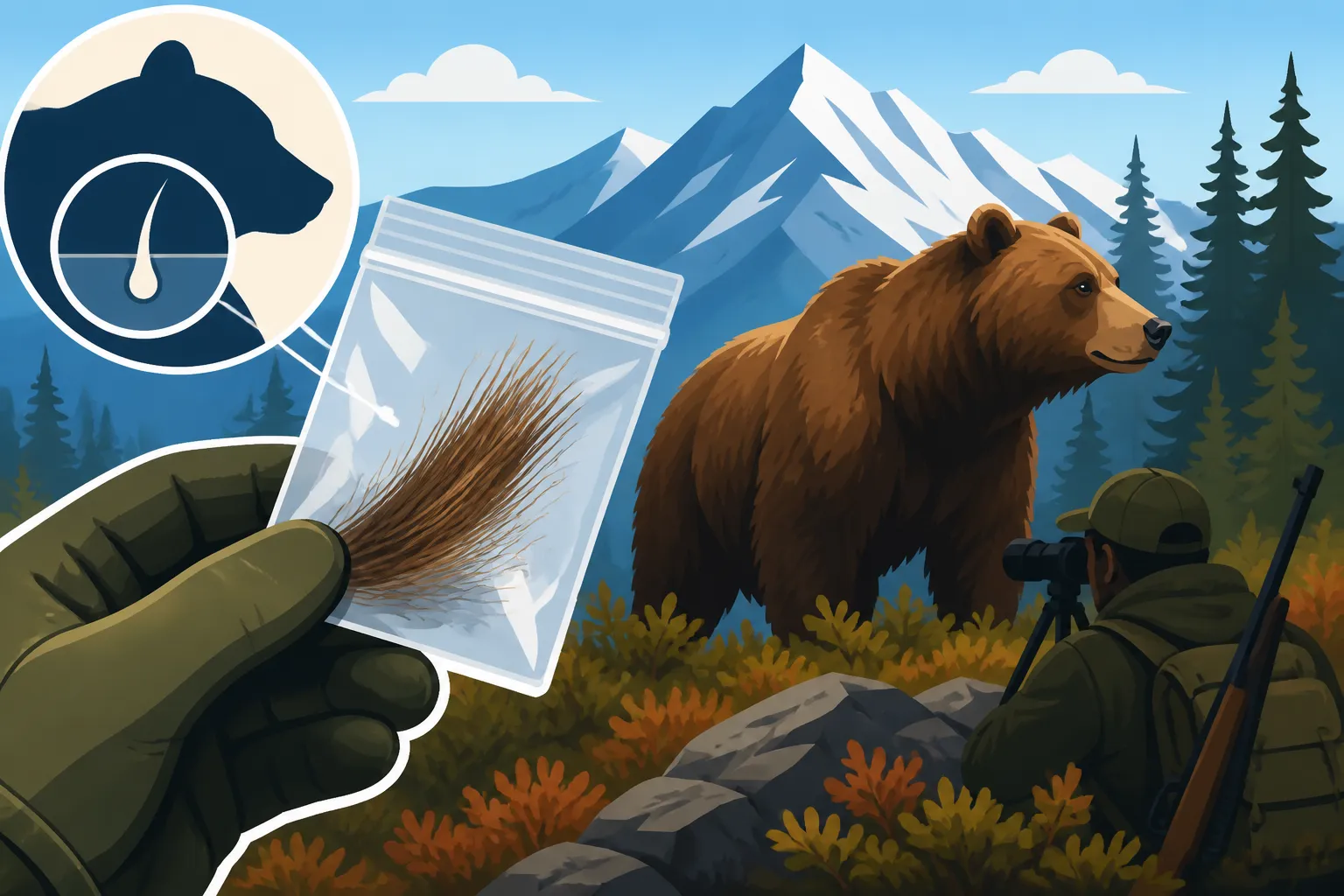
Once a snag site has been active for a period—typically a week or two—biologists return to collect the precious samples. This isn't a job for the faint of heart, as you're often in prime bear country, inspecting an area bears have recently frequented. Using clean forceps or tweezers, researchers meticulously pick individual hair strands caught on the barbs. It's crucial to ensure each sample is kept separate and contamination-free, so hairs are placed in individually labeled paper envelopes or small plastic bags. This meticulous collection is vital because even a single hair follicle contains enough DNA for analysis.
Back in the lab, the real scientific work begins. Biologists extract DNA from the root of each hair. This DNA acts like a unique genetic barcode for each individual bear. From this tiny sample, scientists can determine the bear's species (is it a brown bear or a black bear?), its sex, and, most importantly, identify it as a distinct individual. In some advanced studies, they can even glean information about diet or familial relationships. This unique identification is the cornerstone of how hair snagging contributes to population estimates, essentially giving each bear a temporary, non-invasive "tag" based on its genetics.
The Science Behind the Numbers: Mark-Recapture & DNA
The real power of hair snagging isn't just in collecting a sample, but in what that sample allows researchers to do with statistical analysis. It essentially mimics a traditional mark-recapture study, but with DNA doing all the heavy lifting.
Individual Identification Through DNA
Imagine a traditional mark-recapture study where you physically tranquilize bears, put a numbered ear tag on them, and then release them. That's invasive, expensive, and can be stressful for the animal. Hair snagging achieves the same fundamental goal without ever touching the bear. Each DNA profile extracted from a hair sample is treated as a "mark." When researchers revisit snag sites, any new hair sample collected is run through the same genetic analysis. If the DNA profile matches one already in their database, it's considered a "recapture." If it's a new profile, it's a "new mark."
This process is incredibly powerful. For example, if you set up snags across a large area, you might have a dozen separate hair samples, but DNA analysis could reveal that they all came from just two or three individual bears. This avoids the major pitfall of simply counting hair clumps, which could lead to massive overestimations. By identifying individuals, scientists can track their presence across different sites, estimate their movement patterns, and, most importantly, determine how many unique bears are present in a given study area. This is essential whether you're studying Alaska Brown Bears on the Coast Versus Interior Grizzlies or trying to understand the nuances of a localized black bear population.
Estimating Population Size and Density
Once individual bears are identified through their DNA, statistical models, often referred to as "DNA mark-recapture models," can be applied to estimate the overall population size. The core principle is fairly intuitive: if you repeatedly "capture" (via hair snags) a small number of unique individuals many times, it suggests there aren't many other bears in the area. Conversely, if you keep finding new individuals with each visit, it indicates a larger, uncounted population.
Researchers use sophisticated formulas that account for the number of unique individuals identified, the number of times individuals are "recaptured," and the duration and intensity of sampling efforts. These models don't just give a single number; they provide a population estimate with a confidence interval, giving managers a range within which the true population likely falls. Furthermore, by distributing snag sites across a grid or specific areas, biologists can estimate not just total numbers but also bear density per square mile. This kind of detailed, localized data is invaluable for understanding how a bear population is distributed and how it might respond to environmental changes or hunting pressure. Alaska Game Management Units and How They Are Numbered often have very different bear densities, and these studies help refine our understanding of those differences.
Benefits and Limitations of Hair Snag Studies
Like any scientific method, hair snagging comes with its own set of advantages and challenges. Understanding these helps us appreciate the complexity of wildlife management in a place like Alaska.
Advantages for Alaska Bear Management
Hair snagging offers significant benefits, especially in the rugged and remote Alaskan landscape. First and foremost, it's non-invasive. Bears are drawn to a scent, rub against a wire, and go about their day, completely unharmed. This minimizes stress to the animals and avoids the risks associated with tranquilization and handling. This ethical approach resonates deeply with wildlife enthusiasts and hunters alike.
Secondly, these studies provide incredibly rich data. Beyond just counting bears, the DNA analysis can reveal sex ratios, genetic diversity within a population, and even clues about their diet from the hair's chemical composition. This detailed biological snapshot helps managers understand the overall health and reproductive potential of a bear population. Furthermore, in areas that are nearly impossible to access by traditional ground methods or where aerial surveys are ineffective, hair snagging allows for data collection in otherwise unreachable terrain. This is crucial for managing vast and diverse populations like those of Alaska Brown Bears on the Coast Versus Interior Grizzlies or the varied populations of Alaska Black Bears in Spring and Fall. Finally, while not cheap due to lab costs, it can often be more cost-effective than large-scale collaring operations, allowing for broader spatial coverage. Hunters often turn to resources like GoHunt to understand population trends and regulations, and the data gathered from methods like hair snagging directly contributes to the insights available on such platforms, informing hunting strategies and expectations.
The Real-World Challenges and Considerations
Despite its many advantages, hair snagging isn't without its hurdles. One of the primary challenges in Alaska is pure logistics. Deploying and maintaining numerous snag sites in remote wilderness areas requires significant effort, time, and resources. Field crews must fly into remote locations, haul supplies, set up sites, and return regularly to check them—often in challenging weather conditions and through thick brush. This can be physically demanding and expensive.
Another significant consideration is the cost of DNA analysis. Each hair sample, once collected, needs to be processed in a specialized laboratory, and those costs can quickly add up, especially for large-scale studies attempting to cover expansive areas. This can limit the size and duration of studies, even when the field collection itself is relatively straightforward. There's also the potential for biases. Not all bears might be equally attracted to the lures, or some individuals might be "snag-shy," meaning they avoid the sites. This could lead to an underrepresentation of certain segments of the population. Also, the success of a snag site can be highly dependent on weather conditions; heavy rain might wash away scents, or strong winds could reduce their effectiveness. Researchers must carefully consider these factors when designing their studies and interpreting their results, always striving for the most accurate picture possible.
Conclusion
Hair snagging represents a remarkable leap forward in how we understand and manage Alaska's magnificent bear populations. By harnessing the power of DNA from something as simple as a few strands of hair, biologists can piece together a detailed picture of population size, distribution, and health, all without ever directly disturbing these incredible animals. This non-invasive method is especially suited to Alaska's immense and wild landscapes, providing critical insights where traditional approaches often fall short. For hunters, these studies provide the foundational data that shapes responsible hunting seasons and ensures the long-term sustainability of our bear resources. For all who cherish Alaska's wildness, hair snagging offers a glimpse into the hidden lives of bears, helping us preserve these iconic species for generations to come.
Disclaimer
This article is for general informational purposes only and does not constitute professional advice. Laws, prices and regulations vary by location and change over time. Consult a qualified professional for guidance on your specific situation.