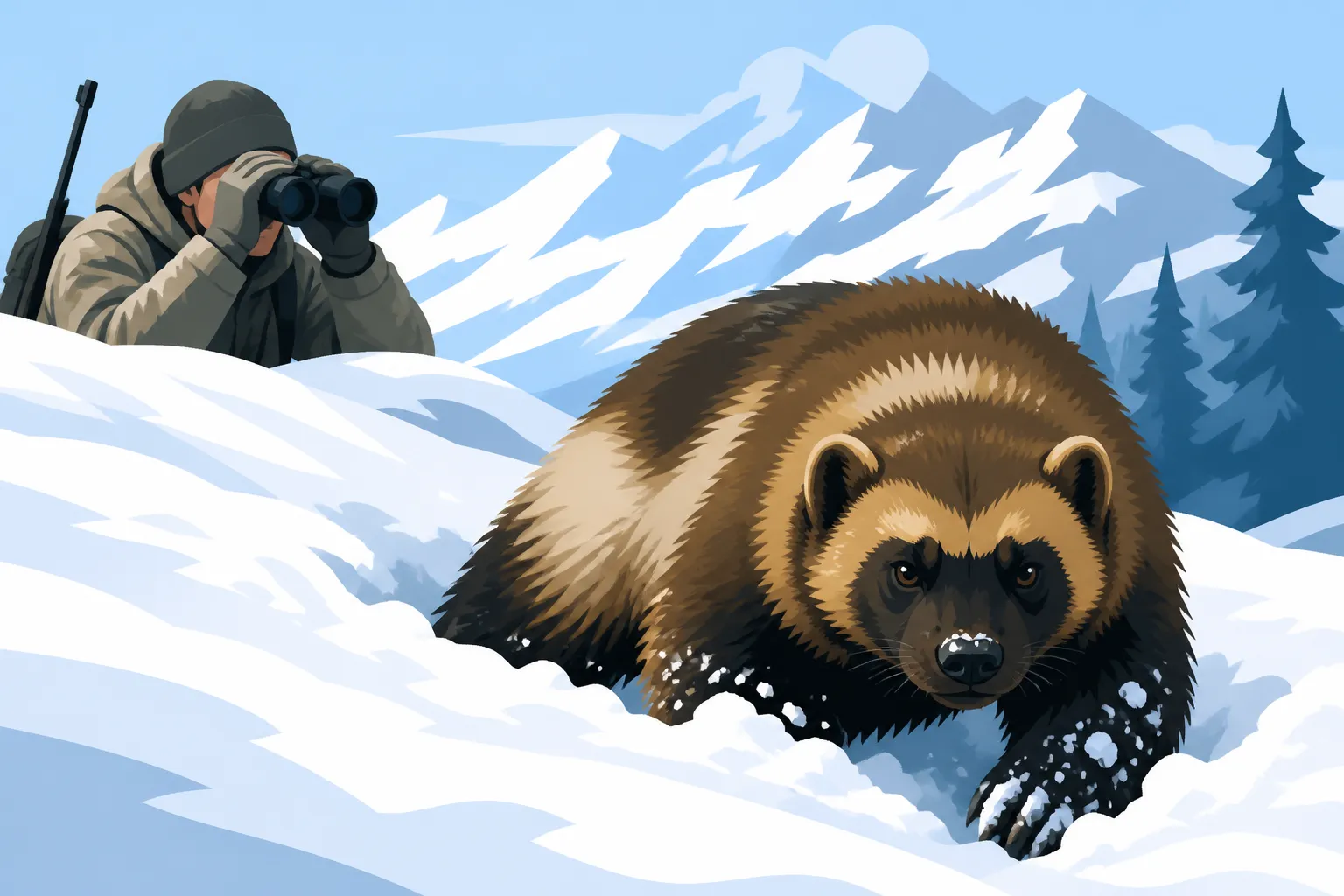
Wolverine Sets in Deep Snow
Hunting wolverines in Alaska's deep winter snow can feel like trying to catch a ghost in a blizzard. These elusive, tenacious creatures are masters of their icy domain, and when the snow piles up, finding and successfully setting for them becomes a whole new challenge. This guide is here to walk you through the specific strategies, gear, and mindset you'll need to outwit Gulo gulo when the white stuff is waist-deep, helping you understand their winter world and maximize your chances on the trapline.
Understanding Wolverine Behavior in Deep Snow
Wolverines, often called "skunk bears" or "gluttons," are perfectly adapted to harsh northern winters. But deep snow fundamentally changes their world, affecting how they move, hunt, and interact with their environment. If you're going to trap them effectively, you first need to think like a wolverine navigating a snowy landscape.
Winter Movement Patterns
When the snow is shallow, wolverines are notoriously wide-ranging, covering vast territories on the hunt for food. But when deep snow blankets the landscape, their movement patterns become more predictable, driven by efficiency. They'll actively seek out routes that minimize energy expenditure. This means focusing on wind-swept ridges, frozen riverbeds, or areas where other animals, like moose or caribou, have already packed down trails. You won't often find a wolverine wallowing through several feet of fresh powder unless absolutely necessary.
These animals are incredibly smart about travel. They might use the same game trails year after year, even if those trails are covered in new snow. Looking for these established routes on maps, especially with resources like those found on Wolverine Home Range Size can give you a significant advantage. They’re constantly conserving energy, so any natural thoroughfare that offers easier passage becomes a prime travel corridor. This is a critical insight for trappers, as it funnels their movements into more manageable areas.
Another key behavior in deep snow is their interaction with existing animal kills. A wolverine will travel surprising distances to scavenge a moose or caribou carcass. Deep snow often means tougher times for ungulates, leading to more winter kills. Wolverines are adept at finding these, so understanding where larger game might die off, perhaps near areas of heavy winter range for species like those discussed in Winter Range and Moose Survival in Interior Alaska, can point you to potential wolverine activity. They don't just opportunistically stumble upon kills; they actively seek out areas where animals might be vulnerable or where winter kill sites are likely.
Scent Marking and Food Caching
Wolverines use scent extensively to communicate, mark territory, and find food. In deep snow, how this scent spreads and persists changes. Their powerful musk gland is still effective, but fresh snowfall can quickly cover scent posts. However, in an older snowpack, scent can linger for a remarkably long time, especially in protected areas like under heavy timber or within snow caves. They'll often mark prominent features like stumps, boulders, or even large snowdrifts that stand out.
Food caching is vital for wolverines, especially when prey is scarce in winter. In deep snow, they often bury food deep within the snowpack, creating elaborate underground larders. These caches are usually strategically placed near their travel routes or den sites. Finding a wolverine cache can be a goldmine for trappers, as it indicates consistent activity in an area. These aren't just random burial spots; they're often significant investments of time and energy, meaning the wolverine will return. They're also incredibly strong; a wolverine can move a surprising amount of snow and even heavy frozen carcasses to create these caches.
They're also masters of identifying areas where prey might be vulnerable, or where other predators, like wolves, have left behind a carcass. A wolverine will often follow wolf trails, knowing that a pack will leave scraps behind. This makes understanding predator dynamics, like those explored in Wolf Hunting Over a Winter Kill Site, extremely useful for predicting wolverine movements and potential caching locations. Their persistence in finding and utilizing food sources, no matter how deep the snow, is a testament to their survival skills.
Essential Gear and Preparation for Deep Snow Sets
Deep snow trapping for wolverines isn't just about setting a trap; it's an expedition. You need to be prepared for the elements, the terrain, and the sheer physical effort involved. Your gear choices, both for trapping and for yourself, will directly impact your success and safety.
Trapping Equipment for Extreme Cold
When setting traps in deep snow, standard equipment often won't cut it. You need traps that can withstand immense pressure, extreme cold, and the potential for deep burial. Conibear traps (often 220 or 330 size) are popular, but they need to be secured in cubbies or elevated sets to prevent snow from rendering them inoperable. For footholds, heavy-duty traps like the MB-750 or similar are essential, and they should be laminated and modified for extreme cold to prevent freeze-up. Think about trap pans freezing down, springs becoming sluggish, or snow and ice clogging the trigger mechanisms.
Anchoring traps in deep snow is another critical consideration. Cables and rebar stakes can be difficult to drive into frozen ground, and if the snow is too deep, they might not reach solid earth. Drag anchors, grapple hooks, or even heavy rocks frozen into the snow are often more effective. Some trappers will use "T-bars" or large diameter rebar driven horizontally through the snow and frozen in place, providing a solid anchor point a foot or two below the surface. You might even consider constructing deadman anchors from logs or heavy branches buried deep within the snow. The objective is to create an immovable anchor that a powerful wolverine cannot pull free, even when it’s covered by feet of snow.
Furthermore, trap components themselves need to be cold-proofed. Many trappers wax their traps to prevent ice buildup and ensure smooth operation. You might also use antifreeze solutions on trigger mechanisms, but be mindful of any scents they might leave behind. The entire setup, from the trap itself to the trigger and anchor, must function flawlessly at temperatures that can drop well below zero for days on end. This attention to detail is what separates a successful deep snow trapper from one who frequently finds frozen, untripped sets.
Personal Gear for Harsh Conditions
Operating a trapline in deep snow for wolverines requires personal gear that goes beyond typical hunting attire. You'll be spending long hours, often alone, far from any road system. Your clothing system needs to be layered, waterproof, and insulated for sustained exposure to extreme cold and potential precipitation. Think about high-quality parka-style outer layers, insulated bibs, and multiple insulating layers underneath, perhaps merino wool or synthetics. Keeping your core warm is paramount, but don't forget extremities: extreme cold-weather mittens (not just gloves), insulated boots rated for -40F or colder, and multiple hats.
Movement in deep snow is impossible without proper flotation. Snowshoes are the classic choice, but for longer distances or more open terrain, cross-country skis or even a snowmachine might be necessary. If you're on snowshoes, ensure they are large enough to support your weight plus any gear, and that their bindings are robust enough to withstand repetitive motion and freezing conditions. Using a pulk or sled to haul gear can significantly reduce your pack weight, allowing you to carry more fuel, food, and emergency supplies. Planning routes with Downloading Offline Maps Before a Fly-In can help you anticipate terrain and potential challenges.
Finally, safety and survival gear are non-negotiable. This includes a robust first-aid kit, emergency shelter (like a bivy sack or tarp), fire starting materials, extra fuel for a stove, high-calorie food, and a reliable communication device. A satellite messenger (like an InReach or Zoleo) is essential, especially when you're working solo in remote areas; you should also have Signal Devices and Check-In Plans for Solo Alaska Hunts in place with someone back home. The cold can quickly drain batteries, so spare power banks for GPS units or headlamps are crucial. Even something as simple as a compass and a physical map, combined with the skills to use them, can be a lifesaver if electronics fail. A good portion of your mental energy should be focused on how to survive if something goes wrong, because in remote Alaska winter, help is often days away.
Strategic Set Placement in Deep Snow
Wolverines are opportunists, but they're not reckless. Their movements are often dictated by the easiest path and the highest probability of finding food. Strategic set placement in deep snow is all about understanding and exploiting these tendencies.
Natural Funnels and Travel Corridors
In a landscape covered in deep snow, natural funnels become absolute magnets for wolverines. Think about narrow passes between mountains, saddles on ridges, creek bottoms with dense cover, or the edges of dense timber that run parallel to open areas. These are places where a wolverine's vast Wolverine Range and Density in Alaska is compressed into a smaller, more predictable pathway. They will naturally gravitate towards areas that offer the path of least resistance or provide cover while they travel.
Look for areas where two different habitat types meet, such as the transition zone between open tundra and thick spruce forest. Wolverines often use these edges for travel, moving from cover to open areas to hunt or scavenge. Frozen river and creek beds, particularly if they have established game trails along their banks, can be excellent travel corridors. Even a dense willow thicket can become a natural funnel if it forces movement through a specific opening. Using tools like those available through GoHunt can help you analyze terrain, identify these funnels on topographical maps, and scout potential access points before you ever put boots (or snowshoes) on the ground. These digital mapping resources can reveal subtle terrain features that act as highways for wolverines.
Once you identify these funnels, look for subtle sign. Even in deep snow, wolverines will leave tracks, though they can be hard to spot in fresh powder. Look for areas where wind consistently scours snow away, exposing patches of dirt or frozen vegetation; these often align with preferred travel routes. You might also find old tracks from other predators or prey animals, indicating a well-used game trail. Setting traps directly in these funnels, or just off to the side where they might investigate a scent, significantly increases your odds of success.
Baiting and Lure Selection for Cold Weather
The effectiveness of your bait and lure system is magnified in cold weather and deep snow, as wolverines are constantly seeking high-calorie food sources. The key is to use baits that are both highly attractive and able to withstand freezing temperatures without losing their potency or becoming unworkable. Rancid meat, especially beaver, deer, or moose scraps, is a wolverine favorite. The smell of decay carries well in cold, dry air. Hang bait strategically, often elevated above the snowline, to maximize scent dispersal and prevent it from being immediately buried by snow or devoured by smaller scavengers.
When it comes to lures, powerful musky or glandular scents are incredibly effective. Wolverine glands themselves, skunk essence, or commercial lures designed for canids and mustelids are excellent choices. Apply lures to "flags" of fur, cotton, or even wood chips, placed around the set. For added drawing power, create a "scent trail" by dragging a bloody piece of meat or a scent-soaked rag on a rope behind your snowmachine or while on snowshoes, leading directly to your set. This creates an irresistible trail for a wandering wolverine.
Consider the environment when applying scents. Placing lures inside a protected cubby or under an overhang prevents them from being washed away by snow or diluted by moisture. You want the scent to concentrate and linger. Some trappers even use small, open containers of liquid lure that can freeze and slowly thaw, releasing scent over time. The goal is to create a long-lasting, far-reaching olfactory signal that screams "easy meal" to any passing wolverine, drawing them in despite the deep snow and frigid temperatures.
Constructing Durable Snow Sets
Building a wolverine set in deep snow that will remain functional for days or weeks requires careful construction. Simply placing a trap on the snow surface is a recipe for failure; it will quickly be buried or rendered useless by subsequent snowfall. Instead, you need to create "snow-proof" sets. Cubbies are a popular option: construct a small box-like structure out of logs, branches, or even a bucket, then pack snow around it to stabilize it. Place your trap (often a Conibear) inside the entrance, with bait in the back. This protects the trap from snow and wind while guiding the wolverine into the strike zone.
Another effective technique is an elevated set. This involves placing your trap and bait on a platform or secured to a tree limb several feet above the snowline. This keeps the trap clear of accumulating snow and out of reach of smaller animals like ermine or voles. A classic elevated set often uses a log or branch leaning against a tree, with the trap secured near the bait at the higher end. The wolverine will climb the log to access the bait, walking right into your trap. For footholds, construct a solid base on the snow using packed snow or a buried log, then cover the trap with fine, dry snow or waxed paper to prevent it from freezing down.
Regardless of the type, your set needs to be robust. Use strong wire to secure bait and traps, not just to the cubby or platform, but also to a fixed anchor point like a sturdy tree. Wolverines are incredibly strong and destructive; a flimsy set will be torn apart. Think about the entire scene: how will the wolverine approach? How will it react to the set? How will the snow, wind, and scavengers affect its integrity? A well-constructed deep snow set is a work of art, designed to withstand the harshest conditions Alaska can throw at it while remaining deadly effective for its intended target.
Running Your Trapline and Overcoming Challenges
Running a wolverine trapline in deep snow is a commitment, demanding diligence, perseverance, and a proactive approach to potential problems. The Alaska winter environment is unforgiving, and success often hinges on how well you manage your line and react to its challenges.
Regular Check-Ins and Maintenance
The mantra for deep snow trapping is frequent check-ins. Unlike some fur-bearing animals where traps can be left for longer periods, deep snow and bitter cold make regular visits essential. Heavy snowfall can bury traps, rendering them useless, or freeze mechanisms solid. Ideally, you should check your traps every 24-48 hours, especially after new snowfall. This means dedicating significant time and effort, and often involves long days on snowshoes or a snowmachine.
During each check, you're not just looking for a catch; you're performing critical maintenance. Clear any accumulated snow from around your sets, ensuring the trigger mechanisms are free and clear. Refresh lures if their scent has faded, and inspect the bait to ensure it hasn't been eaten by smaller critters or frozen solid. You might need to add new "visual attractors," such as a piece of reflective material or some raven feathers, if the existing ones are buried. This regular maintenance ensures your traps are always operating at peak effectiveness, preventing missed opportunities due to a buried or frozen set. It's a continuous battle against the elements, and consistent effort is key.
This constant vigilance also helps you adapt. If you notice wolverine tracks passing by a set but not investigating, you might need to adjust the bait, add more lure, or even move the trap slightly to better intercept their travel. Observing animal behavior, even subtle signs, can provide invaluable clues. Using a GPS with a long GPS Battery Life in Cold Camps is crucial for navigating your trapline efficiently and accurately locating each set, especially when fresh snow obscures all previous tracks.
Dealing with Incidental Catches and Wildlife Interaction
Running a wolverine trapline, especially with powerful traps, inevitably brings the possibility of incidental catches. Non-target species like martens, foxes, or even domestic dogs can sometimes get into your sets. It's crucial to understand state regulations regarding incidental catches. In Alaska, for example, non-target animals must be immediately released if they are alive and unharmed. If they are deceased, specific regulations apply regarding salvage and reporting. This is where your knowledge of Alaska Trapping License Versus Hunting License and general wildlife laws becomes critical.
Minimizing non-target catches starts with smart set design and placement. Placing traps in cubbies or elevated sets can reduce catches of smaller ground-dwelling animals. Using larger traps, like the 330 Conibear, helps target larger animals, though a large marten or fox can still be caught. Avoid setting traps too close to known human trails or residential areas to minimize the risk to pets. Always carry release tools with you, such as a sturdy pair of gloves, a catch pole, or a specialized trap-release tool, to safely handle and release any live incidental catches.
Furthermore, you'll be operating in an active wildlife environment. Ravens, coyotes, and other scavengers will be interested in your bait. Design your sets to protect the bait from these animals while still being accessible to wolverines. This might mean placing bait deep within a cubby or using a wire cage around it. You might also encounter larger predators like wolves or bears, though the latter are typically denned up during deep snow conditions. Always be aware of your surroundings, carry appropriate bear safety measures (even in winter, a denned bear can be a surprise), and understand that you are a visitor in their world. The more you can anticipate and plan for these interactions, the safer and more successful your trapping season will be.
| Trap Type | Recommended Size | Primary Use Case | Advantages in Deep Snow | Disadvantages in Deep Snow |
|---|---|---|---|---|
| Conibear Trap | 220 or 330 | Kill-snare, body grip | Can be elevated in cubbies to avoid burial | Requires careful positioning to avoid snow buildup on trigger |
| Foothold Trap | MB-750 (or similar) | Live-catch, snaring variant | Very strong, good holding power | Prone to freezing down if not waxed/protected; hard to anchor |
| Snares | Heavy cable | Neck/body snare | Less affected by snow depth if properly hung | Requires precise placement and strong anchors; can catch non-targets |
| Box Traps | Large | Live-catch, often for research | Protects animal from elements | Bulky to transport, limited to specific areas, animal can freeze |
Disclaimer
Hunting and trapping in Alaska carry inherent risks, including extreme weather, dangerous wildlife, and remote conditions. The information provided in this guide is for informational purposes only and should not be considered a substitute for professional instruction, thorough research, or compliance with all current Alaska Department of Fish and Game regulations. Always prioritize safety, carry appropriate emergency gear, and ensure you possess all necessary licenses and permits. It is your responsibility to know and follow all local, state, and federal laws.