Spring Bear Over Avalanche Chutes
Hunting black bears in the vast expanse of Alaska during the spring can feel like searching for a needle in a colossal haystack, especially right after they emerge from their dens, spread out, and the landscape is still largely dormant. The trick is to identify those crucial early-season hot spots where bears congregate, and for many seasoned hunters, that means focusing on avalanche chutes. This guide will walk you through why these unique features are bear magnets, how to time your hunt perfectly, and the tactics you’ll need to master to find and ethically harvest a spring bear in this challenging terrain.
Why Avalanche Chutes Are Bear Magnets in the Spring
When the snow starts to recede in Alaska, bears are hungry, and they're looking for the first available food sources. Avalanche chutes, particularly those on south-facing slopes, become veritable cafeterias for emerging bears. It’s a fascinating ecological phenomenon that makes them critical areas to target for spring black bear hunting.
Think about it: an avalanche chute is essentially a scar on the mountainside where snow, ice, and debris have carved a path. In the spring, these areas are often the first to shed their snowpack due to direct sun exposure. As the snow melts, it irrigates the soil, creating a nutrient-rich environment that encourages early vegetation growth. These new, tender shoots of grass, forbs, and sedges are packed with easily digestible nutrients that are exactly what a bear needs after months of hibernation. Unlike the rest of the still-dormant landscape, these chutes "green up" much faster, sometimes weeks before the surrounding hillsides.
Moreover, these chutes can often hold residual winter kills, such as a moose or caribou that was caught in a slide or simply died during the winter and became buried. As the snow recedes, these carcasses become exposed, offering a high-calorie protein source that’s irresistible to a hungry bear. Bears are opportunists, and a readily available protein boost can be a major draw. For a more general understanding of bear diets, check out our piece on Black Bear Diet Before Salmon Arrive.
Another factor is thermal regulation. South-facing chutes, by their very nature, absorb more sunlight. Bears, especially in early spring, are looking to warm up after denning. These sunny slopes provide a comfortable place to bask, forage, and conserve energy. They can often be found bedding down in the sun-warmed patches within or adjacent to these chutes. The steep, broken terrain of avalanche chutes also offers a sense of security from larger predators like wolves or even other bears, and the natural contours provide excellent cover for approaching feeding areas.
Timing Your Spring Bear Hunt for Optimal Success
Timing is absolutely everything when it comes to hunting spring bears over avalanche chutes. Hit it too early, and the chutes are still buried under feet of snow. Hit it too late, and the bears might have moved on to more widespread food sources, or denser vegetation could make spotting them incredibly difficult. The sweet spot usually coincides with what we call "green-up."
The exact window for this varies wildly across Alaska, depending on latitude, elevation, and the specific year's snowpack and temperatures. Generally, in interior and southcentral Alaska, this period often falls from mid-May through early June, sometimes extending into late June in higher elevations. On the warmer, wetter coastlines, it might start a bit earlier. You're looking for that delicate balance where the snow has pulled back enough to expose the new growth, but not so much that the bears have dispersed. You can learn more about this by reading our detailed guide on Green-Up Timing for Spring Bear Hunts.
Monitoring conditions is key. Keep an eye on regional weather forecasts, paying close attention to snowmelt progression in the units you plan to hunt. Satellite imagery from previous years can also give you an idea of when certain areas typically green up. A prolonged cold snap or a late-season snowfall can push the timeline back, so flexibility in your schedule is a huge asset.
Early Spring vs. Late Spring Bear Activity in Chutes (General Guideline)
| Time Period | Snowline in Chutes | Vegetation Growth | Bear Activity & Location | Hunting Conditions |
|---|---|---|---|---|
| Early May | High, patchy snow | Minimal, emerging shoots | Scarce, often near den sites at lower elevations | Cold, potentially deep snow, difficult access |
| Mid-May | Receding, distinct green lines | Tender, vibrant growth | Moderate, feeding in exposed chutes | Improving, still cold mornings, good visibility |
| Late May / Early June | Mostly clear, lush green | Established, richer | High, active feeding and basking | Mild, increasing insects, potential for dense foliage |
| Mid-June | Fully clear, dense vegetation | Very dense, mature | Decreasing in chutes, moving to wider areas | Warm, full foliage, reduced visibility, harder to find |
This table provides a general idea, but always remember that Alaska's weather is famously unpredictable. A warm, sunny spring can accelerate this process, while a cool, wet one can significantly delay it.
Scouting and Glassing Tactics for Avalanche Chutes
Finding a bear in the vastness of an Alaskan mountain range, even in a defined area like an avalanche chute, still demands meticulous scouting and skilled glassing. This isn't a walk in the park; it's a patient, calculated game.
Pre-Season Scouting with Technology
Before you even load up your rifle, do your homework from home. Tools like GoHunt are invaluable for pre-season scouting. You can use their mapping features to identify south-facing slopes, analyze historical satellite imagery for persistent avalanche chutes, and even look at terrain models to understand elevation changes and potential bedding areas. Look for chutes that terminate in open areas or transition zones, as bears often stage in cover before moving into the open to feed. You can overlay historical snow data or even look at past years' "green-up" progression if available through various online platforms to gauge typical timing for different areas. Identifying Old Burns and Where Moose Feed in Them might give you clues for general vegetation growth patterns too, as bears are often drawn to similar early successional plants.
Pay close attention to potential access points, whether by road, ATV trails (like those near the ATV Access Tactics on Alaska's Denali Highway), or areas suitable for a Fly-In Hunting: Working With an Alaska Transporter Pilot. Understanding the land status is also crucial; verify if the areas you're interested in are state, federal, or private land. Our article on Land Status in Alaska: State, Federal and Native Corporation can help you navigate this complex issue.
In-Field Glassing Strategies
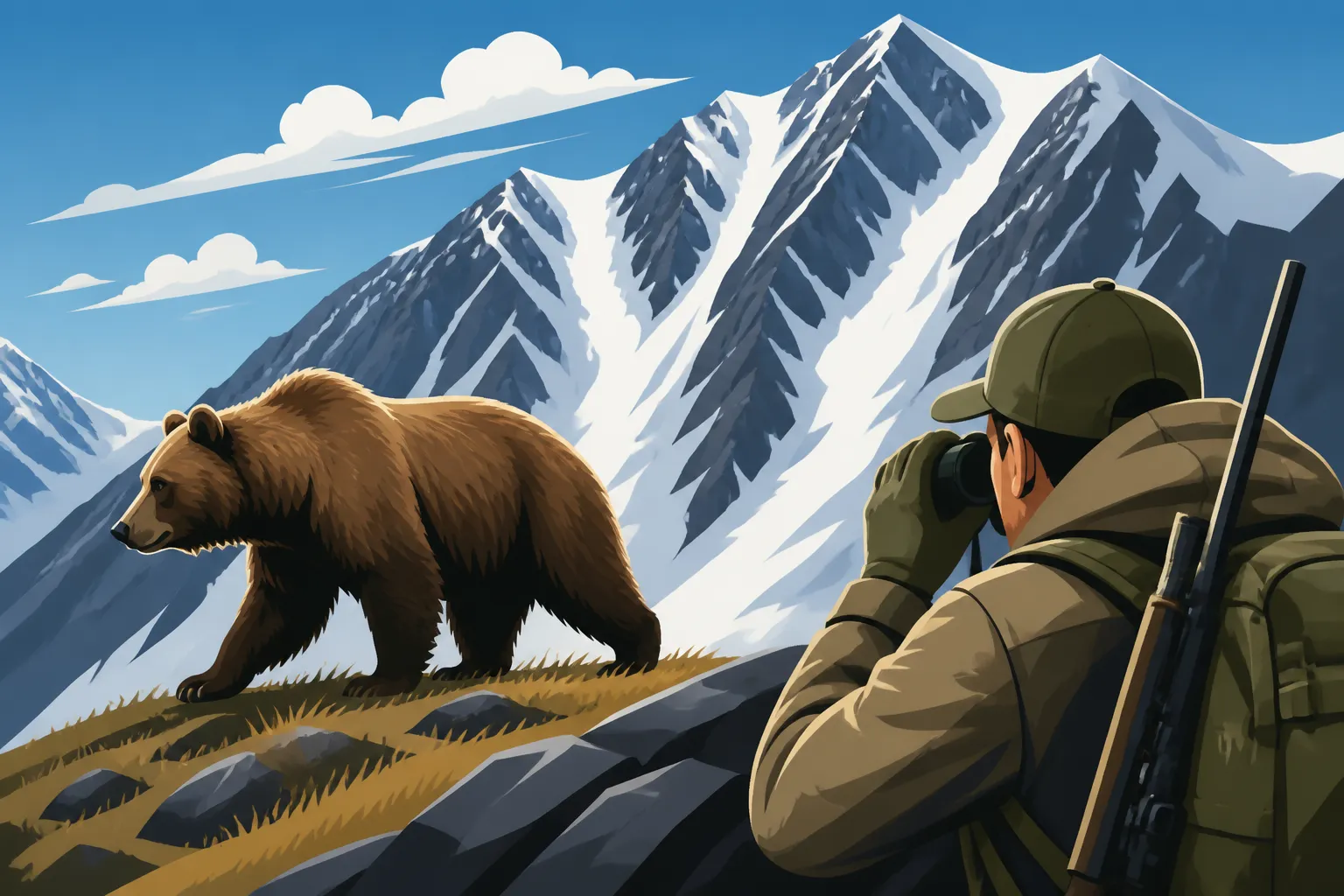
Once you're in the field, patience is your greatest weapon. You're not looking for a needle in a haystack; you're looking for a black speck on a green or white mountainside that might be hundreds or thousands of yards away.
- Find a Good Perch: Your first priority is to find an elevated glassing knob or ridge with a wide, unobstructed view of multiple avalanche chutes. This should be a spot where you can comfortably spend hours, even an entire day. Ensure your vantage point offers safety and a good backdrop to silhouette any potential bears.
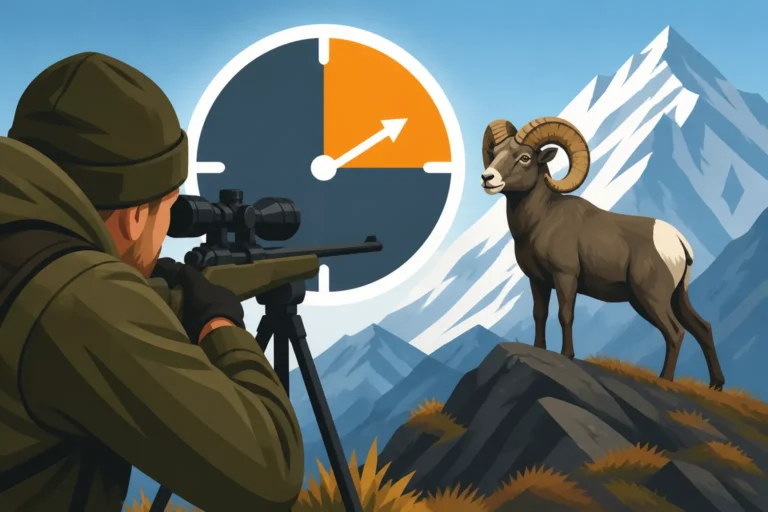
- Use Quality Optics and a Tripod: A high-quality spotting scope (20-60x or even 25-75x) on a sturdy tripod is non-negotiable for spring bear hunting. Coupled with 10x or 12x binoculars, also mounted on a tripod for stability, you'll be able to pick apart distant terrain. The stability offered by a tripod eliminates fatigue and allows you to discern movement or a bear's outline that would otherwise be missed. For more on this, check out Tripod Height for All-Day Glassing and Spotting Scope Power for Ram Judging – the principles apply to bear glassing too!
- Implement a Grid Pattern: Don't just scan randomly. Break down each chute and the surrounding areas into small, manageable sections. Start at one end of a section, systematically sweep your optics across, then move down a small increment and sweep back. This "grid pattern" ensures you cover every square inch, reducing the chance of missing a bedded bear or one momentarily obscured by terrain. Our guide on Glassing Grids That Cover a Whole Basin goes into more detail.
- Work the Thermals and Light: Bears are most active during cooler parts of the day, early morning and late evening, but in spring, they’ll also be out mid-day basking. Glassing at first light is crucial, as bears might still be out from their overnight feeding. Pay attention to how the light changes throughout the day; a bear that was invisible against a dark background might pop when the sun hits it at a different angle. As the day warms, bears might move to shaded areas for a midday nap, so vary your focus.
- Look for Clues: Beyond the bear itself, look for secondary signs. Fresh tracks in remaining snow patches, disturbed vegetation, or even ravens and eagles circling a specific spot could indicate a carcass or a bear feeding. GoHunt also allows users to drop pins on their maps, which can be useful for noting these clues, creating a record of your observations even if no bear is spotted that day.
- Patience and Persistence: This isn't a quick hunt. You might spend days glassing the same chutes, waiting for a bear to emerge. Take breaks, stay hydrated, and keep your spirits up. Remember that spring bear hunting is often more about patience than anything else.
Approaching and Taking Bears in Steep Terrain
Once you've spotted a bear in an avalanche chute, the real work begins. The steep, often broken terrain, coupled with the unpredictable Alaskan weather, demands a careful and deliberate approach. Ethical shot placement and safe recovery are paramount.
The Stalk: Closing the Distance Smartly
- Assess the Wind: The wind is your number one priority. Bears have an incredible sense of smell. Always approach from downwind, even if it means taking a significantly longer, more circuitous route. Wind currents in mountain terrain can be tricky, swirling and changing with thermals. Constantly check the wind as you move.
- Plan Your Route: Before you take a single step, mentally (or even physically, with a map on your phone or GPS like those found in Alpine Navigation Without Cell Service) plot out your entire stalk. Identify cover – rock outcrops, dense alders, snow banks – that will allow you to stay out of sight. Note potential shooting lanes and safe fallback positions. Avoid skylining yourself on ridges. Remember that what looks like a short distance on a map can be a grueling, hours-long climb in steep, unstable terrain.
- Use the Terrain to Your Advantage: Avalanche chutes are chaotic, offering both challenges and opportunities. Use the natural folds, depressions, and rock formations to hide your advance. Be mindful of loose rock and scree; a single misplaced step can send a cascade of noise down the mountain, spooking your bear. This is where fitness is key; you need to be able to move quietly and deliberately over difficult ground.
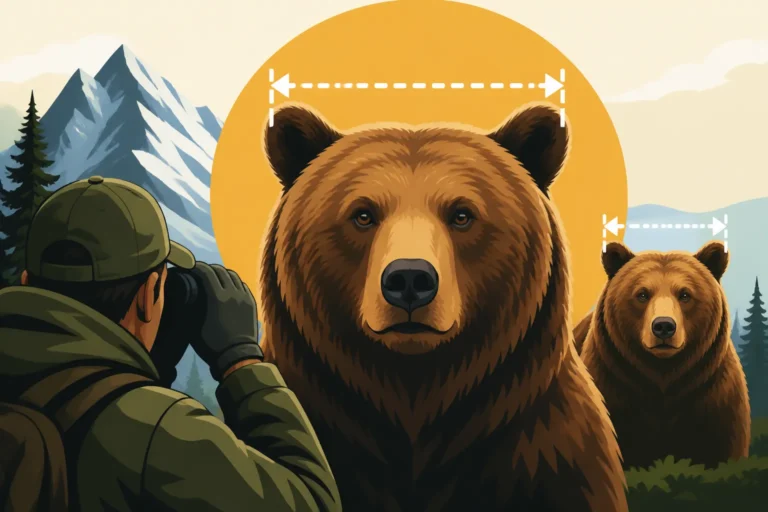
- Identify Your Target: Before committing to a stalk, ensure you've properly identified your bear. In Alaska, it’s illegal to harvest sows with cubs or yearlings. Judging bear size, especially by Judging Bear Size by Ear Spread, and checking for cubs (which might be trailing behind or bedded nearby) is crucial. A spotting scope can help confirm this before you risk a stalk.
The Shot: Ethical and Confident
- Get Stable: When you reach your shooting position, the priority is stability. In steep terrain, this can be challenging. A bipod or backpack can be invaluable for creating a solid rest. Practice Shooting Positions on Alaska Tundra and Sidehills before your hunt. Take your time, control your breathing, and ensure you have a clear shot at the vital organs.
- Aim for the Vitals: A bear's vitals are located in the shoulder/chest area. Aim for the center of the front shoulder to penetrate the lungs and heart. Bears are incredibly tough animals, and a well-placed shot is essential for a quick, humane kill and easier recovery. For rifle choice, while this is for black bear, many hunters carry calibers suitable for larger game for bear defense, like those discussed in Rifle Calibers for Coastal Brown Bear.
- Follow Up Shots: If the bear doesn't drop immediately, be prepared to fire follow-up shots. Don't take your eyes off the bear until it's down and still. Bears can cover ground quickly, even when mortally wounded, especially in steep terrain.
Recovery and Bear Safety
- Wait and Watch: After the shot, resist the urge to immediately rush in. If the bear is out of sight, wait a minimum of 30 minutes, or even longer if it's hit but still moving. This gives the bear time to expire and reduces the risk of a dangerous encounter with a wounded animal. Mark the last spot you saw the bear with your GPS.
- Approach with Caution: When you do approach, do so slowly and deliberately. Have your rifle ready. Scan the area ahead for any movement. Avalanche chutes can be tricky for recovery; the bear might roll or slide a considerable distance after being shot. Pay attention to the ground for tracks, blood, or disturbed vegetation.
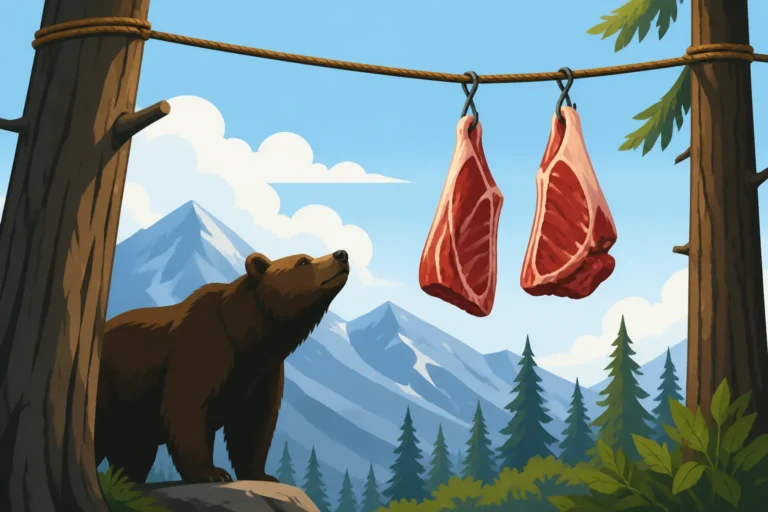
- Bear Safety: Even with a downed bear, the area around a kill site can be dangerous, especially if larger brown bears are in the vicinity, attracted by the smell. Always carry bear spray and a firearm, and know how to use them. Our article on Bear Safety While Butchering a Kill in Alaska provides crucial advice, as does Bear Spray Versus Rifle at Close Range. Consider setting up a Bear Fence Setup at a Meat Cache if you need to leave meat overnight.
- Meat Care: Once you reach your bear, begin the quartering process immediately to cool the meat. Spring temperatures can be surprisingly warm, accelerating spoilage. Get the hide off, quarter the meat, and get it into game bags. For trophy care, especially for a life-size mount, refer to Cape Care for a Life-Size Bear Mount. This is especially important for black bears, as they can have beautiful color phases in Alaska.
- Packing Out: Packing a bear out of an avalanche chute will be strenuous. The ground is often unstable, and the grades are steep. Be prepared for multiple trips and heavy loads. If you're hunting with a partner, share the load and assist each other over difficult sections.
Spring bear hunting over avalanche chutes is a truly classic Alaskan experience. It's challenging, demanding patience and physical prowess, but the rewards of a successful hunt in the raw beauty of the Alaskan spring are unmatched.
Disclaimer
Hunting in Alaska involves inherent risks, including but not limited to severe weather, dangerous wildlife, and remote wilderness conditions. Always prioritize safety, carry appropriate gear, and be thoroughly prepared for all eventualities. This information is for educational purposes only and should not replace professional guidance or official regulations from the Alaska Department of Fish and Game. Ensure you are familiar with and adhere to all current hunting regulations, seasons, and licensing requirements before embarking on any hunt.