ATV Access Tactics on Alaska’s Denali Highway
For many hunters, the thought of an Alaskan adventure conjures images of remote fly-in trips and hefty price tags, making the dream feel out of reach. But there’s a sweet spot where accessibility meets incredible hunting potential: the Denali Highway. This iconic gravel road offers a unique opportunity to access vast tracts of prime hunting country, and with the right approach to ATV usage, you can unlock incredible experiences without breaking the bank. This comprehensive guide will walk you through the essential ATV access tactics and critical considerations for planning your successful Denali Highway hunt.
Navigating the Denali Highway: Understanding ATV Access and Regulations
The Denali Highway is not just any gravel road; it’s a gateway to some of Alaska's most breathtaking and game-rich wilderness. However, simply owning an ATV isn't enough; you need to understand the unique landscape and the specific rules that govern off-road travel here to ensure a legal and ethical hunt. Ignoring these details can quickly turn an exciting trip into a frustrating encounter with law enforcement or, worse, an environmental incident.
The Unique Landscape and Designated Access Points
Running about 135 miles from Paxson to Cantwell, the Denali Highway cuts through rolling tundra, vast wetlands, and spruce forests, offering incredible panoramic views of the Alaska Range. This area is characterized by low-lying vegetation, often boggy terrain, and countless small lakes and rivers. While it might look like open country perfect for free-range ATV travel, that's rarely the case. Most of the land directly adjacent to the highway is either state-owned or managed by the Bureau of Land Management (BLM), with some Native Corporation lands interspersed. Access is generally restricted to existing trails, old seismic lines, or designated routes.
You simply can't just drive off the highway wherever you please. The fragile tundra ecosystem is easily scarred, and those scars can last for decades, which is why regulations are in place. The best approach is to identify specific, legal access points, often marked trailheads or areas where established tracks lead into the backcountry. These are the arteries into the hunting grounds. Before you even set a tire on Alaskan soil, it's crucial to consult current maps and regulations. Digital mapping platforms, like those offered by GoHunt, can be incredibly useful for overlaying land ownership with designated ATV trails, allowing you to visually plan your entire route and stay within legal boundaries.
Legal Framework for ATV Use on State and Federal Lands
Understanding the complex tapestry of land ownership in Alaska is paramount, especially when operating an ATV. Along the Denali Highway, you'll primarily encounter state lands and federal lands managed by the BLM. Each agency has its own set of regulations regarding off-road vehicle use, and these can vary significantly. For state lands, the general rule is to stay on existing trails or routes that have been established through repeated use, often called "traditional trails." Creating new trails is almost universally prohibited. It's not uncommon for hunters to accidentally stray onto private Native Corporation lands, where trespass can result in serious penalties, or into areas with specific restrictions due to ecological sensitivity.
On federal lands managed by the BLM, ATV use is typically restricted to "designated routes" within specific "travel management areas." This means you need to know exactly where you are and what the local rules permit. The Alaska Department of Fish and Game regulations book will have a section on ATV Trail Rules on Alaska State Land, but it's equally important to check directly with the local BLM office for the specific Denali Highway corridor. Some areas might have seasonal closures, weight restrictions, or even bans on motorized vehicles to protect nesting birds, migrating caribou, or fragile permafrost. Don't rely on assumptions; always verify the current year's rules. A small investment in time for research can save you a huge headache and potential fines.
Planning Your Route with Official Maps and Resources
Effective trip planning is the bedrock of any successful Alaskan hunt, and nowhere is this truer than when navigating the Denali Highway with ATVs. You absolutely need detailed maps, both physical and digital. USGS topographic maps (1:63,360 scale) are a classic choice for their detail on terrain features. However, for real-time land status and overlaying game management units, a robust GPS unit with pre-loaded maps or a smartphone app with offline capabilities is invaluable. Platforms like GoHunt often include these layers, allowing you to see land ownership, game unit boundaries, and even historical game harvest data as you plan.
Start by identifying your target game species and researching their typical habitat along the Denali. Are you looking for moose in willow thickets or caribou on the open tundra? Once you have a general area, consult the land status maps. Look for existing trails that lead into these areas from the highway. Don't be afraid to call the local ADF&G office or BLM field office for specific advice on access points and current trail conditions. They can often provide insights into areas that are currently productive or have specific restrictions. Remember, the Denali Highway is remote, and what might look like a short hop on a map can be a multi-hour ATV ride over challenging terrain. Factor in fuel, time, and potential obstacles like creek crossings or downed timber when plotting your course.
Equipping Your ATV for Remote Alaskan Hunting
Taking an ATV into Alaska's backcountry along the Denali Highway isn't like joyriding on a groomed trail back home. The terrain is unforgiving, the weather unpredictable, and help is often days away. Your ATV needs to be more than just a means of transportation; it needs to be a rugged, reliable workhorse, perfectly adapted for the task at hand. Cutting corners on preparation here is a recipe for disaster.
Critical Upgrades and Maintenance for Durability
Before your ATV even leaves the trailer, a thorough inspection and a few key upgrades are essential. Start with tires: stock ATV tires are often not sufficient for the sharp rocks, mud, and uneven terrain of the Denali. Invest in heavy-duty, 6-ply or 8-ply tires with an aggressive tread pattern, like ITP Terracross R/T XD or Maxxis Bighorn, which offer superior puncture resistance and traction. Consider beadlock wheels if you anticipate extremely low pressures for mud or soft ground, but standard heavy-duty wheels are usually fine. Skid plates for the underside are non-negotiable to protect vital components like the engine, transmission, and differential from rocks and stumps.
Beyond protection, think about utility. A heavy-duty winch, rated for at least twice your ATV's weight, is absolutely critical. You will get stuck, whether in mud, a beaver pond, or trying to drag game. Ensure it's properly installed with a synthetic rope and includes essential accessories like tree saver straps and snatch blocks. Regularly service your ATV with fresh fluids, new filters, and check all bushings, bearings, and belts. Carry spare drive belts, spark plugs, and a comprehensive tool kit. Even if you're not a mechanic, being able to perform basic field repairs can mean the difference between getting back to the highway and being stranded.
Strategic Loading and Weight Distribution for Gear and Game
One of the biggest advantages of an ATV over backpacking is its ability to carry heavier loads, but this isn't an excuse to overpack or load haphazardly. Proper weight distribution is crucial for stability and safe handling, especially on sidehills or rough terrain. Remember that your load will change significantly between the outbound trip (gear) and the return trip (gear plus harvested game). Pack smarter, not just heavier.
Utilize robust front and rear racks, securing all gear with high-quality straps and bungees. Waterproof dry bags are your best friend; trust me, everything will get wet eventually. For meat, soft-sided coolers or large game bags secured to the racks work well. When considering Trailer Loads Versus Pack Frames on ATV Trails, remember that while a small utility trailer can significantly increase your hauling capacity for gear, it also adds length and weight, reducing maneuverability and increasing the chances of getting stuck or experiencing mechanical issues in truly rough terrain. For remote, technical trails, a well-loaded ATV might be preferable to a trailer. Always try to keep the heaviest items low and centered on the ATV to maintain a low center of gravity. Practice loading and unloading your full setup before you leave home to identify any stability issues.
Fuel Management and Field Repair Essentials
Out in the Alaskan backcountry, fuel stations are non-existent. You are responsible for carrying every drop you'll need, plus a healthy reserve. Calculate your ATV's fuel consumption based on average terrain (rough terrain burns more fuel) and your planned mileage, then add at least 50% for contingencies. Quality, leak-proof fuel cans are a must. Rotopax fuel packs are a popular choice due to their durability and secure mounting options. Always carry more fuel than you think you'll need.
Beyond fuel, a comprehensive field repair kit is essential. This includes tire repair kits (plugs, patch kit, tire irons, small air compressor or hand pump), a spare drive belt, spare spark plugs, zip ties, duct tape, electrical tape, a multi-tool, and basic wrenches and sockets specific to your ATV. Don't forget fluids like engine oil, differential fluid, and brake fluid. Knowing how to use these items is as important as having them. If you're not confident in your field repair skills, consider taking a basic ATV maintenance course or watching online tutorials. When you're miles from the nearest road, your ability to fix a flat or replace a belt could be the difference between making it home and a costly satellite phone call for an emergency pickup.
Hunting Strategies with ATV Support Along the Denali
The Denali Highway offers a unique blend of accessibility and true wilderness, making ATV-supported hunting an incredibly effective method for covering ground, accessing prime habitat, and managing game recovery. However, "effective" doesn't mean "easy." You still need sound hunting tactics, combined with smart ATV use, to succeed.
Utilizing ATVs for Efficient Scouting and Reconnaissance
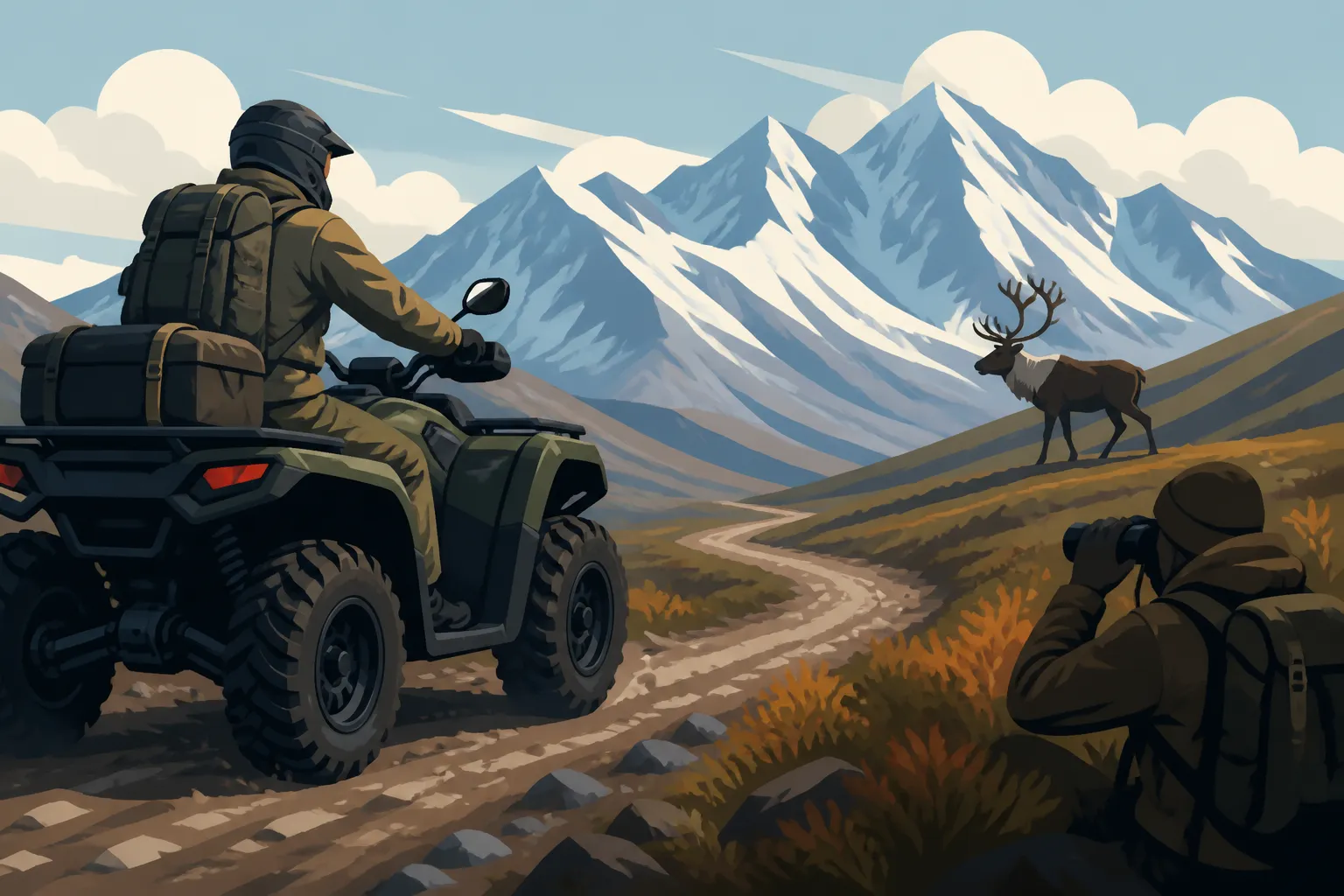
ATVs excel at covering vast distances quickly, allowing you to scout more territory in less time than foot travel alone. This is particularly valuable in the sprawling landscapes surrounding the Denali Highway, where moose and caribou might be widely dispersed. Use your ATV to access high points or glassing knobs along established trails, then shut off the engine and begin glassing with binoculars and a spotting scope. This allows you to survey huge swaths of country for game without burning unnecessary boot leather.
For multi-day hunts, ATVs can transport camp closer to your intended hunting grounds, allowing you to establish a base camp deeper in the backcountry. From this base, you can then conduct foot patrols or use the ATV for shorter hops to new glassing locations. Before you head out, make sure you've consulted detailed maps, perhaps utilizing the tools offered by GoHunt, to identify potential travel corridors, water sources, and areas with good visibility. Remember to move slowly and quietly when approaching an area you intend to hunt. The noise of an ATV can easily spook game, so park it well away from your intended hunting approach and proceed on foot for the final stalk.
Safe and Legal Game Recovery Techniques
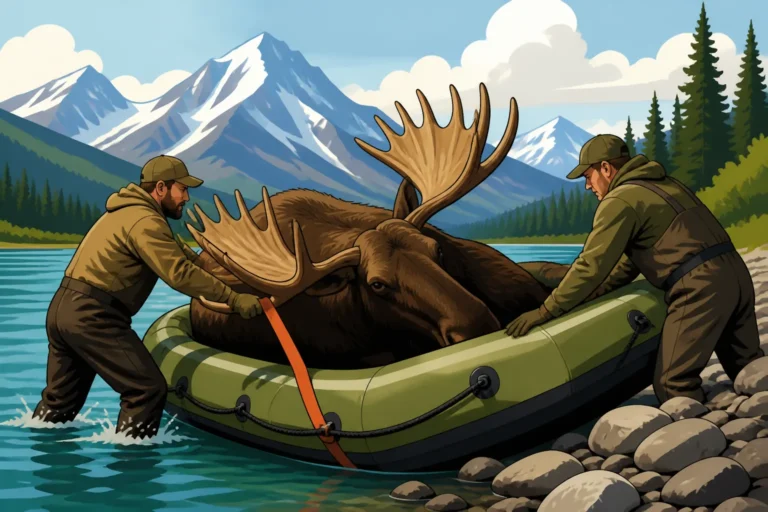
Successfully harvesting an animal is only half the battle; getting it back to the highway is often the harder part, especially with an Alaskan moose or caribou. This is where ATVs truly shine. Once you've made a kill, especially a large animal like a moose, the ATV becomes a critical tool for Quartering a Bull Moose Alone in the Field and then transporting that heavy meat. Positioning your ATV carefully, ideally on solid ground near the kill, will make loading much easier.
Remember that Alaska's meat salvage laws are strict, requiring you to retrieve all edible meat. This means multiple trips might be necessary, especially for a large bull moose. Be mindful of the terrain. While a game sled can be useful for dragging quarters from a difficult kill site to your ATV, dragging directly behind the ATV on rough ground can damage the meat or your equipment. Ensure all meat is properly bagged in breathable game bags, like those made by breathable synthetic materials, to keep it clean and allow for airflow, which is critical for cooling. You'll want to plan for Riding Out Meat Before Dark, as butchering and hauling in the dark is exponentially more challenging and increases risks from wildlife.
Minimizing Environmental Impact and Ethical Considerations
With the privilege of ATV access comes the responsibility to minimize your impact on Alaska's fragile wilderness. Stick to existing trails, old tracks, and designated routes. Avoid creating new ruts, especially in wet or boggy conditions, which can lead to long-term environmental damage. The tundra is incredibly sensitive, and a single pass can leave a visible scar for decades. If a trail looks too wet or too fragile, find another route or consider walking.
Ethical hunting also means being a good steward of the land. Pack out everything you pack in, and then some. Leave no trash, spent casings, or any signs of your presence beyond your tire tracks on existing trails. This not only preserves the beauty of Alaska for future generations but also helps maintain positive public perception of hunters. Be respectful of other users of the Denali Highway, whether they are fellow hunters, hikers, or wildlife watchers. Acknowledge that you are sharing this wild space, and your actions reflect on the entire hunting community.
| Land Type (Along Denali Hwy) | ATV Access Rule Overview | Key Considerations for Hunters |
|---|---|---|
| State Land | Generally restricted to existing trails, roads, or traditional routes. No creation of new trails. | Consult ADF&G regulations and state land use plans. Be aware of private inholdings. |
| BLM Land (Federal) | Often restricted to designated routes within specific "travel management areas." | Check BLM office for specific route maps for the Denali corridor. Seasonal restrictions possible. |
| Native Corporation Land | Private land. Access typically requires permission or a permit from the specific Native Corporation. | Research land ownership carefully (e.g., with GoHunt maps). Trespassing is illegal. |
| National Parks/Preserves | Denali National Park has strict "no ATV" rules. Denali National Preserve has more limited, specific access rules. | Know the exact boundaries. Hunting rules also vary between park and preserve. |
Targeting Specific Game: ATV Tactics for Denali Highway Hunts
The Denali Highway corridor is renowned for its diverse big game opportunities, particularly moose and caribou, but black bears and small game are also viable targets. Leveraging your ATV effectively for each species requires tailored strategies that account for their behavior, habitat, and the unique challenges of the region.
Moose Hunting from ATV Accessible Areas
Moose hunting along the Denali Highway can be incredibly rewarding, especially during the fall rut. Moose tend to frequent willow-choked river bottoms, lake margins, and areas regenerating after a fire, all of which are often accessible via ATV trails branching off the main highway. The key here is using your ATV to get into prime moose country, then leaving it behind for quiet, methodical still-hunting or calling. The noise of an ATV will certainly alert any moose nearby.
Once you’ve reached a promising area, park your ATV a good distance from where you intend to hunt. Scout on foot, paying close attention to fresh tracks, browse, and rub signs. Calling moose, particularly with a Best Moose Call Sequence for the Early Rut, can be highly effective in the thick willows and spruce forests of the Denali region. If you do harvest a bull, remember the strict antler restrictions that apply in many areas; you'll need to know Field Judging a Legal Bull Under Alaska Antler Rules before you pull the trigger. The ability of your ATV to haul out large quarters of meat from deep within the bush is a game-changer for moose hunting, saving you immense physical exertion compared to packing everything out on your back.
Caribou Hunting: Following Migrations and Quotas
Caribou are often the star attraction along the Denali Highway, with the Nelchina Caribou Herd frequently crossing the highway itself or accessible via trails. Their migratory patterns, however, can be incredibly unpredictable, making them a challenging yet exciting quarry. ATVs are instrumental in covering the vast open tundra where caribou roam, allowing hunters to intercept herds as they move. Keep a close eye on ADF&G announcements for harvest quotas and opening/closing dates, as these can change rapidly depending on herd movements. You'll want to understand Nelchina Caribou Movement Along the Denali Highway to plan your hunt effectively.
Using your ATV to access strategic vantage points where you can glass for miles is a highly effective tactic. Once a herd is spotted, park your ATV and plan your stalk on foot. Caribou have excellent eyesight, so using terrain features to stay out of sight is paramount. Be aware of the wind direction; caribou have a keen sense of smell. The open nature of caribou country means shots can be long, so practice shooting accurately at extended ranges. Because caribou often travel in large groups, you might find yourself in the midst of many animals. Exercise patience and select your animal carefully, ensuring it meets legal requirements before taking a shot.
Black Bear and Small Game Opportunities
While moose and caribou often steal the spotlight, the Denali Highway also offers excellent opportunities for black bear and various small game species. Black bears are common throughout the forested and brushy areas along the highway, particularly in early spring when they emerge from dens, or in the fall when they are feeding on berries. Understanding Alaska Black Bear Seasons and Bag Limits is key, as these can vary by game management unit.
ATVs can be used to access remote berry patches or areas with good visibility for spotting bears. When hunting black bears, always prioritize ethical shot placement and ensure you can recover the animal. Bears can cover ground quickly after a shot, especially in dense brush. Small game, such as ptarmigan and snowshoe hare, can also provide excellent camp meat and add to the overall hunting experience. These smaller species are often found along ATV trails or in nearby brushy areas, providing an excellent opportunity for a walk-and-stalk with a small caliber rifle or shotgun during breaks in your big game hunt. Just remember to check the specific regulations for carrying and discharging firearms from or near ATVs.
Ensuring Safety and Preparedness in Denali Backcountry
Hunting along the Denali Highway, while more accessible than some other Alaskan hunts, still plunges you into true wilderness. This means you are responsible for your own safety and preparedness. The environment is unforgiving, weather changes quickly, and wild animals are, well, wild. Thinking through potential risks and having a plan for each is not just smart; it's essential for survival.
Wildlife Encounters and Bear Defense Protocols
Alaska is bear country, and the Denali Highway corridor is home to both black bears and interior grizzlies (brown bears). Encounters are not a matter of "if," but "when." Being prepared is critical. Always carry bear spray, make sure it's easily accessible, and know how to use it. A powerful firearm, typically a large-caliber rifle or a 12-gauge shotgun with slugs, is also a prudent choice for backup, especially when dealing with a downed animal. Understanding Bear Safety While Butchering a Kill in Alaska is vital, as this is when you are most vulnerable to inquisitive or defensive bears.
Travel in groups if possible, and make noise when moving through dense brush to avoid surprising a bear. When you have a kill, especially a large one like a moose, work quickly to quarter the meat and get it secured, but always remain vigilant. Hang meat out of reach if possible, or use electric bear fences around your meat cache. Never approach a bear, especially a sow with cubs, and always give them ample space. If an encounter seems unavoidable, know the difference between a defensive charge (often a bluff) and a predatory attack, and react accordingly.
Dealing with Unpredictable Weather and Emergency Shelter
The weather along the Denali Highway is famously unpredictable. A beautiful, sunny morning can quickly turn into a cold, driving rain, or even an early snowstorm, even in September. Being prepared for all four seasons in a single day is not an exaggeration. Pack layers of high-quality, synthetic or wool clothing that can be adjusted as conditions change. Waterproof outer layers are absolutely non-negotiable. Even on your ATV, pack a small day bag with emergency essentials, including extra warm layers, a fire starter, and high-energy snacks.
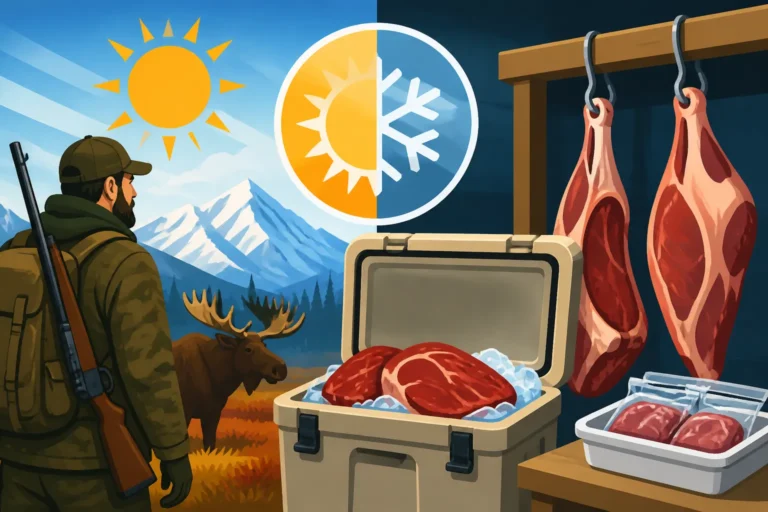
For longer trips, a robust, four-season tent is your primary shelter. In emergency situations, however, you need to know how to construct an improvised shelter or carry a lightweight emergency bivy sack. Hypothermia is a serious risk in Alaska, even in seemingly mild weather, especially if you get wet. Knowing Hanging Meat in Warm September Weather is crucial, but equally important is protecting yourself from the elements while you work. Always have a reliable heat source and extra fuel for cooking and staying warm in camp.
Reliable Communication and Evacuation Planning
Cell service along the Denali Highway is virtually non-existent beyond the small communities at either end (Paxson and Cantwell). Relying on your smartphone for communication is a dangerous gamble. A satellite communication device, such as a Garmin inReach or a Zoleo, is essential. These devices allow you to send and receive text messages, provide your GPS location, and, crucially, trigger an SOS call in a life-threatening emergency. Make sure your device is fully charged, and consider carrying a portable power bank.
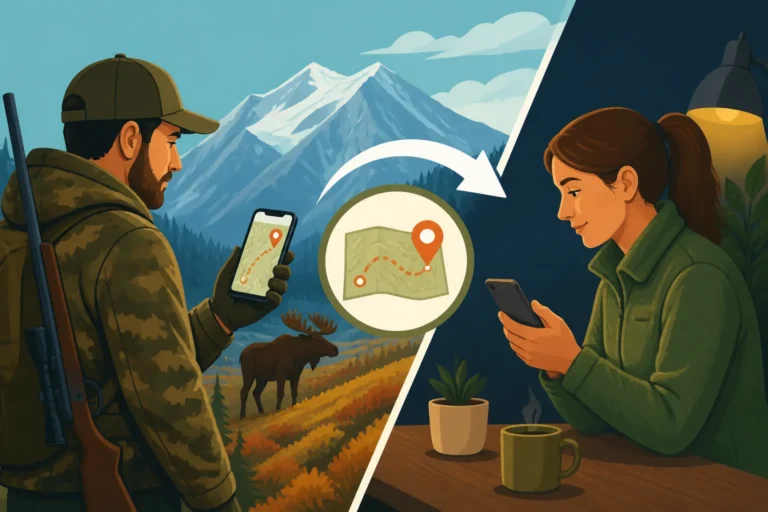
Before you leave, create a detailed trip plan and leave it with a trusted contact who knows when to expect your check-ins and what to do if they don't hear from you. This plan should include your exact route, planned campsites, names of all party members, and emergency contact information. If you're hunting solo, adhering to a strict Signal Devices and Check-In Plans for Solo Alaska Hunts protocol is even more critical. While air taxis and guides can assist in emergencies, self-reliance is the name of the game in remote Alaska. Understand that an emergency extraction can be incredibly expensive, so having medical evacuation insurance is a wise investment.
Disclaimer
Hunting in Alaska carries inherent risks, including but not limited to adverse weather, dangerous terrain, and encounters with wildlife. The information provided in this guide is for informational purposes only and should not be considered a substitute for thorough personal research, proper training, and adherence to all current Alaska Department of Fish and Game regulations. Always prioritize safety, consult official sources for the most up-to-date rules, and ensure you are adequately prepared for any conditions you may encounter.