Muskox in Alaska: Nunivak, Nelson and the North Slope
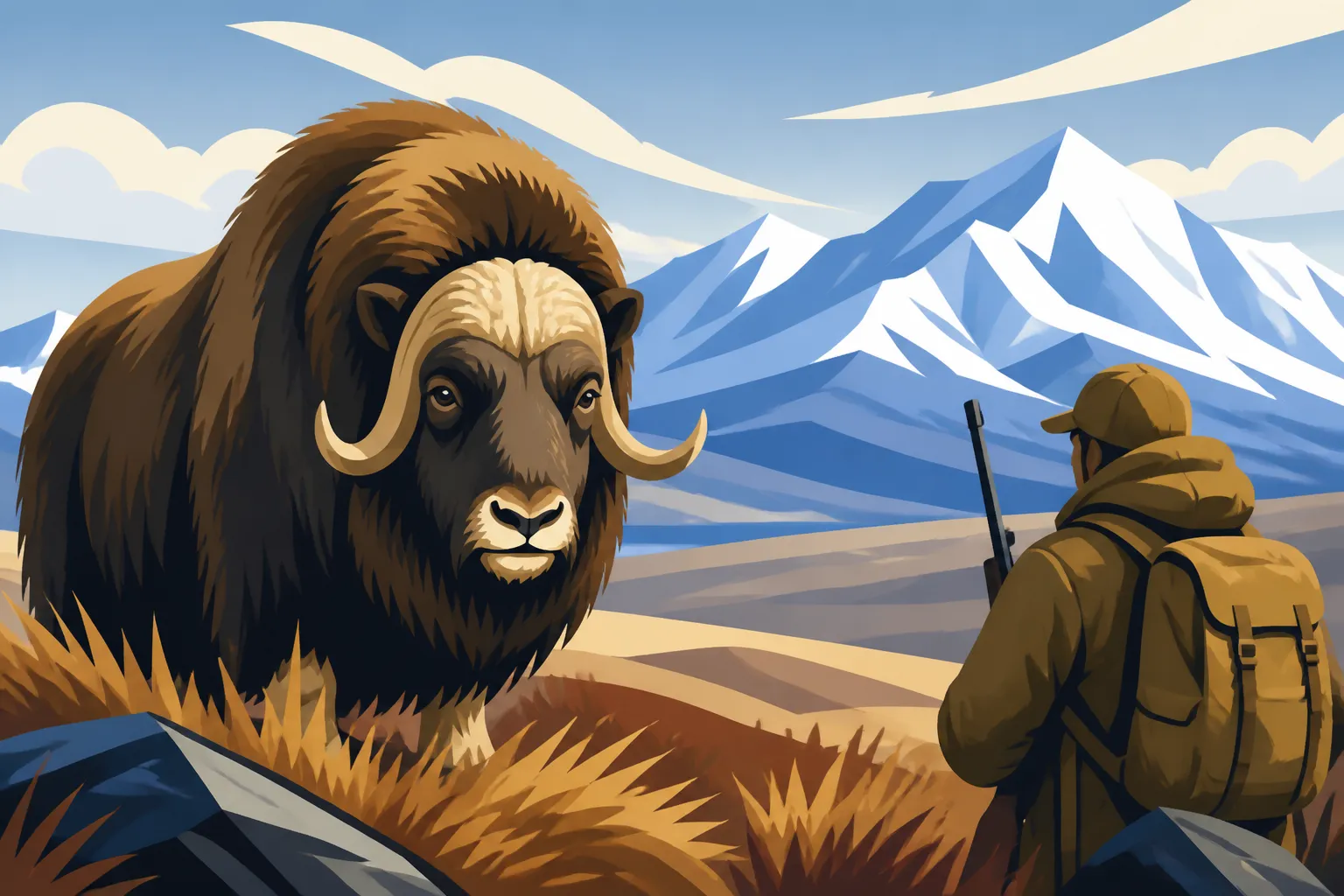
Dreaming of a hunt that takes you back in time, to an era where shaggy beasts roamed icy tundras? The Alaska muskox hunt is precisely that kind of adventure, but for many, the sheer remoteness and specialized logistics make it feel utterly unreachable. It's not just another big game hunt; it's an expedition into truly wild, unforgiving landscapes that demand meticulous planning and a deep understanding of these incredible animals. This comprehensive guide will pull back the curtain on hunting muskox in Alaska, focusing intently on the distinct opportunities found on Nunivak Island, Nelson Island, and the vast North Slope, equipping you with the knowledge to transform that dream into a tangible, unforgettable reality.
The Allure of the Muskox: A Living Relic of the Ice Age
Muskox are, without a doubt, one of North America's most unique and compelling big game animals. Often described as a blend between a buffalo and a sheep, these shaggy, horned bovines are true survivors, direct descendants of the Pleistocene megafauna that once roamed vast ice-age landscapes. Their very presence in Alaska is a testament to their resilience, having been extirpated from the state in the late 1800s and then successfully reintroduced in the early 20th century. For the hunter, pursuing a muskox isn't just about the trophy; it's about connecting with a primeval past, testing your mettle against the elements, and experiencing some of Alaska's most breathtakingly wild and remote country.
Understanding the Unique Biology and Behavior of Muskox
Muskox, or Ovibos moschatus, are incredibly well-adapted to their harsh arctic environment. Their most striking feature is their dense, two-layered coat. The outer layer consists of long, coarse guard hairs that drape almost to the ground, shedding snow and ice. Beneath this, they possess an incredibly fine, insulating undercoat called qiviut – eight times warmer than wool and shed naturally each spring. This double-layer provides unparalleled warmth, allowing them to withstand temperatures as low as -100°F with wind chill. Physically, they are robust, barrel-chested animals, with males (bulls) typically weighing between 600-800 pounds, though some can exceed 900 pounds. Females (cows) are smaller, averaging 300-500 pounds. Both sexes have horns, which grow together across the forehead, forming a heavy boss, before curving downwards around the ears and then sweeping upwards and outwards.
Their behavior is equally fascinating. Muskox are highly social, living in herds that can range from a handful of individuals to dozens, especially outside the rut. When threatened, they famously form a defensive circle, facing outwards with calves and cows protected in the center. This ancient defense mechanism was incredibly effective against natural predators like wolves and bears, but unfortunately, it made them vulnerable to early hunters with firearms. Today, this behavior still shapes hunting strategies, often requiring careful approaches to avoid scattering the herd, which is much preferred over a defensive stance. Their diet primarily consists of grasses, sedges, and willow, which they skillfully uncover from under snow with their hooves and muzzles. Understanding these adaptations is crucial for any hunter hoping to succeed in their unforgiving habitat.
Why Muskox Present a Unique Alaska Hunting Challenge
Hunting muskox in Alaska isn't like chasing deer in the lower 48 or even moose in a familiar river bottom. The challenges are multi-faceted and demand a different kind of preparation and mindset. First and foremost is the extreme environment itself. These hunts often take place in true arctic or sub-arctic conditions, meaning brutal winds, freezing temperatures, and unpredictable weather are the norm. You'll be dealing with vast, treeless tundras, potential whiteout conditions, and the ever-present threat of frostbite or hypothermia if not properly equipped.
Beyond the weather, logistics are a major hurdle. Most muskox populations are in extremely remote areas, requiring bush flights, snowmachines, or even boats to access. This means every piece of gear must be carefully considered for weight and necessity, and you must have a solid plan for getting your meat and trophy out, which can be a significant undertaking in such isolated locations. The hunts are typically draw permit only, making securing a tag a challenge in itself, and some areas have specific residency or guide requirements. Furthermore, the animals themselves, while not typically "spooking" in the traditional sense, can be incredibly difficult to locate in vast open country, and their defensive circle behavior requires a different approach than typical spot-and-stalk big game. It's an experience that tests your physical endurance, mental fortitude, and planning prowess like few others.
Nunivak Island: The Crown Jewel of Alaska Muskox Hunting
Nunivak Island is practically synonymous with muskox hunting in Alaska. This remote island in the Bering Sea, approximately 30 miles off the west coast of mainland Alaska, is home to the largest and most well-established muskox population in the state. For many, a Nunivak hunt is the quintessential muskox experience, offering a true immersion into an arctic landscape teeming with these ancient beasts. The island is part of the Yukon Delta National Wildlife Refuge, and its rugged, treeless terrain of tundra, frozen lakes, and rolling hills provides perfect habitat for muskox, as well as a unique cultural experience with the local Cup'ik Eskimo community in Mekoryuk, the island's only village.
History and Management of the Nunivak Island Muskox Herd
The story of the Nunivak Island muskox herd is one of conservation success. As mentioned, muskox were extirpated from Alaska in the late 19th century. In the 1930s, the U.S. Fish and Wildlife Service began reintroducing muskox to Nunivak Island from Greenland, as part of a broader effort to restore the species to its historical range in Alaska. From a small initial transplant, the herd flourished, demonstrating the species' incredible adaptability. The population grew so robustly that Nunivak became a source for further reintroductions across Alaska and even to other parts of the world, including Canada, Russia, and Norway.
Today, the Nunivak herd is carefully managed through a system of draw permits and registration hunts. The Alaska Department of Fish and Game (ADF&G), in cooperation with the U.S. Fish and Wildlife Service, monitors the population closely to ensure sustainable harvest levels. Permits are highly sought after, reflecting the quality and density of the herd. Management objectives often aim to maintain a healthy population size while providing recreational hunting opportunities that contribute to the local economy. The health and abundance of the Nunivak herd mean that hunters have a very high success rate once they draw a tag, often approaching 90% or more, making it a bucket-list hunt for many. For detailed information on specific season dates and draw odds, resources like GoHunt can be invaluable in tracking application trends and historical success rates for specific units.
Logistics of Planning a Hunt on Nunivak Island
Planning a hunt to Nunivak Island is a significant undertaking, primarily due to its remote location. The first and often most challenging step is drawing a permit. Nunivak hunts are typically structured as draw permits (DM703 for males) or registration hunts (RM702 for either sex) depending on the management objectives for the year. Non-residents must be accompanied by a licensed Alaska guide or a second-degree relative. Securing a guide is paramount, as they provide critical logistical support, knowledge of the terrain, and necessary permits for operating on refuge lands. You'll want to investigate guide options well in advance, as reputable outfits book years out.
Access to Nunivak is exclusively by air. Hunters typically fly to Bethel, a hub city in Western Alaska, and then charter a smaller air taxi flight directly to Mekoryuk, the only village on the island. This leg of the journey is highly weather-dependent, and delays are common, so building extra buffer days into your travel schedule is wise. Once in Mekoryuk, your guide will arrange transportation, usually by snowmachine in the winter or ATV in the fall, to take you out to the hunting grounds. Accommodations can range from small cabins in the village to spike camps set up on the tundra. Be prepared for a basic experience; this is not a luxury hunt. Costs for a guided Nunivak hunt are substantial, covering guide fees, air charters, food, and often local transportation provided by the guide. This is a perfect example of a situation where you might consider consulting a professional like an outfitter or an experienced hunt consultant who specializes in Alaska for their expertise, as they can help navigate the complexities of booking and preparing for such an expedition.
The Nunivak Island Hunt Experience: What to Expect in the Field
The hunt itself on Nunivak Island is an experience like no other. Imagine vast, open tundra, often blanketed in snow, stretching to the horizon. The silence is profound, broken only by the crunch of snow underfoot, the whine of a distant snowmachine, or the roar of the wind. Most Nunivak hunts take place in the late fall or winter, often from November through March, when the tundra is frozen, making travel by snowmachine or even dog team practical. Your guide will typically lead you out, glassing extensively to locate muskox herds. This terrain demands quality optics for spotting animals at a distance. For more on this, you might find valuable insights in articles discussing Glassing Grids That Cover a Whole Basin or Spotting Scope Power for Ram Judging, as similar principles apply to finding muskox.
Once a herd is spotted, the approach becomes critical. Muskox are not skittish like deer, but they can be surprisingly alert. A direct, aggressive approach can cause them to form their famous defensive circle, which, while iconic, isn't ideal for shot placement or separating a legal bull. A good guide will use the terrain, wind, and the animals' natural grazing patterns to get you into a favorable position, often within a couple hundred yards. Shots are typically taken at relatively close range, but the arctic wind can play havoc with bullet trajectory, so practicing shooting in windy conditions is highly recommended. After a successful harvest, the real work begins: quartering and packing out the incredibly dense and heavy animal, often over frozen terrain. Proper Cape Care for a Life-Size Bear Mount will offer general guidance, even though it's for a different species, on ensuring your trophy is handled correctly, particularly for the unique muskox hide. The meat is delicious and highly prized, but salvaging all edible portions is crucial, in line with Alaska's strict Alaska Moose Meat Salvage Requirements which apply across species.
Nelson Island: A Smaller, More Intimate Muskox Opportunity
East of Nunivak Island, across Etolin Strait, lies Nelson Island. While less known globally than Nunivak, Nelson Island also hosts a healthy and huntable population of muskox, offering a slightly different, often more intimate, hunting experience. This island, too, is predominantly tundra, but it features more significant relief with numerous hills and valleys, and it is home to several small Yup'ik Eskimo villages, the largest being Toksook Bay. Hunting here provides another compelling opportunity to pursue muskox in a truly wild Alaskan setting, often with a unique blend of subsistence and sport hunting traditions.
Characteristics of the Nelson Island Muskox Population
The muskox population on Nelson Island, while not as historically large or famous as Nunivak's, is a robust and managed herd. These muskox were also established through translocations from Nunivak Island in the 1960s, a testament to the success of the Nunivak reintroduction program. The herd has thrived in Nelson Island's similar tundra habitat, benefiting from abundant forage and relatively low predation pressure. The animals here are genetically the same as those on Nunivak, exhibiting the same physical characteristics and behaviors, including the famous defensive circle.
Management of the Nelson Island herd falls under the purview of ADF&G, with close coordination with local subsistence councils and the U.S. Fish and Wildlife Service, as portions of the island are also within the Yukon Delta National Wildlife Refuge. Hunting opportunities are often structured as draw permits (DM724 for males) or registration hunts (RM723 for either sex), with specific quotas set annually to ensure the long-term health and stability of the herd. Given the smaller land area compared to Nunivak, the quotas are often more limited, making tags potentially harder to draw for non-residents. However, for those who do secure a permit, the hunting quality can be excellent, providing a deep wilderness experience away from the slightly higher hunter pressure that Nunivak can sometimes experience.
Access and Permitting for Nelson Island Hunts
Access to Nelson Island shares similarities with Nunivak but has its own nuances. Like Nunivak, the primary access point is via air charter from Bethel. From Bethel, you'd charter a smaller plane to one of Nelson Island's villages, such as Toksook Bay, Tununak, or Nightmute. These flights are also susceptible to weather delays, so again, planning for extra travel days is paramount. Non-resident hunters, as with Nunivak, are required to be accompanied by an Alaska-licensed guide or a qualified second-degree relative. This guide will be your key to navigating the unique local conditions, securing necessary land access permits (especially on Native Corporation lands, which are prevalent here), and orchestrating the hunting logistics.
Permits for Nelson Island muskox are allocated through the Alaska Big Game Draw system, and hunters must apply within the Alaska's November 1 to December 15 Draw Application Window. The application process can be competitive, especially for limited trophy bull permits. It's crucial to understand the specifics of How Alaska's Big Game Drawing Permits Work, including application fees and the process for selecting your hunt choices. Hunters should carefully research the specific hunt numbers for Nelson Island and consider their odds. Given the often smaller quotas, it might be beneficial to explore historical draw odds using resources like GoHunt, which compiles this data and provides analysis. Once a permit is secured, coordination with your chosen guide on local transportation (often snowmachines in winter, ATVs in fall), camp setup, and specific hunting zones is essential.
Hunting Strategies and Considerations for Nelson Island
Hunting muskox on Nelson Island involves similar principles to Nunivak but with some adjustments due to the terrain and community presence. The island's rolling hills and numerous valleys can offer more opportunities for stalks utilizing topography, potentially making for a more dynamic hunt than the vast, flatter plains of some Nunivak areas. Most hunts occur in the winter months (November-March), when snowmobile travel is easiest and muskox are often in larger, more visible herds. The villages on Nelson Island are hubs of subsistence activity, and hunters should be respectful of local traditions and customs. Your guide will be instrumental in facilitating positive interactions and ensuring you understand the cultural context of hunting in this region.
Spotting animals is the first step, often involving long hours of glassing from high points or covering ground via snowmachine. Once a herd is located, a methodical approach, often on foot, is initiated to get within ethical shooting range. Wind direction is always a critical factor in the open tundra. Because muskox are herd animals, careful shot placement is vital to ensure a clean kill without alarming the entire group, which can make follow-up shots or recovering a wounded animal more challenging. The density of their qiviut coat means that even a well-placed shot might not immediately drop an animal, so be prepared for it to stand for a moment or two after the hit. After the kill, processing the animal in cold conditions, meticulously removing all Which Cuts Count as Edible Meat in Alaska, and preparing the hide for transport is a significant task that requires teamwork and efficient execution, as detailed in Cape and Skull Care for a Brown Bear Hide (with adaptations for a muskox). The local communities also appreciate donated meat, which can be a valuable contribution.
The North Slope: Arctic Wilderness and Dispersed Herds
Beyond the island populations, Alaska's vast North Slope offers another, distinctly different, muskox hunting experience. Stretching from the Brooks Range north to the Arctic Ocean, this immense wilderness is home to several smaller, more dispersed muskox herds. Unlike the concentrated island populations, hunting the North Slope is often a true expedition into the Alaskan Arctic, characterized by unparalleled remoteness, extreme weather, and animals that can be far more spread out across an even vaster landscape. This is a hunt for the truly adventurous, demanding robust preparation and a deep respect for the profound solitude of the far north.
Different North Slope Muskox Populations and Their Ranges
The North Slope supports multiple, often distinct, muskox populations, primarily concentrated in three general areas: the Western Arctic, the Central Arctic, and the Eastern Arctic (which includes areas like the Canning River and areas east towards the Canadian border). These herds were also re-established through transplants from Nunivak Island, beginning in the 1970s and continuing into the 1980s. Unlike the islands, where muskox are the dominant large herbivores, on the North Slope, they share their habitat with caribou, particularly the massive Western Arctic Herd and Central Arctic Herd, as well as grizzly bears and wolves.
The populations are generally smaller and more spread out than on Nunivak or Nelson islands. For example, the Central Arctic Herd near Prudhoe Bay and the Canning River area has a huntable population, as does the Western Arctic near Kotzebue and Point Hope. ADF&G manages these herds through draw permits and registration hunts, often with very limited quotas due to the more dispersed nature of the animals and the challenges of accurately surveying them across such immense territories. Hunters need to pay close attention to the specific Game Management Units (GMUs) and hunt numbers for the North Slope, as regulations can vary considerably from one area to another. Checking the Alaska Caribou Seasons and the Winter Hunt Split might be helpful to understand how caribou are managed in this area, as muskox hunts can sometimes overlap with caribou seasons.
The Challenges of North Slope Muskox Hunting
Hunting muskox on the North Slope amplifies many of the challenges found on the islands. The scale of the landscape is immense, often requiring extensive air reconnaissance by bush plane to locate animals. Once on the ground, travel is typically by ATV during the limited fall season or snowmachine in the winter, covering vast distances across flat, featureless tundra. The weather here is famously brutal: sustained high winds, whiteout blizzards, and temperatures plummeting far below zero are common from fall through spring. GPS Battery Life in Cold Camps becomes a critical consideration, as navigation without reliable electronics can be incredibly difficult in such an expansive and often featureless environment.
Logistics are even more complex than island hunts. Air charter costs are substantial, flying into remote strips or frozen lakes. Setting up a comfortable, weather-proof camp that can withstand arctic storms is paramount. Unlike the island villages, support infrastructure on the North Slope is minimal to non-existent outside of a few key hubs like Deadhorse (Prudhoe Bay) or Kotzebue, meaning hunters are often truly self-sufficient in the wilderness. There's a higher likelihood of encountering other large predators like grizzly bears (especially in the foothills of the Brooks Range) and wolves, requiring robust bear safety protocols. For this, Bear Safety While Butchering a Kill in Alaska provides essential guidance. The hunting itself is often more of a true expedition, requiring greater physical endurance and mental resilience, often involving multiple days of searching before animals are even spotted.
Unique Gear and Tactics for Arctic Muskox
Given the extreme conditions and expansive terrain, a North Slope muskox hunt demands specialized gear and tactics. Your clothing system is the single most critical component. Layering is key, with high-quality base layers, insulating mid-layers (down or synthetic), and a bomb-proof outer shell that is both windproof and waterproof. Think extreme cold weather gear, often used by those who work on the North Slope or venture into the high Arctic. You'll want to study up on Clothing Systems for Extreme Arctic Weather well in advance. Robust, insulated boots rated for extreme cold are non-negotiable, along with multiple pairs of insulated gloves and mittens.
Optics are equally vital. High-quality binoculars and a spotting scope are essential for methodically glassing the vast expanses to locate herds that might appear as distant specks. Consider using tools or apps like those from GoHunt to overlay land status information on your maps, crucial for hunting areas like the North Slope where Native Corporation lands and federal refuge lands can have complex access rules, as discussed in Land Status in Alaska: State, Federal and Native Corporation. Navigation is often reliant on GPS units with pre-loaded maps and satellite communication devices like InReach or Garmin inReach Mini, given the complete lack of cell service. For tactics, patience is paramount. You might spend days covering ground before finding animals. When you do, a long, careful stalk is often required. Rifle choice should lean towards reliable calibers that perform well in cold, such as .30-06, .300 Win Mag, or larger, capable of delivering a solid punch to a tough animal, similar to discussions around Rifle Calibers for Coastal Brown Bear. Be prepared for shots in windy conditions and potentially at longer ranges if terrain doesn't allow a closer approach.
Muskox Biology and Behavior: Key to a Successful Hunt
Understanding the specific biology and behavior of muskox isn't just academic; it's the foundation of a successful and ethical hunt. These animals are truly unique, and while they may appear slow or cumbersome, their adaptations to the arctic environment are profound. Their social structure, defensive mechanisms, and foraging habits all influence how and when you might encounter them, and how you should approach a harvest.
Muskox Herd Structure and Rutting Bulls
Muskox are highly social animals, typically living in herds that vary in size depending on the season and population density. Outside of the rut, herds often consist of a mix of bulls, cows, and calves, sometimes numbering in the dozens. These mixed herds will graze together, moving slowly across the tundra. During the breeding season, or rut, which typically occurs in late summer and early fall (August and September), the herd dynamics shift dramatically. Mature bulls, which are usually solitary or form small bachelor groups for much of the year, will rejoin mixed herds to compete for breeding rights. This is when the true spectacle of muskox behavior can be observed.
Dominant bulls will engage in elaborate, ritualized displays of strength, including head-on clashes that can be heard for miles. These powerful collisions, where two bulls charge each other at speeds up to 25 mph, are a primary way they establish dominance. For hunters, the rut can present opportunities to find larger, more active bulls, but it also means dealing with animals that are more agitated and focused on competition rather than their surroundings. Identifying a legal bull (which in some units might mean specific horn size or age criteria) in a rutting herd requires careful observation, often from a distance, before making an approach. More depth on this can be found in Muskox Herd Structure and Rutting Bulls.
Muskox Qiviut and Winter Survival
Perhaps the most astonishing adaptation of the muskox is its incredible coat, particularly the inner layer of wool known as qiviut. Qiviut is famously soft, lightweight, and incredibly warm – eight times warmer than sheep's wool, in fact. This dense undercoat allows muskox to thrive in conditions that would quickly kill most other mammals. It provides such exceptional insulation that snow often accumulates on their backs without melting, a clear indicator of their minimal heat loss. Hunters will notice this incredible fur firsthand; it's what makes the hide so valuable and requires careful handling to preserve its quality.
The qiviut is shed naturally each spring, typically in May or June, making it a prized fiber for traditional crafts in arctic communities. For the hunter, understanding the qiviut cycle is important for trophy care. A prime winter hide, with a full, luxurious qiviut layer, is highly sought after. This is one reason many hunts are scheduled in the colder months, when the qiviut is at its thickest and finest. The sheer insulating power of this coat also explains why muskox can stand motionless in blizzards; they simply don't get cold. Their ability to minimize energy expenditure, coupled with their incredible coat, is central to their Muskox Qiviut and Winter Survival in the harshest environments on Earth.
Identifying Legal Animals and Field Judging
Field judging a legal muskox requires knowledge of the local regulations and keen observation. Unlike sheep with "full-curl" rules or moose with antler restrictions, muskox regulations often focus on sex (bull or cow) and sometimes age or general size. Many permits are for "any bull" or "either sex," but specific draw permits might target mature bulls for trophy hunters. When hunting for a bull, you'll generally be looking for larger body size, thicker horn bosses, and a more robust overall appearance compared to cows. Bulls also have a more pronounced, often darker, patch of hair on their chest.
The horns are the primary trophy feature. While both sexes have horns, a mature bull's horns will typically form a massive, fused boss on the top of the skull that covers the forehead. The horns then curve sharply downwards and outwards before sweeping up at the tips. Cows generally have a less massive boss, and their horns typically remain separated by a strip of hair on the forehead. While not as complex as How to Judge a Full-Curl Ram in the Field, distinguishing between a large cow and a smaller bull, especially at a distance or in mixed herds, can be challenging. Your guide will be invaluable in helping you make a correct identification, particularly if specific legal requirements apply to your permit. Taking your time, observing the animals' behavior, and comparing individuals within a herd are crucial steps before making a final decision and taking a shot.
Permitting and Regulations: Navigating the Alaska System
The regulatory framework for hunting muskox in Alaska can seem daunting at first glance. It's a complex blend of state regulations, federal land management rules, and, in some cases, specific rules governing Native Corporation lands. Success in drawing a tag and ensuring a legal hunt hinges on a thorough understanding of these systems. This isn't a hunt you can simply decide to do a few weeks beforehand; it requires foresight and careful planning, often years in advance.
Understanding Draw Permits and Application Timelines
Muskox hunting in Alaska is almost exclusively managed through draw permits and sometimes registration permits. Unlike over-the-counter tags for some species, these permits are limited in number and allocated through a lottery system designed to control harvest pressure and ensure sustainable populations. The application period for the Alaska Big Game Draw is typically from Alaska's November 1 to December 15 Draw Application Window each year, with results usually announced in February. This means you apply in the fall for hunts that will take place the following fall or winter.
Hunters must be meticulous when applying. You'll need to purchase a valid Alaska hunting license (non-residents have different costs than residents, as outlined in Nonresident Hunting License Costs in Alaska) before applying. Each hunt unit (like DM703 for Nunivak bull or RM723 for Nelson either-sex) has a specific hunt number, and you'll typically pay a small application fee per hunt number. It’s critical to double-check these numbers and ensure you meet any specific eligibility requirements, such as guide requirements for non-residents. The odds of drawing a permit can vary wildly by unit and year, with some highly coveted hunts having extremely low success rates. Tools from services like GoHunt are incredibly useful here, providing data on historical draw odds, successful applicants, and even mapping hunt unit boundaries, which can significantly inform your application strategy. This detailed research is vital when trying to optimize your chances in How Alaska's Big Game Drawing Permits Work.
Hunter Education and Orientation Requirements
For many big game species in Alaska, and particularly for hunts in remote areas or for certain species, there are specific hunter education and orientation requirements. While a general Alaska Hunter Education card is often required for younger hunters or those born after a certain date (Alaska Hunter Education Card Requirements), specific hunts, especially for species like Dall sheep and mountain goats, often mandate additional orientations. For muskox, while there isn't a statewide mandatory muskox-specific orientation, hunters are strongly encouraged to review all regulations, often found in the hunt supplement for their specific unit.
Furthermore, if you are hunting on federal refuge lands, such as portions of Nunivak or Nelson islands within the Yukon Delta National Wildlife Refuge, there might be additional federal regulations or refuge-specific orientations that your guide will help you navigate. It’s always best practice to contact ADF&G or the refuge office directly for the most current information regarding your specific hunt number. Your licensed guide will also be a wealth of information, as they are required to stay current on all regulations and hunter requirements. They can inform you of any specific Alaska Hunter Education and Orientation Requirements that might apply to your permit or hunting area.
Post-Harvest Requirements and Trophy Care
Successfully harvesting a muskox is only half the battle; ensuring proper post-harvest care and adhering to strict reporting and sealing requirements is just as important. All big game animals harvested in Alaska, including muskox, are subject to Alaska Harvest Ticket Reporting Deadlines or other specific reporting requirements for draw and registration hunts. This usually involves submitting a harvest report within a specified timeframe (often within 15 days) of the kill or by a season deadline. Failure to report can result in fines or loss of hunting privileges.
Trophy care for a muskox hide is critical, especially given the value of its qiviut and the general rarity of the animal. The dense hide and heavy boss require substantial effort to skin and flesh, particularly in freezing conditions. Your guide will be experienced in this process. The skull, if kept, also needs to be cleaned and potentially sealed depending on the unit and local regulations. The hide and skull must be brought out of the field and presented to an ADF&G representative or designated sealing agent for sealing. Alaska Sealing Requirements for Bear and Wolf Hides provides a framework for understanding such regulations, and while muskox aren't bears or wolves, similar legal steps for identification and sealing apply to ensure legal possession and transport. It’s important to research Where to Get a Hide Sealed in Alaska well in advance of your hunt, as sealing stations might be limited in remote areas. Finally, the meat must be salvaged according to Alaska Moose Meat Salvage Requirements, ensuring all edible portions are removed and utilized.
Essential Gear for Your Alaska Muskox Adventure
A muskox hunt is inherently an extreme cold weather expedition, especially those conducted in the late fall and winter. The gear you choose can literally make or break your trip, impacting not just your comfort but also your safety and success. There's no room for cutting corners on quality when you're facing arctic winds and sub-zero temperatures. Think durability, reliability, and warmth above all else.
Clothing Systems for Extreme Arctic Weather
Your clothing system for a muskox hunt is probably the most critical gear consideration. Forget cotton; think layers of high-performance synthetics and wool. Start with a moisture-wicking base layer that pulls sweat away from your skin. Next, add insulating mid-layers – a heavyweight fleece or synthetic puffy jacket. Your outer layers must be absolutely bombproof: a high-quality, insulated parka and bibs or pants that are both waterproof and windproof. Brands like Sitka, KUIU, or Stone Glacier make excellent technical hunting apparel designed for cold, wet, and windy conditions, though you may need to supplement with even heavier arctic-specific gear.
Footwear is equally vital. You'll need heavily insulated, waterproof boots rated for extreme cold (e.g., -40°F or colder). Companies like Baffin or Schnee's offer options designed for arctic conditions. Bring multiple pairs of heavy wool or synthetic socks. Don't forget extremities: an insulated beanie or trapper hat, a balaclava, and multiple pairs of gloves and mittens. Mittens are generally warmer than gloves in extreme cold. Consider a hand warmer muff for quick access to warm hands. The key is to have enough layers that you can adjust throughout the day as your activity level and the weather change, ensuring you stay dry and warm. For a deeper dive into this, you'll want to read up on Clothing Systems for Extreme Arctic Weather.
Optics and Navigation in Open Tundra
In the vast, treeless expanses of muskox country, your optics are your eyes. High-quality binoculars (10×42 or 10×50 are common choices) are indispensable for scanning distant horizons and spotting the dark forms of muskox against the snow or tundra. Equally important is a powerful spotting scope (20-60x or 20-70x) paired with a sturdy tripod. This allows you to scrutinize animals from a great distance, confirming species, sex, and legal eligibility without spooking them. Brands like Swarovski, Zeiss, Leica, or Maven offer top-tier optics that perform exceptionally well in low light and harsh conditions.
Navigation on the featureless tundra is also a critical skill and requires reliable tools. A good GPS unit, like a Garmin Montana or inReach Explorer, loaded with detailed topographic maps and satellite imagery, is essential. Always carry a traditional map and compass as a backup, and know how to use them. Satellite communication devices, such as an InReach or Zoleo, are vital for checking in with contacts, receiving weather updates, and calling for emergency assistance in areas with no cell service. Understanding GPS Battery Life in Cold Camps is crucial, as cold temperatures drain batteries quickly, so carry spares and keep them warm. Marking your camp, vehicle, and any potential landmarks with GPS waypoints is a fundamental safety measure, especially if you get caught in a whiteout.
Rifle and Ammunition Choices for Muskox
When it comes to rifle and ammunition, reliability and adequate power are paramount for muskox. While muskox aren't typically "hard to kill" in the sense of being bulletproof, they are tough, dense animals with heavy bone structure and a thick hide. A well-placed shot from a moderately powerful cartridge is usually sufficient, but having enough energy to ensure a clean, ethical kill is important. Common recommendations include cartridges like .30-06 Springfield, .300 Win Mag, 7mm Rem Mag, .338 Win Mag, and even .375 H&H Magnum. The .338 Winchester Magnum offers a significant step up in power without being overly cumbersome, providing excellent penetration on larger animals.
Focus on premium, bonded bullets designed for deep penetration and controlled expansion, such as Barnes TSX, Nosler AccuBond, Hornady Interbond, or Federal Terminal Ascent. These bullets are engineered to hold together and drive through dense muscle and bone, maximizing energy transfer. Practice shooting in cold weather with your chosen rifle and ammunition, dressed in your hunting clothes, to ensure you're comfortable and accurate. Pay attention to how your rifle performs in cold, and ensure your scope is robust and securely mounted, as discussed in Scope Damage From Float Plane Vibration. Carrying enough ammunition for practice, sighting in, and the hunt itself is also wise, though be mindful of Ammunition Limits on Alaska Bush Flights. Your guide may also have specific recommendations based on their experience in the area you will be hunting.
Disclaimer
Please note that hunting regulations in Alaska are subject to change annually. It is the hunter's sole responsibility to verify all current regulations, season dates, permit requirements, and land access rules with the Alaska Department of Fish and Game (ADF&G) and relevant land management agencies before planning or undertaking any hunt. This guide is for informational purposes only and does not constitute legal advice or a substitute for official regulations.