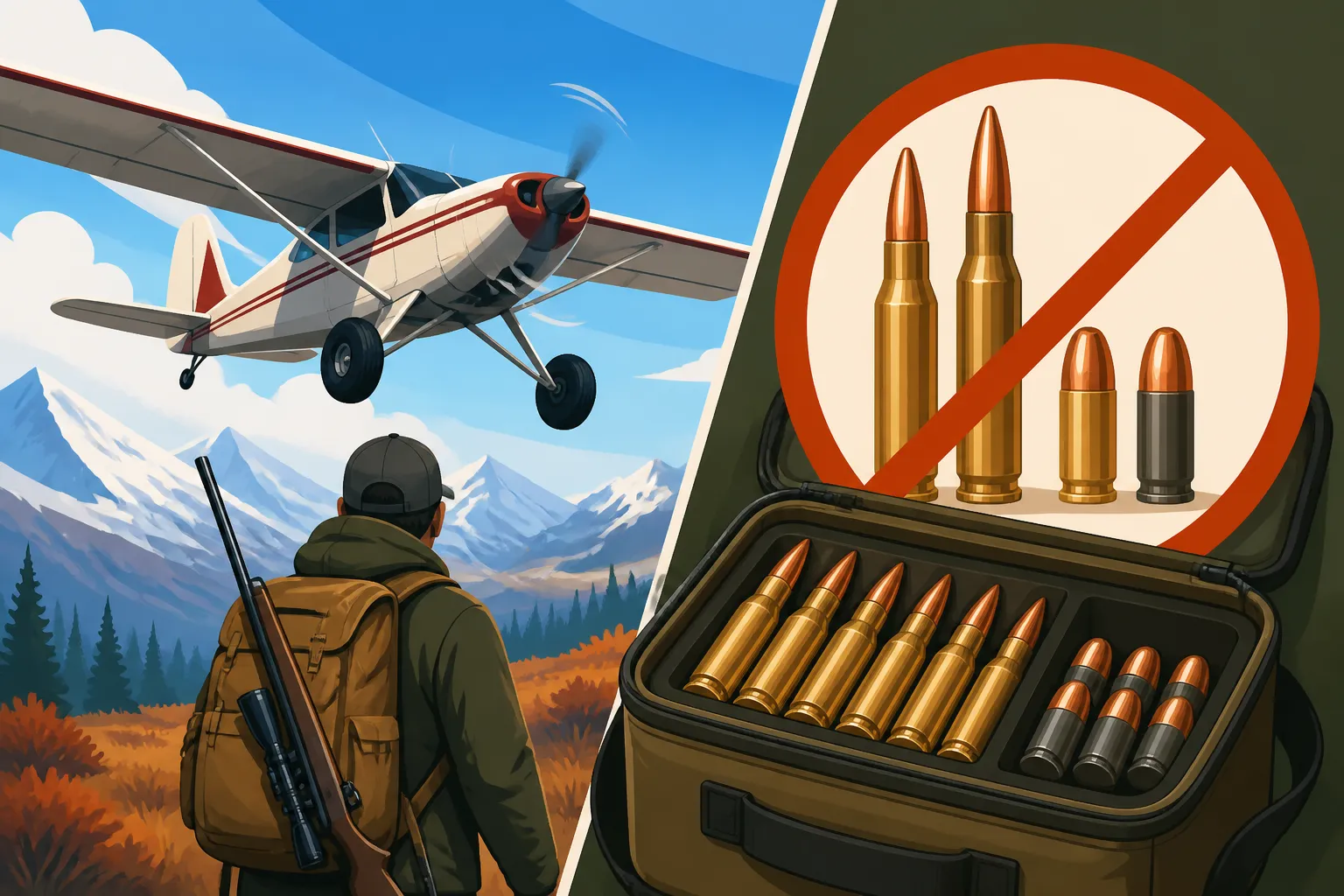
Ammunition Limits on Alaska Bush Flights
One of the biggest anxieties for hunters planning a remote Alaska trip isn't just drawing that coveted tag or finding the right guide; it's the sheer logistics of getting yourself and your essential gear, especially ammunition, into the backcountry. The rules around flying with firearms and ammo can feel like a tangled mess of federal regulations mixed with individual air taxi policies, leaving many folks scratching their heads and fearing a costly snag at the departure point. This guide aims to clear up that confusion, offering practical advice on understanding and navigating ammunition limits when you're flying into the Alaskan bush.
Understanding Federal Regulations for Ammunition Transport
Before you even think about stepping onto that small bush plane, it's crucial to grasp the baseline rules set by federal agencies like the Transportation Security Administration (TSA) and the Federal Aviation Administration (FAA). These regulations apply to all commercial flights, including the smaller carriers that operate out of hubs like Anchorage or Fairbanks, even if you're just connecting to a smaller air taxi later. The key here is safety – ensuring that ammunition is transported in a way that minimizes risk to everyone on board.
TSA Guidelines for Checked Ammunition
The TSA's primary concern for ammunition is that it must be transported securely and safely in your checked baggage, never in your carry-on. This is a non-negotiable rule, and trying to carry ammo onto a plane is a quick way to lose your ammunition and potentially face other penalties. Think of your checked bags as the cargo hold's domain, where specific guidelines are in place to manage hazardous materials, including ammunition.
The guidelines typically state that ammunition must be packed in a fiber (such as cardboard), wood, plastic, or metal box specifically designed to carry small arms ammunition. This isn't just any old container; it needs to be robust enough to withstand the rigors of baggage handling. Furthermore, the ammunition must be securely packed within this container to prevent movement and accidental discharge. Loose rounds rattling around in a duffel bag are a definite no-go. You'll often see hunters using the original factory boxes their ammo came in, which are usually sufficient for this purpose, or specialized ammo carriers. The total weight of ammunition is also a factor, usually capped at a specific poundage per passenger, though this limit is generally quite generous for most hunting needs. It's always wise to check the current TSA regulations directly before your flight, as they can be updated.
FAA Rules and Air Carrier Discretion
While the TSA sets the security screening rules, the FAA provides the safety framework for air carriers, and it's the individual air carriers themselves (the airlines) that often impose stricter limits based on their own operating procedures and aircraft capabilities. For major commercial airlines, this might mean a maximum weight per passenger for ammunition, often around 11 pounds. But here's where it gets interesting for Alaska bush flights: those small air taxis are operating under different rules and with much smaller aircraft.
These smaller planes, often single-engine bush planes like a Super Cub or a Cessna 185, have strict weight and balance limitations. Every pound matters. The FAA allows air carriers to set their own policies above and beyond the minimum federal standards, especially concerning cargo that could pose a risk or impact the aircraft's performance. This means that while 11 pounds might be the federal commercial airline standard, your specific bush pilot or air taxi operator might have a much lower, or entirely different, limit due to the size of their plane, the length of the flight, and the overall load they need to carry, which includes all your gear, food, and perhaps even fuel caches. You might want to consider Rifle Calibers for Coastal Brown Bear and how many rounds you truly need for that specific hunt.
Air Taxi Specific Policies: The Real Gatekeepers
This is where the rubber meets the gravel runway. While federal regulations provide a baseline, the specific air taxi you book for your remote Alaska hunt is going to have the final say on how much ammunition you can bring. Ignoring their policies isn't just risky; it could mean leaving essential rounds behind or, worse, delaying or canceling your flight.
Weight and Balance: Why Every Round Counts
Bush planes, unlike commercial jets, are incredibly sensitive to weight and balance. Every item loaded into the plane, from your heavy pack to your small box of cartridges, affects the aircraft's performance, fuel consumption, and safety. Pilots meticulously calculate these factors to ensure a safe flight, especially when flying into unimproved strips or remote lakes. A pilot isn't being difficult when they tell you there's a limit; they're being responsible and ensuring everyone's safety.
Imagine you're flying into a remote lake for a moose hunt. You've got your rifle, a substantial pack with ten days of gear, food, and probably a few luxuries. Now, multiply that by two or three hunters, plus the pilot and the necessary survival gear. Add in extra fuel for the plane, and suddenly, space and weight become incredibly precious. A box of 20 cartridges might only weigh a pound or two, but when aggregated across multiple hunters and coupled with all other gear, it adds up quickly. It's not uncommon for air taxis to have strict total weight limits for passengers and cargo, and that limit encompasses everything, including your ammunition. This often means making tough choices about what gear makes the cut. For advice on overall load management, check out Weight Limits on a Super Cub Drop.
Common Air Taxi Ammunition Restrictions
Most Alaska air taxis will have specific, often unwritten but firmly enforced, policies regarding ammunition. These usually involve:
- Limited Quantity: It's common for air taxis to recommend or even enforce a limit of one or two boxes (10-20 rounds per box) of ammunition per hunter. This is generally ample for a successful hunt, even if you need to Sighting In Before You Fly to a Remote Alaska Camp once you're in the field. Remember, these aren't target shooting excursions where you'll be burning through hundreds of rounds. A responsible hunter ensures every shot counts.
- Original Packaging: While not always a hard rule, many air taxis prefer ammunition to be in its original factory packaging. This clearly identifies the caliber and type of ammunition, and it's designed to keep rounds secure and prevent accidental discharge. If you've reloaded, be sure to use secure, clearly labeled containers.
- Separation from Firearms: Always, always, always transport your ammunition separately from your firearm. Your rifle or shotgun will be unloaded, typically in a hard case, and often stored in a different part of the aircraft than your checked bags containing ammo. This separation is a fundamental safety practice across all air travel.
- Designated Storage: Some air taxis might even specify where they want ammunition placed within your checked baggage or even in a separate, designated container they provide. Always defer to the pilot's instructions on this.
The best practice is to call your air taxi operator well in advance and ask directly about their specific ammunition policies. Do not assume. Explain what you'll be carrying and listen carefully to their instructions. This communication is vital for a smooth operation, especially when planning a Fly-In Hunting: Working With an Alaska Transporter Pilot.
Packing Your Ammunition for the Bush Flight
Properly packing your ammunition isn't just about following rules; it's about safety and ensuring your gear arrives intact and ready for your hunt. A little foresight here can save a lot of headaches later.
Secure and Segregated Packing
As mentioned, ammunition must be packed in a durable container designed for the purpose. Factory boxes are usually fine. If you're using a plastic ammo box, make sure it latches securely and can't accidentally pop open. The key is to prevent the rounds from shifting, bouncing, or coming loose during transit. Loose cartridges can be a hazard, and they might not be allowed to fly.
It's also a good idea to segregate your ammunition from other items in your bag, perhaps by placing the ammo box within a small, separate compartment or wrapping it in a piece of clothing to cushion it. This prevents any accidental damage to the ammo box itself or to other sensitive gear if the bag gets jostled around.
Labeling for Clarity
While not always a strict requirement for bush flights, clearly labeling your ammunition can be helpful for both you and the air taxi crew. A simple label indicating "AMMUNITION" and your name can streamline the loading and unloading process, especially if multiple hunters are flying together. This also helps in case your bag gets temporarily separated from you.
Always ensure your ammunition is clearly marked with its caliber. This helps the pilot confirm what's being loaded onto their plane, should they need to quickly identify contents.
Planning Ahead: Communication is Key
The success of any remote Alaska hunt hinges on meticulous planning and clear communication, and that's especially true when it comes to flying in with firearms and ammunition.
Contact Your Air Taxi in Advance
Seriously, pick up the phone. Don't rely solely on their website or generic advice. Every air taxi operates differently, with different aircraft, different routes, and sometimes, different interpretations of regulations. A quick call to your specific air taxi operator or pilot can save you a lot of stress. Ask them directly about:
- Ammunition limits: How many rounds or what weight limit do they impose per person?
- Packing requirements: Do they have a preference for factory boxes? Any specific container types?
- Firearm transport: How do they prefer rifles to be cased and stored?
- Overall gear weight limits: This is critical, as your ammo factors into your total allowance.
It's also a good opportunity to discuss your overall gear strategy. If you're flying in for a long trip, you might need to think about Building Extra Days Into a Fly-In Schedule to account for weather, or consider if you truly need Archery Tackle That Survives Ten Days of Rain and a rifle.
What if You Have Too Much Ammo?
So, you've packed your bag, you've got five boxes of ammo, and the pilot tells you their limit is one. What do you do?
- Prioritize: Decide which ammunition you absolutely need. For most big game hunting, 20-40 rounds (one to two boxes) is more than enough. You're not going to be plinking.
- Repack: If possible, move the excess to another hunter's bag if they have space and are within their limits, and if the air taxi allows it. This needs to be coordinated and cleared with the pilot.
- Leave it behind: As a last resort, you might have to leave some ammunition with your outfitter, at the air taxi's base, or even mail it home (following postal regulations). It's a bummer, but it's better than delaying or jeopardizing your hunt.
| Aspect | Commercial Airline (e.g., Alaska Airlines) | Bush Air Taxi (e.g., Super Cub, Cessna 185) |
|---|---|---|
| Federal Regulations (TSA/FAA) | Baseline applies: Checked baggage only, secure container, up to 11 lbs typically. | Baseline applies, but air taxi policies often supersede due to aircraft limitations. |
| Primary Concern | Security screening, general baggage handling safety. | Weight & Balance for small aircraft, specific route, unimproved landing strips, safety. |
| Typical Ammo Limit | Up to 11 lbs (approx. 200-250 rifle rounds or 350-500 pistol rounds, depending on caliber). | Highly variable; often 1-2 boxes (20-40 rounds) per hunter. Must confirm with operator. |
| Packing Preference | Factory packaging or secure ammo box. | Factory packaging preferred, secure ammo box. Loose rounds often not permitted. |
| Firearm Separation | Mandatory: Ammo in checked bag, firearm in locked hard case. | Mandatory: Ammo separate from firearm. Firearm often in specific cargo area. |
| Pilot Discretion | Minimal beyond federal rules. | Significant; pilot's decision is final due to aircraft safety and operational demands. |
| Key Action for Hunter | Check airline website for current baggage rules. | CALL YOUR AIR TAXI DIRECTLY to confirm their specific limits and requirements. |
In the end, navigating ammunition limits for Alaska bush flights comes down to respect for the rules, the aircraft, and the pilot. These aren't just arbitrary restrictions; they're in place to ensure your safety and the success of your adventure into some of the wildest country on Earth. A little preparation and clear communication will go a long way in ensuring your hunting gear, including your precious ammunition, makes it to camp without a hitch. And don't forget to consider essential navigational tools for these remote areas, like having GPS Battery Life in Cold Camps accounted for.
Disclaimer
This article is for general informational purposes only and does not constitute professional advice. Laws, prices and regulations vary by location and change over time. Consult a qualified professional for guidance on your specific situation.