Alaska Caribou and Moose Without a Guide
Many aspiring hunters dream of an Alaska big game adventure, but the thought of the immense cost and logistical hurdles of a fully guided hunt can feel overwhelming, especially for non-residents. The common misconception is that if you're coming from out of state, you must hire a professional guide for any big game animal. This simply isn't true for all species, and this guide will clarify the regulations and empower you with the knowledge to plan a successful unguided moose or caribou hunt in the Last Frontier.
Understanding Alaska's Guide Requirements for Non-Residents
Navigating Alaska's hunting regulations can feel like deciphering ancient runes, particularly when it comes to the guide requirements for non-residents. It's a critical first step, as mistaking the rules can lead to serious legal trouble and a ruined hunt. Many assume a guide is mandatory for all big game, which simply isn't the case for certain species, including moose and caribou.
Species That Require a Guide (and Those That Don't)
Alaska law is quite specific about which species require a licensed Alaska Registered Guide-Outfitter for non-resident hunters. For certain iconic, often dangerous, or highly sought-after animals, a guide is absolutely mandatory. These include:
- Brown/Grizzly Bear: Whether on the coast or in the interior, a non-resident must be accompanied by a licensed guide.
- Dall Sheep: Hunting these mountain monarchs requires a guide.
- Mountain Goat: Similar to sheep, goat hunts are guided-only for non-residents.
- Muskox: These ancient bovines on the tundra require a guide.
- Bison: Specific draw hunts for bison mandate a guide for non-residents.
However, and this is where many non-residents breathe a sigh of relief, several other big game species, including some of Alaska's most popular, do not require a guide for non-resident hunters. This opens up incredible opportunities for self-sufficient adventurers. The species you can hunt unguided as a non-resident include:
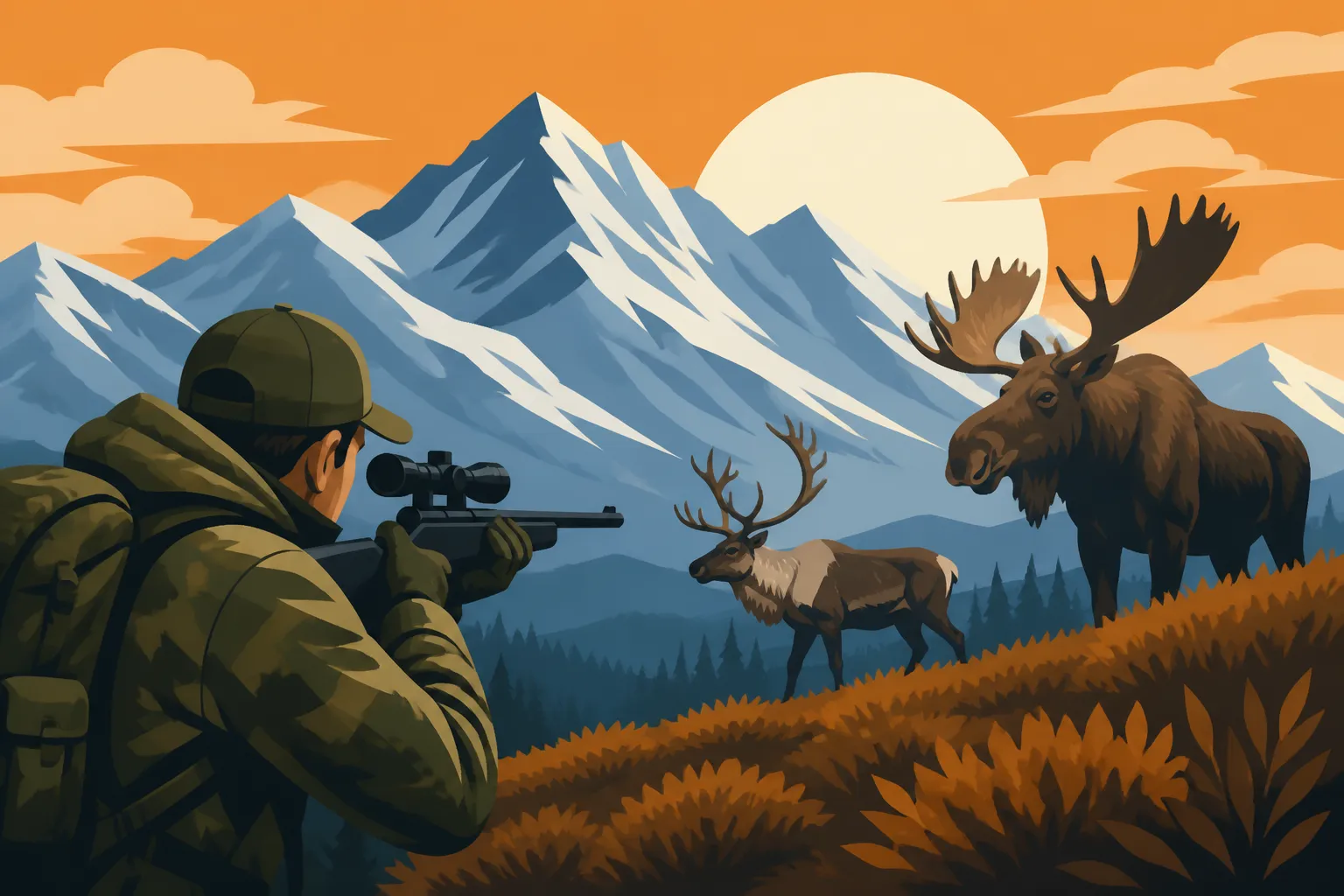
- Moose
- Caribou
- Black Bear
- Sitka Blacktail Deer
- Elk (on Afognak and Raspberry Islands)
- Wolf
- Wolverine
- Small game and waterfowl
This distinction is fundamental. It means that while a guided brown bear hunt might run you a significant sum, planning an unguided moose or caribou hunt, while still a major undertaking, can be significantly more affordable and offers a truly immersive wilderness experience. Understanding these categories is your starting line.
The "Second-Degree-Kinship" Exception (for Guided Species Only)
While not directly applicable to moose and caribou (because they don't require a guide in the first place), it's worth understanding the "second-degree-kinship" exception for those species that do require a guide. This rule allows a non-resident to hunt brown bear, Dall sheep, mountain goat, muskox, or bison without a licensed guide, provided they are accompanied by an Alaska resident who is related to them within the second degree of kinship. This includes parents, grandparents, children, grandchildren, siblings, and spouses.
The resident must possess a valid hunting license and any necessary tags for the species being hunted, and they must accompany the non-resident in the field during the entire hunt. This isn't a loophole to avoid a guide for moose or caribou – it simply provides a specific alternative for those mandatory-guided species if you have eligible family living in Alaska. For your unguided moose or caribou hunt, this specific exception doesn't apply because you are already legally allowed to hunt them without a guide.
Planning Your Unguided Moose or Caribou Hunt
Now that you know you can legally chase moose and caribou without a guide, the real work begins. An unguided hunt in Alaska isn't just a walk in the woods; it's a deep dive into logistical planning, wilderness survival, and serious self-reliance. This isn't for the faint of heart, but for those willing to put in the effort, it's an incredibly rewarding experience.
Researching Units and Access
Your first major hurdle is choosing where to hunt. Alaska is vast, and picking a Game Management Unit (GMU) that matches your budget, physical ability, and hunting style is crucial. You'll want to dive deep into the Alaska Department of Fish and Game (ADF&G) regulations for the current year. This booklet is your bible for season dates, bag limits, antler restrictions, and any specific unit regulations.
Start by looking at areas with good historical harvest success for moose and caribou, keeping in mind that these animals are migratory and their populations can fluctuate. Websites like GoHunt offer a wealth of information and mapping tools that can help visualize GMU boundaries and historical data. Consider:
- Road-System Access: Can you drive a vehicle (or ATV) to your hunting grounds? Areas off the Road-System Hunting in Alaska Off the Glenn and Richardson, such as parts of Unit 13 or the Denali Highway corridor (which also has specific ATV rules you'll need to know), offer more affordable access but also tend to see more hunting pressure. If you're on a tighter budget and have the appropriate vehicle for off-road travel, this might be your best bet.
- Fly-In Hunting: For many, this is the quintessential Alaska experience. Bush planes can drop you into truly remote country, drastically reducing hunting pressure. However, this dramatically increases costs and logistical complexity. Researching Fly-In Hunting Areas Across Interior Alaska will show you the kind of terrain and species available in more remote locations. You'll need to budget for air taxi services, and be prepared for potential weather delays that can strand you in the field.
- Float Hunting: Combining a river trip with hunting can be incredibly effective, especially for moose. This requires specialized gear like rafts or packrafts and a solid understanding of river navigation and safety. Float Hunting Alaska Rivers for Moose and Caribou offers unparalleled access to areas that are otherwise difficult to reach.
- Land Status: Alaska has a complex mosaic of state, federal, and Native Corporation lands. Always verify the land status of your chosen area. While vast tracts are public and open to hunting, some areas require permits or are closed. An online land status map is an indispensable tool.
Once you've narrowed down a few GMUs, dig into specific subunit regulations. Some areas may have antler restrictions for moose (like the "spike-fork or 50-inch" rule), while caribou quotas can change quickly via emergency orders. Understanding Alaska Game Management Units and How They Are Numbered will help you decipher the maps and regulations.
Logistical Challenges and Preparation
An unguided Alaska hunt demands meticulous preparation, far beyond packing a rifle and some clothes. You are your own outfitter, guide, and rescue team.
- Gear: Every item must be carefully chosen for its reliability, weight, and function in harsh conditions. Think about lightweight tents, cooking systems, navigation tools (GPS, satellite messenger, map, compass), water purification, and robust rain gear. Your gear needs to withstand days, or even weeks, of wet, cold, and potentially windy conditions. For specific advice, look into Backpack Hunting in Alaska: Gear Weight and Meat Loads.
- Food: Plan calorie-dense, lightweight meals. Dehydrated options are popular for backpack hunts. Don't forget snacks and emergency rations.
- Meat Care: This is non-negotiable. You'll need quality game bags that breathe, strong rope for hanging meat, and a plan to cool the meat quickly. Alaska law mandates salvaging all edible meat, and warm weather can make this a race against time. Proper Meat Care in 50-Degree September Weather is crucial to prevent spoilage. You need a plan for quartering, which can be a significant task for a large animal like a moose. Consider the skills required for Quartering a Bull Moose Alone in the Field.
- Safety and Communication: Cell service is virtually nonexistent in most remote hunting areas. A satellite communication device (like a Garmin inReach or Zoleo) is essential for daily check-ins and emergency contact. Carry a first-aid kit, bear spray, and know how to use both. Always leave a detailed trip plan with someone reliable. Learn about Signal Devices and Check-In Plans for Solo Alaska Hunts.
- Physical Fitness: This cannot be overstated. Hauling heavy loads of meat over uneven tundra, through brush, or up mountainsides is physically brutal. Training with a weighted pack for months beforehand is not overkill – it's a necessity.
Permit, License, and Tag Acquisition
Before you even step foot in Alaska, you'll need to secure your hunting credentials. This process requires attention to detail and adherence to deadlines.
- Hunting License: All hunters, resident and non-resident, must purchase a valid Alaska hunting license. This is your basic permit to hunt. You can purchase this online through the ADF&G website.
- Locking Tags: For moose and caribou, non-residents must purchase a locking tag for each animal they intend to harvest. These tags are affixed to the animal immediately after the kill. You'll need to decide which species you're targeting and budget accordingly for these tags, as they are an additional cost beyond the license. Understanding Alaska Hunting Seasons and Tag Rules Explained will cover these details.
- Harvest Tickets / Registration Permits: Most moose and caribou hunts in Alaska are managed through either a general season harvest ticket or a registration permit.
- Harvest Tickets: For many general season hunts, you simply obtain a free harvest ticket. You must report your harvest online or by mail after the hunt, regardless of success.
- Registration Permits: Some hunts are "registration hunts," meaning you must register for a specific hunt number before the season opens. These hunts often have quotas and can close by emergency order once the quota is met, so signing up early and checking the ADF&G website frequently for status updates is vital. This is distinct from the lottery draw permits.
- A deeper dive into Alaska Harvest Tickets, Registration Permits and Draw Permits will provide more clarity on these different types of permits and their requirements.
- Hunter Education: If you were born after January 1, 1986, you must show proof of successfully completing a hunter education course to hunt in Alaska. Be sure to carry your hunter education card with you.
It's imperative to buy your license and tags well in advance of your hunt and thoroughly understand the reporting requirements for any permits or harvest tickets you obtain. Missing a reporting deadline can lead to fines and restrictions on future hunting privileges.
Practical Considerations for Unguided Success
Once the paperwork is done and the gear is packed, the practicalities of the hunt come into sharp focus. This is where your planning and physical conditioning truly pay off.
Transportation and Recovery
Getting to your hunting area is just half the battle; getting yourself and your meat out is often the bigger challenge.
- Air Taxis: If you're flying into a remote location, a good relationship with your air taxi operator is key. They aren't guides, but they provide critical transportation. Communicate clearly about your schedule, gear weight, and especially your meat recovery plan. Be realistic about Weight Limits on a Super Cub Drop and always expect delays due to weather. Learning about Fly-In Hunting: Working With an Alaska Transporter Pilot will help you understand their role. Some air taxi operators are listed on platforms like BookYourHunt, making it easier to find and vet potential transporters for your specific area.
- ATVs: For road-system hunts, ATVs can be invaluable for accessing deeper country and, critically, for packing out meat. However, there are strict ATV Access Tactics on Alaska's Denali Highway and other state land. You must know where you can legally ride and where you cannot. Many areas have weight restrictions or width limits for trails.
- Boats/Rafts: For float hunts, your raft is your lifeline and your meat hauler. Ensure it's appropriately sized and rated for the weight of your gear, yourself, and a potential moose or caribou. River conditions can change rapidly, so expertise in watercraft is vital. Floating a large bull moose out of a remote drainage is an undertaking that requires careful planning and execution.
| Factor | Unguided Hunt (Moose/Caribou) | Guided Hunt (Any Species) |
|---|---|---|
| Cost | Generally lower (licenses, tags, transport, gear, food) | Significantly higher (guide fees, licenses, tags, transport, tips) |
| Logistics | Hunter is fully responsible for all planning, gear, food, transport, emergency plans. | Guide handles most logistics: transport, camp, food, field care, emergency prep. |
| Responsibility | Complete self-reliance; all decisions, successes, and failures are your own. | Guide provides expertise, leads the hunt, ensures legal compliance. |
| Flexibility | High; you set your own pace, choose your exact spots, adapt plans as needed. | Lower; adheres to guide's schedule, camp, and hunting plan. |
| Physical Demands | Often very high; packing out heavy loads is a primary concern. | Can be high, but guides often have packers to assist with meat. |
| Wilderness Experience | Maximum immersion, self-reliance, and personal achievement. | Immersive, but with the safety net and expertise of a professional. |
| Success Rates | Highly dependent on hunter's skill, preparation, and luck. | Generally higher due to guide's experience, knowledge, and resources. |
Field Care and Salvage
This is arguably the most critical aspect of any Alaska hunt, especially for moose and caribou, given their size and the potential for warm weather during the early seasons. Alaska has strict wanton waste laws, meaning you must salvage all edible meat from your kill.
- Cooling is Key: As soon as an animal is down, the priority is to get the hide off and the quarters separated to cool the meat. In early September, temperatures can still be surprisingly warm, accelerating spoilage. Hang meat in game bags in the shade, allowing air to circulate. Alaska Moose Meat Salvage Requirements dictate what constitutes edible meat, including neck and rib meat.
- Bear Safety: Butchering an animal, particularly a moose, creates a powerful attractant for bears. Always work with a partner if possible, and carry bear spray and/or a firearm. Be vigilant, know how to store meat out of reach of bears, and have a plan for Bear Safety While Butchering a Kill in Alaska.
- Packing Out: This is where your physical fitness will be tested. A bull moose can yield hundreds of pounds of bone-in meat. You'll make multiple trips, often over challenging terrain. Have a clear route planned, and be prepared to move slowly and deliberately. Caribou are smaller but can still require multiple trips, especially if you're alone.
An unguided moose or caribou hunt in Alaska is a significant undertaking, but it offers an unparalleled adventure and a profound connection to the wilderness. By thoroughly understanding the regulations, meticulously planning your logistics, and preparing physically and mentally, you can achieve a truly unforgettable Alaska hunting experience without the need for a professional guide.
Disclaimer
This article is for general informational purposes only and does not constitute professional advice. Laws, prices and regulations vary by location and change over time. Consult a qualified professional for guidance on your specific situation.