Road-System Hunting in Alaska Off the Glenn and Richardson
For many aspiring Alaska hunters, the dream of a deep-wilderness, fly-in adventure can feel out of reach, burdened by staggering costs and logistical nightmares. But the truth is, a tremendous amount of prime hunting opportunity exists right off the state's main arteries, particularly the Glenn and Richardson Highways. This guide is designed to peel back the layers of frustration and overwhelm, helping you understand how to successfully plan and execute a road-system hunt, tapping into Alaska's abundant game without needing a bush plane or a massive budget.
The Allure and Challenge of Alaska Road-System Hunting
There's a persistent myth that "real" Alaska hunting only happens miles from any road, deep in the backcountry. While those experiences are certainly iconic, they often overlook the rich and diverse opportunities available to those who stick closer to established infrastructure. Road-system hunting offers a unique blend of accessibility and adventure, but it comes with its own set of challenges that savvy hunters learn to navigate.
Why Hunters Choose the Road System
The most immediate and obvious draw for road-system hunting is accessibility. For many Alaskans, and certainly for most non-residents, the thought of chartering an expensive air taxi or buying into a multi-thousand-dollar guided trip is simply not feasible. The Glenn and Richardson Highways, which cut through vast and varied landscapes, offer a tangible entry point into hunting some of Alaska's most sought-after species. You can load your truck or ATV, drive to a trailhead or pullout, and be hunting within minutes or hours, rather than days of travel. This dramatically reduces overall costs, making it a viable option for families, new hunters, or anyone operating on a tighter budget.
Beyond the financial aspect, road-system hunting provides a degree of convenience and flexibility that fly-in trips often lack. You're not beholden to weather delays for bush planes or strict pickup schedules. If the weather turns foul, you can often adapt, move to a different area, or even head back to town for a warm meal and a dry night before resuming the hunt. It's also a fantastic way to introduce new hunters, especially youth, to the sport without immediately throwing them into the deep end of a remote expedition. The ability to bring more gear, have a comfortable base camp, and retrieve game more easily are all significant advantages that make these hunts incredibly appealing.
The Reality: Pressure, Competition, and Land Navigation
Now, let's be realistic: road-system hunting isn't without its hurdles. The very accessibility that makes it appealing also leads to increased hunting pressure. You're not going to be the only one with this brilliant idea, especially for popular species like moose or caribou during peak season. This means you'll likely encounter other hunters, potentially sharing pullouts, trails, and even glassing knolls. The wilderness feel might be less pronounced than in a remote unit, and you'll need to develop strategies to hunt effectively despite the competition. This often involves putting in more legwork, exploring less obvious areas, or hunting during less conventional times.
Another significant challenge is the intricate mosaic of land ownership found along these corridors. Unlike vast swathes of federal or state land in some remote areas, the road system often carves through a patchwork of state, federal, Native Corporation, and sometimes even private holdings. Trespassing, even inadvertently, is a serious offense that can result in fines, confiscation of game, and loss of hunting privileges. This requires a diligent approach to land navigation and boundary identification, often demanding more than just a paper map. You'll need to be hyper-aware of where you are at all times and ensure you have permission to hunt on any non-public lands.
Understanding Land Status: Critical for Success and Legality
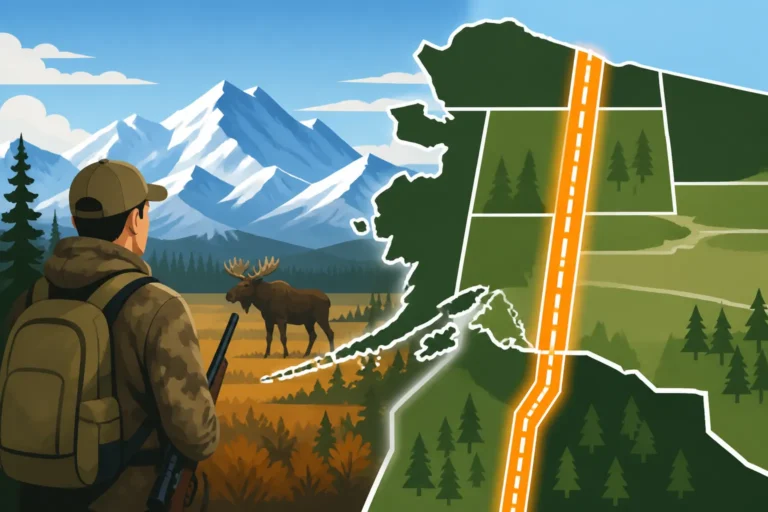
This point bears repeating: understanding land status is paramount. Alaska is unique in its land ownership mix, and near major highways, this mix can be especially complex. You might start your hike on State lands, cross onto a parcel owned by a Native Corporation, skirt the edge of a private mining claim, and then enter a National Forest or Preserve, all within a few miles. Each land designation can have different regulations regarding hunting, camping, vehicle use, and even access.
Imagine setting up a perfect ambush, only to realize the bull you're watching is just inside the boundary of a Native Corporation land parcel where you don't have a permit, or worse, that your entire approach was across restricted property. This kind of mistake is easily avoided with proper planning. We'll delve deeper into specific tools later, but know upfront that investing time in learning how to identify land ownership boundaries is not just a recommendation; it's an absolute necessity for ethical and legal road-system hunting in Alaska. Ignorance is no defense when dealing with game regulations and land trespass laws. How to Check Alaska Land Status Before a Hunt is a great resource for understanding this complex topic.
The Glenn Highway Corridor: Gateway to Interior Opportunities
The Glenn Highway, stretching from Anchorage north to Glennallen and then east to Tok, is one of Alaska's most iconic drives, offering breathtaking scenery and, crucially for hunters, unparalleled access to a diverse array of game. It acts as a primary artery into the Talkeetna Mountains, the Chugach Mountains, and the vast Copper River Basin, which are home to significant populations of moose, caribou, sheep, and bear.
Accessing Moose and Caribou Along the Glenn
For moose hunters, the Glenn Highway offers access to areas known for decent populations, particularly within Unit 13. While the really "big" bulls might be deeper in, plenty of legal animals are taken each year within a reasonable distance of the road. Look for areas with a mix of willow flats, old burns, and riparian zones—these are classic moose habitats. Early season hunts in September can be fantastic as bulls are still relatively quiet and predictable, focusing on feeding. Later in the rut, calling tactics become highly effective, especially in dense cover where bulls feel secure. Remember, moose often bed down in thick brush, so glassing open areas at dawn and dusk, then still-hunting through cover, is a common tactic. The dense willows around some of the lakes and drainages offer excellent cover for both moose and hunters.
Caribou hunting off the Glenn primarily focuses on the Nelchina Herd, which can sometimes be found near the highway, especially during their migrations. However, predicting caribou movements is famously difficult. One year they might be right by the road, the next they could be miles away. Successful road-system caribou hunting often involves extensive glassing from high points, covering vast swaths of tundra and looking for moving specks. Patience and mobility are key. If you don't see them, be prepared to move your camp or drive to a different section of the highway. Sometimes, the caribou are simply not near the road system, and you may need to commit to a longer hike or reconsider your plan. Caribou Herds of Alaska and How They Move outlines more about these migratory patterns.
Sheep and Bear Hunting in the Talkeetnas
The Talkeetna Mountains, accessible from various points along the Glenn Highway, hold huntable populations of Dall sheep and both black and brown bears. Sheep hunting in the Talkeetnas is not for the faint of heart; it involves significant physical exertion, traversing steep, rugged terrain, often above timberline. Access typically involves parking at a pullout and embarking on a multi-day backpack hunt into the alpine. You'll need to be prepared for drastic weather changes, including sudden snowfalls even in August or September. Success relies heavily on thorough glassing and patient stalking. Be sure to study Dall Sheep in Alaska's Brooks and Alaska Ranges for more details on these magnificent animals.
Black bears are common in the timbered and brushy areas along the Glenn. Spring hunts often involve glassing south-facing slopes as bears emerge from their dens, while fall hunts can find them feeding on berries or near salmon streams. Brown bears (grizzlies) are also present, especially in the more remote areas of the Talkeetnas and the Chugach accessible from the Glenn. Understanding bear behavior and being prepared for encounters is critical, especially when butchering game. Alaska Brown Bears on the Coast Versus Interior Grizzlies clarifies the differences and considerations. You’ll need to ensure you’re always following proper bear safety protocols, including carrying appropriate deterrents and knowing how to use them.
Specific Pullouts and Trailheads
Along the Glenn Highway, numerous pullouts, gravel pits, and unmaintained tracks offer potential access points. For example, heading east past Palmer, the highway skirts the edge of the Talkeetnas. Mile markers are your friends here; many hunters use specific mileages as informal indicators for general hunting areas. Roads like the Old Glenn Highway or the roads around Lake Louise can offer additional entry points away from the main thoroughfare. Pay close attention to "No Trespassing" signs or indications of private property, which are increasingly common near developed areas. Always consult current Alaska Department of Fish and Game (ADF&G) regulations and land status maps before venturing out, as specific road-accessed units can have unique rules, such as antler restrictions for moose or specific seasons for caribou.
Some established campgrounds or recreation sites along the Glenn might offer opportunities for comfortable base camping while you hunt adjacent public lands. Areas like the Matanuska Glacier recreation area offer stunning views but also serve as jumping-off points for serious hikes into the mountains. Further east, towards Glennallen, the landscape opens up into vast lowlands and braided river systems, providing different types of terrain and access points for moose and bear. Remember to check for ATV Access Tactics on Alaska's Denali Highway if you plan to venture off the pavement, as regulations vary by area and land ownership.
The Richardson Highway: A Northern Hunter's Lifeline
The Richardson Highway, running from Valdez in the south up to Fairbanks, is Alaska’s oldest highway and another crucial corridor for road-system hunting. It traverses incredibly diverse landscapes, from the coastal mountains of Valdez to the Copper River Basin, across the Alaska Range, and into the Interior lowlands, providing access to a wide array of big game species and countless opportunities for adventurous hunters.
Diverse Species Along the Richardson
The Richardson Highway truly lives up to its reputation as a hunter's lifeline, offering access to moose, caribou, black bears, brown bears (grizzlies), Dall sheep, and even mountain goats in its southern reaches. For moose, the Copper River Basin, particularly areas around Paxson and the Tonsina River, are historically productive. Look for river bottoms, brushy lowlands, and old timber cuts. As with the Glenn, effective moose hunting here often means getting off the beaten path, even if it's just a mile or two from the road, to escape immediate pressure.
Caribou can be found along certain stretches, particularly in areas where the vast Nelchina Herd might migrate, or further north, where segments of the Fortymile Herd could appear. Again, their movements are unpredictable, so flexibility and scouting are key. Dall sheep hunters will find opportunities in the Chugach Mountains near Valdez and Thompson Pass, and further north in segments of the Alaska Range visible from the highway. These are typically grueling, multi-day backpack hunts in high-elevation terrain. Mountain goat hunts are also possible in the steep, rugged country near Valdez, though these are often draw-only permits and require specialized skills for traversing extreme vertical terrain.
Key Access Points and Adjacent Units
The Richardson Highway cuts through several game management units, each with its own regulations. In the south, near Valdez, it passes through Unit 6, known for coastal brown bears, black bears, and mountain goats. Further north, it enters Unit 13 (Copper River Basin) and Unit 12, offering moose and caribou. As you head towards Fairbanks, it passes through Unit 20A, renowned for its dense moose populations, and Unit 20D. Each of these units has specific seasons, bag limits, and often antler restrictions, so thorough research using the ADF&G regulations is non-negotiable. Alaska Game Management Units and How They Are Numbered provides a useful overview.
Notable access points include the numerous pullouts and small gravel roads leading off the main highway. The area around Delta Junction offers access to some specific hunting units and can be a jumping-off point for more remote excursions or for targeting the Delta Bison herd if you're lucky enough to draw a tag. Further south, the road offers access to various river systems like the Copper River, providing float hunting opportunities for moose, especially if you have a packraft or a small boat. Remember to consider Choosing a Float Hunt River by Water Level and Length if this is your plan.
Navigating Seasonal Changes and Closures
The long stretch of the Richardson Highway means that hunting seasons and regulations can vary significantly from south to north, and also change from year to year. Caribou seasons, for instance, are often managed with quotas, meaning areas can close on short notice via emergency orders if the harvest limit is met. This makes it crucial to check ADF&G announcements regularly, even during your hunt. Missing an emergency closure can lead to serious legal trouble.
Similarly, moose seasons often have specific opening and closing dates, as well as antler restrictions that require careful field judging. For example, some areas might be "spike-fork" only, or require a 50-inch spread or at least three brow tines. Knowing these rules intimately before you pull the trigger is paramount. Weather also plays a massive role in opening and closing access, particularly in early spring or late fall when snow can make side roads impassable. Always have a contingency plan and be ready to adapt to whatever Alaska throws at you. Alaska Registration Hunts That Close on Quota and Alaska Moose Antler Restriction Areas offer vital information for staying legal.
Essential Gear and Tactics for Road-System Success
Hunting off Alaska's road system might mean easier access, but it doesn't mean easier hunting. You still need to be properly equipped and employ smart tactics to be successful. The same principles of preparedness and bushcraft that apply to fly-in hunts still apply here, with a few nuanced considerations for areas that see more human activity.
Mapping and Navigation: The Digital Edge
In a landscape crisscrossed by varied land ownership, accurate mapping and navigation are not just helpful; they are absolutely vital. Forget relying solely on old paper maps; while they have their place as a backup, digital tools are indispensable. This is where applications like onX Hunt truly shine. With onX Hunt, you can download detailed satellite imagery and land ownership maps directly to your phone, even when you're out of cell service. This allows you to see property boundaries, public land designations (State, Federal, Native Corp.), and private holdings in real-time as you move. This is an absolute game-changer for avoiding accidental trespass and confirming you're hunting legally.
Beyond legal boundaries, these mapping tools help you navigate the terrain itself. You can mark your vehicle's location, plot potential routes to glassing points or game sign, and track your movements to avoid getting turned around. Identifying historical animal movements or features like water sources and dense cover becomes much easier when you can overlay aerial photography with topographic data. Another valuable tool is GoHunt, which offers detailed unit profiles and species-specific information, often including insights into public land access and common hunting strategies for different areas. Combining these resources for pre-hunt scouting and in-field navigation will give you a significant advantage. Downloading Offline Maps Before a Fly-In is a useful related topic for anyone heading into areas with no cell service.
ATV and UTV Use: Rules, Benefits, and Limitations
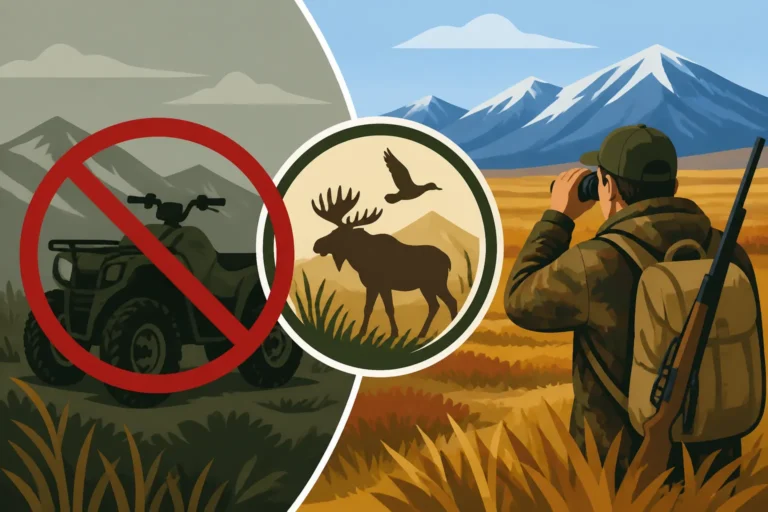
ATVs and UTVs can be incredibly useful tools for road-system hunters, extending your range beyond what's possible on foot and making meat retrieval much easier. However, their use is strictly regulated, and these rules vary significantly based on land status and specific game management units. On many State lands, ATVs are allowed on established trails, but off-trail travel might be restricted to protect sensitive tundra or to limit hunter impacts. Federal lands, like National Wildlife Refuges or National Parks/Preserves, often have even stricter rules, sometimes limiting ATVs to designated routes or banning them entirely in certain areas or during specific seasons.
Before you even load your machine, thoroughly research the specific unit and land you intend to hunt. Consult the ADF&G regulations and any land management agency websites (e.g., Bureau of Land Management, National Forest Service). There are areas designated as "Controlled Use Areas" that might restrict or ban motorized vehicles during certain hunting seasons. Misusing an ATV can lead to substantial fines and loss of privileges. When legal, ATVs can help you access remote trailheads, haul camp gear, or, critically, retrieve a moose or caribou that's down a few miles from the main road, saving immense physical effort and preserving meat quality. Just make sure to properly secure your loads. ATV Trail Rules on Alaska State Land is a good starting point for research.
Stealth and Spotting: Dealing with Increased Pressure
Because road-system areas often see more hunter traffic, adapting your tactics to account for pressure is crucial. This means focusing on stealth. Avoid making unnecessary noise, use natural cover to conceal your movements, and be mindful of your scent. While many hunters might stick close to their vehicles, the most successful road-system hunters are willing to walk further, often pushing past the initial "road warrior" zone to find less disturbed animals. This might mean hiking 3-5 miles in, rather than 1-2, to get into areas where game feels safer.
Glassing is your best friend. Instead of blindly walking, find high vantage points and spend significant time observing. Use quality binoculars and a spotting scope to pick apart distant hillsides, willow thickets, and open tundra. Patience here is paramount. Many animals that are pressured will become largely nocturnal or spend their days in the densest cover. By sitting and watching, especially during prime feeding times at dawn and dusk, you increase your chances of spotting a legal animal moving between bedding and feeding areas. Don't be afraid to pull off the road, find a good vantage, and spend a few hours simply observing before you commit to a specific area. Glassing Grids That Cover a Whole Basin describes an effective method for systematic scanning.
Understanding Alaska's Land Status: Your Most Important Tool
Hunting in Alaska is an unparalleled experience, but it requires a deep understanding of something many hunters from the Lower 48 might take for granted: land ownership. The state's unique history has created a complex patchwork of land designations, and successfully navigating these without incident is perhaps the most critical skill for a road-system hunter. Ignoring this can lead to serious legal consequences, including fines and the loss of your harvested game.
State, Federal, and Native Corporation Lands
Alaska's land is broadly divided into three main categories: State, Federal, and Native Corporation lands. Each comes with its own set of rules and access policies.
- State Lands: These are lands managed by the State of Alaska. Generally, state lands are open to hunting and public access, but there can be specific restrictions, such as those related to motorized vehicles, camping durations, or designated recreational areas. It's often where the most accessible road-system hunting takes place.
- Federal Lands: This category includes lands managed by various federal agencies like the Bureau of Land Management (BLM), National Forest Service (NFS), National Park Service (NPS), and U.S. Fish & Wildlife Service (USFWS). While much of it is public, the rules vary wildly. National Forests and BLM lands are generally open to hunting, but National Parks (like Denali National Park, distinct from Denali National Preserve) often prohibit it. National Wildlife Refuges and Preserves usually allow hunting but may have unique permit requirements, access limitations, or season restrictions different from state regulations. Always verify the specific rules for the federal unit you intend to hunt.
- Native Corporation Lands: Resulting from the Alaska Native Claims Settlement Act (ANCSA) of 1971, Native Corporations own millions of acres across Alaska. These lands are private property, similar to any private ranch or timberland in other states. Hunting on Native Corporation lands generally requires explicit permission, often in the form of a paid permit, from the respective corporation (e.g., Ahtna, Doyon, CIRI, etc.). Hunting without permission is trespassing and can lead to severe penalties. These lands are often interspersed with state and federal parcels, making accurate boundary identification absolutely essential.
The Importance of Public Easements
Even on seemingly private Native Corporation or private lands, there can be public access easements. These are legal rights-of-way that allow public passage across private lands to access adjacent public lands. Two common types are:
- Section Line Easements: In surveyed areas, these are often 50-foot wide strips of public access between sections of land. However, these are not always clearly marked on the ground and may not be navigable for vehicles. They typically provide pedestrian access.
- Navigable Waters: Under Alaska law, the public generally has the right to use waters that are "navigable in fact" for purposes like hunting and fishing, even if the adjacent land is privately owned. This means you can often float a river or use a lake for access, but you cannot legally step onto private land unless there's an established easement or you have permission. This can be critical for float hunters using rivers that run through mixed ownership.
These easements can be tricky, and it's best to confirm their existence and exact boundaries before relying on them for access. If in doubt, assume it's private and seek permission.
Using Digital Tools for Land Ownership
This is where technology becomes your best friend. Investing in a robust digital mapping application is non-negotiable for road-system hunting in Alaska. Applications like onX Hunt are invaluable because they overlay parcel boundaries and land ownership information directly onto high-resolution satellite imagery and topographic maps. You can see at a glance whether you are on state, federal, or Native Corporation land. You can zoom in to see specific property lines, identify designated trails, and even mark your own waypoints. This functionality allows you to plan your approach to public lands without inadvertently crossing private property.
Similarly, other platforms like GoHunt can provide valuable context, often linking directly to land management agency information or providing detailed unit-specific insights that can help clarify ambiguities. Before leaving home, use these tools to study your chosen hunting area meticulously. Download offline maps so they work even without cell service. Mark key boundaries, potential access points, and areas to avoid. This proactive approach will not only keep you legal but also greatly increase your confidence and effectiveness in the field. Remember, a quick glance at your phone might save you from a major headache or an expensive citation.
Practical Considerations for Road-System Hunters
While the road system offers easier logistics compared to a bush plane drop-off, it doesn't mean you can slack on practical preparations. In fact, the very accessibility can sometimes create a false sense of security. Hunters must still be prepared for Alaska's challenging environment and the specific demands of these areas.
Camp Setup and Bear Safety
Road-system hunting often means setting up a roadside camp, either in a designated campground or a dispersed site on public land. Even close to the road, you are in Alaska's bear country. Both black bears and brown bears (grizzlies) frequent these areas, attracted by food sources or simply traveling through. Therefore, diligent bear safety practices are paramount. All food, garbage, and scented items must be stored in bear-resistant containers, hung from a bear pole, or secured in a hard-sided vehicle. Never leave food unattended, even for a short time. Cooking should be done well away from sleeping areas, and all cooking utensils should be cleaned immediately.
If you make a kill, especially a large animal like a moose, the smell of fresh meat will attract bears. Plan your butchering process carefully. Have bear spray readily accessible, and consider carrying a large caliber firearm for defense. Many hunters also employ portable electric bear fences around their meat caches or sleeping tents. Even if you're just hunting for a day from your truck, ensure all food is secure. These measures aren't just for multi-week expeditions; they're for any time you're in the field in Alaska. Bear Safety While Butchering a Kill in Alaska provides essential tips for dealing with this reality.
Meat Care and Salvage Requirements
One of the benefits of road-system hunting is easier meat retrieval, but proper meat care remains absolutely critical. Alaska has strict salvage laws, meaning you are legally required to salvage all edible meat from your kill. This includes everything from the prime cuts to the ribs and neck meat. Wanton waste is a serious offense. Once an animal is down, especially in warmer early September weather, the clock starts ticking.
Even if you're only a mile from your truck, you need a plan to quickly quarter, cool, and pack out the meat. Have good quality game bags that breathe, and if temperatures are above freezing, focus on getting the meat off the bone and spread out to cool as rapidly as possible. Hanging meat in the shade, particularly if there's a breeze, is ideal. If you're fortunate enough to have an ATV, it can significantly aid in getting the meat back to your vehicle without spoilage. Once at your vehicle, a cooler with ice (if available) or even simply keeping the meat in game bags in a shaded, airy spot can help buy you time until you can get it to a processor or refrigerator. Meat Care in 50-Degree September Weather is a helpful resource for preserving your harvest.
Respecting Other Users and Private Property
On the road system, you're rarely alone. This means exercising an extra degree of respect for other hunters, hikers, campers, and private landowners. Parking responsibly, not blocking access points, and keeping noise levels down are all simple courtesies that go a long way. If you encounter other hunters, a friendly wave or brief chat is fine, but avoid infringing on their space or intentions. The "first come, first served" unspoken rule often applies to specific pullouts or popular hunting areas.
Regarding private property, we've already covered the legal aspect, but there's also an ethical dimension. Even if you believe you have a right to cross a piece of land via an easement, demonstrating respect for the landowner can prevent conflicts and maintain good public relations for all hunters. This might mean making contact if possible, or at least being extra careful not to leave trash or disturb property. Maintaining a positive image for hunters on the road system is crucial for preserving access for everyone in the future.
Permits, Seasons, and Regulations: Staying Legal
Successfully hunting Alaska's road system isn't just about finding game; it's about staying legal. The complexity of Alaska's hunting regulations can be intimidating, especially for those new to the state or specific units. A thorough understanding of permits, seasons, and species-specific rules is absolutely non-negotiable.
Harvest Tickets and Registration Hunts
Many of the more accessible species and areas along the Glenn and Richardson Highways are managed through Harvest Tickets or Registration Permits.
- Harvest Tickets: These are simple, free permits required for common species like black bears, small game, and some caribou and moose hunts in certain units. You obtain them online or from ADF&G offices, and they primarily serve as a data collection tool. You simply fill out the ticket, carry it with you, and report your harvest (or lack thereof) by a specific deadline. They don't limit the number of hunters, but they do have specific seasons and bag limits that must be followed.
- Registration Permits (RM Permits): These are more restrictive. They are also free, but they often require you to "sign up" for the hunt during a specific period. The key feature of many registration hunts is that they are managed by quota. This means a certain number of animals (e.g., 50 bull moose) are allowed to be harvested from a unit, and once that quota is reached, the season is closed, often by an "emergency order." This can happen on very short notice, so hunters on a registration hunt must constantly check the ADF&G website or local offices for closure announcements. Failing to do so could lead to harvesting an animal illegally. Alaska Harvest Tickets, Registration Permits and Draw Permits explains the distinctions in detail.
Antler Restrictions and Species-Specific Rules
Many of the moose hunt units accessible from the Glenn and Richardson Highways are managed under antler restrictions to protect young bulls and manage herd demographics. These rules are designed to ensure a healthy age structure in the moose population by allowing hunters to only harvest bulls that meet specific criteria. Common antler restrictions include:
- Spike-Fork: The bull must have at least one antler with a spike (unbranched point) and one fork (two points), or be clearly a legal spike and fork.
- 50-Inch Spread: The antlers must measure at least 50 inches across at their widest point. This can be incredibly difficult to judge accurately in the field, especially at a distance.
- Three Brow Tines: The bull must have at least three points on one or both of its brow paddles (the lowest points on the antler closest to the skull).
Mistaking a sublegal bull for a legal one is a common violation and can result in significant fines and confiscation of your trophy and meat. It is absolutely crucial to be proficient at field judging these criteria before you hunt. Practice with photos, videos, and ideally, observe live animals. Always err on the side of caution; if you're not 100% sure, don't shoot. Alaska Moose Antler Restriction Areas delves into the specifics of these rules.
Other species also have specific rules. Dall sheep often have "full curl" requirements, meaning the ram's horn must complete a full 360-degree curl. Mountain goats typically have nanny identification requirements, with efforts to avoid harvesting females to protect herd growth. Bear hunting may have specific seasons for spring vs. fall, and bag limits can vary by unit and species.
Emergency Orders and Quotas
As mentioned, emergency orders are a critical aspect of Alaska hunting, especially for species managed by quota. These orders can modify season dates, change bag limits, or close a hunt entirely, sometimes with only a few days' notice. They are issued by ADF&G and are legally binding.
This means that your pre-hunt research is only part of the equation; you must remain vigilant throughout your hunt. Before you leave for your trip, check the ADF&G website for the latest emergency orders affecting your chosen unit. While in the field, if you have any cell service, check daily. If not, plan to check whenever you pass through a town or get to an area with connectivity. Some outfitters or local businesses might also have posted notices. Being informed is your responsibility, and it's the only way to avoid an unintentional violation that could ruin your hunt and cost you dearly.
Highway Hunting Considerations Comparison
| Feature | Glenn Highway | Richardson Highway |
|---|---|---|
| Typical Species | Moose, Caribou (Nelchina), Black Bear, Brown Bear (Grizzly), Dall Sheep (Talkeetnas) | Moose, Caribou (Nelchina/Fortymile), Black Bear, Brown Bear (Grizzly), Dall Sheep (AK Range), Mountain Goat (South) |
| Primary Access | Pullouts, side roads, trailheads into Talkeetnas/Chugach, Lake Louise area | Pullouts, side roads, trails, river access (Copper River), Delta Junction area |
| Hunting Pressure | Moderate to High, especially near Anchorage | Moderate, varies more significantly by location |
| Terrain | Mountains (Talkeetnas/Chugach), willow flats, some open tundra, forested areas | Mountains (Chugach/AK Range), Copper River Basin, Interior lowlands, tundra |
| Land Status Mix | State, Federal, Native Corp. (e.g., Ahtna, CIRI) | State, Federal, Native Corp. (e.g., Ahtna, Doyon) |
| Key Units Accessed | Units 13, 14, parts of 6, 11 | Units 6, 11, 12, 13, 20A, 20D |
Disclaimer
This article is for general informational purposes only and does not constitute professional advice. Laws, prices and regulations vary by location and change over time. Consult a qualified professional for guidance on your specific situation.