Motorized Access Rules on Refuge Land
Navigating the vast and often remote landscapes of Alaska for a hunt is a dream for many, but it can quickly turn into a headache when you start delving into the intricate web of land ownership and access rules. One of the biggest challenges hunters face, especially those looking to explore prime areas, is understanding exactly what's allowed on National Wildlife Refuge lands when it comes to getting around. It’s frustrating to scout a promising area, only to realize too late that your planned access method, whether it's an ATV, a snowmachine, or even a bush plane landing, might be restricted. This guide is here to untangle those complexities, helping you understand the motorized access rules on refuge lands in Alaska so you can plan your hunt with confidence and avoid any unwelcome surprises or violations.
Understanding Alaska's National Wildlife Refuges and Their Purpose
Alaska is home to an incredible 16 National Wildlife Refuges, encompassing over 76 million acres. That's a huge chunk of wild country, and these refuges are managed by the U.S. Fish and Wildlife Service with a primary goal: conserving wildlife and their habitats. Unlike national parks, which often prioritize recreation, refuges are specifically about wildlife, though compatible public uses like hunting are often permitted. This difference in primary mission means that access, especially motorized access, is often viewed through the lens of its impact on wildlife first and foremost.
The 'Refuge System' in Alaska
When you hear "National Wildlife Refuge," think of a place where wildlife comes first. These aren't just patches of land; they're vital ecosystems designed to protect everything from migratory birds to enormous moose, caribou, and bears. Each refuge has its own unique character, its own specific management plan, and, critically, its own set of rules. For instance, the Arctic National Wildlife Refuge in the far north has different concerns and, therefore, different regulations than, say, the Kenai National Wildlife Refuge, which is much closer to population centers and sees more diverse human activity. This means a "one-size-fits-all" approach to planning your hunt just won't cut it. You absolutely have to do your homework on the specific refuge you intend to visit.
Why Access Rules Can Feel Complex
It’s easy to get overwhelmed. You look at a map, see a big block of green or yellow, and think "public land!" But then you read the regulations, and suddenly there's a laundry list of restrictions: no ATVs past this point, snowmachines only on designated trails, aircraft landings only on approved strips, or only during certain times of the year. This complexity stems from the Fish and Wildlife Service's mandate to balance public access with wildlife protection. They have to consider breeding seasons, sensitive habitats, potential for habitat damage from vehicle use, and the impact of noise and disturbance on animals. For us hunters, it translates to extra planning steps, but it's all part of ensuring these wild places remain wild for future generations. It’s a bit of a challenge, but a necessary one, and understanding the "why" behind the rules can make them a little less frustrating.
General Principles of Motorized Access on Refuge Lands
Alright, let's get down to brass tacks. The fundamental difference you need to grasp when hunting on refuge lands is that, generally speaking, motorized access is considered "closed unless specifically opened." This is a critical distinction from many other public lands, especially state lands, which often operate on an "open unless specifically closed" principle.
"Closed Unless Open" vs. "Open Unless Closed"
Imagine planning a moose hunt. On much of Alaska's state land, if there isn't a sign or a regulation explicitly banning your ATV on a particular trail, you might assume you can use it. On refuge land, that assumption could land you in hot water. The default stance on a National Wildlife Refuge is that all forms of motorized access, from ATVs to snowmachines to fixed-wing aircraft landings, are prohibited unless the specific refuge management plan or a special regulation explicitly states they are allowed. This shifts the burden of proof, so to speak, onto the hunter to verify permission rather than assuming it. This is why tools that show land ownership and specific regulations are so invaluable. Programs like onX Hunt, for example, can overlay land ownership boundaries right on your map, giving you a visual cue of where these stricter rules might apply. Knowing this upfront can save you a world of grief and potential citations.
Permits and Special Regulations
Beyond the general "closed unless open" rule, many refuges have very specific permit systems or special regulations for certain types of access or activities. You might need a special permit to operate a snowmachine off a designated trail, or to land an aircraft in a non-designated area for a remote drop camp. These permits are often time-sensitive, location-specific, and may come with their own set of conditions, such as limits on group size or restrictions on the type of gear you can bring in.
It's not just about what vehicle you're using, but also when and where. For instance, a snowmachine might be allowed on groomed trails during winter when the ground is frozen solid and deeply snow-covered, minimizing impact. However, the exact same vehicle might be strictly prohibited in the spring or fall when the tundra is wet and susceptible to damage. Always check the annual hunt regulations booklet and the specific refuge's website for any amendments or emergency orders that might affect your plans. Some refuges, like the Yukon Delta National Wildlife Refuge, have very detailed Permits Required on the Yukon Delta Refuge for certain activities. This isn't just bureaucracy; it's about protecting fragile ecosystems.
Specifics of ATV, Snowmachine, and Aircraft Access on Refuges
Let's dive into the nuances of specific motorized access methods, as each comes with its own set of challenges and rules on refuge lands.
ATV and Off-Road Vehicle Restrictions
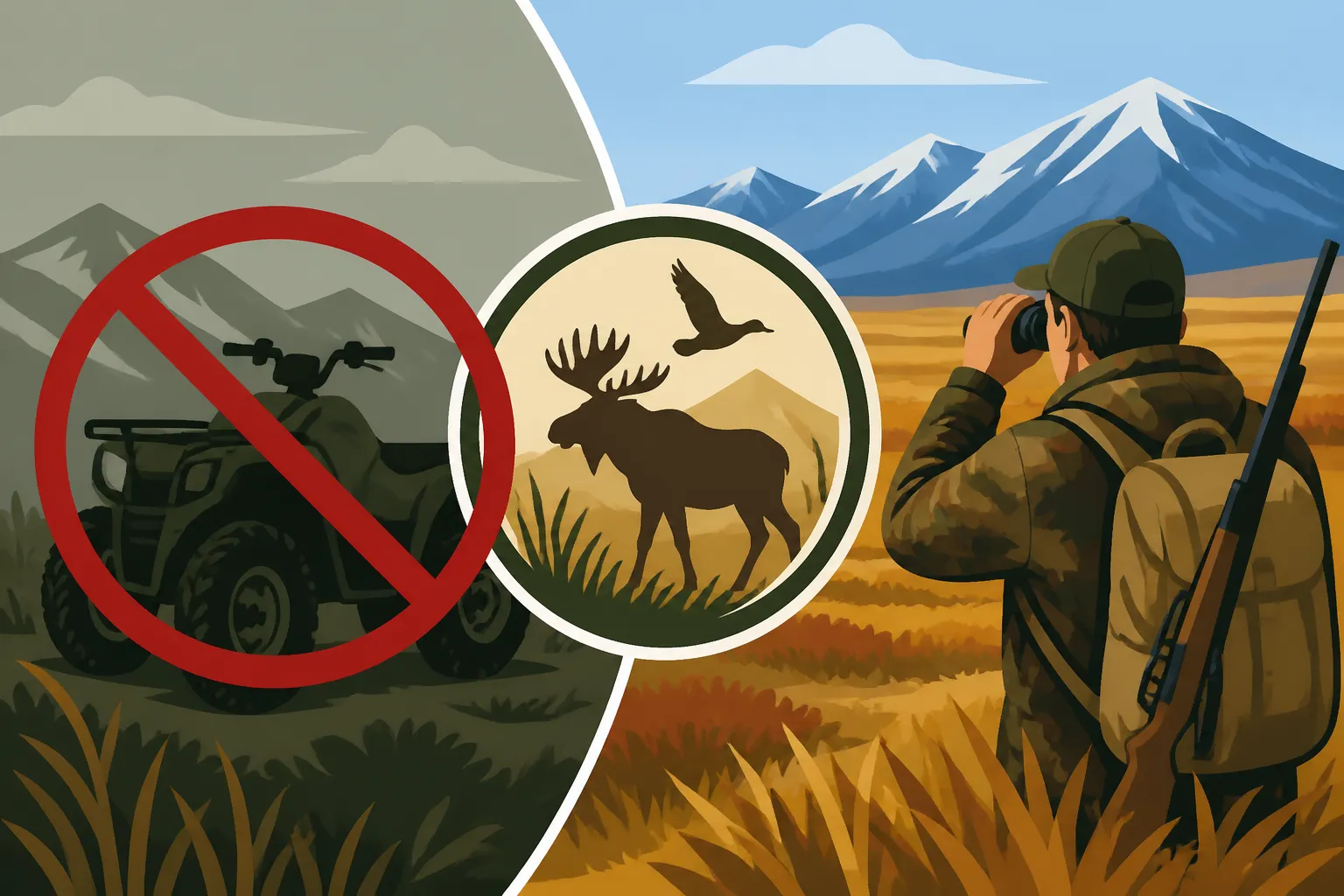
Ah, the trusty ATV. A workhorse for many Alaska hunters, allowing access to country that would otherwise be an arduous foot journey. On refuge lands, however, ATV use is arguably the most scrutinized form of motorized access. The primary concern here is habitat damage. The tundra, especially in wet conditions, is incredibly fragile, and ATV tracks can scar the landscape for decades. Because of this, many refuges severely restrict or outright prohibit off-road vehicle use, often limiting them to existing roads, designated trails, or specific areas where soil conditions can withstand the impact.
You might find some limited allowance for ATVs on specific access corridors or during very dry periods, but these are exceptions rather than the rule. Don't ever assume that because a trail looks like a track, it's legal for ATV use. Always confirm with the refuge headquarters directly, or consult detailed maps and regulations. Even if you're legally allowed to use an ATV, consider the ethical impact and stick to established routes to minimize your footprint. Remember, leaving a pristine landscape is part of the hunting ethos, especially in places managed for wildlife conservation. You don't want to be the reason stricter rules are imposed.
Snowmachine Use in Winter
Snowmachines (or snowmobiles, depending on where you're from) present a different scenario. When the ground is blanketed in a deep, insulating layer of snow and frozen solid, the risk of habitat damage from a snowmachine is significantly reduced. Because of this, snowmachine use is often more broadly allowed on refuge lands than ATV use, particularly for traditional activities like trapping, subsistence hunting, and even general recreation.
However, "more broadly allowed" doesn't mean "unrestricted." You still need to confirm regulations for the specific refuge. There can be restrictions on when you can use them (e.g., only after a certain snow depth is reached), where you can use them (e.g., avoiding critical wildlife wintering areas or designated wilderness zones), and even what type of snowmachine might be allowed. For example, some areas may prefer quieter, four-stroke engines over noisy two-strokes to minimize disturbance to wildlife. Always confirm the specific dates and areas of allowance, as these can change annually based on snowpack and wildlife needs. Understanding Alaska Controlled Use Areas and What They Restrict can also be very helpful, as some of these areas overlap with refuge lands and have additional rules.
Aircraft Access: Fixed-Wing and Helicopters
Aircraft—specifically fixed-wing bush planes—are the lifeline for many remote Alaska hunting adventures. They open up vast expanses of wilderness that are otherwise inaccessible. On refuge lands, fixed-wing aircraft are generally allowed for landing on established air strips, designated gravel bars, or frozen lakes. However, the regulations surrounding where you can land are often very precise. Landing in undesignated areas can disturb wildlife, especially during sensitive breeding or denning periods.
Helicopter use is almost universally prohibited for hunting purposes on refuge lands, primarily due to the intense disturbance they cause to wildlife. While a fixed-wing aircraft might be allowed to drop you off, you won't typically see hunters using helicopters to spot game or access areas on refuge lands. If you're planning a fly-in hunt, it's crucial to work with a reputable air taxi that is familiar with the specific refuge's regulations. They’ll know which Gravel Bar Landings for Wheel Planes in Alaska are approved or which Float Plane Lakes in Interior Alaska are legal for landing. Always confirm with the refuge management and your air taxi that your intended landing zone is permitted. This is also where the Alaska's Same-Day-Airborne Rule and What It Bans becomes critical, ensuring you understand the rules around flying and hunting on the same day, especially when using an aircraft for access.
Planning Your Hunt: Essential Tools and Resources for Refuge Access
Alright, so you know the rules can be complicated. Now, how do you actually put that knowledge into practice and plan a successful, legal hunt on refuge land? It all comes down to diligent research and using the right tools.
Utilizing Digital Mapping Tools
In this day and age, digital mapping tools are an absolute game-changer for hunting in Alaska. Forget the days of flipping through countless paper maps in a sporting goods store, trying to figure out land ownership boundaries. Now, with apps like onX Hunt, you can pull up detailed satellite imagery and instantly see land ownership overlays: state, federal, Native Corporation, and even private parcels. This is invaluable when you're trying to figure out if that prime ridge or willow flat you spotted is on refuge land, state land, or somewhere else entirely.
Beyond simple boundaries, these apps often include layers for hunting units, controlled use areas, and even some specific refuge restrictions. While they are amazing tools, they are just that—tools. They should always be cross-referenced with official regulations. Another excellent resource is GoHunt, which provides detailed draw odds and unit information, which can sometimes include land status maps or links to specific refuge regulations. Before you even pack your boots, spend hours poring over these maps, identifying your target area, and confirming its land status. This helps you understand, for example, why Checking Alaska Land Status Before a Hunt is such a critical first step.
Consulting Refuge-Specific Regulations
I cannot stress this enough: always go directly to the source. Every single National Wildlife Refuge in Alaska has its own website, managed by the U.S. Fish and Wildlife Service, where you'll find detailed hunting regulations specific to that refuge. These regulations often go beyond the general statewide hunting rules. They'll outline:
- Specific motorized access allowances and prohibitions: Is ATV use permitted on certain trails? Are snowmachines allowed off-trail? Where can you land an aircraft?
- Permit requirements: Do you need a special use permit for anything beyond a standard hunting license and tag? Hunting Access Inside Togiak National Wildlife Refuge or Getting Into Kanuti Refuge by Float Plane are good examples of places where you'd consult specific refuge rules.
- Season dates and bag limits: While statewide regulations provide the general framework, refuges can have more restrictive dates or bag limits for certain species.
- Designated wilderness areas: Many refuges contain designated wilderness, where motorized access of any kind is almost always strictly prohibited, even for snowmachines. These areas are managed to preserve their primeval character.
Don't rely solely on a general "Alaska hunting regulations" booklet. Get the refuge-specific supplement or visit their website. Print it out, highlight key sections, and bring it with you. A quick call to the refuge manager's office is also never a bad idea if you have specific questions or need clarification. They are there to help you understand and comply with the rules.
The Importance of a Pre-Hunt Check
Even after all your digital scouting and regulation reading, there's one final, crucial step: a pre-hunt check. This involves contacting the refuge office a week or two before your departure to confirm that no emergency orders or sudden closures have been issued. Weather events, unexpected wildlife management concerns, or even temporary infrastructure issues can lead to last-minute changes in access or hunt conditions. Imagine flying into a remote area only to find out, too late, that your landing strip is now temporarily closed due to an eagle nesting site. That would be a heartbreaking and costly mistake.
This check is also a good time to confirm any questions you still have about specific access points or routes. It's much better to be "that guy" who called one too many times than "that guy" who received a citation for a preventable violation. Planning for unexpected delays or changes in your hunting area is also part of a safe trip. Always consider Emergency Evacuation Plans in Remote Alaska when venturing into these wild places, especially when access rules are so particular.
| Motorized Access Method | General Status on Alaska National Wildlife Refuges | Common Restrictions/Considerations |
|---|---|---|
| ATV / Off-Road Vehicle | Generally Restricted to Prohibited | Limited to designated roads/trails, specific access corridors, or very specific conditions (e.g., dry ground, frozen tundra). High potential for habitat damage. |
| Snowmachine | Often Allowed Seasonally | Permitted when ground is deeply snow-covered and frozen. Restrictions on when (snow depth) and where (avoiding sensitive areas, wilderness). |
| Fixed-Wing Aircraft | Generally Allowed with Specific Limitations | Permitted for landing on established airstrips, designated gravel bars, frozen lakes. Prohibited in wilderness areas or non-designated spots to minimize disturbance. |
| Helicopter | Generally Prohibited for Hunting | High disturbance to wildlife, almost universally banned for hunting activities on refuge lands. |
| Boats (Motorized) | Often Allowed on Navigable Waterways | Permitted on major rivers and lakes, but may have speed limits or restrictions in sensitive shallow water areas or deltas. |
Disclaimer
This article is for general informational purposes only and does not constitute professional advice. Laws, prices and regulations vary by location and change over time. Consult a qualified professional for guidance on your specific situation.