Weather Days and Who Pays for Them
One of the most profound realities of hunting in Alaska is the weather. It doesn't just change; it dominates. You can plan every detail of your hunt, from your gear list to your shooting lanes, but a wall of fog, a relentless rainstorm, or a sudden blizzard can bring everything to a grinding halt. When your bush plane can't fly, or your boat can't safely navigate the chop, "weather days" become more than just an inconvenience—they become a serious question of logistics and, often, a surprising hit to your wallet. This guide will help you understand who typically shoulders the cost of these inevitable delays and how you can prepare for them.
The Unpredictable Nature of Alaska's Weather
Alaska's weather systems are famously dynamic and localized. What's clear and calm in one valley can be a whiteout blizzard over the next ridge. This isn't like hunting in the Lower 48 where you might just hunker down for a day in a tent and wait for the sun. Here, a "weather day" can mean the critical piece of your hunt—your air taxi flight, your river pickup, or your guide's ability to spot game—is impossible.
The Impact of Bush Flying Conditions
For many remote Alaska hunts, a bush plane is your lifeline. It gets you in, it gets you out, and it's how your meat and trophy make it back to civilization. But these small aircraft, often Cubs or Beavers, operate under Visual Flight Rules (VFR), meaning the pilot must be able to see where they're going. Fog, low clouds, heavy rain, or high winds aren't just uncomfortable; they make flight illegal and dangerous. Your pilot isn't being difficult; they're upholding regulations and ensuring everyone's safety. A clear morning might turn into an impassable soup by afternoon, leaving you stranded or delaying your journey into the field. This reliance on visual conditions makes bush flying one of the most susceptible aspects of your hunt to weather delays. You might be ready, but if the weather isn't, you're not going anywhere.
How Weather Reroutes Hunting Plans
Beyond just flying, weather directly impacts every aspect of a hunt. High winds can make glassing impossible, turning a prime spotting knob into an exposed, unproductive misery. Heavy rain can swell rivers, making crossings dangerous or even impossible, effectively cutting off access to hunting areas or creating new challenges for a float hunt. Imagine trying to navigate a swift river with logs after days of downpour, only to find your planned pickup gravel bar is now underwater. Even if you're physically in the field, severe weather can severely limit your ability to hunt effectively or safely. It can also complicate critical tasks like Quartering a Bull Moose Alone in the Field or Hanging Meat in Warm September Weather, making these already tough jobs even tougher. These unexpected twists can force you to extend your trip, change your pickup location, or even abandon part of your original plan.
Who Bears the Financial Burden of Weather Delays
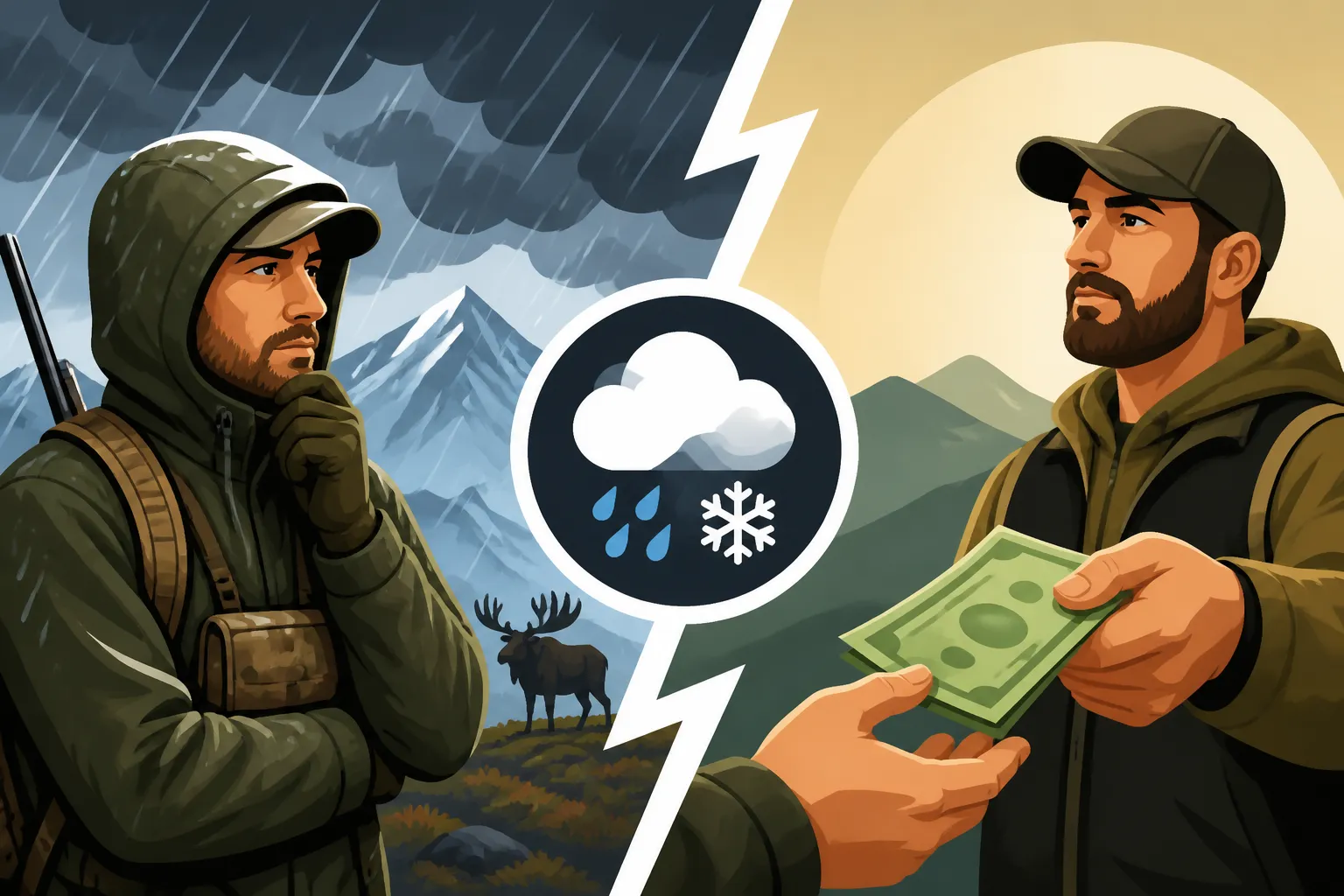
This is where things often get complicated and where a clear understanding of your agreements is paramount. Generally, the costs associated with weather delays are a shared burden, but the specific distribution can vary wildly depending on your outfitter, air taxi, and the terms of your contract.
Air Taxi Policies on Delays and Extra Flights
When you book an air taxi, you're essentially buying flight time, not a guarantee of perfect weather. Most reputable air taxi services have clear policies regarding weather delays. If a pilot can't fly due to weather, they typically won't charge you for the delayed portion of the original flight. However, if that delay forces extra nights in a hotel at the base camp town, or if it requires additional flights beyond your initial booking—say, an extra trip to ferry your meat out days later than planned because you got stuck—those costs will almost certainly fall to you.
Consider a scenario where you've booked a seven-day drop camp. On your scheduled pickup day, a low-pressure system moves in, grounding all flights for two full days. Those two extra days in the field, consuming more food and potentially needing satellite communication for extended check-ins, are on you. When the weather finally breaks, your pilot might be facing a backlog of other clients. If your delayed pickup requires them to make a special, unscheduled flight just for your party, or if they incur "deadhead" time flying an empty plane to get to you, those additional operational costs might be passed on. Always clarify Estimating Flight Cost From Base to Camp and potential extra charges for unforeseen circumstances when booking.
Guide-Outfitter Contract Clauses
For guided hunts, the guide's contract is your primary document. Good guide contracts anticipate weather delays and clearly outline who is responsible for what. Some outfitters might include a clause where the client is responsible for all extra costs incurred due to weather, including additional days in the field, food, guide wages for those extra days, and any additional air transport. Others might offer a grace period, perhaps covering one or two extra days of guide services or food, before additional charges kick in.
It's crucial to scrutinize the fine print of your agreement. Does the contract state a specific number of hunting days, or is it a "fixed price for the hunt," regardless of length? What happens if you can't even get into camp on the planned start date? If you've spent three days stuck in town waiting for a break in the weather, who pays for your lodging and meals during that time? These are not minor details; they can easily add thousands of dollars to your trip. Remember to ask about What an Alaska Guide Contract Should Specify before signing anything.
Hunter's Responsibility and Unexpected Costs
Ultimately, many of the costs associated with weather days fall to the hunter. This includes:
- Additional lodging and meals: If you're stuck in Anchorage, Fairbanks, or a small bush town waiting for a flight, your hotel and restaurant bills accumulate.
- Extra days in the field: Beyond the initial hunt cost, you're consuming more of your own supplies—food, fuel for stoves, satellite phone minutes.
- Rescheduling fees: If a weather delay causes you to miss a connecting commercial flight, you'll be responsible for change fees and potentially the higher cost of a last-minute ticket.
- Meat and trophy storage: If your meat and trophy are flown out late, you might incur storage fees at a local processor or cold storage facility until you can arrange further transport.
- Guide and air taxi overage charges: As mentioned, extra days or flights beyond your contracted amount will be billed to you.
These aren't hidden fees; they're the realities of operating in a remote, weather-dependent environment. It’s essential to factor these potential costs into your overall budget.
Mitigating Risks and Planning for Weather Days
While you can't control the weather, you can absolutely control how you prepare for it financially and logistically.
Building Buffer Days into Your Schedule
One of the best pieces of advice for any Alaska hunt is to build in buffer days. Instead of scheduling your return commercial flight for the day after your planned bush plane pickup, give yourself at least two, preferably three, extra days. This means arriving in Alaska a day or two before your hunt is scheduled to start and planning to depart a few days after your hunt is supposed to conclude.
| Scenario | Traditional Schedule | Buffer Schedule | Potential Outcome (Weather Delay) | Financial Impact (Hunter) |
|---|---|---|---|---|
| Arrival | Fly in Day 0, Hunt Day 1 | Fly in Day -1, Hunt Day 1 | Weather grounds flights Day 0 | Stays in town, misses Day 1 of hunt |
| Departure | Fly out Day 8, Hunt ends Day 7 | Fly out Day 10, Hunt ends Day 7 | Weather grounds flights Day 7 | Misses commercial flight, pays change fees |
| Pickup Delay (2 days) | Stuck in field 2 extra days | Stuck in field 2 extra days | Significant commercial flight cost and stress | Minimal commercial flight cost, less stress |
These extra days aren't just for cushion; they allow you to decompress, sort gear, handle meat and trophy processing, and account for unforeseen circumstances without panic. It also makes it easier for your air taxi pilot to work you into their schedule if they've been backed up. Consider it an investment in your sanity and your hunt's success. This ties directly into advice like Building Extra Days Into a Fly-In Schedule.
The Role of Hunt Insurance
Given the significant investment involved in an Alaska hunt, travel insurance that specifically covers trip interruption or delay due to weather is not just a suggestion—it's almost a necessity. Not all policies are created equal, so read the fine print carefully. Look for policies that cover:
- Trip Cancellation: If severe weather prevents you from even starting your hunt.
- Trip Interruption: If you're forced to leave your hunt early due to weather, or if the delay causes you to miss a significant portion of it.
- Trip Delay: Coverage for additional accommodation, meals, and transport costs if you're delayed getting to or from your hunting destination.
- Emergency Evacuation: While not strictly for weather delays, this is a critical component for any remote Alaska hunt, covering the cost of medical transport if you become ill or injured.
Providers like BookYourHunt often emphasize the importance of trip insurance when booking international or remote hunts, and it's a good reminder. Don't assume your credit card travel benefits will cover everything; dedicated hunt insurance is designed for these specific scenarios. Doing your homework here can save you a fortune and a headache, especially when you think about Hunt Insurance for Cancellations.
Pre-Trip Communication with Your Outfitter and Air Taxi
Before you even step foot on an airplane, have candid conversations with your guide or air taxi operator about their specific policies regarding weather delays. Don't be shy about asking direct questions:
- "What happens if we can't fly in on our scheduled start day due to weather?"
- "What are the charges if we get weathered in and need an extra two or three days in the field?"
- "Are there any fees for extra flights if our meat needs to be hauled out separately due to a delay?"
- "What is your communication plan if we're delayed in the field, and how often do you check in?" (This is where Radio or Satellite Check-Ins With a Pilot becomes crucial).
A reputable outfitter or air taxi will appreciate your thoroughness and be transparent about their policies. If they're vague or dismissive, that's a red flag. Write down their answers and compare them with your contract. This clarity upfront will prevent unpleasant surprises later.
Understanding Your Contract and Finalizing Logistics
Your hunting contract is more than just a piece of paper—it's your agreement on how the hunt will proceed, including what happens when things go awry.
The Specifics of Your Guide Agreement
When reviewing a guide contract, pay particular attention to sections detailing "Acts of God," "Force Majeure," or "Weather Clauses." These clauses typically define conditions beyond anyone's control (like severe weather) and outline the financial responsibilities. For example, some contracts might specify:
- "Client is responsible for all costs associated with delays due to weather, including extra guide days at [X rate] per day, additional food costs, and all air transportation beyond the initial contracted amount."
- "Outfitter will provide up to X extra days of guide services and camp provisions without additional charge in the event of a weather delay, after which standard daily rates apply."
- "No refunds or discounts will be provided for hunting days lost due to weather."
Understanding these nuances is key. If you are uncertain about a clause, ask your guide for clarification in writing. Platforms like GoHunt, which offer detailed research and planning tools, often stress the importance of understanding these contractual obligations fully. This due diligence ensures you're not caught off guard by unexpected expenses.
Communication and Contingency Plans
Beyond the contract, good communication builds trust and helps manage expectations. Discuss potential alternate pickup points for float hunts if a river becomes impassable, or different landing strips for wheel planes if your primary one is too soft from rain. Ask about the procedures for Pickup Windows and Late Pickups and what the fallback plan is if the weather just won't break. Having a robust Emergency Evacuation Plans in Remote Alaska in place is also paramount, as severe weather can hinder even emergency flights.
Even if you're planning an unguided hunt, these principles apply. You are your own outfitter and air taxi. You're responsible for your own buffer days, your own insurance, and your own contingency plans if weather traps you in camp. The wildness of Alaska is part of its allure, but it demands respect and thorough preparation from every hunter.
Remember, the goal isn't to scare you away from an Alaska hunt, but to empower you with the knowledge to plan wisely. Embrace the unpredictable nature of the Last Frontier, build in your buffers, invest in good insurance, and communicate openly with your service providers. That way, when the weather inevitably throws a wrench in your plans, you'll be ready for it, both mentally and financially.
Disclaimer
This article is for general informational purposes only and does not constitute professional advice. Laws, prices and regulations vary by location and change over time. Consult a qualified professional for guidance on your specific situation.