How Many Hunters Share One Camp
One of the biggest anxieties when planning an Alaska hunting trip, especially if you're venturing out with a guide or transporter, is the unknown of the camp itself. You spend months, maybe even years, dreaming of crisp mountain air and vast wilderness, but then the practical questions hit: "Who else will be there? How many people will I be sharing space with?" This guide is here to shed light on the various hunter-to-camp ratios you'll encounter in Alaska, helping you set realistic expectations for your remote adventure and ensure your wilderness experience matches your vision.
Understanding Hunter-to-Camp Ratios
When you book a guided hunt or a drop camp in Alaska, one of the crucial details that often gets overlooked until you're deep into planning is the number of hunters sharing the same physical camp space. This isn't just about personal preference; it fundamentally impacts your experience, from the amount of one-on-one attention you receive from your guide to the overall quietude and solitude of your stay. Knowing these ratios upfront can save you from an unexpected surprise in the bush.
Think about it: a hunt where you're the sole client with a dedicated guide is a vastly different experience from one where you're one of four hunters, sharing a single cooking tent and possibly even sleeping quarters with a larger group. The former offers unparalleled focus and flexibility, allowing the guide to tailor the hunt entirely to your pace and goals. The latter, while often more budget-friendly, requires a different mindset, a willingness to compromise, and a more communal approach to camp life.
This ratio can also dictate the logistical flow of the hunt itself. In a smaller camp, decisions about where to hunt each day, when to leave, and what pace to maintain can be made more dynamically. In a larger camp, the guide might need to balance the needs and abilities of multiple hunters, potentially leading to a more structured, less adaptable schedule. It’s important to clarify these details with any outfitter or transporter you're considering, as it directly impacts the level of personalized attention and the overall hunting style you can expect.
The Significance of Guide-to-Hunter Ratios
Beyond just the total number of people in camp, the guide-to-hunter ratio specifically addresses how many guides are dedicated to your party. This is a critical distinction, especially for non-residents pursuing species like brown bear, Dall sheep, or mountain goat, which legally require a guide in Alaska. A 1×1 (one guide, one hunter) experience means you have exclusive access to your guide's expertise, judgment, and physical presence in the field. This level of dedicated attention can be invaluable when making critical decisions, whether it's Spotting Scope Power for Ram Judging on a distant hillside or navigating dangerous terrain with a Rifle Choice for Alaska Brown Bear Country.
Conversely, a 2×1 (one guide, two hunters) scenario means the guide is splitting their attention and efforts between two clients. This is a very common and effective setup, particularly for species where active calling or stalking might involve both hunters simultaneously, like with moose or caribou. However, it requires both hunters to be compatible in terms of fitness, hunting style, and goals. If one hunter is significantly slower or has different expectations, it can impact the other's experience. You also need to consider how the guide manages the shot opportunity if two animals present themselves at once.
For larger groups, you might encounter situations like 2×3 or even 2×4, meaning two guides are working with three or four hunters. These scenarios are less common for remote, challenging big game hunts but can happen in road-accessible or drop camp settings where hunters are often more self-sufficient, or for smaller game. The key takeaway is that the higher the guide-to-hunter ratio (meaning more hunters per guide), the more you'll need to consider how your individual needs and hunting pace align with the rest of the group.
Camp Population Versus Hunting Party Size
It’s crucial to distinguish between the overall camp population and your specific hunting party size. Sometimes, an outfitter might run multiple hunting parties out of a single base camp or a larger tent setup. This could mean your 1×1 guided hunt operates from a camp that also hosts another 2×1 caribou hunt, plus a couple of solo drop-camp hunters waiting for their pick-up. While you might still get your dedicated guide attention in the field, the shared common areas like the cook tent, drying tent, or even latrine will have more traffic.
This distinction is especially relevant for those seeking ultimate solitude. If your dream is to not see another human for ten days, a larger base camp, even if you’re on a 1×1 guided hunt, won't deliver that. Conversely, if you enjoy the camaraderie of fellow hunters sharing stories in the evening, a larger camp could be a bonus. Always ask your outfitter directly: "How many hunters will be in the field with me, and how many hunters, total, will be in our base camp or area during my hunt?" This clarifies both aspects of the equation.
For many Alaska drop camp arrangements, especially those facilitated by air taxis, you and your hunting partner(s) are often the only hunters in your specific satellite camp, though you might be one of several parties dropped into a broader area. This offers profound solitude once the plane flies away. Remember, outfitters and transporters like those found on platforms such as BookYourHunt often specify these details in their hunt descriptions, but a direct conversation is always best.
Common Camp Configurations in Alaska
Alaska's vast and varied landscape lends itself to many different hunting styles, and each style often comes with its own typical camp configuration and hunter density. Understanding these common setups will give you a clearer picture of what to expect when you finally step off that bush plane or out of that river boat.
Fully Guided Camp Formats
For a fully guided hunt, especially for premium species, the camp experience is generally more structured and often more intimate, especially for the active hunting portion.
- 1×1 Guided Hunts: This is the pinnacle of personalized hunting, where you and your guide are a team. In these situations, the camp itself is often quite small – sometimes just two small tents (one for the guide, one for the hunter) or a single larger tent with a divider, a small cooking area, and minimal amenities. You're typically the only hunter, and the focus is entirely on your hunt. This is common for physically demanding sheep or goat hunts in remote alpine areas, where lightweight, mobile camps are essential. Think of Backpack Hunting in Alaska: Gear Weight and Meat Loads for a truly Spartan setup. The significant investment for a 1×1 hunt often translates to this exclusive attention, and it's what many serious hunters seek when booking an Alaska adventure.
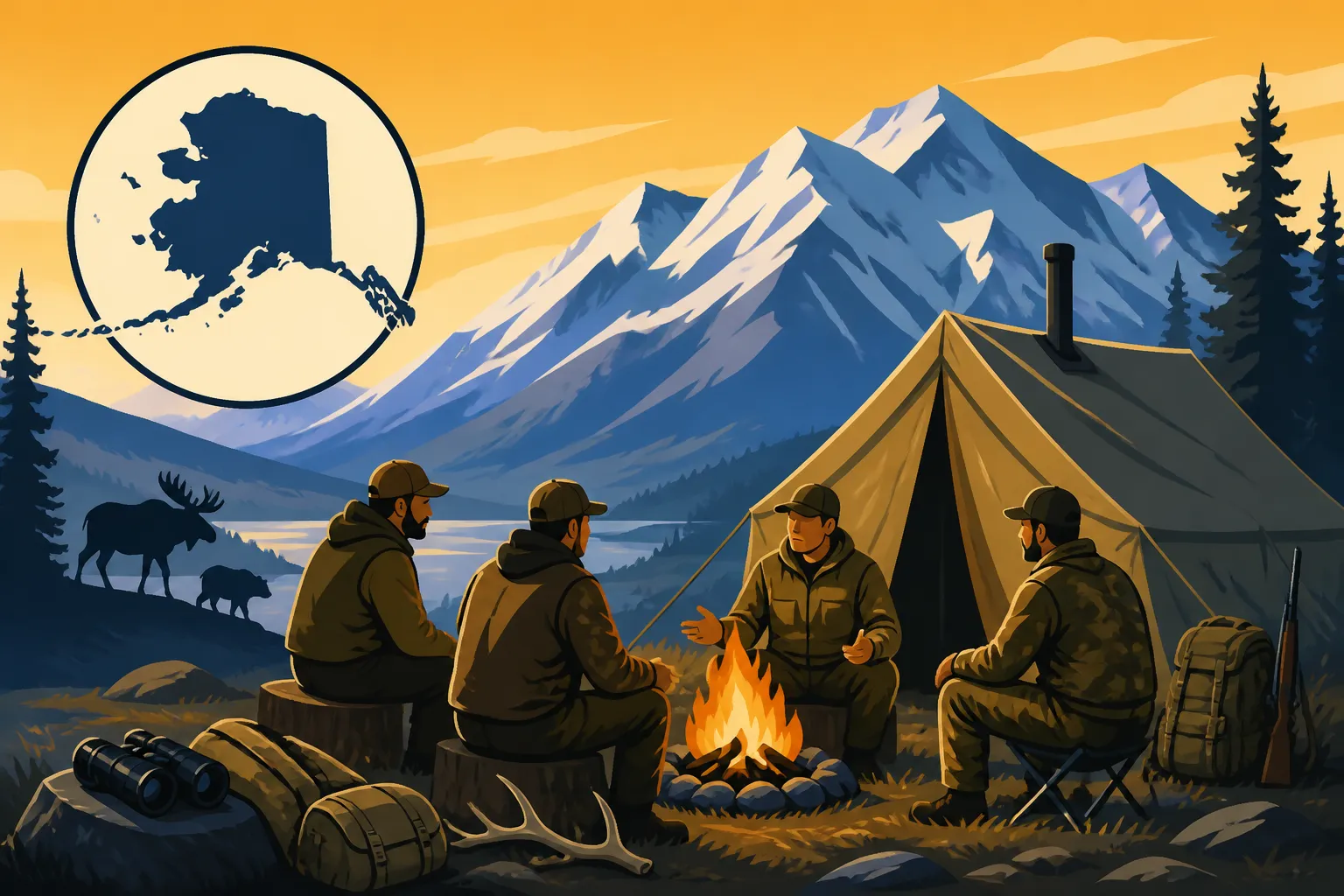
- 2×1 Guided Hunts: This is arguably the most common guided hunt format in Alaska, especially for moose, caribou, or bear. The camp usually accommodates the guide and two hunters, often in a larger wall tent, or two smaller sleeping tents, with a shared cook tent. The dynamic here is a bit more social. You'll be sharing daily hunting strategies, meals, and downtime with another hunter, which can be a great way to build camaraderie. Outfitters use this model effectively, as it optimizes their resources and can make the hunt more accessible to hunters who might not opt for the higher cost of a 1×1. Successful 2×1 hunts depend heavily on the compatibility of the two hunters, so it's worth considering if you're booking alone and will be paired with a stranger.
- Base Camp with Spike Camps: Some outfitters operate a central, more comfortable base camp – perhaps a cabin, a large canvas tent with a wood stove, or even multiple smaller tents – and then utilize smaller, more spartan "spike camps" for active hunting. You might return to the base camp every few days for a hot meal, a shower (if available), and resupply, but the actual hunting is done from the spike camps, often with a 1×1 or 2×1 guide-to-hunter ratio. This setup offers the best of both worlds: comfort between strenuous hunting days and the flexibility of mobile, remote hunting. It's common in areas where game might move, or when hunters are pursuing different species from the same general area. For instance, you might be focused on Calling Bull Moose During the Alaska Rut from a spike camp, while another party from the same base camp is focused on black bear.
Drop Camp and Unguided Camp Formats
Drop camps offer a different level of independence and are inherently "unguided" in the traditional sense, though an air taxi or transporter facilitates your access.
- Small Group Drop Camps (2-4 Hunters): The vast majority of Alaska drop camps involve a small group of friends or family, typically 2 to 4 hunters, being flown into a remote location. The camp you establish is entirely your own, consisting of your tents, cooking gear, and provisions. This is where you truly embrace the "do-it-yourself" spirit of Alaska hunting. You're responsible for all aspects of the hunt – scouting, calling, tracking, field care, and safety. The number of hunters here is dictated by your own group and the logistics of flying in gear. A pair of hunters is very common, balancing companionship with efficiency, though trios and quads also work well, especially for moose or caribou, where the sheer volume of meat requires more hands for Quartering a Bull Moose Alone in the Field and packing.
- Solo Drop Camps: While less common, some seasoned and self-reliant hunters choose to do a solo drop camp. This offers the ultimate solitude and self-sufficiency but comes with significant risks. Every decision is yours alone, and help is far away. Hunters considering this route must be incredibly experienced, physically capable, and carry robust Signal Devices and Check-In Plans for Solo Alaska Hunts. The camp itself would be just for one, often a compact backpacking tent and minimal gear, emphasizing light weight for easier movement once on the ground.
- Float Hunt Camps: For those embarking on a Float Hunting Alaska Rivers for Moose and Caribou, the camp is often mobile. You might have a primary camp set up for a few nights, and then move downriver, setting up new camps daily or every other day. The number of hunters usually ranges from two to four, fitting comfortably in rafts with gear. Each night, you'll establish a temporary camp, often a tent or two, a cooking area, and a fire. The experience is intimate, centered around your small group, and the "camp" location is constantly changing. The key here is coordination within your float group, as everyone shares the workload of setting up and breaking down camp.
Factors Influencing Camp Size and Hunter Ratios
Many variables play a role in determining how many hunters share one camp, and understanding these can help you narrow down your choices when researching an Alaska hunting adventure. It's not just random; there's usually a logistical or strategic reason behind each setup.
Species Hunted and Terrain
The type of animal you're pursuing and the habitat it lives in heavily influence camp size and hunter ratios.
- Mountain Hunts (Sheep, Goat): For species like Dall sheep or mountain goat, which reside in steep, remote alpine terrain, camps are almost invariably small and mobile. This is because getting equipment into these areas is often done by backpack, requiring minimal gear and a light footprint. You'll typically find 1×1 guided hunts here, or very small unguided parties, often operating out of spike camps. The focus is on stealth, mobility, and covering vast amounts of ground. A larger camp simply wouldn't be practical or efficient.
- Moose and Caribou Hunts: These hunts can accommodate larger groups, especially for drop camps. Moose and caribou are often found in areas accessible by air taxi to gravel bars or lakes, or via float plane to a river, allowing for more gear. A group of 2-4 hunters can effectively work together to call, track, and ultimately Packing Out Meat in Alaska: The Salvage Law Hunters Must Follow a large animal like a moose. Guided moose hunts often run 2×1, as a single guide can effectively manage two hunters for calling and stalking.
- Bear Hunts (Brown and Black): Brown bear hunts, especially on the coast, often involve 1×1 guided setups due to the inherent danger and the need for precision and safety. Camps might be boat-based or small shore camps. For black bear, particularly in baiting scenarios, camps can be larger or even multiple hunters operating from a central lodge, as the hunting is more localized to registered bait sites. Setting a Legal Black Bear Bait Station in Alaska requires specific regulations to be followed, and a guide may have multiple sites for different clients.
Budget Considerations
Let's be real, cost is a huge factor for most of us. The hunter-to-camp ratio directly correlates with the price tag of your hunt.
- 1×1 Guided Hunts: The Premium Experience: When you have a guide dedicated solely to you, you're paying for their undivided attention, expertise, and time. This means higher costs, reflecting the exclusivity and personalized service. While a general price cannot be given, expect these hunts to be at the top end of the spectrum for guided adventures. The "cost" isn't just financial; it's also in the commitment to physical fitness needed to maximize that one-on-one effort.
- 2×1 Guided Hunts: A Balanced Option: Sharing a guide with one other hunter spreads the cost, making guided hunting more accessible. This is a popular choice because it offers a significant amount of guide attention while being more affordable than a 1×1. It also introduces a social element, which many hunters enjoy. When comparing guided hunt prices, you'll often see distinct rates for 1×1 versus 2×1.
- Drop Camps: The DIY Savings: Unguided drop camps are generally the most budget-friendly way to hunt big game in Alaska, as you're primarily paying for the air taxi service and your own gear/provisions. Splitting the airfare among a group of 2-4 further reduces individual costs. This model maximizes your independence but demands thorough preparation and self-reliance, from navigation skills using Alpine Navigation Without Cell Service to proper Meat Care in 50-Degree September Weather. Websites like GoHunt provide resources for planning such DIY adventures, often focusing on scouting and self-guided strategies.
Guide or Transporter Operational Style
Every outfitter and transporter has their own way of doing business, which affects their camp configurations.
- Boutique vs. Volume Operations: Some outfitters run very limited, high-end hunts, focusing on a few clients with very personalized service. Their camps will likely be smaller and more exclusive. Others might run more volume, taking multiple parties out simultaneously, which could mean a larger central base camp or more camps in a particular area, potentially increasing interaction with other hunters or groups.
- Air Taxi Logistics: Transporters flying hunters into remote areas must balance safety, efficiency, and aircraft capacity. A Super Cub, for example, is fantastic for tight landings on small gravel bars, but can only carry one or two hunters with minimal gear. Larger aircraft can carry more people and gear, but require bigger landing strips. The type of aircraft and the logistics of resupply or multiple drops within an area can influence how many groups (and thus how many hunters) they can realistically support. Understanding Weight Limits on a Super Cub Drop is crucial for planning your group's gear.
| Camp Type | Hunter-to-Guide Ratio | Typical Number of Hunters in Camp | Key Characteristics |
|---|---|---|---|
| 1×1 Guided Hunt | 1:1 | 1 hunter + 1 guide | Maximum privacy & guide attention. High cost. Often very mobile/lightweight camp. |
| 2×1 Guided Hunt | 2:1 | 2 hunters + 1 guide | Shared cost & guide attention. Good camaraderie. Often a more established camp than 1×1. |
| Base Camp (Guided) | Varies (e.g., 2:2, 4:2) | 2-6 hunters + 1-2 guides | More comfortable, central camp. Day hunts or spike camps from here. More social. |
| Drop Camp (Unguided) | N/A | 2-4 hunters (your group) | DIY. Max independence. Camp is entirely your group's responsibility. Air taxi provides access. |
| Solo Drop Camp | N/A | 1 hunter | Ultimate solitude and self-reliance. Highest risk for inexperienced. Very lightweight camp. |
| Float Hunt Camp (Mobile) | N/A | 2-4 hunters (your group) | DIY. Camp moves daily/regularly. Emphasis on teamwork. Accessible via raft. |
Choosing the Right Camp for Your Hunt
Deciding on the ideal number of hunters in your camp boils down to your personal hunting philosophy, physical capabilities, and what you ultimately seek from an Alaska wilderness experience. There's no single "best" answer, only the best fit for you.
Prioritizing Solitude Versus Camaraderie
This is often the first and most personal question to ask yourself. Are you going to Alaska to truly escape, to immerse yourself in silence and wildness without seeing another soul for days on end? If so, a solo drop camp (if you have the experience and preparation), or a 1×1 guided hunt in a remote spike camp, might be your ideal. Even in a 1×1, you'll have your guide, but the focus is often so intense on the hunt itself that the social aspect is secondary.
However, if you thrive on shared experiences, swapping stories around a campfire, and the camaraderie that comes from facing challenges with a partner or small group, then a 2×1 guided hunt or a drop camp with 2-3 trusted friends could be perfect. There's something truly special about sharing the highs and lows of an Alaska hunt with others. It can also be safer and more practical for handling large game like a moose, especially when considering Bear Safety While Butchering a Kill in Alaska. Think about what truly rejuvenates your spirit in the outdoors.
Balancing Cost and Service Expectations
As discussed, the more exclusive the attention and the fewer people you share a camp with, generally the higher the cost per hunter. If you're on a tighter budget but still want to experience Alaska, a 2×1 guided hunt or a well-planned drop camp can provide incredible value. Just be clear on what you're getting. For a 2×1, ensure your hunting partner (if assigned by the outfitter) has similar fitness levels and expectations. For a drop camp, remember you're hiring an air taxi for Fly-In Hunting: Working With an Alaska Transporter Pilot, not a guide, so all the heavy lifting of hunting and camp management falls to your group.
When reviewing options on platforms like BookYourHunt or GoHunt, pay close attention to the listed hunter-to-guide ratios and any mention of camp sizes. Don't hesitate to contact the outfitter directly to ask specific questions about how many people will be in your camp, both hunting and support staff. Clarify what's included in the price – sometimes a higher initial cost for a 1×1 includes more amenities or flexibility that might save you money or stress in the long run.
Physical Demands and Logistics
Your physical condition and the logistical complexity of the hunt also play a role. A solo sheep hunt into the Brooks Range will be physically brutal and demands a minimalist camp. A moose hunt near a river landing might allow for a larger, more comfortable wall tent with a stove. If your group is planning an unguided hunt, consider how many hands you'll need for Loading a Bull Moose Into a Raft or for packing meat over several miles.
Always think about the "what ifs." What if someone gets injured? What if you have to pack out a bull moose in rough terrain? More hands (within reason for the terrain) can be a significant advantage in challenging situations. This is another reason why many choose to hunt in pairs or small groups. Regardless of your chosen camp size, always ensure you have a solid communication plan and emergency devices like an InReach, especially in areas with Alpine Navigation Without Cell Service.
Ultimately, the number of hunters sharing your camp is a crucial detail that will shape your Alaska hunting experience. By carefully considering your personal preferences, budget, and the practicalities of the hunt, you can choose a camp configuration that maximizes your enjoyment and chances of success in the Last Frontier.
Disclaimer
This article is for general informational purposes only and does not constitute professional advice. Laws, prices and regulations vary by location and change over time. Consult a qualified professional for guidance on your specific situation.