What Alaska Guides Do With Salvaged Meat
The moment you connect on a magnificent bull moose or a majestic Dall sheep in the vastness of Alaska, the immediate exhilaration is often quickly followed by a very practical question: "Now what do we do with all this meat?" For many hunters, especially those new to the Last Frontier, the sheer volume of game, coupled with stringent regulations and remote conditions, can feel overwhelming. This guide will walk you through precisely what your Alaska guide does with that hard-earned salvaged meat, from field care to final transport, ensuring everything is handled legally and effectively.
Understanding Alaska's Salvage Law for Hunters
Hunting in Alaska isn't just about the thrill of the chase; it's deeply rooted in the principle of ethical take and utilization of wild game. This is why understanding the salvage law is paramount, and your guide is your primary resource for navigating these requirements in the field.
The Core Principle of Wanton Waste
Alaska has strict regulations to prevent "wanton waste" – essentially, the intentional or negligent failure to salvage the edible meat of game animals. This isn't just a guideline; it's a legal obligation. When you successfully harvest an animal, it becomes your responsibility, and that of your guide, to ensure that all edible portions are properly cared for and brought out of the field. This ethos respects the animal, the resource, and the tradition of hunting. The feeling of seeing a huge animal down, knowing the work ahead, is humbling, and your guide will immediately shift into that practical mindset to ensure every pound of meat is treated with respect.
Which Parts of an Animal Must Be Salvaged
For most big game animals in Alaska, "edible meat" is quite broadly defined and often includes far more than just the prime cuts you might envision from a grocery store. This means not only the hindquarters, shoulders, and backstraps but also often includes the neck meat, rib meat, and sometimes even the organ meat (like heart and liver) if it's in good condition.
Think about a bull moose, for example. We're talking hundreds of pounds of meat. The regulations ensure that none of that goes to waste. Your guide will know the exact requirements for your specific species and hunt area. For instance, some regulations specify that ribs and neck meat must be salvaged, while others might focus primarily on the muscle tissue. They understand Alaska Moose Meat Salvage Requirements down to the letter, ensuring you avoid any potential violations. It's a heavy lift, both literally and figuratively, but a core part of the Alaska hunting experience.
Guide's Role in Ensuring Compliance
When you hire an Alaska Registered Guide-Outfitter, you're not just getting someone to help you find game; you're hiring an expert in all aspects of an Alaska hunt, including legal compliance. Your guide assumes a significant responsibility for ensuring that all salvage laws are strictly followed by their clients. This means they'll direct the entire process from the moment an animal hits the ground.
They're constantly aware of the specific unit regulations that might affect your hunt, whether it's an antler restriction on a moose or a full-curl requirement for a Dall sheep. Their knowledge extends to the legalities of field care, ensuring that meat is salvaged correctly and quickly. A good guide anticipates potential issues, such as rapidly warming weather or challenging terrain, and has a plan in place to handle the meat efficiently, leaving no doubt that you're operating within the bounds of the law. They understand the intricacies of Alaska Game Management Units and How They Are Numbered and the specific rules that apply.
On-Site Meat Processing and Initial Care
The clock starts ticking the moment an animal is down, especially in Alaska's often unpredictable weather. Proper and swift on-site processing is crucial for preserving the quality of the meat.
Field Dressing and Quartering in Remote Camps
Your guide's expertise truly shines in the field immediately after a kill. They'll typically lead the field dressing process, which involves carefully removing the entrails to quickly cool the carcass. Following that, especially for large animals like moose or caribou, the animal will be skinned and quartered. This means breaking the animal down into manageable pieces – usually four quarters, plus the backstraps, tenderloins, and sometimes the neck and rib sections.
A skilled guide can do this quickly and cleanly, often with minimal equipment, ensuring the meat is kept free from dirt, hair, and other contaminants. This is hard, physical work, often done on uneven terrain or in less-than-ideal weather, but it's absolutely vital. They understand the importance of making quick work of Quartering a Bull Moose Alone in the Field, especially when daylight is fading or weather is moving in.
Cooling and Protecting Meat from Contaminants
Once the meat is quartered, the next critical step is cooling and protecting it. In Alaska, this often involves hanging the quarters to allow air to circulate around them. Game bags are essential here; they protect the meat from flies, birds, and other scavengers while still allowing it to breathe. Your guide will bring appropriate game bags designed for Alaskan conditions, often made of breathable, durable material.
Depending on the location, a meat pole might be rigged between trees, or quarters might be hung from a sturdy tripod. The goal is to get the meat cooled as quickly as possible. This is especially challenging in early season hunts when temperatures can still be quite warm. Your guide will have strategies for Hanging Meat in Warm September Weather and for keeping it safe from opportunistic scavengers like bears, which might involve setting up a Bear Fence Setup at a Meat Cache around the meat pole. They’re constantly balancing the need for cooling with protection against the elements and wildlife.
Transporting Salvaged Meat from the Field
Getting the meat out of the remote Alaskan backcountry is often the most significant logistical challenge, and where a guide's experience truly pays dividends.
Bush Planes and Weight Limitations
Many Alaskan hunts are fly-in, meaning a bush plane is your lifeline to and from civilization. Transporting hundreds of pounds of meat, along with hunters and gear, means dealing with strict weight limitations. Your guide will coordinate closely with the air taxi service to plan for meat flights. Often, the hunter and gear might fly out first, and then the plane will return specifically for the meat. This isn't just an extra step; it's often a necessity due to the sheer volume and weight.
The guide understands the economics and logistics of Weight Limits on a Super Cub Drop or other aircraft. They will have ensured the meat is packed efficiently for transport, often in durable game bags, ready for the pilot to load. Sometimes, if the weather turns or the animal is particularly large, it might require multiple trips from the air taxi, which is a cost factor that guides typically discuss upfront.
Pack Horses, ATVs, and Boat Transport
Not all hunts involve bush planes. Depending on the hunting area and the type of hunt, other modes of transport might be used.
- Pack Horses: In some interior mountain ranges or for certain designated guide areas, pack horses might be used to haul out meat and capes. This is a traditional method that's still highly effective for getting large quantities of weight out over difficult terrain.
- ATVs: On hunts where ATV access is permitted, such as along specific trail systems or off the Denali Highway, ATVs are invaluable for hauling heavy loads. Your guide will have experience loading quarters safely onto an ATV trailer or rack, understanding the challenges of riding out meat before dark on rough trails. They know the rules for ATV Access Tactics on Alaska's Denali Highway.
- Boats: For river-based hunts, commonly known as float hunts, the raft or boat itself becomes the primary mode of meat transport. After a successful moose kill along a river, the guide will lead the effort to break down the animal and load it carefully into the raft, distributing the weight evenly for safe navigation. Float Hunting Alaska Rivers for Moose and Caribou is a specialized skill, and loading a massive bull into a raft requires careful planning. Similarly, Skiff Hunting Deer Along Saltwater Beaches might involve loading deer into a boat directly from the tide flats.
Each method presents its own set of challenges, from weather delays to difficult terrain, and your guide's expertise is crucial for overcoming these logistical hurdles.
What Happens to Meat at the Base Camp or Town
Once the salvaged meat makes it out of the backcountry and back to a base camp or small Alaskan town, there are several pathways it can take, all coordinated by your guide.
Options for Hunter-Retained Meat
For hunters who want to take their meat home, there are typically a few options:
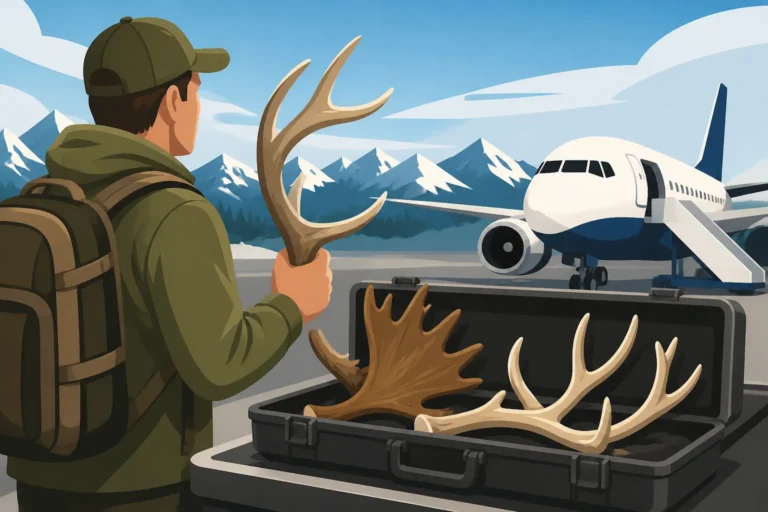
- Commercial Airline Transport: Many hunters choose to fly their frozen game meat home. This requires meticulous preparation, as airlines have specific rules regarding packaging, weight, and temperature. The meat needs to be properly frozen solid and then placed in approved coolers or boxes. Your guide can provide advice on how to prepare the meat for this journey, often directing you to local services that specialize in preparing wild game for air travel. Understanding Airline Rules for Frozen Game Meat is key to a smooth trip home.
- Shipping Services: For larger quantities or for hunters who prefer not to check meat as luggage, freight shipping services are an option. This is often more costly but can be more convenient. Again, the meat must be frozen and properly packaged.
- Local Processing: Many smaller Alaskan towns or major hubs like Anchorage and Fairbanks have excellent wild game processors. Your guide will often have a relationship with a trusted local butcher who can cut, wrap, and freeze your meat to your specifications. This is a popular option, especially for non-resident hunters, as it ensures professional handling and preparation for its journey.
Guide's Assistance with Processing and Shipping Logistics
Your guide acts as a vital liaison in this phase. They won't necessarily butcher your meat themselves (though some might offer basic services), but they will facilitate the entire process. They have the local knowledge to connect you with reputable processors, expeditors, and shipping companies. They'll help you understand the costs involved for processing, freezing, and freight, allowing you to budget accordingly.
For a non-resident, navigating the logistics of getting hundreds of pounds of meat processed and shipped from a remote Alaskan location can be daunting. Your guide will streamline this, making calls, arranging pickups, and ensuring that your meat is handled according to your wishes. This often involves coordinating with the air taxi for direct delivery to a processor and managing the paperwork. This support is a significant part of what makes a guided hunt a more accessible experience for those less familiar with bush logistics.
Donating or Distributing Salvaged Meat
Sometimes, hunters may find themselves with more meat than they can reasonably transport or use, or perhaps they simply choose to donate some of it. Alaska has specific rules about donating wild game.
Legalities of Donating Wild Game Meat in Alaska
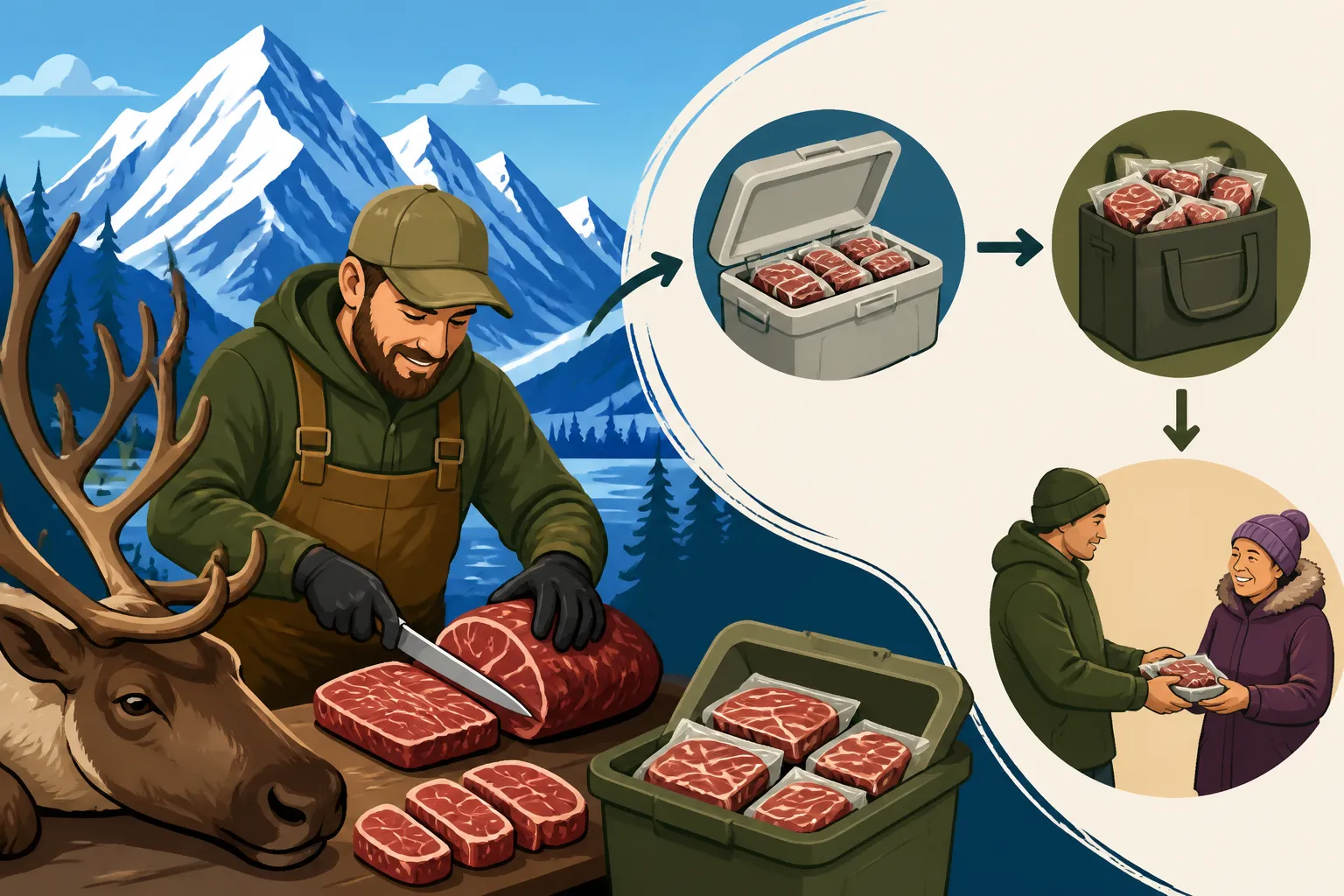
Alaska's fish and game regulations allow for the donation of legally harvested game meat. This is a wonderful way to ensure that no part of the animal goes to waste and can benefit local communities or individuals. However, there are rules to follow. You can't just hand it off to anyone; typically, donations must be made without compensation and often through recognized charities, food banks, or directly to individuals.
A hunter might choose this option if they are traveling light, have limited freezer space at home, or simply want to contribute to the local community that often supports their hunting endeavors. Your guide will be well-versed in these rules and can help facilitate legal donations, connecting you with appropriate organizations or individuals in the area if you wish to donate some of your kill. This ensures that the spirit of full utilization is upheld, even if you can't take every ounce home yourself.
Guide's Own Use or Local Distribution
In certain situations, after all legal requirements for salvage have been met and the hunter has taken the desired portions, there might be remaining meat. It's not uncommon for guides, especially those who live and work in remote Alaskan communities, to utilize some of this meat for their own families or to distribute it locally. This often happens if a non-resident hunter only wishes to take trophy parts (cape and skull) and a limited amount of meat, leaving the rest.
However, any such arrangement must be explicitly agreed upon between the hunter and the guide before the hunt, and it must strictly adhere to Alaska's regulations regarding the distribution and possession of game meat. The guide must ensure that the hunter has met all salvage requirements and that any remaining meat is legally transferred or utilized. This practice is part of the subsistence lifestyle that many Alaskans, including guides, embrace, where wild game is a significant food source. It's a pragmatic solution that further ensures the ethical utilization of the resource, avoiding any potential for waste.
Here’s a quick overview of how meat might be handled post-harvest:
| Scenario | Guide's Primary Action | Hunter's Involvement | Key Considerations |
|---|---|---|---|
| Hunter Takes All Meat Home | Oversees field quartering, bags, chilling, transport to town/processor. Coordinates with air taxi. | Arranges for processing, freezing, and shipping/airline transport at their cost. | Weight limits, airline rules, proper packaging. |
| Hunter Takes Some Meat Home | Same as above, ensuring minimum salvage met. Facilitates donation/local distribution of remainder. | Arranges for their portion. Agrees with guide on remainder's fate. | Clear communication, adherence to donation laws. |
| Hunter Donates All Meat | Oversees field quartering, bags, chilling, transport to designated charity/individual. | Formalizes donation intent. May provide contact info for recipient. | Legal donation channels, proper documentation if required. |
| Guide Utilizes Remainder | Ensures hunter has met all salvage requirements; legally transfers remaining meat for personal use. | Clear agreement with guide before hunt about any remaining meat. | Strict adherence to Alaska game laws; transparency. |
Ultimately, your Alaska guide is an invaluable partner in ensuring that the meat from your successful hunt is handled with the utmost care, respect, and within the bounds of Alaska's comprehensive game laws. Their experience transforms what could be an overwhelming task into a seamless part of your incredible Alaskan adventure. From Cape and Skull Care for a Brown Bear Hide to ensuring every edible pound is accounted for, they cover all bases.
Disclaimer
This article is for general informational purposes only and does not constitute professional advice. Laws, prices and regulations vary by location and change over time. Consult a qualified professional for guidance on your specific situation.