What Camp Conditions to Ask About
You're finally looking at booking that dream Alaska hunting trip, maybe a fly-in moose hunt or a backpack sheep adventure, and the excitement is building. But then reality sets in: you'll be out in the Alaska bush, far from civilization, and the romantic notion of "roughing it" can quickly give way to questions about just how rough it will be. It's totally normal to feel a bit of anxiety about the unknown, especially when it comes to basic comforts and safety in a remote camp. This guide is here to help you cut through the vague promises and ask your potential outfitter or transporter the hard, specific questions about camp conditions before you ever set foot on a plane. Knowing what to expect means you can pack smarter, mentally prepare, and ultimately, have a much more enjoyable and successful hunt.
The Essentials of Shelter and Warmth: Your Bush Home Base
When you're far from any town, your camp isn't just a place to sleep; it's your refuge from the elements, your command center, and your only real comfort. Don't underestimate the importance of a solid, warm, and dry shelter. The quality of your camp can make or break a hunting trip, especially when Alaska weather decides to throw everything it has at you.
Tent Types and What to Expect
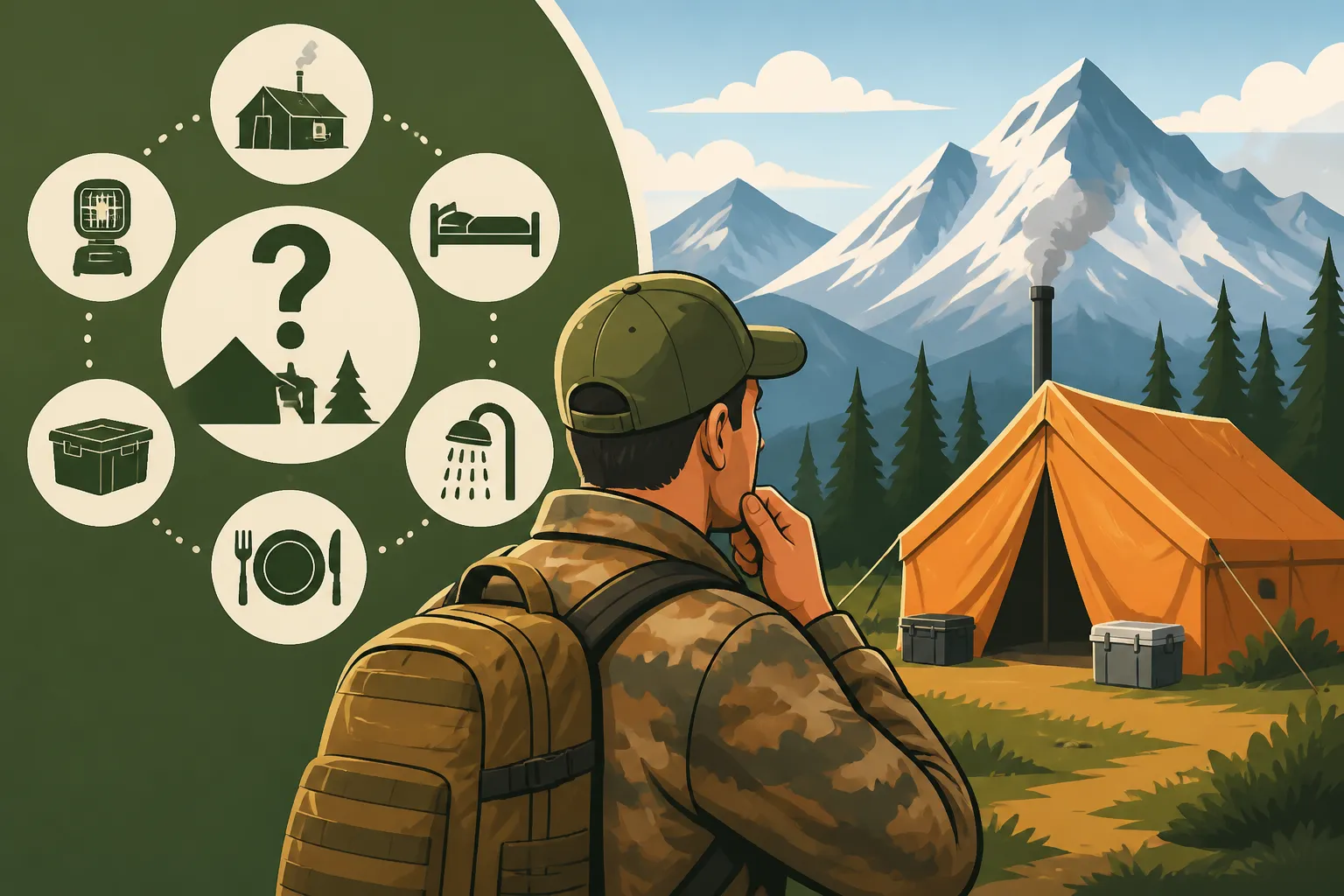
Alaska camps run the gamut from minimalist backpacking tents to canvas palace wall tents. The type of tent you're in will heavily influence your overall experience. For a true fly-in experience or a more mobile hunt, you might be in lighter, smaller tents. If it's a base camp for a week or more, a larger, more comfortable setup is often expected.
- Backpacking Tents: These are lightweight, usually two-person tents designed for mobility. They're great for hunts where you'll be moving camp frequently, like a high-alpine Dall sheep hunt. Expect minimal headroom, just enough space for you and your gear, and a vestibule for boots and wet items. The downside? No standing room, and prolonged bad weather can feel very confining. They offer decent protection from wind and rain, but aren't typically designed for robust heating beyond your sleeping bag. You'll definitely want to clarify if your hunt involves spike camps and what kind of tent you can expect there, versus a main base camp.
- Dome or Outfitter Tents: These are more robust than backpacking tents, often accommodating 2-4 hunters with a bit more interior space. They might have a taller center height, allowing you to stoop rather than crawl. These are common for drop camps or less mobile fly-in hunts where a slightly more comfortable but still portable shelter is needed. They usually have a tougher fly and a more durable floor. You should ask about floor type (sewn-in or separate ground cloth) and ventilation, especially if you anticipate a lot of rain. Archery Tackle That Survives Ten Days of Rain is a good article to review if you're thinking of bowhunting in these conditions.
- Wall Tents or Arctic Ovens: These are the Cadillac of bush camps, typically seen in fully guided operations or longer-duration drop camps. These heavy-duty canvas tents offer standing room, ample space for cots, gear, and often a dedicated cooking area. They are usually heated by a wood stove, providing a warm, dry place to dry clothes, eat meals, and relax. If you're envisioning a cozy camp with a roaring fire, this is what you're hoping for. These are fantastic for moose hunts where you might be waiting out weather or have a lot of gear. Asking for photos of the actual camp setup can be incredibly helpful here.
| Tent Type | Mobility/Weight | Space/Comfort | Heating Capability | Typical Use Case |
|---|---|---|---|---|
| Backpacking Tent | High/Light | Minimal | Low | Spike camps, mobile sheep/goat hunts |
| Dome/Outfitter Tent | Medium/Moderate | Moderate | Low to Medium | Drop camps, less mobile fly-in hunts |
| Wall Tent/Arctic Oven | Low/Heavy | High/Comfortable | High | Guided base camps, long-duration drop camps |
Heating Your Home Away From Home
Even in September, Alaska nights can get surprisingly cold, and daytime rains can chill you to the bone. Having a way to dry out and warm up is crucial for morale and safety. Don't assume anything; ask explicitly about heating sources.
- Wood Stoves: Common in larger wall tents, wood stoves offer excellent heat and a place to dry wet gear. They require a steady supply of firewood, which is often found locally, but it might mean extra work for you (or your guide) to cut and haul. Ask if firewood is provided or if you'll be responsible for cutting it. Also, inquire about the stove's size and if it can hold a burn through the night. A good stove can transform a miserable, damp camp into a cozy haven.
- Propane Heaters: Smaller tents might use portable propane heaters. While convenient, they consume fuel quickly and require good ventilation to prevent carbon monoxide buildup. They are usually a supplemental heat source, not meant for continuous all-night operation. Ask how much propane is provided, or if it's your responsibility to bring extra canisters. It's a very different experience to rely on a small propane heater compared to a robust wood stove.
- No Dedicated Heat: In some lighter backpacking camps or spike camps, there might be no dedicated heat source beyond your sleeping system. This is common for hunts where weight is paramount, such as high-country Dall sheep. In such scenarios, your focus shifts entirely to your personal gear: Backpack Hunting in Alaska: Gear Weight and Meat Loads emphasizes this reality. You need a top-tier sleeping bag, insulated pad, and warm clothing layers to compensate. Make sure you know if this is the case so you can plan your gear accordingly.
Sleeping Systems and Cold Weather Reality
After a long day of hiking, glassing, or tracking, a good night's sleep is essential. Your sleeping arrangements play a huge role in your recovery and overall well-being.
- Cots, Pads, and Bags: Most guided or drop camps will provide cots. These keep you off the cold ground, which is a huge comfort. However, a cot alone isn't enough; you'll still need an insulated sleeping pad to prevent heat loss from below. Always confirm if pads are provided, or if you need to bring your own. The sleeping bag rating is critical. Alaska temperatures can drop dramatically overnight. Ask your outfitter what temperature rating they recommend or provide, especially if they are providing the bags. If you're bringing your own, aim for a bag rated at least to 0°F, even for September hunts. You don't want to be shivering through the night.
- Shared vs. Private Sleeping Areas: In some camps, especially with multiple hunters, tents might be shared. Clarify how many hunters will share a tent. A two-person tent designed for backpackers can be quite tight with two large hunters and all their gear. Sometimes, a larger wall tent might be partitioned for more privacy, but it's important to ask. This can affect everything from snoring tolerance to how easily you can organize your gear.
- Drying Gear Inside: This ties into heating, but it's worth asking separately. Can you effectively dry wet clothes, boots, and optics inside the tent? In rainy Alaska, this isn't a luxury, it's a necessity. A wall tent with a stove is ideal for this, allowing you to hang wet items to dry. In smaller tents without heat, drying gear often means simply trying to keep it from getting wetter, or wearing it until your body heat dries it out. This is a common frustration for hunters in wet camps.
Food, Water, and Sustenance in the Bush: Keeping You Fueled
You can't hunt hard if you're not eating well and staying hydrated. The food and water situation in a remote camp is often very different from what you might be used to, and it's something many hunters overlook until they're miserable.
Meal Planning and Dietary Needs
This is a big one. Hunger and bland food can severely impact your energy and mood.
- Guided Hunts: A fully guided hunt will typically include all meals, prepared by the guide or a camp cook. This is where you need to be very specific about dietary restrictions (allergies, vegetarian, gluten-free, etc.). Don't assume they'll just figure it out. Ask for a sample menu. Will it be freeze-dried meals, or fresh-cooked, hearty fare? Will there be fresh meat (beyond the game you shoot, of course) or is it all shelf-stable? A hot breakfast and dinner can be a huge boost on a cold, wet day. Mentioning brands like BookYourHunt or GoHunt often highlights the value of researching guides who prioritize good camp logistics.
- Drop Camps: In a drop camp, you're usually responsible for all your own food. This means careful planning for weight, caloric density, and variety. Ask the transporter if they have any recommendations for local suppliers or if they can transport perishable items (and how they'll be kept cold). You'll need to know if the camp is set up with a dedicated cooking tent or if you'll be cooking in your sleeping tent. Waterfowl and Ptarmigan as Camp Meat is a great resource if you plan to supplement your diet with small game, but don't rely on it.
- Weight vs. Comfort: This is the eternal dilemma. Freeze-dried meals are light and convenient but can become monotonous. Canned goods and fresh produce add weight but offer comfort. Understanding the logistical constraints (e.g., small plane weight limits for Fly-In Hunting: Working With an Alaska Transporter Pilot) will help you make informed decisions about your food choices.
Water Sourcing and Purification
Water is life, especially when you're exerting yourself daily. Never assume potable water is readily available.
- Source Reliability: Inquire about the water source. Is it a stream, a spring, a lake, or will water need to be hauled in? How reliable is this source, especially in dry periods? The more remote the camp, the more likely you'll be relying on natural sources.
- Purification Methods: How will the water be purified? Filters, purifiers, boiling, or chemical treatments? Are these provided, or do you need to bring your own? Many outfitters will provide a pump filter system, but having a backup (like purification tablets) is always wise. It's crucial to understand who is responsible for keeping the water safe to drink. This is an area where you cannot take chances with your health.
- Storage and Volume: How much water can be stored at camp? Is there a large water bladder, or are you expected to fill individual bottles? Plan for at least a gallon per person per day for drinking and cooking, plus extra for hygiene.
Camp Kitchen Setups
Whether guided or drop camp, understanding the kitchen setup helps with meal prep and cleanliness.
- Cooking Area: Is there a dedicated cooking tent or area? This is especially important for bear country, as cooking odors near sleeping tents can attract unwanted attention. Ask about a separate cooking setup, even if it's just an outdoor area designated for food prep and eating.
- Cooking Equipment: What cooking equipment is provided? Stove, fuel, pots, pans, utensils? Is there a cooler for perishables (and how is ice or refrigeration managed)? For guided hunts, this is less of a concern, but for drop camps, it dictates what you need to pack. GoHunt resources often include gear lists that cover kitchen essentials for various hunt types.
- Food Storage: How is food stored to protect it from animals (bears, rodents, ravens) and the elements? Bear-resistant containers or a hung cache might be used. This is critical for both safety and preventing food loss. Discuss Bear Safety While Butchering a Kill in Alaska and food storage together to ensure you understand all precautions.
Hygiene, Waste, and Daily Logistics: Maintaining Order in the Wild
It might not be glamorous, but how a camp manages hygiene, waste, and basic communication significantly impacts comfort and the environment. These questions show you're a serious hunter who cares about more than just the kill.
Toilet Facilities and Waste Management
"Bathroom" facilities in the bush are rarely luxurious, but understanding the system is important.
- Latrine/Toilet: What's the toilet situation? Is it a designated cathole area, a pit latrine with a privacy screen, or a portable toilet system? For longer stays or larger camps, a more structured latrine is usually present. Ask about privacy and cleanliness expectations.
- Toilet Paper and Hand Sanitizer: Are these provided, or do you need to bring your own? These seem minor, but they are essential.
- Waste Disposal: This is crucial for leaving no trace. How is solid human waste managed (buried, packed out)? How about greywater from washing dishes? All trash, including food scraps, should always be packed out. Ask for explicit instructions on how to manage all types of waste to ensure you're compliant and respectful of the environment.
Personal Hygiene in Remote Camps
Forget daily showers; hygiene in the bush is about managing cleanliness efficiently.
- Washing Facilities: Are there any provisions for washing? A bucket and rag, solar shower bag, or just wet wipes? For a 10-day hunt, even a rudimentary washing setup can feel like a godsend.
- Gear Drying: Beyond the tent's main heating, are there specific areas or methods for drying wet gear, especially boots and outer layers? Persistent dampness leads to discomfort, chafing, and even trench foot.
- Laundry: Realistically, laundry isn't happening. But knowing if you can rinse out small items and hang them to dry is useful. This leads into what kind of Game Bags That Breathe in Coastal Rain and clothing you should bring.
Communication and Power Needs
Even in the wilderness, sometimes you need to stay connected or power essential devices.
- Communication Devices: What communication devices will be at camp? Satellite phone, InReach, VHF radio? How frequently are check-ins planned, especially for drop camps? This is vital for emergencies and updates. Always carry your own personal communication device, even if the camp has one. Signal Devices and Check-In Plans for Solo Alaska Hunts highlights the critical nature of communication.
- Power Sources: Is there any way to charge electronics (GPS, headlamps, camera batteries)? A small generator, solar panel, or portable power bank? For hunters relying on GPS, optics with integrated rangefinders, or cameras, this is a very important consideration. If no power is available, pack extra batteries for everything.
Unforeseen Circumstances and Safety Protocols: Planning for the Unexpected
Alaska is wild, and things can go wrong. A good outfitter or transporter will have clear protocols for emergencies and unexpected events. Knowing these plans is not about dwelling on negatives, but about being prepared and feeling confident in your operation.
Emergency Preparedness and Evacuation Plans
This is perhaps the most critical set of questions you can ask.
- Medical Emergencies: What is the protocol for a medical emergency in camp? Does the guide have first aid training? What kind of first aid kit is available? How long would it take to get professional medical help to your location? What are the nearest medical facilities?
- Evacuation Procedures: If an evacuation is needed, how would it happen? Which air service would be contacted? What are the typical response times? Who covers the cost of an emergency evacuation? This is where travel insurance, especially one with robust medical evacuation coverage, becomes non-negotiable.
- Lost Hunter Protocols: What happens if a hunter gets lost? What procedures are in place for searching and recovery? This also ties back into communication devices and check-in plans. Knowing that a system is in place can provide peace of mind.
Bear Safety Measures in Camp
You're in bear country. Period. Understanding and adhering to bear safety is paramount.
- Food Storage: As mentioned, how is food stored away from bears? Is there a designated bear-proof area, hung cache, or electric fence?
- Food Preparation: Is cooking done away from sleeping areas? How are cooking odors managed?
- Bear Protection: What bear protection is in camp? Bear spray, firearms, electric fences? Does the guide carry a firearm? Are hunters expected to carry their own bear protection? How often are bear safety briefings conducted? Don't just assume; ask explicitly about Bear Fence Setup at a Meat Cache or any other specific precautions.
- Meat Management: Once an animal is down, where will the meat be cached? How will it be protected from bears until it can be flown out or packed out? This is a prime time for bear encounters.
Weather Delays and Extended Stays
Alaska weather is famously unpredictable. A beautiful morning can turn into a whiteout or driving rain in hours.
- Weather Days: What is the protocol and cost implications if weather delays your pick-up or causes extra days in camp? Who bears the cost for these extra days (guide, transporter, or hunter)? Make sure this is clearly spelled out in your contract. This is a common point of frustration for hunters who don't clarify this upfront.
- Extra Food and Fuel: If weather delays extend your stay, is there a contingency supply of food, water, and fuel? You don't want to be rationing food or shivering because a storm has trapped you longer than planned.
- Mental Preparation: Beyond logistics, how does the outfitter or transporter prepare clients for potential weather delays? It’s part of the Alaska experience, but knowing it's a possibility helps you mentally prepare for the waiting game.
By asking these detailed questions, you'll gain a much clearer picture of what your Alaska hunting camp experience will truly be like. Don't be shy; a reputable outfitter or transporter will appreciate your thoroughness and be transparent about their operations. This diligence ensures you're prepared for the realities of the bush and can fully enjoy the adventure.
Disclaimer
This article is for general informational purposes only and does not constitute professional advice. Laws, prices and regulations vary by location and change over time. Consult a qualified professional for guidance on your specific situation.