How Wolves Affect Moose Calf Survival
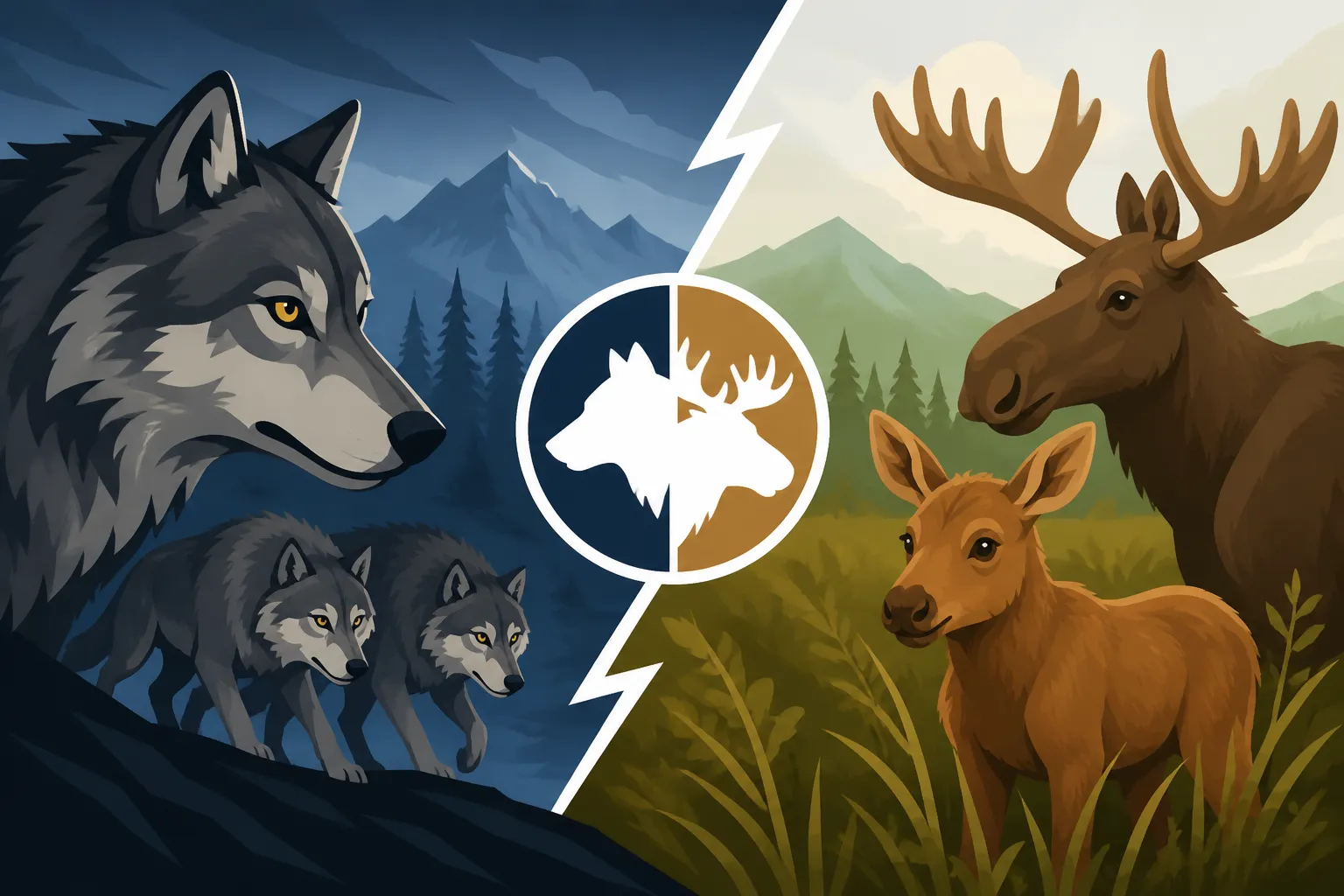
There's an undeniable draw to the vastness of Alaska, a place where nature's raw struggle for survival plays out daily. For anyone who has spent time in the bush, especially those hoping to catch a glimpse of a majestic moose, the question often arises: why are there so few calves around? It's a disheartening sight when you know a cow had twins just months ago, and now only one, or none, remains. This guide aims to pull back the curtain on one of the most significant factors in this dynamic – how wolves profoundly affect moose calf survival in Alaska, and what that means for the moose populations we cherish.
The Predator-Prey Dynamics in Alaska
Alaska is a land of extremes, where every species plays a critical role in a complex, often brutal, ecosystem. For moose, one of the most iconic animals of the Last Frontier, life is a constant balance between finding forage, surviving harsh winters, and evading predators. Wolves are among the most efficient and persistent of these predators, and their relationship with moose, particularly young calves, is a cornerstone of this wild landscape. It’s a natural cycle of life and death that shapes the health and resilience of both populations.
The Alaskan Ecosystem's Balance
The Alaskan wilderness functions as a vast, interconnected ecosystem, a testament to raw, untamed nature. Here, a dynamic balance exists between various species, from the mighty Alaska Moose: Where the Biggest Bulls Live to the elusive Wolves and Wolverine as Alaska Game Animals. Apex predators like wolves aren't just random killers; they're an integral part of this system, often playing the role of natural selection, culling the weak, old, or sick. This process, while appearing harsh, generally contributes to a healthier, more robust prey population in the long run. It ensures that the strongest genes continue, helping the moose herd adapt to its challenging environment.
However, this balance is rarely static. It’s a constantly shifting ledger influenced by environmental changes like climate and wildfire, the prevalence of disease, and of course, human presence and management. A particularly hard winter, for example, can weaken moose, making them more susceptible to predation, which in turn can lead to a temporary increase in wolf success rates. Understanding this fluid interaction is key to appreciating the role wolves play, especially when it comes to the most vulnerable members of the moose population: their calves.
The Vulnerability of Young Moose
Moose calves arrive in the world incredibly vulnerable, typically during the lush spring and early summer months when new growth provides both sustenance and some concealment. They are gangly, still developing their coordination, and completely reliant on their mothers for protection and nourishment. A newborn calf is a marvel of nature, capable of standing within hours, but its initial speed and endurance are no match for a swift predator. They're basically four-legged snacks in a world full of hungry mouths.
Their relatively small size compared to an adult moose makes them an accessible target for multiple predators. While a determined cow moose is a formidable defender, capable of delivering powerful kicks with her front legs, a single cow can be overwhelmed. A relatively small wolf pack, working together, can often outmaneuver or wear down even the most vigilant mother. The sheer energy expenditure required for a cow to constantly defend her calf also takes a toll, sometimes leaving her less able to feed efficiently.
This critical birthing period often coincides with the heightened activity of predators as they, too, are raising their young and facing increased caloric demands. The seasonal overlap creates a perilous window of vulnerability for moose calves, where their chances of survival are at their lowest. It's during these early weeks that the impact of wolves on Predation Pressure on Alaska Moose Calves is most keenly felt.
Specific Ways Wolves Impact Moose Calves
When we talk about wolves affecting moose calf survival, it's not always a straightforward scenario of a direct kill. Their influence extends to various aspects of a calf's life, from immediate danger to long-term stress. Wolves are sophisticated hunters, and their methods are honed by generations of adapting to Alaska’s challenging landscape.
Direct Predation: Hunting Strategies
Wolves are not just opportunistic feeders; they are highly intelligent, cooperative hunters with well-developed strategies. They don't just stumble upon calves; they actively seek them out, understanding that young moose are significantly easier prey than a full-grown bull or even a healthy cow. A wolf pack might split up to cover more ground, systematically sweeping through known calving areas, or they might work as a unit to isolate a cow and her calf. Their keen sense of smell and hearing allows them to locate young animals hidden in dense cover. Many serious hunters consult platforms like GoHunt for detailed analysis of game trends and population health before planning their expeditions, which often includes insights into predator activity in specific regions.
Common wolf hunting tactics for moose calves often involve a relentless testing of the mother's defenses. They might harass the pair, feinting attacks from different directions to try and separate the calf from the cow. Once separated, the calf becomes much easier to take down. Even if the calf stays close, the sheer persistence of a wolf pack, often working in relays, can eventually wear down both the mother and the calf. It's a grueling test of endurance and resolve, and often, the wolves prevail due to their numbers and stamina.
The numerical advantage of a wolf pack cannot be overstated. While a single wolf might hesitate to engage a determined cow, a pack of several individuals drastically increases the odds of a successful kill. They can surround the pair, block escape routes, and apply continuous pressure, making it incredibly difficult for the cow to protect her young. This consistent pressure means that even in areas with abundant moose, wolf predation can keep calf recruitment rates low, which directly impacts the number of moose that survive to adulthood.
Ultimately, this direct predation, while grim to consider, is a natural mechanism that contributes to the overall health of the moose herd. Wolves preferentially target the easiest prey, meaning the weakest or least vigilant calves, along with older or sick adults. This removal helps prevent the spread of disease and ensures that only the strongest individuals contribute to future generations, an essential aspect of natural selection in the wild.
Indirect Effects: Stress and Displacement
Beyond direct kills, the mere presence and activity of wolves can exert significant, indirect pressure on moose calf survival. Imagine being a cow moose with a newborn, constantly aware that a pack of wolves might be lurking nearby. This constant vigilance consumes an enormous amount of energy, energy that could otherwise be dedicated to foraging, recovering from birth, and producing nutrient-rich milk for her growing calf. The heightened stress can lead to a cascade of negative effects.
One major indirect effect is displacement. If wolf presence in prime calving habitat becomes too intense or frequent, cow moose might instinctively move their calves to less ideal areas. These alternative locations might offer poorer forage quality, increasing the nutritional stress on both mother and calf. They could also expose the calves to other dangers, such as increased bear predation or more difficult terrain that a young calf struggles to navigate. This forced relocation can reduce the calf's growth rate and overall health, making it more susceptible to future wolf encounters or other environmental challenges.
Repeated encounters or close calls with wolves, even if they don't result in a kill, can profoundly affect a calf's development and long-term survival prospects. A calf that is constantly on edge may not feed as efficiently, or rest as deeply, inhibiting its physical development. This can lead to a weaker, less robust calf that is less able to escape danger, less capable of withstanding harsh weather, and ultimately, more vulnerable to subsequent predation or other mortality factors. The psychological toll on the cow, too, can impact her future reproductive success.
Factors Influencing Wolf Predation Success
The success of wolves in preying on moose calves isn't a static constant; it's heavily influenced by a confluence of environmental conditions, the health and density of the moose population itself, and the characteristics of the wolf pack. It's a dynamic interplay that makes predicting outcomes challenging but understanding the mechanisms crucial.
Environmental Conditions and Habitat
Environmental factors play a massive role in the predator-prey dynamic. Consider the impact of deep snow in winter. While it doesn't directly affect spring-born calves, a hard winter weakens adult cow moose, meaning they're more likely to give birth to smaller, less robust calves in the spring. These calves are naturally less resilient and the mothers, being weaker, have less energy to dedicate to their defense. Furthermore, deep, crusted snow can give wolves a significant advantage with their larger paws and ability to travel more efficiently over treacherous terrain, allowing them to gain on struggling moose.
The specific type of habitat where moose calve also matters immensely. Dense willow thickets or heavy timber offer crucial concealment for newborn calves, making it harder for wolves to spot them. However, very open tundra areas, while offering less cover, might provide better visibility for a vigilant cow to spot an approaching wolf pack from a distance. Old burn scars, for instance, can initially provide excellent browse, supporting a healthy moose population, but over time, as Moose Habitat in Alaska Burn Scars evolves, the cover might change, altering the dynamics of calf vulnerability. Each landscape presents unique challenges and opportunities for both predator and prey.
The availability of alternative prey species is another significant environmental variable. If caribou herds are abundant, or Dall sheep populations are robust in adjacent areas, wolves might shift their focus, reducing the pressure on moose calves. For instance, the migration of large caribou herds can draw wolf packs away from moose ranges for extended periods. Conversely, when alternative prey is scarce – perhaps due to harsh winters, disease, or cyclical population lows – moose calves become a much more critical and targeted food source for wolf packs, intensifying their predation efforts.
Moose Population Density and Health
The density of the moose population itself can paradoxically influence calf survival rates. When moose populations are very dense, it might seem like there's an abundance of calves, but high density can also lead to increased competition for forage. This means less quality nutrition per moose, which can result in weaker cows and, consequently, smaller, less robust calves. These calves are inherently more vulnerable to predation, and their mothers may not have the energy reserves to mount an effective defense. It’s a classic case where more doesn't always mean stronger.
The overall health of the cow moose is, without question, paramount. A cow in peak physical condition, having fed well through the previous summer and autumn, is more likely to give birth to strong, healthy calves. She also possesses the strength and stamina to defend them fiercely against predators. In contrast, a malnourished or stressed cow will likely have weaker calves and fewer resources to dedicate to their protection, making her offspring prime targets for wolf predation. This vulnerability creates a crucial link between habitat quality, forage availability, and calf survival.
Disease within the moose population can further exacerbate their vulnerability to wolves. While wolves naturally help to cull sick animals, a widespread disease outbreak could significantly weaken a large segment of the moose population, including calves. This would dramatically increase the success rate of wolf predation, as even healthy-looking animals might be compromised. The interconnectedness of predator, prey, and environment is a constant reminder that health in one area impacts all others.
Wolf Pack Size and Hunting Experience
The size of a wolf pack has a direct and profound correlation with its hunting efficiency, particularly its ability to take down larger, more challenging prey like adult moose, and therefore, its success in preying on calves. Larger packs, as detailed in discussions around Wolf Pack Sizes in Interior Alaska, can employ more sophisticated and coordinated hunting strategies. They can surround prey, pursue it over longer distances, and overwhelm a defensive cow through sheer numbers, ultimately increasing their kill rate on calves. A solitary wolf might take an occasional calf, but a cohesive pack is a far more dangerous threat.
Experience within a wolf pack is another critical factor. Older, seasoned wolves teach younger pack members effective hunting techniques, demonstrating patience, strategy, and the best ways to approach and handle moose. A pack with several experienced hunters will almost always have a higher success rate on moose calves than a younger, less experienced pack still learning the ropes. This passing down of knowledge ensures that successful hunting traditions persist and evolve within the pack.
Furthermore, a pack's established territory and the level of competition from other predators, such as brown bears, also play a role. Wolf packs with clearly defined territories and less overlap with other large carnivores might have more consistent access to moose populations, leading to more predictable success on calves. Before embarking on a hunt, leveraging data from resources such as GoHunt can provide crucial insights into game management unit specifics, including predator-prey dynamics, allowing hunters to understand these complex interactions better.
Management Strategies and Human Influence
Understanding the wolf-moose dynamic is not just an academic exercise; it’s central to how wildlife is managed in Alaska. State agencies grapple with the complexities of maintaining healthy populations of both predators and prey, often navigating differing public opinions on the subject. Human influence, both through direct management and hunting, is undeniably a part of this intricate balance.
State Wildlife Management Approaches
Alaska's wildlife managers, primarily the Alaska Department of Fish and Game (ADF&G), constantly monitor moose and wolf populations. They employ a suite of tools, including intensive aerial surveys, sophisticated radio-collar studies, and detailed harvest data collected from hunters. This information is vital for understanding population trends, birth rates, mortality factors, and, crucially, the impact of wolf predation on moose calf survival. The goal is always to gather enough scientific data to make informed decisions for sustainable wildlife populations.
In specific Game Management Units (GMUs) where moose populations are struggling to meet management objectives – perhaps due to declining numbers or persistent low calf recruitment – more aggressive predator management strategies may be considered. This can include regulated wolf hunting and trapping, as outlined in regulations like Alaska Hunting Seasons and Tag Rules Explained. The aim of such interventions is often to temporarily reduce wolf numbers in a localized area, thereby giving moose calves a better chance of survival and allowing the moose population to rebound. These decisions are not taken lightly and are part of a broader adaptive management framework.
These management strategies are often subjects of public debate and contention, reflecting the diverse values people place on wildlife. However, the actions taken by the state are rooted in scientific data and are geared towards achieving specific, measurable population goals – whether that's for supporting subsistence harvests, providing recreational hunting opportunities, or simply ensuring healthy wildlife for viewing. It's a complex balancing act, with ongoing reviews and adjustments made by bodies like the Alaska Board of Game to ensure these strategies remain relevant and effective.
Hunter Influence and the Broader Picture
Hunters are a significant and often underestimated component of the predator-prey management equation in Alaska. Regulated hunting seasons for wolves, which might include tactics like Wolf Hunting Over a Winter Kill Site or using Predator Calling for Alaska Wolves and Wolverine, serve as a management tool. By harvesting wolves in specific areas, hunters can help to manage predator populations, particularly in regions where moose numbers are depressed and increased calf survival is desired. This direct influence can provide relief for moose populations struggling with high predation pressure.
Beyond direct harvest, hunters contribute invaluable data to wildlife agencies through their mandatory harvest reports. Every moose, caribou, or wolf taken under an Alaska Harvest Tickets, Registration Permits and Draw Permits provides critical information that biologists use to track population trends, monitor success rates, and assess the overall health of both prey and predator populations. Hunters, in essence, act as a network of field reporters, providing real-time data from remote corners of the state. GoHunt, a platform popular among many hunters, often features detailed guides and resources that help hunters comply with these reporting requirements and understand the regulations in various Alaska Game Management Units and How They Are Numbered.
It’s important to recognize that while wolves are a major factor, the overall picture of moose calf survival is influenced by a multitude of interconnected elements. Habitat quality, the presence of other predators like brown bears, disease outbreaks, and severe winter weather all play significant roles. Wolves are a crucial piece of the puzzle, but never the only piece. Understanding the full spectrum of Predation Pressure on Alaska Moose Calves requires a holistic view, acknowledging the complex, dynamic relationships that define the wild heart of Alaska.
Disclaimer
This article is for general informational purposes only and does not constitute professional advice. Laws, prices and regulations vary by location and change over time. Consult a qualified professional for guidance on your specific situation.