How Far Alaska Wolf Packs Range
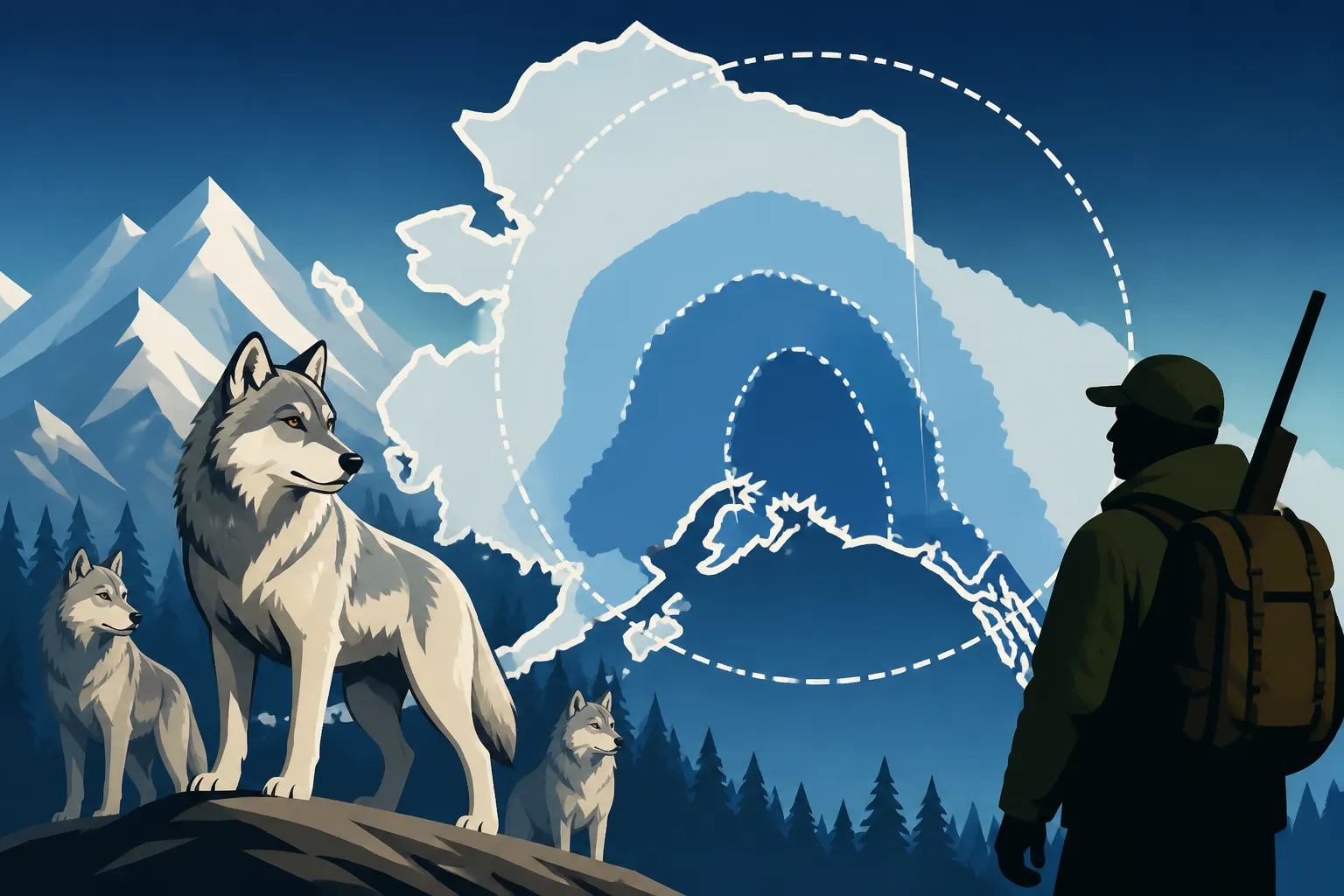
One of the most elusive and intriguing animals in the Alaskan wilderness is the wolf, and for many hunters, understanding their movements and habits is key to a successful experience. You might be wondering just how much ground a typical wolf pack covers in this vast state, and believe me, it's not a simple answer. This guide is here to shed light on the intricate world of Alaskan wolf packs, helping you grasp the dynamics of their territories and how that impacts everything from prey populations to hunting strategies.
The Intricate World of Alaska Wolf Pack Dynamics
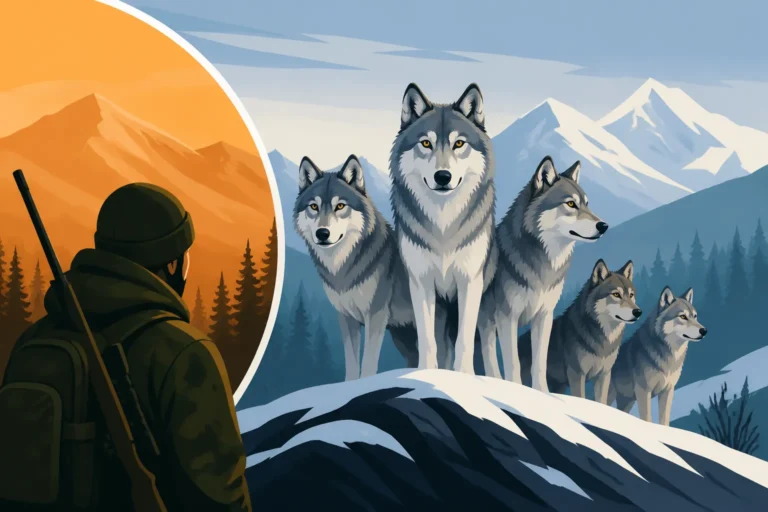
Wolf packs in Alaska are highly organized social units, far more complex than a mere group of animals. They operate within established territories, which are essentially their hunting grounds and homes. These territories aren't just random patches of land; they are vital to the pack's survival, providing access to food, denning sites, and safety. Understanding this fundamental structure is crucial for anyone keen on studying or hunting wolves.
Social Structure and Territoriality
A typical wolf pack usually consists of an alpha male and female, their offspring from previous years, and current pups. While pack sizes can vary greatly, from just a few individuals to more than a dozen, the core social bonds are incredibly strong. This tight-knit unit works together to hunt, raise young, and defend its territory. They communicate through a fascinating array of howls, growls, barks, and body language, constantly reinforcing their social hierarchy and alerting each other to threats or opportunities.
Territoriality is a cornerstone of wolf life. Each pack claims an area, often marking it with scent posts—urine, scat, and even scratching the ground—to warn other wolves to stay away. These boundaries aren't always hard lines drawn on a map, but rather a fluid concept understood by the resident pack and their neighbors. Encroachment by a rival pack can lead to fierce, sometimes fatal, conflicts, demonstrating just how important these established ranges are for their survival. Hunters who stumble upon fresh wolf sign, like tracks or scat, can often infer they're within an active pack's established range.
Why Pack Range Matters for Hunters
For the Alaska hunter, knowing about wolf pack ranges isn't just academic; it's practical. Wolves are incredible predators, and their presence—or absence—can significantly impact the behavior and distribution of other big game animals like moose and caribou. A pack actively hunting in an area can push prey species into new drainages or make them more wary. Conversely, if you're targeting wolves, understanding their range helps you predict their travel corridors, locate potential denning sites (which are always off-limits during hunting), or identify areas where they might spend more time.
Furthermore, wolf hunting and trapping seasons are often open across vast portions of Alaska, but tactics vary wildly depending on the terrain and local wolf densities. Knowing how a pack utilizes its range can inform your scouting efforts, helping you decide where to place a call or set a trap line. Alaska Wolf Trapping Versus Hunting Seasons delves into the regulatory differences between these activities, but understanding the pack's movements is foundational to both.
Key Factors That Dictate Wolf Pack Range Size
The question of "how far" a wolf pack ranges isn't fixed; it's a dynamic calculation influenced by a multitude of environmental and ecological factors. Alaska is a massive state with incredibly diverse habitats, and what holds true for a pack in the vast interior might be entirely different for one living on the fringes of a coastal mountain range.
Prey Abundance and Distribution
Hands down, the single biggest determinant of a wolf pack's range size is the availability and distribution of its primary prey. If moose or caribou are abundant and relatively stationary, a wolf pack might not need to travel as far to find its next meal. In areas with dense, stable prey populations, packs can afford to have smaller, more concentrated territories. For example, in a lush river bottom thick with willows and moose, a pack might find everything it needs within a few hundred square miles.
However, consider the migratory caribou herds, like the Western Arctic or Fortymile herds. These animals can travel hundreds of miles seasonally, and wolf packs that specialize in hunting them often follow suit. A pack linked to a migrating herd will naturally have an enormous range, sometimes encompassing thousands of square miles, simply because their food source is constantly on the move. When you're trying to locate a target species, or even wolves themselves, knowing what big game animal they primarily feed on gives you a huge clue about how expansive their movements might be. This is why knowing Fortymile Caribou Herd Range and Migration is so valuable.
Habitat Type and Topography
The physical landscape itself plays a massive role. Open tundra and vast boreal forests, characteristic of much of Interior Alaska, allow for long-distance travel. Wolves can move efficiently across relatively flat or rolling terrain, meaning their territories can stretch across impressive distances. In such environments, a pack might range anywhere from 500 to well over 1,000 square miles, with some extreme cases exceeding 2,000 square miles. These are the truly massive ranges where Wolf Pack Sizes in Interior Alaska are often the largest and their movements the most sweeping.
Contrast this with mountainous regions or areas with dense, old-growth timber. Here, travel is more arduous, and natural barriers like impassable mountain ranges, deep canyons, or large bodies of water can effectively limit a pack's movements. In these "rougher" habitats, ranges might be smaller, perhaps a few hundred square miles, simply because the effort required to traverse greater distances outweighs the benefit. Hunters recognize this; a wolf in dense spruce might be tougher to find than one crossing open tundra, but its movements within its smaller, more constrained range can sometimes be more predictable.
Human Activity and Seasonal Changes
Human presence, even in remote Alaska, can influence wolf pack behavior and range size. Areas with more roads, communities, or consistent hunting pressure can sometimes fragment wolf territories or push packs into more secluded, less accessible areas. While wolves are incredibly adaptable, persistent disturbance can lead them to avoid certain zones, effectively shrinking their usable range or forcing them to expand into less ideal habitat.
Seasonal changes also dramatically impact a pack's movements. Winter, with its deep snow and colder temperatures, can sometimes make travel more difficult, though wolves are incredibly well-equipped for it. However, the concentration of prey in wintering areas can sometimes lead to more localized hunting efforts. During the denning season in spring and early summer, packs will have a more restricted range centered around their den site, a period when they are particularly vulnerable and therefore protected by regulations. Come fall, as pups mature and prey begins to move, the pack's range will often expand again, reflecting increased hunting activity and wider exploration.
How Hunters Can Leverage Knowledge of Wolf Range
For those venturing into Alaska's wildlands, whether pursuing moose, caribou, or the wolves themselves, understanding pack ranges isn't just about curiosity—it's about strategy. Knowing these dynamics can significantly enhance your chances of success and deepen your appreciation for these intelligent predators.
Scouting for Active Pack Territories
Before you even set foot in the field, you can begin to research potential wolf territories. Modern mapping tools, like those offered by platforms such as GoHunt, allow you to study large swaths of public land, identifying key terrain features, drainages, and potential travel corridors. Look for areas with high concentrations of preferred wolf prey, like major caribou migration routes or dense moose browse. Scouting a Unit From Satellite Imagery Before You Fly is an excellent way to start this process, identifying pinch points, ridgelines, and open areas where wolves might travel or hunt.
Once in the field, active scouting for wolf sign becomes paramount. Look for tracks along riverbeds, gravel bars, old logging roads, or game trails. Pay attention to scent posts—urine or scat—especially on prominent rocks, stumps, or trail intersections. Howling at dusk or dawn can sometimes elicit a response, giving you a general idea of a pack's presence and direction. Remember that fresh sign indicates a pack is actively using that area, giving you valuable clues about their current range and movement patterns. Always be prepared with Downloading Offline Maps Before a Fly-In, as cell service is rarely available in prime wolf country.
Strategic Calling and Setup Locations
If your goal is to call in a wolf, understanding their range helps you choose the most effective setup. Wolves are highly intelligent and often wary, so simply howling anywhere isn't enough. If you've identified an active pack's territory, you can select calling locations that offer good visibility, allow the sound to carry, and ideally, are downwind of where you expect wolves to approach. Think about natural funnels, ridges overlooking valleys, or openings within dense timber.
For example, if you know a pack often travels a certain ridge line to intercept caribou, setting up along that ridge with a good vantage point might be highly effective. During winter, when prey is more concentrated, or if you find a recent kill site, Calling Wolves Off a Winter Kill can be a devastatingly effective tactic, as hungry wolves will be more inclined to investigate. Learning to mimic a distress call or a challenge howl requires practice, but doing it in an area you suspect is part of an active pack's range dramatically increases your odds. For more specific advice on calls, check out Predator Calling for Alaska Wolves and Wolverine.
Understanding Prey Behavior in Relation to Wolves
Lastly, a strong grasp of wolf pack range helps you predict the behavior of other big game. If you're hunting moose in an area where a large, active wolf pack is known to range, those moose are likely to be more alert, perhaps moving more frequently, or sticking to denser cover. This might mean adjusting your hunting strategy, opting for more still-hunting or carefully planned calling sequences rather than expecting animals to be unpressured.
Conversely, if you've done your research and found an area with historically lower wolf presence, the moose or caribou there might be slightly less wary, though no wild animal is ever truly "easy." Recognizing the interconnectedness of predator and prey within a given range is a powerful tool for any serious Alaska hunter. Many hunters rely on resources like GoHunt to analyze historical harvest data and habitat characteristics, helping them make more informed decisions about where to focus their efforts, whether for wolves or their primary prey.
Regional Variations in Alaska Wolf Range
Alaska is a land of extremes, and just as its ecosystems vary dramatically from region to region, so too do the typical home ranges of its wolf packs. What's normal for a pack living on the Arctic Slope might be unheard of for one deep in the rainforests of Southeast.
Interior Alaska's Vast Expanses
Interior Alaska, characterized by immense boreal forests, wide-open tundra, and major river systems like the Yukon and Kuskokwim, is home to some of the largest wolf ranges in the world. Here, packs often follow the migratory patterns of caribou herds. For example, a pack associated with the Fortymile Caribou Herd might traverse thousands of square miles over the course of a year, moving between summer calving grounds and wintering areas. In these vast, sparsely populated regions, human disturbance is minimal, allowing wolves to establish truly enormous territories.
Even packs that primarily target moose in the interior will have substantial ranges, often several hundred to a thousand square miles, due to the lower density of moose compared to more productive habitats further south. These are the wolves that epitomize the wild spirit of Alaska, traveling immense distances in search of food. Hunters in these regions often rely on aircraft for access, flying into remote Alaska Game Management Units and How They Are Numbered and then covering vast distances on foot, by ATV, or via float boat to intercept game.
Coastal Mountains and Island Ecosystems
Moving to Alaska's coastal regions, particularly areas like Southeast Alaska or the Kodiak Archipelago, the dynamics shift considerably. Here, dense rainforests, steep mountains, and numerous islands break up the landscape. While wolves are present, their populations are often less dense, and their ranges can be smaller, constrained by these geographical barriers and, in some cases, by the distribution of prey like Sitka blacktail deer or smaller moose populations.
On islands, a wolf pack's range is naturally limited by the coastline, though they are known to swim between islands. In mainland coastal areas, the rugged topography and heavy vegetation can make long-distance travel difficult, leading to more localized territories. Prey availability is also a factor; in areas with strong salmon runs, wolves might focus their efforts on fish during certain times of the year, potentially altering their movements compared to a pack relying solely on ungulates. While there might be fewer wolves overall in these areas, understanding their more confined ranges can be beneficial for hunters interested in species like Sitka Blacktail Deer of Alaska's Island Rainforest.
The Alaska Peninsula's Unique Challenges
The Alaska Peninsula offers another unique scenario. This long, narrow strip of land is famous for its massive brown bears and also supports significant populations of moose and caribou. Wolf packs here must contend with top predators like bears for food resources, and their ranges can be influenced by these interactions. The open, treeless landscape allows for relatively free movement, but the linear nature of the peninsula itself might lead to ranges that are long and narrow, rather than circular.
The table below offers a general comparison of typical wolf pack range sizes across different Alaskan habitats, based on observed patterns. Keep in mind that these are approximations, and individual pack behavior can always vary!
| Habitat Type | Primary Prey | Average Range Size (Square Miles) | Key Limiting Factors |
|---|---|---|---|
| Interior Tundra/Boreal Forest | Caribou (migratory), Moose, Dall Sheep | 500 – 2,000+ | Prey migration, vastness |
| Interior River Bottoms/Willow Flats | Moose, Beaver, Snowshoe Hare | 200 – 800 | Prey density, river systems |
| Coastal Rainforest/Mountains | Sitka Blacktail Deer, Moose, Salmon | 100 – 500 | Rugged terrain, water |
| Alaska Peninsula | Caribou, Moose, Brown Bear interactions | 300 – 1,000 | Linear landscape, bear density |
As you can see, there's no single answer to "how far." It's a complex equation based on ecology, geography, and the constantly shifting dynamics of the wild. But armed with this understanding, you're better equipped to interpret the landscape and the movements of Alaska's iconic wolves.
Disclaimer
This article is for general informational purposes only and does not constitute professional advice. Laws, prices and regulations vary by location and change over time. Consult a qualified professional for guidance on your specific situation.