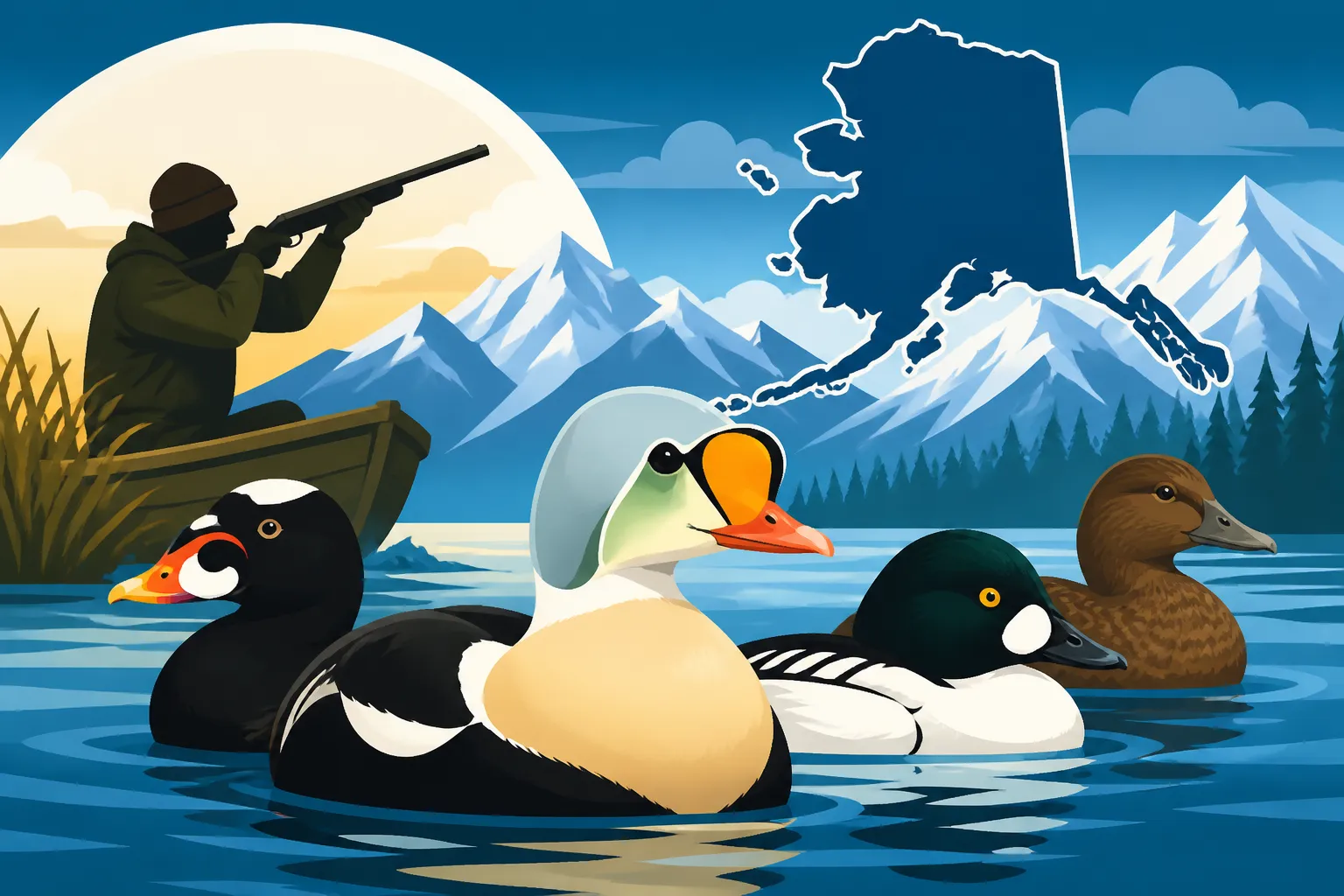
Sea Duck Species in Alaska Waters
For many hunters, the vast world of waterfowl conjures images of mallards cupping wings over a prairie pothole or honkers breaking the dawn stillness over a cornfield. But out here in Alaska, there’s an entirely different breed of bird, one that braves the frigid, often turbulent, saltwater environments of our endless coastlines: the sea duck. Often overlooked or simply misunderstood, hunting sea ducks offers a unique challenge and an incredible connection to Alaska's wild marine ecosystems. This guide will introduce you to the diverse sea duck species found in Alaska's bountiful waters, helping you identify them, understand their habits, and prepare for an unforgettable hunting adventure.
The Unique World of Alaska's Sea Ducks
Alaska isn't just known for its massive moose and grizzly bears; it's also a paradise for waterfowl enthusiasts, especially those drawn to the rugged beauty of sea duck hunting. Unlike their freshwater cousins, sea ducks have evolved incredible adaptations to thrive in the harsh coastal environments, making them a fascinating subject for both observation and the pursuit of game.
What Sets Sea Ducks Apart
Imagine a duck that can dive to incredible depths, often over 100 feet, to forage for shellfish, crustaceans, and marine worms. That's a sea duck. They possess a denser bone structure and powerful legs set further back on their bodies, giving them unparalleled underwater propulsion. This specialization means they rarely venture far from the ocean or large coastal estuaries, a stark contrast to dabbling ducks that frequent shallow ponds and rivers. Their diet, largely composed of marine invertebrates, also contributes to a distinct flavor profile that some hunters find highly desirable, while others approach with caution, focusing more on the experience of the hunt. They are tough birds, built for survival in rough seas and often challenging conditions, which translates into a robust, resilient quarry for hunters. The thrill of a sea duck hunt often lies not just in the shot, but in the entire experience of battling the elements, navigating rough waters, and appreciating the sheer tenacity of these birds.
Why Alaska is a Sea Duck Hotspot
When you look at a map of Alaska, one of the most striking features is its colossal coastline—longer than all the other states combined. This immense stretch of diverse marine habitat, from the icy Bering Sea to the stormy Gulf of Alaska and the intricate waterways of Southeast, creates an unparalleled haven for sea duck species. Alaska sits at the crossroads of major migratory bird flyways, serving as critical breeding grounds, staging areas, and wintering locales for millions of waterfowl. The sheer abundance of marine life in these cold, nutrient-rich waters provides an endless buffet for diving ducks. Different regions of Alaska offer distinct habitats, attracting specific species. For instance, the high Arctic coasts are critical for some of the eiders, while the protected bays and rocky shorelines further south draw in scoters and harlequins. This geographic diversity means that whether you're hunting near Kodiak, exploring the islands of Southeast, or venturing to the remote Aleutians, you're likely to encounter a rich variety of these hardy birds.
Key Sea Duck Species to Identify in Alaska Waters
Identifying sea duck species in the field can be a rewarding challenge, especially given their often-cryptic winter plumages and the sheer distance they are often viewed from. Knowing what to look for—size, shape, bill structure, and unique markings—is crucial, not just for success, but for respecting regulations, especially with protected species.
The Majestic Eiders: Kings of the Arctic Coast
Eiders are arguably the most iconic of Alaska's sea ducks, known for their large size, distinctive features, and often remote, northerly distributions.
- King Eider: These magnificent birds truly live up to their name, especially the breeding males with their vibrant, unmistakable orange frontal shield and prominent greenish-blue knob on their forehead. Females are a mottled reddish-brown. King Eiders are primarily found in Arctic and sub-Arctic waters, typically favoring offshore areas and often forming large rafts during migration and wintering. Their diet consists almost exclusively of mollusks and crustaceans, which they dive deep to acquire. Encountering a flock of King Eiders on a remote Alaskan coastline is an experience few hunters forget.
- Common Eider: While not as "regal" in appearance as the King Eider, the Common Eider is still a substantial bird. Males are striking with their black bodies, white backs, and a distinct green nape and black cap. Females are uniformly barred brown. These eiders have a distinctive wedge-shaped bill that flows smoothly into their forehead. They are found in coastal areas across the North Atlantic and Pacific, including the Aleutian Islands and parts of the Gulf of Alaska. They prefer rocky coastlines and sheltered bays where they can dive for mussels and other shellfish.
- Spectacled Eider: This species is a true gem and one of the most sought-after by birders, and strictly protected for hunters. The male's most striking feature is the large, white, goggle-like patches around its eyes, giving it its namesake "spectacled" appearance. They have a pale green head and a small, upturned bill. Females are mottled brown but also display the "spectacles." Spectacled Eiders are quite rare and have a very specific, remote distribution, primarily found in the shallow coastal waters of the Bering Sea and along the western and northern coasts of Alaska. They are largely dependent on specific marine habitats for feeding and breeding. It is illegal to hunt Spectacled Eiders due to their endangered status.
- Steller's Eider: The smallest of the eiders, the Steller's Eider is still a beautifully marked bird. Breeding males are quite colorful with a dark green head, white eye-patch, a pale blue-gray patch on the side, and a rich chestnut breast. Females are a dusky brown with a small, rounded head. They are often found in tight, cohesive flocks in shallow coastal waters, especially around the Aleutian Islands and parts of the Alaska Peninsula. They feed on a variety of small marine invertebrates. Like the Spectacled Eider, Steller's Eiders are a protected species and cannot be hunted.
Remember, positive identification is paramount when hunting any waterfowl, but especially with eiders due to the protected status of Spectacled and Steller's Eiders. Always be certain of your target.
Scoters: Dark Flyers of the Coastal Seas
Scoters are another prominent group of sea ducks in Alaska, known for their dark plumage and robust diving capabilities. They are often seen flying in long, undulating lines low over the waves or congregating in large rafts on the open water.
- Black Scoter: True to its name, the male Black Scoter is almost entirely black, with a distinctive bright yellow-orange knob at the base of its bill. Females are a dusky brown with pale cheek patches contrasting with a dark cap. These scoters are often found in relatively shallow coastal waters, feeding on mollusks and crustaceans. They have a distinctive whistling wingbeat and a somewhat clumsy-looking flight when taking off. They are common targets for sea duck hunters due to their widespread distribution.
- Surf Scoter: The Surf Scoter is easily identifiable by the male's striking white patches on its forehead and nape, which contrast sharply with its otherwise black body. Their bill is particularly large and colorful, often yellow, orange, and white, with a prominent black spot. Females are dark with two whitish spots on the face. They prefer rocky coastlines and turbulent surf zones, hence their name, where they dive for mussels, clams, and other invertebrates. They are strong fliers and often present a challenging shot.
- White-winged Scoter: The largest of the scoters, the White-winged Scoter is characterized by a prominent white patch on its secondary wing feathers, visible in flight and at rest. Males are black with a small white patch under the eye and a distinctive swelling at the base of an orange bill. Females are a dark brown with two vague white face patches and the white wing patch. They are strong divers, feeding on a wide array of marine organisms, and are found in both coastal and sometimes large freshwater environments during migration. They are widely distributed across Alaska's coastlines.
All three scoter species are generally legal to hunt in Alaska, offering exciting opportunities for hunters willing to brave the coastal conditions. Their dark plumage can make them blend into the waves, requiring a keen eye to spot incoming flocks.
Long-tailed Ducks and Harlequins: Diverse Coastal Dwellers
Beyond the eiders and scoters, two other captivating sea duck species regularly grace Alaska's waters, each with unique characteristics and preferred habitats.
- Long-tailed Duck (Oldsquaw): Known for its incredibly varied and beautiful seasonal plumages, and its distinct, vocal "ow-ow-ow" call, the Long-tailed Duck is a favorite among many sea duck enthusiasts. Males in breeding plumage sport a long, slender tail (hence the name), a white body, and dark patterns on their head and back. In winter, they become predominantly white with a black patch on the cheek. Females have shorter tails and less defined markings. These ducks are highly pelagic, meaning they spend much of their lives on open ocean, but they come to coastal waters and large lakes to feed. They are incredibly agile divers, feeding on crustaceans and small fish. They often fly in loose, scattered flocks.
- Harlequin Duck: If there's a fashion model among sea ducks, it's the Harlequin. Males are spectacularly patterned with intricate blue-grey, chestnut, and white markings, truly a work of art. Females are a more subdued dusky brown with a prominent white spot in front of the eye and another at the base of the bill. Harlequin Ducks are specialized residents of turbulent, fast-moving water, often found in rocky coastal areas where waves crash, or in swift-flowing mountain streams during breeding season. They feed on aquatic insects, small crustaceans, and fish eggs, which they pluck from under rocks. These birds are a challenging quarry due to their preference for rough water and their wary nature, but taking a drake Harlequin is a bucket-list achievement for many waterfowl hunters.
Both Long-tailed Ducks and Harlequin Ducks are legal to hunt in Alaska, providing some of the most striking trophies for the taxidermy shop and challenging hunts in dynamic coastal environments.
Hunting Alaska's Sea Ducks: Challenges and Rewards
Hunting sea ducks in Alaska is not your typical marsh hunt. It demands respect for the ocean, robust gear, and an understanding of unique tactics. It's a true adventure that tests your mettle.
Gear and Tactics for Saltwater Hunting
First and foremost, a reliable boat is essential. Depending on the conditions you plan to face, this could range from a stout skiff capable of handling chop in a protected bay to a larger, offshore-capable vessel for more open waters. Safety gear, including personal flotation devices (PFDs), a marine radio, a GPS, and an emergency beacon, is non-negotiable. The ocean is unforgiving, and conditions can change rapidly. When it comes to decoys, sea duck hunting often calls for large spreads. These birds are drawn to numbers, and spreading out 50 or more diver decoys, sometimes even mixed with silhouettes of eiders or scoters, can be very effective. Many hunters opt for specialized longline rigs to manage large numbers of decoys in strong currents.
Shotgun choice is usually a 12-gauge, capable of handling magnum loads. Steel shot is a federal requirement for all waterfowl hunting, and for sea ducks, larger shot sizes like BB or #1 are often preferred due to their tough constitution and often longer shooting distances. You'll want warm, waterproof clothing, stout waders (often chest waders), and layers that can withstand freezing spray, wind, and rain. A good quality dry bag for electronics and spare clothes is also critical. Always be aware of the tides and currents; what might be calm at high tide could be a raging torrent or an exposed mud flat at low tide. For those looking to hunt from a boat, our article on Boat-Based Deer Hunting on Alaska's Island Coastlines offers some great insights into marine safety and navigation that translate well to sea duck hunting.
Regulations and Conservation
Like all hunting in Alaska, sea duck hunting is subject to both federal and state regulations. These include specific season dates, daily bag limits, and possession limits that vary by species and region. It's vital to consult the current Alaska hunting regulations booklet before planning any hunt. For example, some species of eiders, as mentioned earlier, are fully protected and cannot be harvested. Hunters must also possess a valid Alaska hunting license and a federal migratory bird hunting and conservation stamp (duck stamp). The importance of positive identification cannot be overstated—always be sure of your target. Resources like GoHunt are excellent for researching regulations specific to the areas you plan to hunt, often providing up-to-date information that can be critical for staying legal. Understanding the rules helps ensure these incredible opportunities remain for future generations. For a broader overview of how hunting seasons and tag rules work in Alaska, check out our guide on Alaska Hunting Seasons and Tag Rules Explained.
Planning Your Sea Duck Adventure
An Alaskan sea duck hunt requires diligent planning, often more so than a land-based big game hunt, due to the unique challenges of the marine environment.
Where to Find the Ducks
Alaska's vast coast offers numerous hotbeds for sea ducks. Southeast Alaska, with its intricate network of islands and protected channels, is excellent for Harlequin Ducks, Surf Scoters, and Long-tailed Ducks. Prince William Sound also holds good numbers of these species, particularly in its many bays and inlets. For those chasing Common Eiders, the Kodiak Archipelago and the Aleutian Islands offer prime opportunities. Further north, the Bering Sea coast and Arctic Ocean are the domain of King Eiders and, if you're lucky enough to spot them (though remember their protected status), Spectacled Eiders. Each region presents its own logistical challenges and requires different boat access or transporter services. A great place to start your research on coastal hunting can be found in our deep dive into Hunting Alaska's Southeast Islands by Boat. Also, if you're thinking of focusing on the Kodiak region, our piece on Kodiak and Afognak Island Hunting Access will be very helpful.
Working with a Transporter or Going DIY
For many, particularly non-residents or those without extensive saltwater experience, hiring a transporter service or even a fully guided hunt is the safest and most effective way to experience Alaska sea duck hunting. Transporters can drop you off at remote coastal camps, often by boat or floatplane, providing essential logistical support. You are still responsible for your own hunting, gear, and camp operations. Our article Alaska Transporters and What They Legally Provide breaks down what these services entail. If you're considering a more comprehensive experience, a fully guided hunt will provide the boat, decoys, guide, and often meals and lodging. For certain species like brown bear, a nonresident must use a guide or be accompanied by a second-degree relative, but for sea ducks, nonresidents can typically hunt unguided. You can read more about guided vs. unguided options in Hiring an Alaska Registered Guide-Outfitter.
Going DIY requires significant planning, including bringing your own boat or chartering one, knowing how to read marine charts, understanding local weather patterns, and being completely self-sufficient. This route is often more budget-friendly but demands a high level of experience and preparedness. Whether guided or DIY, consider building extra days into your schedule for weather delays, as explained in Building Extra Days Into a Fly-In Schedule. No matter how you choose to hunt, always prioritize safety. If you're flying into a remote camp, understanding how to work with your air taxi is paramount, so check out Fly-In Hunting: Working With an Alaska Transporter Pilot. Even if you're on your own, maintaining communication with a check-in plan and a reliable satellite device like an InReach, as discussed in InReach Check-In Schedules for Solo Hunts, is a lifesaver. GoHunt's resources can also help you connect with reputable transporters or research self-guided opportunities by providing detailed information on various hunting units and potential access points.
Comparison of Key Alaska Sea Duck Species
| Species | Primary Identifying Features (Males) | Typical Habitat | Common Group Size | Hunting Status |
|---|---|---|---|---|
| King Eider | Large orange frontal shield, green nape, black body | Arctic/sub-Arctic offshore waters | Large rafts | Legal |
| Common Eider | Wedge-shaped bill, black cap, white back, green nape | Rocky coastlines, sheltered bays (Aleutians, Gulf of Alaska) | Moderate to large | Legal |
| Spectacled Eider | Large white "goggles" around eyes, pale green head | Shallow Bering Sea coastal waters | Small groups | PROTECTED |
| Steller's Eider | Smallest eider, dark green head, white eye-patch, chestnut breast | Shallow coastal waters, Aleutian Islands | Small, tight flocks | PROTECTED |
| Black Scoter | All black, yellow knob on bill, distinctive whistling flight | Relatively shallow coastal waters | Moderate to large | Legal |
| Surf Scoter | White forehead/nape patches, large colorful bill, black body | Rocky coastlines, turbulent surf zones | Small to moderate | Legal |
| White-winged Scoter | White wing patch (visible at rest/flight), black body, white eye-patch | Coastal and large freshwater bodies | Moderate to large | Legal |
| Long-tailed Duck | Long pointed tail, complex seasonal plumage, very vocal | Open ocean, coastal waters, large lakes | Loose flocks | Legal |
| Harlequin Duck | Intricate blue-grey, chestnut, white patterns, small bill | Turbulent rocky coasts, swift mountain streams | Small groups | Legal |
Disclaimer
This article is for general informational purposes only and does not constitute professional advice. Laws, prices and regulations vary by location and change over time. Consult a qualified professional for guidance on your specific situation.