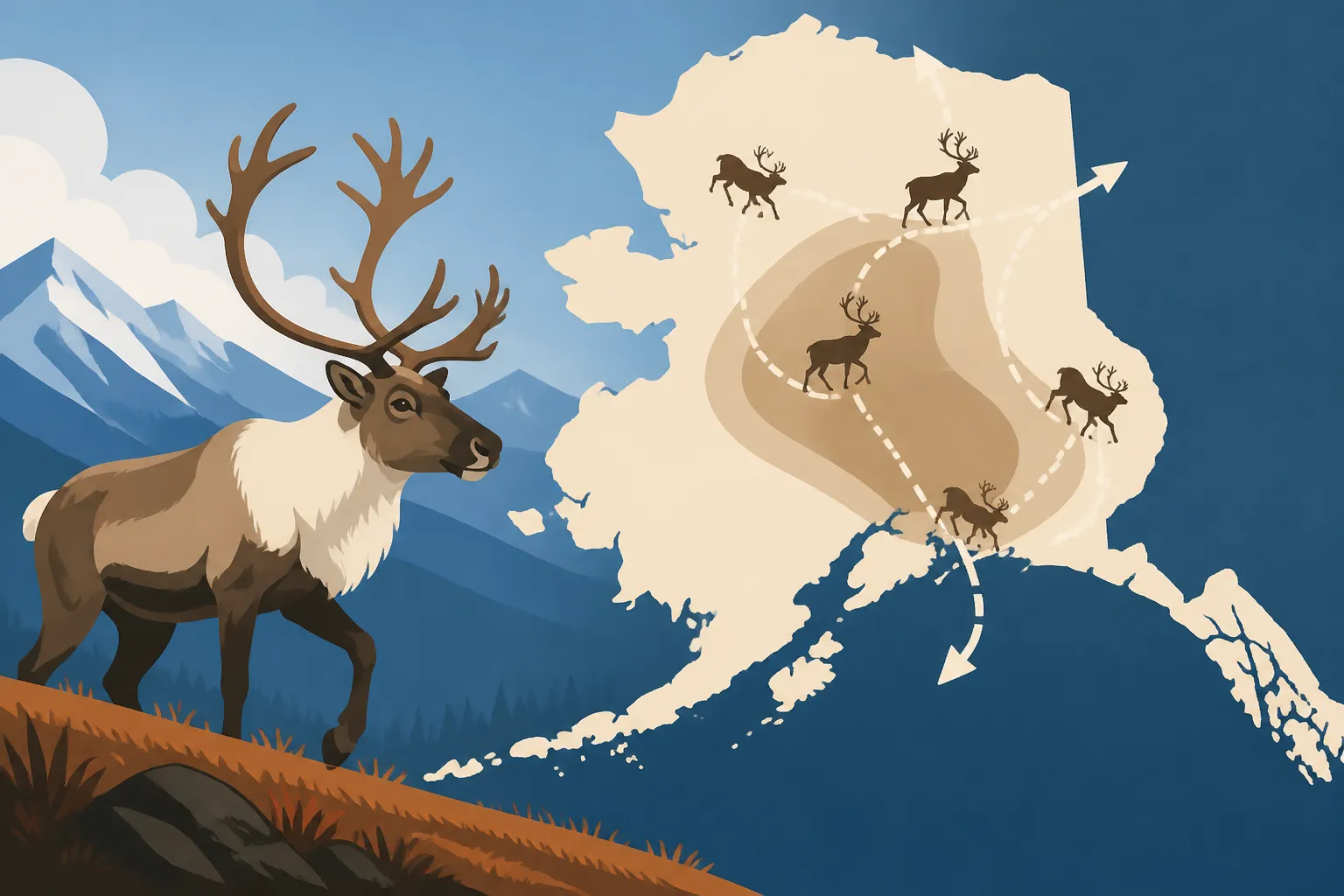
Fortymile Caribou Herd Range and Migration
The unpredictability of caribou movements can be one of the most frustrating challenges for any hunter hoping to fill a tag in Alaska. One moment they're there, the next they've vanished over the horizon. This is especially true when you're pursuing an iconic, wide-ranging herd like the Fortymile. This comprehensive guide will pull back the curtain on the Fortymile Caribou Herd's vast range and complex migration patterns, offering insights into their behavior and how to approach hunting them effectively.
Understanding the Fortymile Caribou: A Living Legacy
A Legacy of Resilience
The Fortymile Caribou Herd isn't just any group of animals; it's a living symbol of the Alaskan and Yukon wilderness, boasting one of the longest and most storied histories of any caribou population in North America. For generations, this herd has roamed the vast landscapes of interior Alaska and western Yukon, experiencing dramatic population swings that reflect the harsh realities of their environment. Back in the early 1900s, this herd was truly massive, numbering in the hundreds of thousands, a sight that must have been absolutely breathtaking to behold. Can you imagine the sheer scale of that migration, caribou stretching as far as the eye could see?
However, like many wildlife populations, the Fortymile faced severe declines, dropping to a mere 5,000-10,000 animals by the mid-20th century due to a combination of factors including overhunting, habitat changes, and increased predation. This period was a real wake-up call for wildlife managers and local communities alike. But through dedicated conservation efforts, including strict harvest limits, predator management, and robust research, the herd has made a remarkable comeback. Today, the herd stands strong, fluctuating between 50,000 and 70,000 animals, a testament to what collaborative conservation can achieve. It's a reminder that even in the face of immense challenges, these wild populations can recover with thoughtful management and respect for their needs.
Population Dynamics and Management Goals
Managing a caribou herd that spans international borders and vast wilderness areas is an incredibly complex undertaking. The Fortymile Caribou Herd is co-managed by the Alaska Department of Fish and Game (ADF&G) and the Yukon Department of Environment, along with significant input from local communities, federal agencies, and various stakeholders. Their primary goal is to maintain a healthy, sustainable herd that can continue to provide subsistence, recreational, and commercial hunting opportunities, while also recognizing its ecological importance. This often means balancing the desires of hunters with the biological needs of the caribou, which isn't always easy.
Population dynamics are constantly monitored through aerial surveys, radio-collaring studies, and hunter harvest reports. These data help biologists understand calving rates, survival rates, and migration fidelity, which in turn inform management decisions, such as setting annual quotas and season dates. For instance, if calving success is low for a few years, managers might reduce harvest opportunities to allow the herd to rebuild. These decisions are critical, affecting everything from Fortymile Caribou Quota for the Season to specific zone openings. It’s a delicate dance, always striving for that sweet spot where both the herd and its users can thrive.
The Vast Range of the Fortymile Herd: Where They Roam
Geographic Extent: Alaska and Yukon Overlap
One of the most defining characteristics of the Fortymile Caribou Herd is its incredibly expansive range, which effortlessly crosses the invisible line separating Alaska from Canada's Yukon Territory. This herd truly embodies the spirit of a borderless wilderness animal, utilizing hundreds of thousands of square miles of boreal forest, tundra, and mountain terrain. For hunters, this transboundary movement adds a layer of complexity; what might be an open season on one side of the border could be a closed area on the other, or regulations might differ significantly. Understanding this vast geographical spread is crucial, especially when planning a hunt. Many online resources, like those offered by GoHunt, provide detailed maps and data that illustrate this cross-border movement, helping hunters anticipate where the herd might be.
The core range of the Fortymile stretches from the White Mountains National Recreation Area in Alaska, eastward through the Yukon-Charley Rivers National Preserve, and deep into the rugged landscapes of the Yukon Territory, including areas around Dawson City. This means they traverse an incredible diversity of ecosystems, from dense spruce forests to open alpine tundra. Imagine the resilience these animals must possess to navigate such varied terrain and extreme weather conditions. Their adaptability is truly remarkable, allowing them to exploit different food sources and escape pressure across this enormous territory.
Key Summering and Wintering Grounds
Throughout the year, the Fortymile Caribou Herd relies on distinct areas for specific needs, cycling between summering and wintering grounds as dictated by the seasons. Their summer range typically encompasses higher elevations and open tundra areas where they can feed on a bounty of fresh vegetation, like sedges, grasses, and forbs, that emerge after the snowmelt. These open landscapes also offer some relief from the incessant swarms of mosquitoes and other biting insects, which can be a significant nuisance for caribou.
As winter approaches and snow begins to accumulate, the herd shifts its focus to more sheltered areas, often within the boreal forest. Their wintering grounds are usually characterized by an abundance of lichens—a critical food source during the lean months—found on the forest floor or hanging from trees. These areas also provide some thermal cover, shielding them from the brutal arctic winds and deep snow. The herd often concentrates in vast tracts of old-growth spruce and birch forests, particularly in parts of the Yukon-Charley Rivers National Preserve and sections accessible via The Taylor Highway and Fortymile Country. Understanding these seasonal preferences is key to predicting where the caribou might be at any given time, though as we'll discuss, predicting exact locations is always a gamble.
Annual Migration Patterns: Following the Fortymile's Rhythms
Spring Calving and Summer Foraging Movements
The annual migration of the Fortymile Caribou Herd is one of nature's most impressive spectacles, a primordial journey driven by the fundamental needs of survival and reproduction. As winter's grip begins to loosen and the first hints of spring emerge, the pregnant cows embark on a journey towards their traditional calving grounds. These specific areas, often characterized by low-lying, well-drained tundra ridges, offer a critical combination of early-emerging forage and some degree of isolation from predators. The timing of this migration is dictated by snowmelt and the availability of nutrient-rich green-up, which is vital for the cows to produce milk for their newborn calves.
After calving, the herd gradually coalesces, with mothers and calves joining larger groups. Throughout the summer, these aggregations move across the vast tundra and alpine regions, constantly seeking out fresh forage. These movements are less about long-distance travel and more about opportunistic grazing, taking advantage of the fleeting abundance of arctic vegetation. They might spend weeks in a particular basin, then suddenly move miles to another in search of better feed or to escape insect harassment. This period is crucial for putting on fat reserves, which will be essential for surviving the coming winter and the rigors of the fall rut.
Fall Rut and Wintering Migration
As the days shorten and the tundra transforms into a fiery tapestry of reds and golds, the caribou herd begins its fall migration, leading up to the intense period of the rut. The bulls, having spent the summer growing magnificent antlers, become increasingly restless and aggressive, ready to compete for breeding rights. The location of the rutting grounds can vary from year to year, influenced by where the herd happens to be during this critical time. During this phase, the caribou are often less wary and more focused on breeding, making them a target for hunters, particularly when Caribou Antler Shedding and Bull Identification is a key skill for ensuring a legal harvest.
Following the rut, as snow deepens and temperatures plummet, the entire herd undertakes its final major migration of the year: the move to wintering grounds. This is often the longest and most directed phase of their journey, as they head to those lichen-rich boreal forests we discussed earlier. The timing and specific routes of this winter migration are highly variable, dependent on snow depths, the availability of accessible forage, and prevailing weather patterns. It's during this time that hunters often try to intercept them, knowing that large numbers of caribou will be moving through specific corridors. However, this unpredictability can also lead to great frustration, as a herd might simply bypass an area entirely, leaving hunters with empty hands.
Unpredictability in Movement
If there's one constant about caribou migration, it's its unpredictability. Unlike some other migratory species that follow relatively fixed routes, caribou are notoriously fickle. One year, they might pass directly through an area, offering incredible hunting opportunities, while the next year they could be miles away, leaving bewildered hunters scratching their heads. This variability is driven by a complex interplay of factors, including localized weather patterns, snow conditions, available forage, and even predator pressure.
For hunters, this means relying solely on past experiences or old maps can be a recipe for disappointment. Real-time information, often gleaned from satellite tracking data shared by ADF&G or through communities like GoHunt, becomes invaluable. Being prepared to be flexible, to move camp, or to change your hunting strategy on the fly is not just an advantage; it's a necessity. It’s why many experienced Fortymile hunters prioritize skills like Scouting a Unit From Satellite Imagery Before You Fly and being adept at Glassing the Alaska Range: Finding Game Before You Move to quickly adapt to the herd’s latest movements. The caribou truly dance to their own rhythm, and to succeed, you have to learn to dance with them.
Factors Influencing Fortymile Migration: Weather, Food, and Predators
The Role of Snow and Ice
In a subarctic environment like Interior Alaska and the Yukon, snow and ice are far more than just winter phenomena; they are powerful drivers of caribou migration. Deep snow can be a major impediment, making it incredibly difficult for caribou to travel and, more importantly, to access their preferred forage, especially ground lichens. When snow crusts over due to freezing rain or melt-freeze cycles, it can create an impenetrable barrier, essentially locking away food sources and forcing the herd to move to areas where snow is softer or shallower. This is why a mild winter can mean a more dispersed herd, while a harsh, deep-snow winter often forces them into tighter, more concentrated bands in specific wintering areas.
Conversely, a late spring melt or heavy spring snows can delay the cows' journey to calving grounds, potentially impacting calf survival rates. Caribou are remarkably adapted to snow, with broad hooves that act like snowshoes, but even they have their limits. Hunters often pay close attention to snow forecasts and recent snow reports, understanding that these conditions directly influence where the caribou will be and how easily they can move. This knowledge can be the difference between finding a herd or wandering through empty country.
Forage Availability and Habitat Quality
The search for food is perhaps the most fundamental driver of caribou movement, dictating both their short-term foraging decisions and their long-term migratory routes. Caribou are herbivores with a specialized diet, and their nutritional needs change throughout the year. In summer, they crave protein-rich green vegetation, while in winter, lichens become their primary sustenance. The quality and availability of these forage resources across their vast range play a critical role in shaping their movements.
Factors like wildfires, which can temporarily destroy lichen beds but also promote new growth of shrubs and forbs, can alter habitat over time, potentially shifting migration corridors or wintering areas. Overgrazing in a particular area can also force the herd to seek greener pastures (or more lichen-rich forests), even if it means moving further or into less traditional zones. This constant evaluation of "where is the best food right now?" is at the heart of their nomadic existence. It’s a dynamic landscape, and the caribou are constantly responding to it.
Predation Pressure and Human Disturbance
While weather and food are primary drivers, predation pressure also significantly influences caribou migration patterns, particularly concerning vulnerable calves and during periods when the herd is more dispersed. Wolves are the primary natural predators of caribou in this region, and their presence can certainly steer herd movements. Caribou often attempt to "dilute" their risk by forming large aggregations, making it harder for a single wolf or pack to target an individual. This is particularly noticeable during calving, when mothers try to find areas with fewer predators, and during migration, when large groups offer safety in numbers.
Human disturbance, including hunting pressure, can also cause caribou to alter their routes or shy away from certain areas. While hunting is a vital part of game management and a cultural tradition, excessive pressure in specific zones can cause caribou to become warier and move more frequently. This is why regulations often include specific areas or seasons, such as Fortymile Bull-Only Bag Limit areas, to manage pressure and ensure sustainable harvest while minimizing disruption to the herd's overall health and movement. Striking that balance is always a challenge for wildlife managers.
Hunting the Fortymile Herd: Navigating Seasons and Access
Permit Systems and Quota Management
Hunting the Fortymile Caribou Herd is a highly sought-after opportunity, but it's also carefully managed to ensure the long-term health and sustainability of the herd. This often involves a permit system, particularly for non-residents or when the herd population is at a lower threshold. For residents, harvest tickets or registration permits are common. These permits are crucial for ADF&G and Yukon wildlife managers to monitor harvest levels and ensure that the total number of caribou taken doesn't exceed sustainable limits. When population numbers are lower, or during specific times of the year, draw permits may be implemented to control the number of hunters.
The management strategy often includes specific quotas, which can be broken down into various categories like bull-only, cow-and-calf, or general harvest. These quotas are dynamic, meaning they can change from year to year based on the latest population surveys and biological data. For example, if surveys indicate a strong breeding year, the Fortymile Fall and Winter Quota Split might be adjusted to allow for a slightly larger harvest. It’s absolutely essential for hunters to stay on top of the most current regulations, which can be found on the ADF&G website or through reliable sources like GoHunt, because things can, and often do, change at short notice. Missing a reporting deadline or misunderstanding permit requirements can quickly turn an exciting hunt into a frustrating legal issue.
Access Points and Logistics for Hunters
Given the immense size of the Fortymile Caribou Herd's range, accessing prime hunting areas requires careful planning and often significant logistical effort. While some portions of the range are accessible by road, particularly off the Taylor Highway or the Steese Highway, much of the true wilderness hunting requires aircraft support. Fly-in hunting is a common method for reaching remote areas, often involving a bush plane landing on a gravel bar or a floatplane on a remote lake. This adds a considerable layer of complexity and cost, but it also opens up vast, less-pressured areas.
For those planning a fly-in hunt, securing a reliable air taxi service is paramount. You'll need to coordinate drop-off and pick-up dates, understand weight restrictions, and have contingency plans for weather delays. Some hunters utilize ATVs or UTVs on designated trails to reach more distant areas, particularly along the ATV Access Tactics on Alaska's Denali Highway corridors, but always be mindful of specific regulations regarding motorized access. It's not uncommon for hunters to backpack deep into the backcountry, combining the challenges of Alpine Navigation Without Cell Service with the physical demands of packing heavy loads. No matter your chosen method, detailed planning, navigation skills, and a robust communication strategy, like an InReach device for check-ins, are non-negotiable for a safe and successful Fortymile hunt.
Understanding Fortymile Zones and Openings
To manage the harvest effectively across such a vast and dynamic range, the Fortymile Caribou Herd management area is often divided into various zones, each with its own specific regulations, season dates, and sometimes unique permit requirements. These zones are designed to distribute hunting pressure, respond to local caribou concentrations, and protect specific segments of the herd, such as calving cows. The challenge for hunters is that these zones and their opening/closing dates can be highly fluid, responding quickly to herd movements and harvest quotas.
For instance, the ADF&G might announce Fortymile Zone Openings and Delays via emergency order, sometimes with very little lead time. One zone might open for a week, close, and then another opens, or a zone might be designated as "bulls only" when another allows for any caribou. This means constant vigilance is required from hunters to stay legal and capitalize on opportunities. Keeping an eye on state websites, local news, and community forums, or even investing in a service like GoHunt that aggregates this real-time information, is absolutely crucial. Never assume that what was open last year, or even last week, will be open today. Always double-check before heading into the field, especially for the Federal Fortymile Winter Hunt Opening Date or specific early-season opportunities.
| Fortymile Caribou Management Zone | Typical Access Methods | Common Season Dates (Approx.) | Key Restrictions/Notes |
|---|---|---|---|
| Zone 1 (Steese Highway/Taylor Highway) | Road, ATV | Late August – September | Often quota-based, frequently closes early. |
| Zone 2 (Yukon-Charley Rivers) | Fly-in, Boat | Late August – September | Remote, fewer hunters, often longer seasons. |
| Zone 3 (White Mountains/South) | Fly-in, ATV | September – October | Mix of terrain, often subject to early closures. |
| Zone 4 (Winter Range Core) | Snowmachine (winter), Fly-in | November – March | Primarily for winter subsistence/resident hunts. |
Note: Season dates and restrictions are highly variable by emergency order. Always consult current ADF&G regulations, especially for specific Units Open in the Federal Fortymile Winter Hunt.
Conservation and Management: Protecting a Legacy
Interagency Cooperation
The successful management of the Fortymile Caribou Herd is a remarkable example of interagency and international cooperation. Because the herd's range crosses the Alaska-Yukon border, collaboration between the Alaska Department of Fish and Game (ADF&G) and the Yukon Department of Environment is absolutely essential. These agencies work hand-in-hand, sharing data from aerial surveys, radio-collar studies, and harvest reports to get a comprehensive picture of the herd's health and movements. This partnership extends to setting consistent management objectives and, where possible, coordinating hunting regulations to avoid conflicting impacts on the herd.
Beyond the state and territorial agencies, various federal entities like the National Park Service (managing Yukon-Charley Rivers National Preserve) and the Bureau of Land Management also play a crucial role, particularly concerning habitat management and access on their respective lands. Local communities, Native corporations, and advisory committees are also integral to the decision-making process, ensuring that traditional knowledge and local perspectives are incorporated. It's a truly multi-faceted effort, recognizing that no single entity can effectively manage a resource as vast and mobile as the Fortymile Caribou Herd alone. This complex interplay helps manage all of Caribou Herds of Alaska and How They Move.
Challenges and Future Outlook
Despite the herd's impressive recovery, managing the Fortymile Caribou Herd still presents significant challenges. Climate change introduces a layer of uncertainty, with potential impacts on snow conditions, vegetation growth, and the timing of seasonal events that could disrupt migration patterns and forage availability. Increased human activity, including mining exploration and expanded recreational use, can also create new pressures on sensitive habitats and traditional migration corridors.
Another ongoing challenge is balancing the diverse interests of all stakeholders—subsistence users, resident hunters, non-resident hunters, wildlife viewers, and conservationists. Each group has valid perspectives and needs, and finding common ground is not always easy. However, the collaborative spirit that has driven the herd's recovery remains strong. Ongoing research, adaptive management strategies, and continued public engagement are vital for ensuring the Fortymile Caribou Herd continues to thrive. The legacy of this resilient herd depends on our collective commitment to its future, allowing generations to come to witness and appreciate the magnificent migrations of these iconic animals.
Disclaimer
Please remember that hunting regulations, seasons, and access rules in Alaska are subject to change, sometimes on short notice via emergency order. Always consult the most current Alaska Department of Fish and Game (ADF&G) regulations and any applicable federal land agency rules before planning or undertaking any hunting activity. This guide is for informational purposes only and should not be considered a substitute for official regulatory documents.