Hunting Off the Glenn Highway Near Sheep Mountain
For many hunters, the dream of an Alaska hunt conjures images of remote fly-in adventures, deep in the untouched wilderness. But the reality for many of us, especially those juggling jobs and families, is that road-system hunting is far more accessible, if not without its own unique challenges. This guide is all about tackling those challenges head-on, specifically focusing on how to find success hunting off the Glenn Highway in the stunning, rugged country around Sheep Mountain. We'll dive into the species you can find, the specific access points, and the tactics that will help you make the most of your road-accessible Alaskan hunting trip.
Understanding the Landscape Around Sheep Mountain
The area surrounding Sheep Mountain, a prominent landmark visible from the Glenn Highway, offers a fascinating blend of diverse Alaskan ecosystems, from broad river valleys to high alpine ridges. It's a landscape that demands respect and a keen understanding of its nuances if you hope to find success. You're not just driving down a paved road; you're on the edge of truly wild country.
Geographic Context and Terrain Features
Sheep Mountain itself is a part of the vast Talkeetna Mountains, which meet the Chugach Mountains to the south, creating a spectacular, often intimidating, backdrop to the Glenn Highway. The highway itself runs through the Matanuska River valley, flanked by these immense ranges. This means your hunting opportunities span a wide vertical range: from dense spruce and willow thickets along the river bottom, through transitional timberline areas, and ultimately into steep, rocky alpine terrain far above the trees.
The terrain here is notoriously rugged. While you might spot a sheep from the comfort of your vehicle on a distant ridge, reaching that ridge is an entirely different matter. Expect steep ascents, loose shale and scree slopes, and potentially treacherous creek crossings. Below timberline, dense alders and devil's club can create impenetrable walls, making travel slow and exhausting. It's not uncommon to gain thousands of feet in elevation over just a couple of miles from the road. This rapid change in elevation also means rapid changes in vegetation and, consequently, in game animal habitat.
The Influence of Weather and Microclimates
One of the biggest frustrations and challenges of hunting anywhere in Alaska, and especially in mountain country like Sheep Mountain, is the unpredictable weather. A clear, calm morning can quickly transform into a howling gale with driving rain or snow, even in August or September. The mountains create their own microclimates. What's happening down in the Matanuska Valley might be completely different from conditions higher up on the ridges. Fog can roll in quickly, reducing visibility to mere yards, which can be disorienting and dangerous in steep terrain.
This means being prepared for everything. You need rain gear that genuinely holds up to sustained downpours, warm layers for sudden temperature drops, and reliable navigation tools, because cell service is definitely not guaranteed. Alpine Navigation Without Cell Service is a very real concern here. The weather doesn't just impact your comfort; it dictates game movement, visibility for glassing, and your overall safety and ability to move through the country. Don't underestimate it.
Prime Species and Seasonal Opportunities
While Sheep Mountain might sound like it's exclusively for sheep hunters, the area, like many parts of Alaska's road system, actually offers a diverse range of big game opportunities depending on the season and your willingness to venture off the beaten path.
Dall Sheep: The Crown Jewel of Sheep Mountain
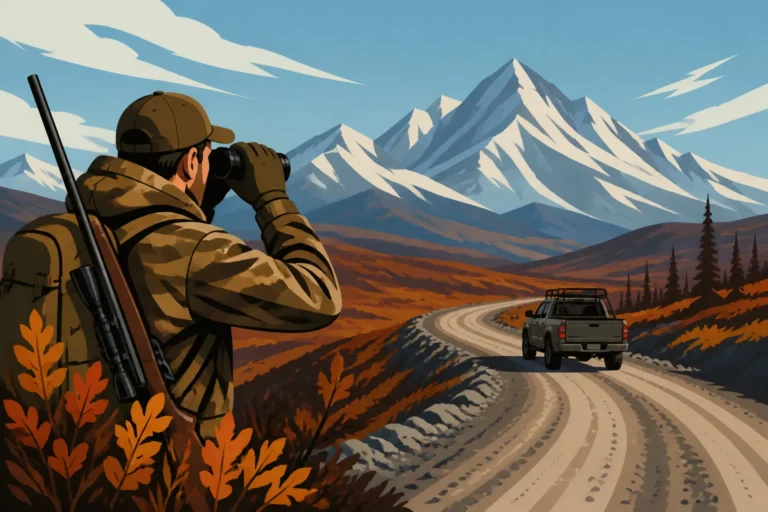
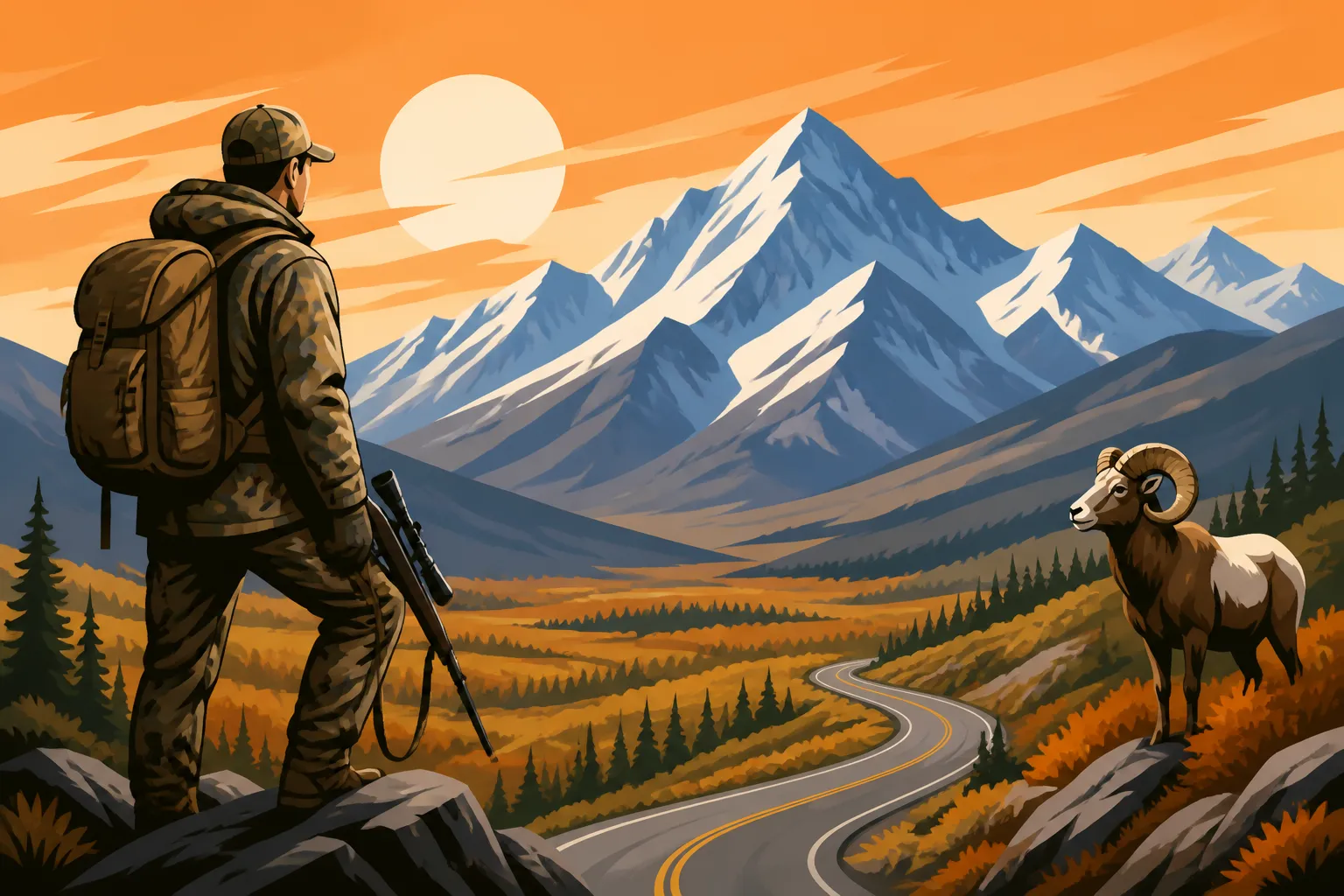
Without a doubt, Dall sheep are the quintessential species that draw hunters to Sheep Mountain. These magnificent white animals inhabit the high, rugged peaks and alpine bowls. Their season typically opens in August, providing a brief window when the weather is relatively mild, though as mentioned, that's never a guarantee. Hunting Dall sheep is perhaps the most physically demanding big game pursuit in Alaska. It involves strenuous climbs, meticulous glassing, and often long stalks in challenging terrain.
You'll spend hours, if not days, behind your binoculars and spotting scope, picking apart distant rock slides and snowfields, looking for that telltale flash of white. Legal rams are often identified by their horn curl, requiring careful field judging to ensure they meet the "full curl" or "eight-year age class" criteria. This means you might spend a long time observing a ram before deciding whether to commit to a stalk. How to Judge a Full-Curl Ram in the Field is paramount here. Access for sheep often means parking at a highway pullout and simply hiking straight up, gaining thousands of feet. It's not for the faint of heart, or for those who haven't put in the time to get into serious shape.
Moose: Hidden in the River Bottoms and Burns
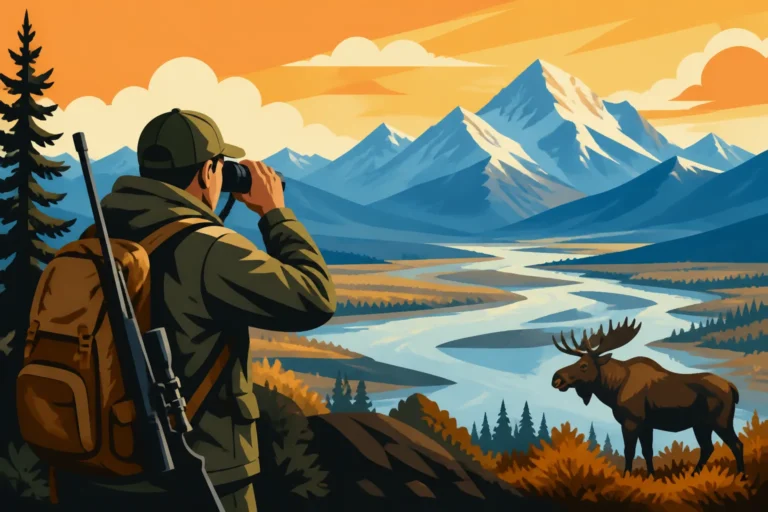
While the mountains beckon for sheep, don't overlook the potential for moose in the lower elevations. The Matanuska River valley, with its vast willow flats, old burn areas, and dense timber along smaller creeks, provides excellent moose habitat. These areas are often overlooked by sheep hunters focused on the peaks, which can work to your advantage. Moose seasons usually open in early to mid-September, often coinciding with the early stages of the rut, making calling a viable tactic.
Hunting moose off the road system, especially in areas with antler restrictions, requires careful identification. You'll need to know your Alaska Moose Antler Restriction Areas regulations inside and out – distinguishing a legal bull (often 50-inch spread or specific brow tine count) from a sublegal one is crucial and can be incredibly difficult in thick cover. Access typically involves following old seismic lines, ATV trails (where legal), or simply bushwhacking through dense vegetation. The biggest challenge here isn't necessarily finding a moose, but getting one out of the thick, swampy lowlands once it's down. Quartering and packing out an Alaska-Yukon moose is an undertaking of epic proportions, and definitely not something to attempt alone without a solid plan.
Black Bear: Opportunistic Hunting in Spring and Fall
Black bears are also common throughout the Sheep Mountain area, from the timbered slopes to the lower river country. They offer both spring and fall hunting opportunities, providing a great option for a less physically demanding hunt than sheep, though still requiring diligence and careful scouting. Spring hunting often focuses on south-facing slopes where green-up first occurs, drawing bears out of their dens to feed on emerging vegetation. In the fall, they can be found feeding on berries on the mountainsides or scavenging for salmon scraps along smaller streams.
Alaska Black Bear Seasons and Bag Limits vary by Game Management Unit, so always double-check the current regulations. Color phases can range from the typical black to cinnamon or even blonde, adding to the excitement. While baiting is permitted for black bears in certain areas of Alaska, it's generally not a tactic employed by road-system hunters in the Sheep Mountain vicinity, where spot-and-stalk or still-hunting through timber is more common. Patience and keen observation are key; bears can melt into the timber surprisingly fast.
Navigating Access and Regulations Along the Glenn Highway
Hunting off a major highway like the Glenn presents a unique set of challenges and responsibilities. It’s not simply about pulling over and starting your hike. You need to be acutely aware of land ownership, specific regulations for the corridor, and the general etiquette of hunting near developed areas.
Public Land vs. Private Land: Know Your Boundaries
Alaska has a complex patchwork of land ownership: state, federal, Native Corporation, and private. Around the Glenn Highway, you're primarily dealing with a mix of state and federal lands, but there are also private parcels, especially closer to towns or homesteads. Trespassing, even unintentionally, is a serious offense. This is where tools like onX Hunt truly shine. Using a reliable mapping application on your phone or GPS device, pre-downloaded for offline use, is absolutely non-negotiable. You need to know exactly where you are and whose land you're on at all times.
Before you even leave home, spend time studying the land status maps for your intended hunting area. The boundary lines can sometimes be subtle or unmarked on the ground, making digital maps your best friend. Remember, just because you can see a mountain from the highway doesn't mean it's legally accessible public land. Always err on the side of caution. If in doubt, find another spot. Ignoring land boundaries is a quick way to lose your hunting privileges and face legal trouble. State Land Versus Federal Land in Alaska can have different regulations, so be sure you understand the specifics of your chosen area.
Controlled Use Areas and Corridor Restrictions
The Glenn Highway, like other major transportation arteries in Alaska, can have specific hunting regulations that differ from the broader Game Management Unit. Some areas might be designated as Controlled Use Areas (CUAs), which can restrict the use of motorized vehicles, aircraft, or even specific hunting methods during certain seasons. For example, some highway corridors have "no shooting" zones or mandates regarding how far from the road you must be to discharge a firearm.
Always consult the current Alaska hunting regulations booklet for the specific GMU you plan to hunt, and pay close attention to any "Special Areas" sections that might cover the Glenn Highway corridor. These rules are in place for safety, to manage wildlife, and to ensure a quality hunting experience for everyone. Disregard for these rules can lead to citations and danger. Alaska Controlled Use Areas and What They Restrict is a good read to understand the various forms these restrictions can take. Don't assume you know the rules; verify them every season.
Parking, Trailheads, and Ethical Access
Road-system hunting means dealing with other people. You'll be sharing pullouts, parking areas, and sometimes even the first few miles of trails with hikers, berry pickers, and other hunters. Be respectful and courteous. If a pullout is full, be prepared to move on to another spot rather than creating an unsafe parking situation.
Many access points are simply wide spots in the road or informal trails that lead directly into public land. There aren't always marked trailheads with restrooms and vast parking lots. This means planning your entry point carefully, considering where you can safely leave your vehicle for multiple days. While the Glenn Highway provides relatively easy access, it's crucial to consider the visibility of your vehicle and gear to deter theft, though thankfully this is less of an issue in true bush than it can be closer to major towns. Also, remember that if you are using an ATV, there are specific ATV Access Tactics on Alaska's Denali Highway which are relevant for other road systems too: know where you can legally ride and where you can't.
Essential Field Craft for Sheep Mountain Hunters
Hunting the Sheep Mountain area, especially for Dall sheep, is physically and mentally taxing. Even a moose hunt in the river bottom can become an epic ordeal without the right preparation and skills. Success often hinges on more than just spotting an animal; it's about being prepared for everything Alaska can throw at you.
Physical Fitness: Your Most Important Gear
This cannot be stressed enough: if you plan on hunting sheep anywhere in Alaska, including Sheep Mountain, you need to be in peak physical condition. It's not just about being able to walk a few miles; it's about climbing thousands of feet of elevation with a heavy pack, day after day, in potentially adverse weather. Your body is your primary mode of transportation. If you're out of shape, you'll be miserable, you'll put yourself at risk, and you'll severely limit your chances of success.
For sheep, training should focus on leg strength, endurance, and cardiovascular fitness. Think hiking with a weighted pack on steep terrain, stair climbing, and general high-intensity interval training. Don't wait until a month before the hunt to start. Make fitness a year-round commitment. For moose, while less vertical, the strength for packing out heavy loads through dense, uneven terrain is crucial. No amount of fancy gear can compensate for a lack of physical preparation.
Glassing Techniques: The Art of Finding Game
Whether you're looking for a white dot on a distant ridge or a brown mass in a sea of willows, effective glassing is paramount. Most hunting around Sheep Mountain, especially for sheep, is done with optics. A good quality pair of binoculars (10x-15x) and a powerful spotting scope (20-60x or more) on a sturdy tripod are essential. You'll spend hours patiently dissecting terrain, looking for anomalies, movement, or the specific shapes of game animals.
Learn to break down a mountainside or a willow flat into grids. Don't just scan; methodically pick apart the landscape. Focus on shaded areas, benches, and transitions where animals might bed or feed. Take your time, let your eyes relax, and periodically give them a break. Often, an animal will only reveal itself for a split second, or only after you've looked at the same spot for the tenth time. Reading Contour Lines for Sheep Benches can help you understand where sheep are likely to be. Remember, the goal is to find the animal before it sees you.
Navigation and Communication in Remote Areas
Even though you're "road-system hunting," once you step off the highway, you are in remote Alaska. Cell service is unreliable at best and often non-existent. You absolutely need reliable navigation tools. A GPS device with pre-loaded maps, along with a traditional map and compass, is the bare minimum. Downloading Offline Maps Before a Fly-In is a smart practice, and it's equally important for road-system hunts. Digital mapping apps like onX Hunt or GoHunt are incredibly useful for identifying terrain features, land ownership, and marking waypoints. However, always carry backup batteries or a portable charger, and know how to use all your tools without relying on a phone signal.
For communication, especially if you're hunting solo or with a small group, consider a satellite communication device like a Garmin inReach or a Zoleo. These allow you to send and receive text messages, share your location, and most importantly, trigger an SOS in an emergency. InReach Check-In Schedules for Solo Hunts are critical for your safety and the peace of mind of those back home. Never go into the Alaska backcountry without a solid communication and emergency plan.
Gear Preparedness and Bear Safety
Your gear needs to be robust and appropriate for Alaskan conditions. This means quality rain gear that performs, layered clothing for variable temperatures, comfortable and supportive boots, and a pack capable of carrying heavy loads – both your initial gear and potentially hundreds of pounds of meat and trophy. Game Bags That Breathe in Coastal Rain are crucial, as are sturdy game bags that can protect your meat from insects and dirt while allowing it to cool.
Finally, bear safety is non-negotiable. Both black bears and brown bears inhabit the Sheep Mountain area. Always carry bear spray, know how to use it, and have it readily accessible. Many hunters also carry a powerful handgun or a rifle chambered in a capable Rifle Calibers for Coastal Brown Bear cartridge, such as a .375 H&H, especially when dealing with a downed animal. Make noise while hiking, particularly in dense cover, to avoid surprising a bear. When you have an animal down, be extra vigilant and have a plan for Bear Safety While Butchering a Kill in Alaska. Never leave food or garbage exposed in camp. Proactive bear awareness is simply part of hunting in Alaska.
| Species | Typical Habitat | Primary Season (approx.) | Physical Demand for Hunting | Key Challenge |
|---|---|---|---|---|
| Dall Sheep | High alpine ridges, steep rocky slopes | August – September | Extremely High | Extreme climbing, field judging legal rams |
| Moose | River bottoms, willow flats, old burns | September – October | Moderate – High | Dense brush, antler restrictions, heavy pack |
| Black Bear | Timbered slopes, berry patches, creek bottoms | Spring (May-June), Fall (Aug-Oct) | Low – Moderate | Spotting in cover, unpredictable encounters |
| Small Game (e.g., Ptarmigan) | Alpine tundra, willow thickets, spruce forests | August – Winter | Low – Moderate | Locating small birds, often opportunistic |
Disclaimer
This article is for general informational purposes only and does not constitute professional advice. Laws, prices and regulations vary by location and change over time. Consult a qualified professional for guidance on your specific situation.