Goat Country Above the Seward Highway
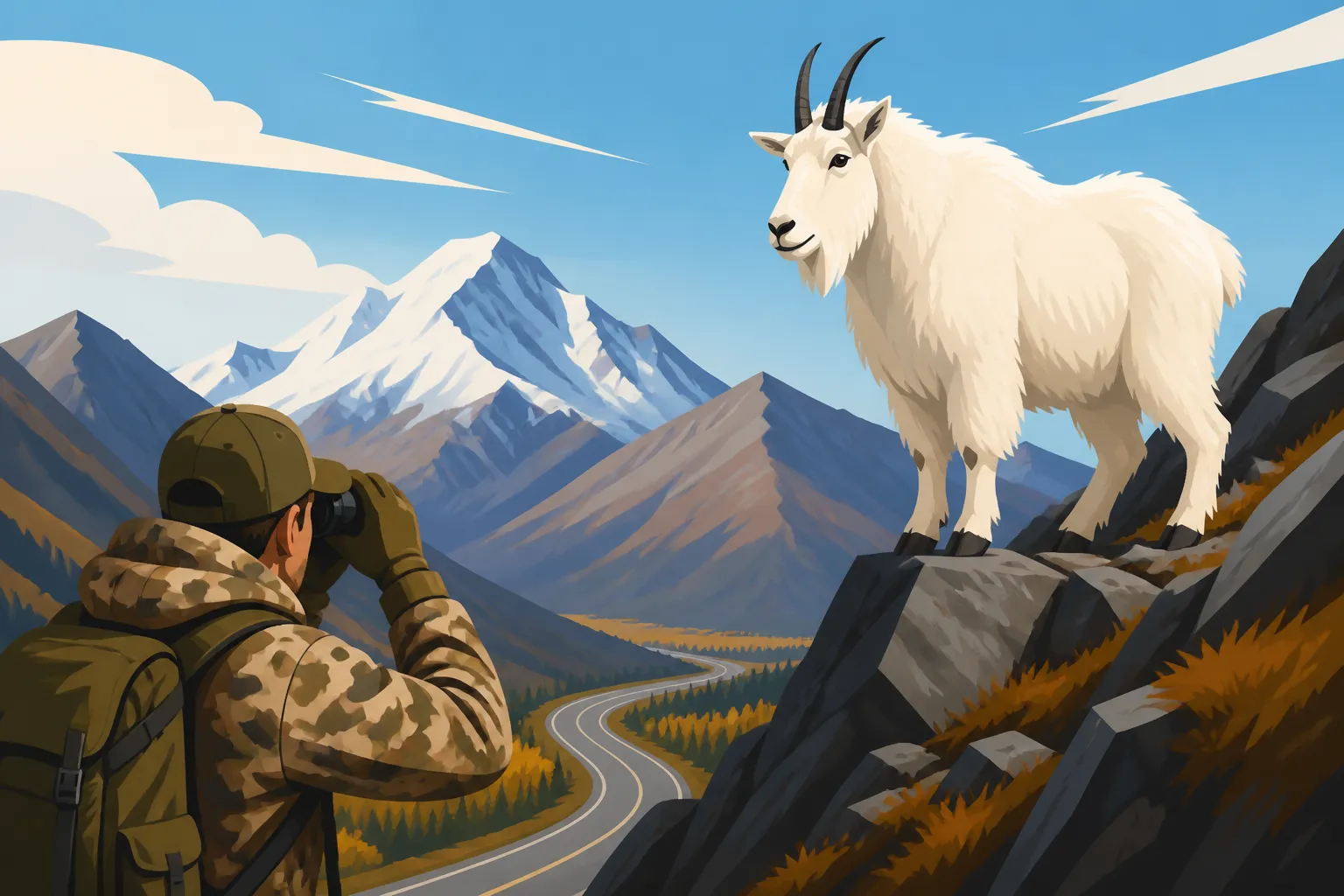
The towering, rugged peaks of Alaska's Chugach Mountains, often glimpsed from the scenic Seward Highway, hold a secret for the determined hunter: the elusive and majestic mountain goat. It’s a sight that can stop you in your tracks, these pure white sentinels clinging to impossible cliffs. But for those dreaming of pursuing them, the challenge isn't just the climb; it's understanding the landscape, the demanding regulations, and the sheer effort involved in accessing these vertical kingdoms. This guide will walk you through what it really takes to hunt mountain goats in the breathtaking, yet brutal, terrain above the Seward Highway.
The Chugach Mountains: Prime Goat Habitat Above the Seward Highway
When you drive the Seward Highway, especially the stretch between Anchorage and Seward, you're constantly surrounded by the Chugach Mountains. These aren't rolling hills; they're steep, glaciated, and incredibly rugged, forming the perfect sanctuary for mountain goats. Goats thrive in this vertical world, using the precipitous cliffs and rocky benches as defense against predators and as access to high-alpine forage. Their incredible agility and specialized hooves allow them to navigate terrain that would be impassable for most other big game, let alone a human hunter.
The sheer scale of the Chugach, combined with its proximity to a major road system, makes it a unique hunting ground. However, don't let the "road-system access" fool you into thinking it's easy. The mountains here are unforgiving, often shrouded in fog, hammered by strong winds, and prone to rapid weather changes. A clear, calm morning can quickly turn into a whiteout blizzard, even in late summer or early fall. Understanding this environment is the first, and perhaps most critical, step to a successful and safe goat hunt.
Understanding the Goat's Domain
Mountain goats in the Chugach typically prefer elevations above timberline, often between 3,000 and 6,000 feet, but they'll occasionally descend to lower elevations, especially in early spring or late fall when snow drives them down. They are creatures of habit, often using the same steep trails and bedding areas year after year. This means that extensive glassing and careful observation from afar are absolutely crucial to locating them. You’re not just looking for a white dot; you’re looking for patterns of movement, preferred feeding grounds, and the routes they use to traverse their steep world.
The vegetation above the Seward Highway primarily consists of alpine tundra, rocky outcroppings, and small, scattered patches of subalpine shrubs and trees in the protected drainages. Goats forage on various alpine grasses, lichens, and small forbs. Knowing their diet helps you identify key feeding areas. Remember, they need good forage and escape cover, often combining the two on incredibly steep, broken terrain where they can quickly disappear over a ridge or into a chute if pressured. For a deeper dive into their natural world, read Alaska Mountain Goats in Coastal Cliff Country.
Seasonal Movement and Behavioral Patterns
Mountain goat behavior changes throughout the hunting season, which generally runs from August into the late fall. In August, nannies and kids are often found in tight family groups, while mature billies might be solitary or in small bachelor groups. As the rut approaches in late October and November, billies become more active, moving lower and covering more ground in search of receptive nannies. This can sometimes make them slightly more visible, but also means they are focused on other things and can appear almost oblivious to their surroundings, which is not an excuse for carelessness on your part.
During the early season, particularly when the weather is mild, goats will be high, utilizing the cool air and abundant feed of the alpine. They'll bed on rock ledges with good views, allowing them to spot potential threats. As winter approaches, heavy snow can push them lower, but they still prefer steep, south-facing slopes that shed snow and receive more sun, exposing crucial forage. Always consider the snowpack and recent weather when scouting or planning your hunt, as it directly impacts their location and accessibility.
Navigating Access and Terrain: Reaching the High Country
Accessing goat country above the Seward Highway is challenging. While the road itself provides a starting point, getting from the road to where the goats live often involves grueling climbs, bushwhacking through dense alder thickets, and navigating treacherous boulder fields and scree slopes. There are very few maintained trails that lead directly into prime goat habitat; most access points require you to create your own path.
Planning your ascent is critical, and this is where tools like onX Hunt truly shine. You can use it to meticulously study the topography, identify potential avalanche chutes (always a danger, even in summer), mark possible routes up ridges, and pinpoint areas of dense vegetation to avoid. Mapping out your approach from home, looking for benches, saddles, and drainages that might offer a less vertical path, can save you immense effort and frustration in the field.
Popular Access Points and Challenges
Several areas along the Seward Highway offer potential access, but each comes with its own set of difficulties. The terrain generally gets more rugged the further south you go towards Seward. Near Anchorage, areas like the Chugach State Park offer some access, though specific hunting regulations and closures apply. Further south, the slopes off Turnagain Arm, stretching towards Portage or even past Girdwood, can hold goats. The key is finding legal access through state, federal, or private lands. How to Check Alaska Land Status Before a Hunt is essential reading for this.
| Area (General) | Typical Elevation Gain | Terrain Characteristics | Key Challenges |
|---|---|---|---|
| Near Anchorage (e.g., Chugach State Park border) | 3,000-5,000 ft | Steep, brushy, rocky ridges | Heavy brush, limited public access, proximity to urban areas, specific park regulations |
| Turnagain Arm (e.g., Bird Ridge to Portage) | 3,500-6,000+ ft | Very steep, high alpine, glaciated peaks, scree fields | Extremely physically demanding, rapid weather changes, technical climbing, rockfall danger |
| Johnson Pass Area (beyond Portage) | 2,500-4,500 ft | More open alpine, some gentler slopes, dense timber below | Lower goat densities, long approaches, heavy snow early/late season |
Remember, "access" from the highway often means a brutal multi-thousand-foot climb from sea level or valley bottom. There are no shortcuts up these mountains. You'll likely be backpacking in, so everything you carry needs to earn its place in your pack. For considerations on how much to carry, look at Backpack Hunting in Alaska: Gear Weight and Meat Loads.
Scouting from Afar and Strategic Glassing
Effective goat hunting in the Chugach is almost entirely dependent on meticulous glassing. You need quality optics – good binoculars, a powerful spotting scope, and a sturdy tripod are non-negotiable. Spend hours, even days, glassing from vantage points across valleys or from lower ridges before ever committing to a climb. Look for white specks against the gray rock, paying close attention to benches, chutes, and areas near snowfields. Goats can bed down and be surprisingly hard to spot, especially if they're in a shady pocket or obscured by rock.
Using a topographical map or a GPS mapping app like onX Hunt is invaluable for identifying potential glassing knobs and drawing direct lines of sight to distant slopes. Mark any sightings, even if it's just a fleeting glimpse. Note the time, weather, and specific location. This can help you establish patterns and predict where goats might be at different times of the day or under varying conditions. A single goat sighting might be all you get, so you need to be prepared to commit to a multi-day stalk once you locate a legal animal.
Understanding Alaska's Goat Hunting Regulations and Permits
Goat hunting in Alaska, particularly in accessible areas like those above the Seward Highway, is highly regulated, and for good reason. Mountain goat populations are sensitive, and overharvest can severely impact herd numbers. This is where researching regulations becomes paramount, especially through resources like GoHunt, which can help parse through complex draw systems and unit-specific rules.
Most mountain goat hunts along the Seward Highway corridor are conducted under a draw permit system, meaning you must apply and be selected to receive a permit. This isn't a simple over-the-counter tag situation. The application process is competitive, and odds of drawing can be slim, especially for popular units.
Draw Permits and Hunt Numbers
The Chugach Mountains above the Seward Highway fall into various Game Management Units (GMUs) and subunits. Each specific hunt area will have its own hunt number, season dates, and permit quotas. You'll need to research these numbers carefully on the Alaska Department of Fish and Game (ADF&G) website. When applying, you'll specify your hunt choices, and if successful, you'll be awarded a permit for a particular unit and hunt period. This system is designed to manage harvest pressure and maintain healthy goat populations. More information on how the draw system works can be found in How Alaska's Big Game Drawing Permits Work.
It's crucial to understand that even if you draw a permit, it's not a guarantee of a harvest. The permit grants you the opportunity to hunt within a specific area and timeframe. Success rates can vary wildly, depending on weather, goat numbers, and hunter effort. Don't underestimate the physical and mental demands, even with a coveted permit in hand.
Billy-Only and Nanny Identification Rules
A critical component of Alaska goat hunting regulations is the strong emphasis on selective harvest, particularly avoiding the taking of nannies. Nannies are the reproductive engine of the herd, and their loss can have a disproportionate impact on goat populations. Many goat hunts are "billy-only" or have strict guidelines discouraging the harvest of nannies, sometimes with penalties for mistaken identity.
Learning to differentiate a billy from a nanny in the field is a skill that takes practice and good optics. Generally, billies tend to be larger-bodied with thicker horns that have more pronounced bases and sweep back further, often with less curvature. Nannies are typically smaller, more slender, and their horns are thinner and straighter, with a more gradual curve. Pay attention to the animal's behavior, body size, and horn characteristics. Nannies are almost always accompanied by kids, which is a dead giveaway. Never shoot if you're unsure. You can learn more about this vital skill in Telling a Billy From a Nanny at Distance and Why Shooting a Nanny Hurts a Goat Herd. If you're selected for a goat hunt, you'll often be required to complete a goat hunter orientation, which covers these identification skills in detail.
Essential Gear and Safety for Steep Terrain
Hunting mountain goats above the Seward Highway is not for the faint of heart or the unprepared. The environment demands respect, and your gear choices can literally be a matter of life or death. Forget your typical deer hunting setup; this is an extreme environment requiring specialized equipment and a meticulous approach to safety.
Your physical fitness is as important as your gear. These hunts involve significant elevation gain, often with heavy packs, across unstable terrain. Start training well in advance with cardio, strength training, and plenty of hiking with a loaded pack.
Pack, Boots, and Clothing
Your pack needs to be robust, comfortable, and capable of carrying heavy loads, including meat and hide, on the way out. Look for internal frame packs with good suspension that can handle 70-100+ pounds. Your boots are arguably the most critical piece of gear. They must be stiff-soled for side-hilling and kicking steps, waterproof, and provide excellent ankle support. Break them in thoroughly before your hunt.
Layering is key for clothing. Alaska's weather is notoriously fickle. You need base layers that wick moisture, insulating layers like fleece or puffy jackets, and a bombproof outer shell (jacket and pants) that is fully waterproof and windproof. Forget water-resistant; you need waterproof. Even in August, snow and freezing rain are possible at elevation.
Optics, Navigation, and Communication
As mentioned, quality optics are non-negotiable. A good pair of 10x binoculars and a 15-45x or 20-60x spotting scope on a sturdy tripod are essential for locating and judging goats from a distance.
For navigation, a GPS device or a robust mapping app on your phone (like onX Hunt, with downloaded offline maps) is vital. Combine this with a traditional map and compass, and know how to use them. Cell service is spotty to nonexistent in much of this country. A satellite communication device, such as a Garmin inReach or Zoleo, is not just a luxury; it's a safety imperative for emergency communication and regular check-ins. It's truly a lifesaver in these remote mountains. Don't forget to have a solid Signal Devices and Check-In Plans for Solo Alaska Hunts in place with someone back home.
Food, Water, and Emergency Preparedness
Carry enough high-calorie, lightweight food for your planned trip duration, plus an extra day or two. Water sources can be scarce high in the mountains, or require filtering from glacial runoff. Plan your water strategy carefully. A good water filter or purification tablets are essential.
Beyond your standard hunting gear, always have an emergency kit. This includes a first-aid kit, fire starter, headlamp, extra batteries, emergency shelter (like a bivy sack), and signaling mirror. Tell someone your detailed hunt plan and check-in schedule. These mountains are unforgiving, and help can be days away. Understanding Alpine Navigation Without Cell Service is not just a skill; it's a necessity.
Meat Care and Trophy Preservation in a Harsh Environment
Successfully harvesting a mountain goat is only half the battle. The real work often begins after the shot, especially when you're perched on a steep slope, potentially miles from camp, with heavy meat and a fragile cape. Proper meat and trophy care in this challenging environment is crucial to honoring the animal and avoiding waste.
The weather is a major factor. Even if it's cool, the sun can quickly warm exposed meat, leading to spoilage. Rain and moisture can damage capes and make handling messy. You'll need to be efficient and work quickly, often in less-than-ideal conditions.
Field Butchering and Meat Handling
Once your goat is down, the first priority is to get it field dressed and cooling as quickly as possible. This often means working on a steep, unstable slope, so extreme caution is advised. Skin the animal carefully, especially if you plan a full shoulder or life-size mount. Separate the hide from the meat immediately to allow for maximum cooling. Using game bags designed for breathable airflow will protect the meat from flies and dirt while allowing it to cool.
Quartering a goat requires strong knife skills and careful attention to hygiene. Remove all edible meat from the bone. Unlike moose or caribou, a goat doesn't yield a massive amount of meat, but every bit is precious. Hang the game bags in a shady, airy spot if possible, away from potential predators. If you're alone, you might be making multiple trips with heavy loads. Remember, Packing Out Meat in Alaska: The Salvage Law Hunters Must Follow means you must salvage all edible portions.
Cape and Skull Care for Mounts
If you're planning a mount, the cape needs meticulous care. After skinning, turn the ears, split the lips, and flesh out as much of the fat and muscle as possible. This is tedious work, but vital for preserving the hide. Many hunters carry a small amount of non-iodized salt to rub into the flesh side of the cape to begin the curing process, especially if they expect to be in the field for a few days. Even so, cooling the cape as much as possible is the primary goal until it can be frozen or taken to a taxidermist.
The skull plate, with the horns attached, also needs attention. The horns can be surprisingly delicate, especially the black tips. Protect them during the pack out. Once home, the skull plate can be cleaned and prepared for transport to a taxidermist. Ensure all parts are properly labeled if you're hunting multiple animals or sharing a camp. Proper initial care in the field will save you headaches and expense later and ensure your trophy lasts a lifetime.
Disclaimer
This article is for general informational purposes only and does not constitute professional advice. Laws, prices and regulations vary by location and change over time. Consult a qualified professional for guidance on your specific situation.