Medical Insurance for Remote Alaska
Heading out into the vast, untamed wilderness of Alaska for a hunt is a dream for so many of us, but the sheer remoteness and rugged nature of this land also come with a stark reality: what happens if you get hurt? Far from any road or clinic, a medical emergency can quickly escalate from a bad situation to a life-threatening one, not to mention an astronomically expensive one. This guide is all about helping you understand the critical need for proper medical insurance, especially evacuation coverage, when you're planning any remote Alaska hunting trip.
Why Standard Health Insurance Isn't Enough in Remote Alaska
It’s a common misconception that your regular health insurance policy, the one you use for doctor visits and hospital stays back home, will fully cover you if something goes wrong in the Alaska bush. The truth is, most standard policies have significant gaps when it comes to the unique challenges of a remote medical emergency, especially the costs associated with getting you out of the wilderness and to a medical facility. You might be covered once you hit the hospital doors, but getting there is a whole different ballgame.
The Cost of a Bush Evacuation
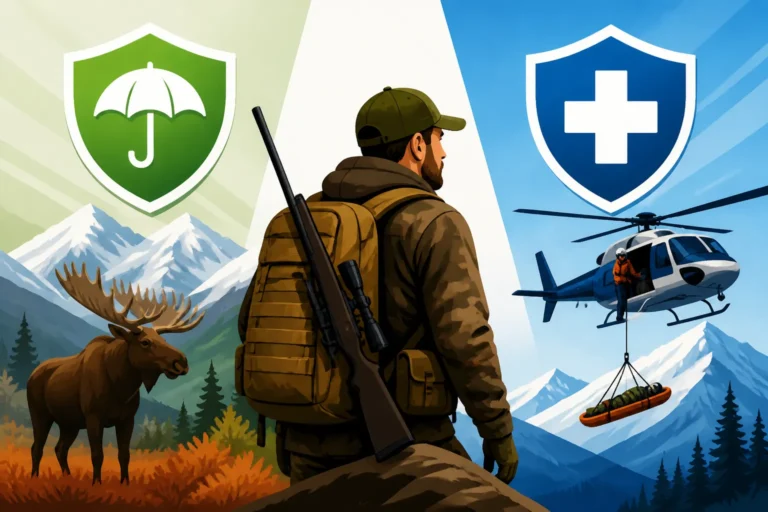
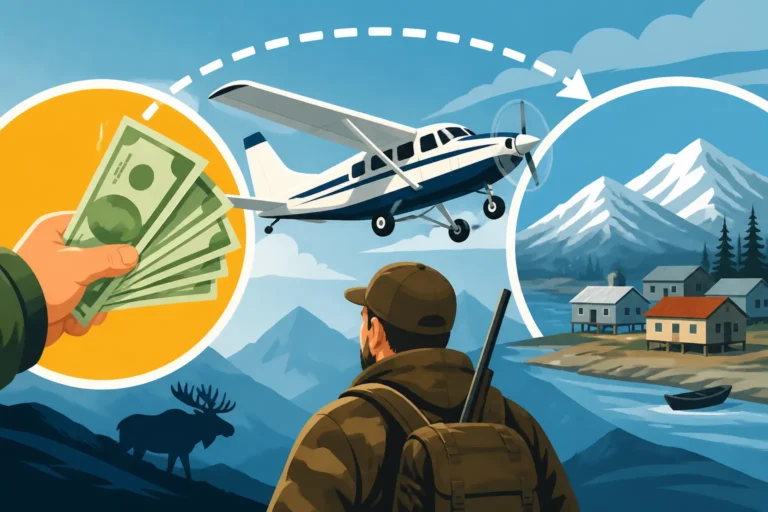
Imagine the scene: you're miles from the nearest road, deep in the Alaska Range on a Dall Sheep in Alaska's Brooks and Alaska Ranges hunt, and you take a bad fall, breaking a leg. Or perhaps you're Quartering a Bull Moose Alone in the Field after a successful hunt in the Interior, and a bear encounter leaves you injured. In such scenarios, getting you to medical care isn't a simple ambulance ride. It often means a specialized air ambulance, typically a helicopter or a fixed-wing aircraft with medical personnel, flying into a challenging, unpopulated area. These aren't cheap rides; they involve highly trained pilots, medical crews, and expensive equipment, all operating in demanding conditions.
The cost for such an operation can easily run into tens of thousands of dollars, sometimes even more, depending on the distance, the type of aircraft needed, and the complexity of the rescue. Many standard health insurance policies, if they cover air ambulance at all, often cap the benefit at a fraction of the actual cost or specify that they will only cover transport to the nearest appropriate facility, not necessarily the best one or one that's closer to home. You could be on the hook for a massive bill that completely blindsides you, turning a hunting adventure into a financial nightmare.
Limited Coverage for Medical Transport
Even if your regular health insurance does have some provision for emergency transport, it's crucial to dig into the fine print. Often, these policies define "emergency" or "medically necessary" in very specific terms, and they might not consider a bush extraction to be the same as an urban ambulance trip. For instance, they might only cover transport if it's from one hospital to another, not from a remote campsite to the nearest clinic. They might also only cover ground ambulance services, which are entirely irrelevant when you're perched on a mountain ridge or stuck deep in a river valley accessible only by plane or boat.
This gap in coverage is precisely why hunters absolutely need to research specific medical evacuation policies. Relying on your standard insurance for a bush emergency is like bringing a fishing pole to a bear hunt – it's the wrong tool for the job. You need coverage designed for the unique challenges and astronomical costs of remote medical transport. Many hunters who are meticulous about their gear lists, checking everything from Rifle Calibers for Coastal Brown Bear to Archery Tackle That Survives Ten Days of Rain, often overlook this single most important piece of "emergency gear."
The Time-Sensitive Nature of Emergencies
In remote Alaska, time is not just money; it's often the difference between life and death. A severe injury or sudden illness needs immediate attention. Weather can change in an instant, grounding aircraft and isolating you even further. Having a dedicated medical evacuation plan in place means that when the worst happens, the focus can be entirely on getting you help as quickly as possible, without delays caused by trying to figure out how to pay for it or navigate bureaucratic insurance hurdles.
When you're in a situation where every minute counts, you don't want your loved ones or your hunting partners to be making frantic phone calls to insurance companies, trying to get authorization for a flight. A good evacuation policy streamlines this process, allowing for rapid deployment of resources. This speed is invaluable when dealing with trauma, hypothermia, or other conditions that worsen rapidly in a wilderness setting. Planning for this often means having Signal Devices and Check-In Plans for Solo Alaska Hunts that include emergency contact information and explicit instructions regarding your evacuation policy.
Understanding Different Types of Medical Coverage
Since standard health insurance often falls short, what are your options for robust coverage in remote Alaska? There are several types of specialized policies and services designed precisely for the kind of situations you might encounter while chasing caribou across the tundra or spotting brown bears on the Alaska Peninsula. Knowing the distinctions is key to making an informed choice for your next adventure.
Travel Insurance with Medical Riders
Many general travel insurance policies offer what's called a "medical rider" or an "emergency medical" component. These policies are designed to cover unforeseen medical expenses incurred while traveling outside your home area, and sometimes outside your home country. They can be a good option for hunters, as they often include coverage for emergency medical treatment, hospital stays, and sometimes even medical evacuation. However, it's critical to scrutinize these policies carefully.
First, check the limits for emergency medical evacuation. Are they high enough to cover the potential costs of an Alaska bush rescue? Also, look for exclusions. Does the policy exclude "hazardous activities" or "adventure sports"? While hunting might not always be explicitly listed, an insurer could argue that a remote hunt falls under such a category, potentially voiding your coverage. Furthermore, some policies might only evacuate you to the nearest facility that can provide adequate care, not necessarily back to your home state or a hospital of your choice. When researching hunts on platforms like BookYourHunt, be sure to ask any potential outfitter or air taxi if they have recommendations for travel insurance that specifically caters to remote Alaska activities, as they often deal with client questions on Insurance and Evacuation Coverage on Alaska Hunts.
Standalone Medical Evacuation Plans
For serious hunters heading into truly remote areas, standalone medical evacuation plans are often the most comprehensive and reliable option. These policies focus specifically on the costs and logistics of emergency medical transport, separate from general medical care. They don't pay for your hospital bills once you're admitted, but they ensure you get to the hospital. Many of these plans boast high coverage limits for evacuation and are designed for wilderness and international travel.
These policies typically cover a wide range of scenarios, from accident to sudden illness, and are specifically tailored to handle remote rescue operations. They understand that "nearest appropriate facility" might mean thousands of air miles and that specialized aircraft are often required. Some plans also offer repatriation services, meaning they'll get you back to your home hospital once you're stable enough to travel. This peace of mind is invaluable, especially if you're venturing into areas that demand significant logistical planning, such as Fly-In Hunting: Working With an Alaska Transporter Pilot to reach a remote camp.
Membership-Based Air Ambulance Services
A popular choice among frequent wilderness travelers and hunters are membership-based air ambulance services. Companies like MedjetAssist and Global Rescue offer annual memberships that, for a flat fee, provide medical evacuation and sometimes security evacuation services. These aren't insurance policies in the traditional sense; rather, they are service contracts. The primary advantage here is that if you need an evacuation, they often commit to getting you to your home hospital of choice, not just the nearest adequate facility, once you are medically stable.
These memberships typically cover a wide range of activities and locations, often without the "hazardous activity" exclusions you might find in some travel insurance policies. They are specifically designed for people venturing into remote or challenging environments. While they don't cover the medical treatment itself, they provide the crucial link between your injury site and the care you need, wherever you want that care to be, within their terms. For those of us who spend a lot of time in the bush, whether it's Backpack Hunting in Alaska: Gear Weight and Meat Loads for a sheep hunt or a float trip for moose, these services offer a high level of confidence that a ride will be available if things go sideways.
Choosing the Right Plan for Your Alaska Hunt
With various options available, selecting the perfect medical insurance for your remote Alaska hunt requires a bit of homework. It's not a one-size-fits-all situation, and what works for a guided road-system hunt might be entirely inadequate for a solo backpack hunt deep in the wilderness. Taking the time to assess your needs and understand the nuances of each policy will save you immense stress, and potentially immense cost, down the line.
Assessing Your Risk Profile and Hunt Location
Before you even start looking at policies, take an honest inventory of your hunt. How remote will you truly be? Are you hunting alone or with a group? What species are you after, and what inherent risks does that entail? A Bear Safety While Butchering a Kill in Alaska scenario, for example, presents a different level of risk than a quiet day of ptarmigan hunting near a village. Consider the physical demands: a Spot-and-Stalk Dall Sheep Hunting Above Alaska Timberline requires a high level of physical fitness and involves inherent risks of falls and exposure that a caribou hunt on relatively flat tundra might not.
Also, think about the duration of your trip and the time of year. Early season hunts might be warmer, but wet weather can still lead to hypothermia. Late season can bring extreme cold and shorter daylight hours, increasing the risk of accidents. The more remote and physically demanding your hunt, the more robust your medical evacuation coverage needs to be. Tools available on sites like GoHunt can help you scout your unit and understand the terrain, elevation, and potential challenges, which should inform your risk assessment for medical emergencies.
Key Questions to Ask About Coverage
Once you have a sense of your risk profile, start asking critical questions about any policy or membership you consider. Don't assume anything; get clear answers in writing if possible:
- What is the maximum coverage limit for medical evacuation? Does it realistically cover the tens of thousands a bush plane or helicopter rescue might cost?
- Are there any exclusions for specific activities? Does it cover hunting, backcountry travel, or "hazardous sports"?
- What is the definition of "medical emergency" for evacuation? Does it require a life-threatening situation, or will it cover a broken ankle that simply prevents you from self-extracting?
- To where will they evacuate you? The nearest adequate medical facility, or your home hospital of choice?
- What are the communication requirements? Do you need to call them before any action is taken, or will they authorize immediate rescue based on a third-party report? Emergency Evacuation Plans in Remote Alaska often detail these crucial steps.
- Does it cover search and rescue? Some policies distinguish between medical evacuation and actual search for a lost person.
- Are there any age limits or pre-existing condition clauses?
- What is the process for initiating an evacuation? Who do you call, and what information do they need? Make sure this information is readily available in your InReach Check-In Schedules for Solo Alaska Hunts or communication plan.
Navigating Enrollment and Pre-Existing Conditions
When you're ready to enroll, be upfront and honest about any pre-existing medical conditions. Failing to disclose these can invalidate your policy if a claim arises from an undisclosed condition. Many policies have clauses regarding pre-existing conditions, often requiring a certain waiting period or excluding them entirely unless specifically waived. It's always best to apply for coverage well in advance of your trip, giving you time to clarify any issues or seek alternative options if necessary.
Some policies offer a "waiver of pre-existing conditions" if you purchase the plan within a certain number of days of your initial trip deposit and are medically able to travel at the time of purchase. Always read the policy document thoroughly, not just the marketing brochures. Understanding these details will help ensure that if you find yourself in a bind in the Alaska wilderness, your coverage will actually be there for you.
| Coverage Type | Primary Function | Evacuation Coverage Focus | Medical Treatment Coverage | Typical Cost Structure | "Home Hospital" Transfer? | Best For |
|---|---|---|---|---|---|---|
| Standard Health Insurance | Everyday medical care | Often limited, urban ambulance focus | Yes (within network/plan) | Premiums + deductibles | Rarely | Routine care, urban emergencies |
| Travel Insurance (w/ rider) | Trip protection, emergency travel | Some coverage, check limits/exclusions | Yes (emergency only, usually) | Per-trip fee | Possible (limited) | Shorter trips, less extreme remote travel |
| Standalone Medical Evacuation | Dedicated emergency transport | Comprehensive, high limits | No (pays to get you to care) | Per-trip or annual fee | Varies, often to nearest adequate | Very remote hunts, high-risk activities |
| Air Ambulance Membership | Service contract for transport | Comprehensive, home hospital focus | No (pays to get you to care) | Annual membership fee | Yes (once stable) | Frequent remote travelers, ultimate peace of mind |
Disclaimer
This article is for general informational purposes only and does not constitute professional advice. Laws, prices and regulations vary by location and change over time. Consult a qualified professional for guidance on your specific situation.