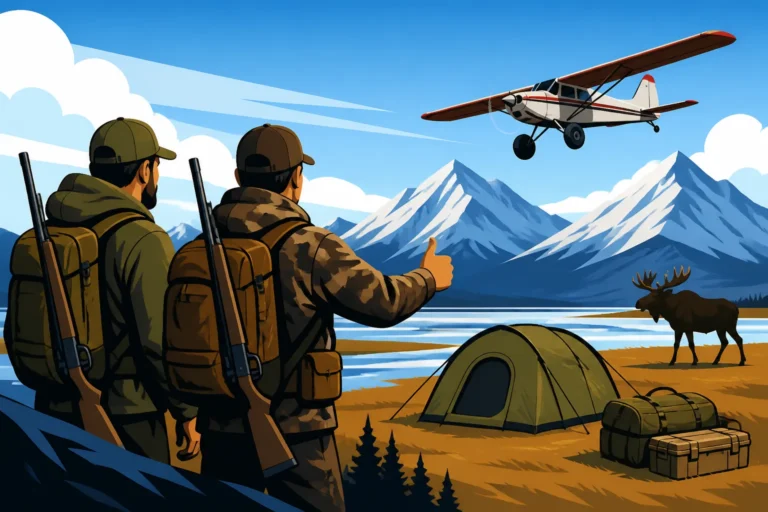
Alaska’s Brown Bear, Sheep and Goat Guide Requirement
For many aspiring hunters, the dream of an Alaska big game hunt conjures images of vast wilderness and incredible wildlife. But the reality for non-resident hunters eyeing iconic species like brown bear, Dall sheep, or mountain goats is that a crucial regulation often stands between them and their quarry: the guide requirement. This isn't just a suggestion; it's a deeply ingrained law designed to ensure safety, ethical hunting practices, and sound wildlife management. If you're planning an adventure after these magnificent animals, understanding this requirement is your very first step to a legal and successful hunt.
The Fundamental Rule: Who Needs a Guide in Alaska?
Let's cut right to the chase because this is where a lot of hunters can get tripped up before they even book a flight. Alaska has some very specific rules about who can hunt certain big game animals, especially if you don't call the Last Frontier home. These regulations aren't arbitrary; they stem from the unique challenges and responsibilities that come with hunting in such a wild and unforgiving landscape.
The "Big Three" Game Animals and Non-Resident Requirements
If you're a non-resident of Alaska and you have your sights set on brown bear (that includes coastal brown bears and interior grizzlies), Dall sheep, or mountain goats, you absolutely need a guide. There's no getting around it in most circumstances. This isn't like hunting moose or caribou, where a non-resident can typically go out on their own with the proper tags and licenses. For these three species, the state mandates that you either hire an Alaska-licensed guide-outfitter or qualify for a very specific kinship exception. It’s a requirement often discussed among hunters, and it's pivotal for planning. Many look to resources like Hiring an Alaska Registered Guide-Outfitter to understand what this entails.
Imagine planning for years, saving every penny, and then arriving in Alaska only to find out you can't legally hunt your target species because you didn't have a guide. It's a heartbreaking scenario, but it happens. The guide isn't just there to help you find an animal; they are an integral part of the regulatory framework for these particular hunts. They ensure you adhere to local laws, understand the nuances of the terrain, and handle the trophy and meat properly.
Understanding the "Second-Degree-Kinship" Exception
Now, there is one very specific workaround to the guide requirement for non-residents, and it's called the "second-degree-kinship" exception. This rule allows a non-resident to hunt brown bear, Dall sheep, or mountain goat without a professional guide, provided they are accompanied by an Alaskan resident who is related to them within the second degree of kindred. This means the accompanying resident must be your spouse, father, mother, grandfather, grandmother, brother, sister, son, daughter, grandson, or granddaughter.
This isn't just about showing up with a cousin twice removed. The relationship must be direct and verifiable. Both the non-resident hunter and the resident relative must carry proof of their relationship in the field, ready to show if requested by Alaska Wildlife Troopers. This exception is designed for family connections, allowing residents to share the hunting experience with close relatives from out of state. It's not a loophole for casual friends or distant acquaintances to bypass the guide requirement. Understanding the specifics of Alaska's Second-Degree-Kinred Alternative to a Guide is crucial if you plan to go this route. It requires a lot of trust, shared responsibility, and meticulous planning, often mirroring much of the preparation that goes into a guided hunt, just without the commercial aspect.
Non-Resident Aliens: A Different Set of Rules
For those who are not U.S. citizens but wish to hunt in Alaska – often referred to as non-resident aliens – the rules are even stricter. If you are a non-resident alien, you must be accompanied by a licensed Alaska guide-outfitter when hunting any big game animal. This means there is no second-degree-kinship exception available to you, even if you have close relatives who are Alaskan residents. This regulation underscores the state's intent to have foreign visitors operate under the direct supervision of a professional who is familiar with all local laws, customs, and safety protocols. This is a key distinction covered more in-depth when considering Nonresident Aliens and Alaska's Guide Requirement. It simplifies the decision-making process in one sense, but it also means that all big game hunts for non-resident aliens will inherently involve the cost and logistics of hiring a guide.
Why These Animals? Unpacking the Rationale Behind the Requirement
It might seem unfair or overly restrictive to some, but there are solid reasons why Alaska places a guide requirement on non-resident hunts for brown bear, Dall sheep, and mountain goats. These reasons touch upon safety, conservation, ethical hunting, and the sheer difficulty of these hunts.
Managing Risk in Dangerous Bear Country
Hunting a brown bear in Alaska, whether it's a massive coastal bear on the Alaska Peninsula or a grizzly in the interior, is an inherently dangerous endeavor. These animals are powerful, unpredictable, and can be incredibly aggressive, especially when surprised or wounded. A guide brings a lifetime of experience in reading bear sign, understanding their behavior, and knowing how to react in close-quarter encounters. They are often equipped with large-caliber firearms, bear spray, and, most importantly, the cool head and situational awareness that comes from years in the field.
For a non-resident who might be unfamiliar with the nuances of Alaska Brown Bears on the Coast Versus Interior Grizzlies, especially concerning their size and temperament, venturing into their domain unguided can quickly turn catastrophic. The guide's presence isn't just about finding the bear; it's about getting you home safely. They understand the critical importance of a clean kill, the swiftness required in field dressing, and the necessity of proper Bear Safety While Butchering a Kill in Alaska, all of which contribute to minimizing risk in bear country.
Navigating Challenging Alpine Terrain
Dall sheep and mountain goat hunts are almost exclusively conducted in incredibly rugged, high-alpine environments. We're talking steep cliffs, treacherous scree slopes, unpredictable weather, and extreme physical demands. These are not hunts for the faint of heart or the unprepared. Finding sheep in the vastness of the Alaska Range or goats clinging to the Chugach cliffs requires intimate knowledge of the terrain, animal behavior, and expert glassing skills.
Guides for these species are often seasoned mountaineers as much as they are hunters. They know how to assess routes, mitigate avalanche risks (if applicable), and guide clients safely through terrain that can be unforgiving for even experienced hikers. They are also adept at judging legal animals – a full-curl ram or a legal billy – from long distances, which is critical in avoiding mistakes that could lead to citations. Their experience can mean the difference between a successful hunt and a dangerous situation, especially when navigating in areas with Alpine Navigation Without Cell Service or dealing with sudden weather changes.
Conservation, Ethics, and Fair Chase Principles
Alaska takes its wildlife management and fair chase principles very seriously. For species like brown bear, Dall sheep, and mountain goat, which can be sensitive to overharvesting or require specific criteria for legal take, having a guide ensures adherence to regulations. Guides are professionals who are licensed by the state and are accountable for the ethical conduct of their clients. They play a vital role in ensuring that hunters understand and follow complex rules, such as antler or horn size restrictions, season dates, and reporting requirements.
The guide requirement also helps to maintain the integrity of these hunts. It ensures that hunters are properly equipped, physically prepared, and mentally ready for the challenges, minimizing the chances of wounded animals or other situations that compromise fair chase. This commitment to ethical hunting and sound conservation practices is a cornerstone of Alaska's wildlife management strategy for its most iconic and vulnerable species.
Choosing Your Path: Guided Hunt or Kinship?
Once you understand the requirements, the next step is to decide how you'll proceed. For most non-residents, this means either committing to a guided hunt or exploring the kinship option. Both have their advantages and significant considerations.
What a Registered Guide-Outfitter Provides
Hiring an Alaska Registered Guide-Outfitter is often the most straightforward and reliable path for non-residents pursuing brown bear, sheep, or goats. A reputable guide provides much more than just a presence to satisfy the law. They offer:
- Expert Knowledge: Years of experience in specific hunting units, understanding animal patterns, seasonal movements, and prime habitat. They know where to look, when to look, and how to approach.
- Safety and Logistics: Guides handle the intricate logistics of remote travel, often including charter flights, spike camps, and all necessary gear for a wilderness expedition. They are equipped for emergencies and prioritize your safety in rugged terrain and dangerous animal encounters.
- Legal Compliance: They ensure every aspect of your hunt adheres to Alaska's complex hunting regulations, from proper licensing and tagging to ethical harvesting and meat salvage.
- Specialized Gear and Techniques: Guides often have top-tier optics, calling equipment, and skinning/caping tools. They instruct on specialized techniques like Glassing the Alaska Range: Finding Game Before You Move or Shooting Positions on Alaska Tundra and Sidehills, optimizing your chances of success.
- Enhanced Success Rates: While no guide can guarantee a kill, their expertise significantly increases your odds of a successful and ethical harvest. They have a vested interest in your success and a reputation to uphold.
When you're ready to start looking, resources like BookYourHunt can be incredibly helpful for exploring available guided hunts and comparing different outfitters. You can find detailed packages, read reviews, and often get a good sense of what's included in a Guided Versus Unguided Hunting in Alaska experience.
Evaluating the Kinship Option: Pros and Cons
The second-degree kinship exception is a valuable option for families, but it's not a shortcut to an easy hunt. It comes with its own set of responsibilities and challenges:
| Feature | Guided Hunt | Kinship Hunt (Resident Relative) |
|---|---|---|
| Legal Requirement Met | Yes (Professional Guide) | Yes (Qualified Resident Relative) |
| Experience Level | Guide is typically highly experienced and knowledgeable | Relies on resident relative's hunting experience and local knowledge |
| Logistics Handled By | Primarily the guide/outfitter | Primarily the resident relative and non-resident hunter |
| Safety Protocol | Professional-level planning and equipment | Depends entirely on the resident relative's preparedness |
| Cost | Significant investment for guide fees, often all-inclusive | Lower direct guide fees, but still costs for travel, gear, etc. |
| Liability | Shared with guide (as per contract) | Primarily on the resident relative and non-resident hunter |
| Local Knowledge | Deep, specific knowledge of hunt area | Varies depending on resident relative's personal experience |
| Permits/Tags | Guide often advises on process | Hunter and relative must navigate all permit/tag requirements |
The "pro" is obviously the potential cost savings on guide fees and the unique experience of hunting with a close family member. The "cons," however, are substantial. The resident relative must possess the skills, knowledge, and equipment of a professional guide for the target species and terrain. This includes proficient navigation, first aid, bear safety, animal identification, and field care of game. It's a huge undertaking for the resident and demands thorough preparation. They need to be as prepared, if not more, than a commercial guide for Booking an Alaska Sheep Hunt With a Guide or Booking an Alaska Brown Bear Hunt Years Ahead.
Finding Reputable Guides and Resources
If you opt for a guided hunt (and for most non-residents pursuing these species, it's the best choice), thorough research is paramount. Start by checking the Alaska Department of Fish and Game (ADF&G) and the Alaska Board of Game websites for lists of licensed guide-outfitters. Look for guides with experience in the specific regions and species you're targeting.
Beyond official lists, leverage online hunting forums, social media groups focused on Alaska hunting, and reputable booking platforms. Websites like GoHunt often have a wealth of information and forums where you can ask questions, read reviews, and connect with other hunters who have experience with various guides. When you find potential guides, always:
- Verify their license status: This is a critical first step.
- Ask for references: Talk to previous clients about their experiences, both good and bad.
- Review their contract carefully: Understand what's included, what's not, payment schedules, and cancellation policies.
- Discuss expectations: Be clear about your physical capabilities, desired trophy quality, and what you expect from the hunt.
It's a significant investment, both financially and personally, so don't rush the decision.
Beyond the Guide: Other Key Considerations for Your Hunt
While securing a guide or qualifying for the kinship exception is the first major hurdle, it's just one piece of the complex puzzle of planning an Alaska big game hunt. There are many other critical elements to consider to ensure a safe, legal, and successful experience.
Licensing, Tags, and Draw Permits
Even with a guide, you, as the non-resident hunter, are responsible for obtaining all necessary licenses and tags. For brown bear, Dall sheep, and mountain goat, these are typically locking tags, which are physically attached to the animal after a kill. These tags can be quite expensive for non-residents, and their cost should be a significant factor in your overall budget planning. Make sure you understand Alaska Big Game Locking Tags and What Each Costs.
Some hunts for these species might also be draw permits, meaning you have to apply and be selected in a lottery-style drawing. The application period is usually quite early, often in November and December of the year before the hunt. If you're considering a draw hunt, you need to be aware of Alaska's November 1 to December 15 Draw Application Window and plan far in advance. Missing these deadlines means missing your chance for the entire year. Your guide can often advise on permit applications, but the ultimate responsibility for applying correctly rests with you.
Physical Demands and Preparation
Hunting brown bear, Dall sheep, or mountain goat in Alaska is not a casual stroll in the park. These are physically grueling hunts. Dall sheep and mountain goat hunts, in particular, involve significant vertical gain, backpacking heavy loads over rough terrain, and enduring potentially harsh weather conditions. Even a brown bear hunt can involve long hikes through dense brush or across challenging tundra.
Physical preparation cannot be overstated. Start training months in advance. Focus on cardiovascular fitness, strength training, and endurance. Practice hiking with a weighted pack on uneven ground. Being in top physical condition won't just increase your chances of success; it will also significantly enhance your safety and enjoyment of the hunt. Don't underestimate the demands, as many guides emphasize Fitness Expectations on an Alaska Sheep Hunt or Training for a Backpack Sheep Hunt long before you arrive.
Planning Logistics for Remote Access
Alaska is vast, and many of the prime hunting areas for these species are incredibly remote, accessible only by bush plane, boat, or extended backpacking trips. This adds layers of complexity to logistics. You'll need to consider how you'll get to your guide's base camp, the type of aircraft or boat required for the final leg to the actual hunting grounds, and what happens in case of weather delays.
Communication in these remote areas is also a major concern. Cell service is virtually nonexistent in most of the true wilderness. Satellite communication devices, like an inReach or satellite phone, are essential for safety and checking in with your guide or loved ones. Your guide will handle many of these logistical details, but understanding the challenges of Fly-In Hunting: Working With an Alaska Transporter Pilot or Boat-Based Deer Hunting on Alaska's Island Coastlines (even if you're not hunting deer) gives you a realistic picture of the immense planning involved. Always factor in extra "weather days" when planning your schedule, as unforeseen delays are common.
Disclaimer
This article is for general informational purposes only and does not constitute professional advice. Laws, prices and regulations vary by location and change over time. Consult a qualified professional for guidance on your specific situation.