Why Alaska Drop Camps Require Two Hunters
It can be incredibly frustrating when you've got your heart set on an Alaska drop camp hunt, picturing that perfect solo adventure deep in the backcountry, only to find out that most air taxi services won't take you unless you're a party of two. This isn't some arbitrary rule set by individual operators; it's deeply rooted in both state regulations and the stark realities of Alaskan wilderness safety. This guide will walk you through exactly why Alaska drop camps have this two-hunter requirement, delving into the safety, logistical, and even financial reasons that make going with a partner not just recommended, but often mandatory.
Understanding the "Two-Hunter" Rule for Alaska Drop Camps
The idea of a remote drop camp hunt, just you and the wilderness, is the dream for many. But when you start calling air taxi services, you'll quickly hit a wall: "Sorry, we need at least two hunters for a drop camp." This isn't just an air taxi trying to maximize their profit (though that's a factor too, we'll get to that). This is primarily about safety and compliance with how the state views unguided remote operations.
The Legal Basis: State Regulations and Safety
While there isn't a single, universally cited Alaska statute that explicitly bans solo drop camp hunts for non-residents (residents have a bit more flexibility in certain scenarios), the spirit of the law, combined with an understanding of liability and practical safety, shapes this industry standard. The State of Alaska takes a very serious view of hunting operations, especially those involving aircraft. Air taxis are licensed transporters, but they operate under strict guidelines regarding what they can and cannot do. They can't act as guides (unless they are also registered guides) and they certainly can't knowingly put clients in unduly dangerous situations. Dropping a single hunter off in extremely remote, often unforgiving terrain without a support system is seen as an immense liability and a significant safety risk.
Think about it from their perspective: if you get hurt, disappear, or run into serious trouble, who is responsible? While you sign waivers, the reputation and operational license of the air taxi are on the line. Most reputable transporters simply won't take that risk for a solo drop-off. They know the potential consequences of leaving one person alone in a place where self-rescue is often impossible, and emergency services are days, if not weeks, away. This is distinct from a fully guided hunt where the guide is legally responsible for your safety and well-being in the field. For more on what transporters are allowed to do, see Alaska Transporters and What They Legally Provide.
Practical Implications for Solo Hunters
For you, the hunter, this means your dreams of a truly solo wilderness experience via drop camp are likely going to need a revision. You'll either need to find a partner, or seriously consider other hunting options. Finding a buddy can be a challenge, especially if your hunting style or availability doesn't match up with friends or family. Many hunters even connect with strangers through forums or social media specifically to meet the two-person requirement for these hunts.
The practical implications extend beyond just booking the flight. When you're in the field, even seemingly minor tasks become monumental alone. Setting up a heavy wall tent, quartering a large animal like a moose, or dealing with unexpected equipment failures are all incredibly difficult, dangerous, or sometimes impossible without a second set of hands. While some highly experienced Alaskan residents might pull off solo remote hunts, they often have decades of specific local knowledge and gear that far exceeds what most non-residents possess. For the average hunter, it's just not a viable, or safe, path.
Safety in the Backcountry: Why Two is Better Than One
Alaska's backcountry is wild, unpredictable, and unforgiving. The "two-hunter" rule isn't just about regulations; it's a cold, hard dose of reality about surviving in an environment where everything from a twisted ankle to a surprise grizzly encounter can turn deadly in an instant. Having a partner isn't just helpful; it's often the difference between life and death.
Mitigating Risks: Injury, Wildlife, and Weather
Imagine this scenario: you're five days into your moose hunt in Interior Alaska, miles from any trail or human contact. You're traversing a steep, brushy hillside, and suddenly your foot catches, sending you tumbling. You feel a sickening pop in your ankle. Now you're immobile, deep in bear country, and a thousand miles from the nearest emergency room. If you're alone, what do you do? Even with a satellite communication device, rescue could be days away, depending on weather and aircraft availability. With a partner, one person can stabilize the injury, provide first aid, set up shelter, and initiate communications, while the other can focus on signaling for help or, in a dire situation, attempting to get back to a pre-arranged pick-up point if absolutely necessary.
Wildlife encounters are another huge factor. While we all hope to see game from a distance, unexpected close encounters with brown bears are a very real possibility, especially when processing meat. Two people make a much more imposing presence than one. One hunter can stand guard with a rifle while the other butchers, or two hunters can quickly react to a charging animal. Trying to quarter a bull moose while constantly scanning your surroundings for a curious grizzly is a level of stress no one needs. The sheer volume of game that hunters are trying to pack out also draws predators in, meaning you’re often working at a kill site for hours. For some species, non-residents are even required to have a licensed guide, which is a testament to the inherent dangers. See Alaska's Brown Bear, Sheep and Goat Guide Requirement for more.
Then there's the weather. Alaska's weather can shift on a dime, turning a sunny day into a blinding blizzard or a relentless downpour. A sudden flood can cut off a river crossing. Being stuck in extreme conditions, alone, with hypothermia setting in, is a dire situation. A partner means shared body warmth, an extra set of hands to pitch a tent in gale-force winds, and another mind to problem-solve when things go south.
Shared Responsibilities and Workload
Let's be brutally honest: hunting in Alaska is hard work. It's not just the hunting part; it's the sheer physical labor of setting up and breaking down camp, fetching water, processing game, and then packing it all out. A drop camp means you are completely self-sufficient for the duration of your hunt.
Consider the following tasks:
- Camp Setup: Unloading gear from a small plane, hauling it to a suitable camp spot, pitching a bomb-proof tent, setting up a stove, and organizing supplies. This is easily a multi-hour job for two people, far longer and more arduous for one.
- Game Processing: Field dressing, quartering, and then deboning a large animal like a moose is an enormous undertaking. A typical bull moose can yield hundreds of pounds of meat. Doing this alone, especially under pressure from flies or potential predators, is incredibly taxing and inefficient. One person can hold a leg while the other cuts, one can run meat to game bags while the other finishes butchering. Speed matters, especially when you're trying to perform Meat Care in 50-Degree September Weather.
- Packing Out Meat: This is where the physical demands truly hit home. Even with the lightest Backpack Hunting in Alaska: Gear Weight and Meat Loads, carrying heavy loads of meat over uneven, brushy tundra is exhausting. A second person means you can split the load, making multiple trips more feasible and safer. If you drop a full quarter, two people are a lot more effective at getting it back on a frame.
- Decision Making: Hunting is full of critical decisions, from navigation to stalk strategy to whether to push on or set up camp. Having a trusted partner to bounce ideas off, double-check maps, or simply share the mental burden makes for better, safer choices.
| Task Category | Solo Hunter Challenges | Two-Hunter Advantages |
|---|---|---|
| Physical Labor | Extremely demanding, prone to injury, slow | Shared workload, faster completion, less fatigue |
| Safety in Field | No immediate aid for injury, vulnerable to wildlife | Immediate aid, stronger defense against wildlife |
| Problem Solving | Sole responsibility, potential for mental fatigue | Collaborative decision-making, diverse perspectives |
| Logistics | Everything on one person, easily overwhelmed | Split tasks (e.g., one sets camp, one gathers water) |
| Emergency Response | Self-rescue only, delayed communication for help | One can assist, one can communicate, faster response |
Logistics and Emergency Preparedness
Beyond the immediate dangers, drop camps present unique logistical challenges, especially when it comes to communication and getting your harvest out. These are areas where having a partner significantly improves your odds of success and safety.
Communication and Evacuation in Remote Areas
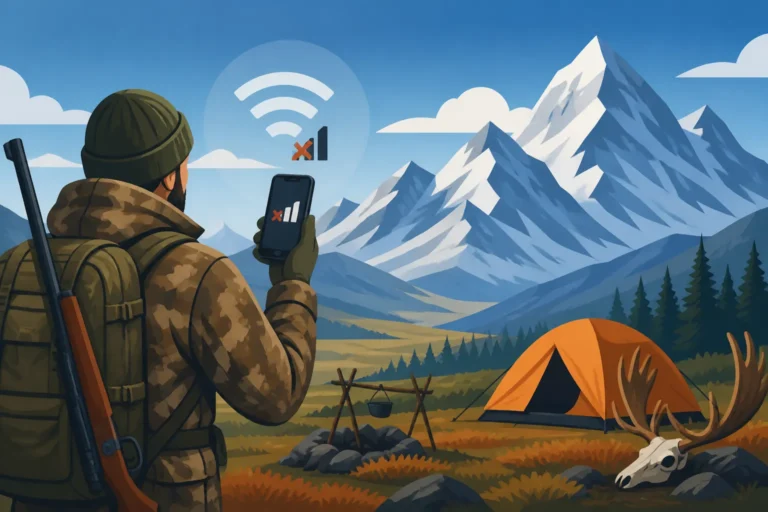
In much of Alaska's backcountry, cell service simply doesn't exist. You are truly off the grid. This means relying on satellite communication devices like an InReach or satellite phone for emergency contact or daily check-ins with your air taxi. While a solo hunter can carry and operate these devices, the sheer stress and physical impairment of an injury can make effective communication impossible.
Imagine breaking your leg. Even if you can hit the SOS button, can you clearly relay your exact location, the nature of your injury, and what resources you need? Can you keep the device charged and functional while in shock or incapacitated? A partner can calmly and clearly communicate with rescuers, provide accurate coordinates, and keep lines of communication open. They can also administer first aid and provide comfort while waiting for help. When you're dealing with a true emergency, every minute counts, and a clear, concise message drastically improves the speed and effectiveness of a rescue. For those who do venture out, understanding Signal Devices and Check-In Plans for Solo Alaska Hunts is absolutely critical, even if you are with a partner.
Emergency evacuations in Alaska are complex, expensive, and often delayed by weather. Having a partner who can manage the situation, pack up critical gear, and prepare the camp for departure streamlines the entire process. Without one, you're entirely at the mercy of the rescue team, who may not be able to quickly assess your needs or manage your gear efficiently.
Gear Capacity and Meat Salvage
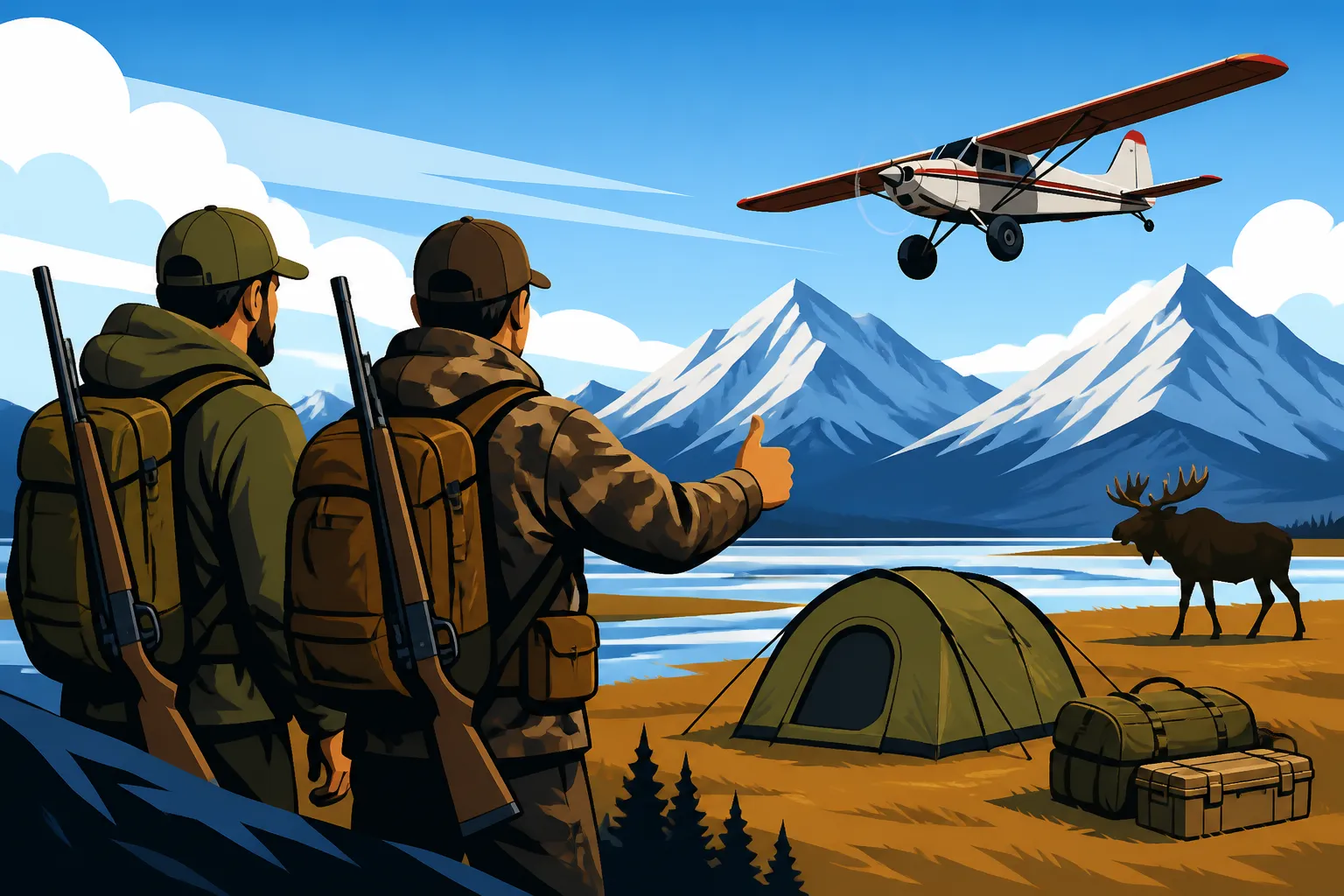
One of the biggest logistical headaches for any Alaskan hunter is dealing with gear and, hopefully, meat. A typical drop camp load for two hunters might include a tent, stove, fuel, sleeping bags, food for 10-14 days, personal gear, hunting rifles, optics, and game bags. This is usually flown in on one or two trips by a bush plane. If you're solo, you'd still need much of that same bulk, but with only half the carrying capacity for packing it from the landing strip to camp, and then from camp back to the strip.
Then comes the game. Let's say you're fortunate enough to harvest a bull moose. As mentioned, that's hundreds of pounds of meat, plus a cape and antlers. Alaska has strict Alaska Moose Meat Salvage Requirements that hunters must follow. Failure to salvage all edible meat can result in significant penalties. Hauling this much weight out is a monumental task for two people, often requiring multiple trips. For one person, it can easily turn into an impossible feat, leading to wasted meat or violating salvage laws.
Even if you manage to quarter the animal and get the meat in game bags, a single person simply cannot physically transport it all, along with their camp gear, back to the pick-up point within a reasonable timeframe, especially if the weather changes or a bear moves into the area. Two hunters can make shorter, more manageable trips, ensuring all meat is retrieved safely and legally. This is a primary reason transporters insist on two hunters – they know the meat has to come out, and one person simply can't do it efficiently or safely.
Financial Considerations and Alternatives
While the two-hunter rule is rooted in safety and logistics, there are also undeniable financial implications, both for the hunter and the air taxi operator. Understanding these can help you plan your Alaska hunting adventure more effectively.
The Cost-Sharing Benefit
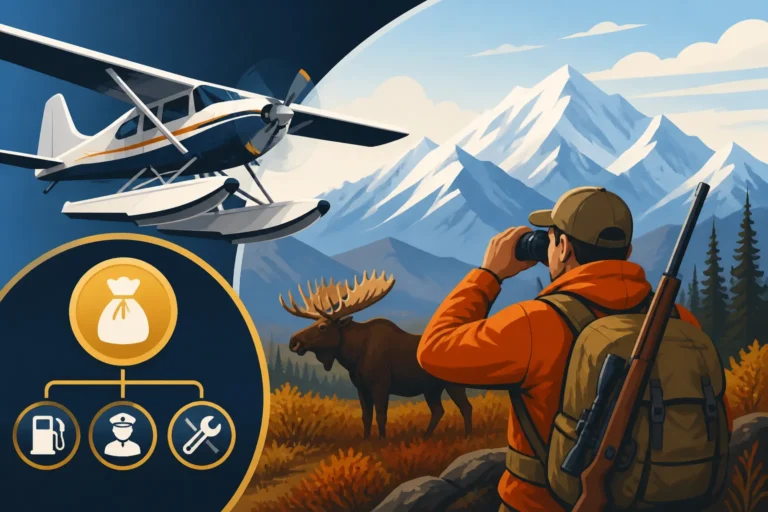
Let's be blunt: flying into remote Alaska is expensive. Bush planes consume a lot of fuel, and the pilots who fly them are highly skilled professionals operating specialized aircraft. Air taxi services have fixed costs regardless of whether they fly one hunter or two. Their goal is to operate efficiently and safely. A single hunter still requires the same plane, pilot time, and fuel for a drop-off and pick-up as two hunters.
When you divide the cost of a charter flight between two people, it significantly reduces the per-person expense. For example, if an air taxi charges for a round-trip flight from their base to your drop camp, splitting that cost in half makes the hunt far more affordable. This cost-sharing benefit extends beyond just the flight. You can split the cost of shared camp gear like a large wall tent, stove, and fuel. Even shared food expenses can add up.
Many air taxis actually have a "two-hunter minimum" for their advertised drop camp packages, precisely because it makes the operation economically viable for them and more palatable for hunters. While some might technically allow a solo hunter if they pay the full two-person rate (essentially paying for an empty seat), few hunters opt for this, especially given the aforementioned safety concerns. It's often more economical and safer to find a partner. For a deeper dive into these costs, check out How Air Taxi Pricing Works in Alaska and What an Alaska Transporter Drop Camp Package Price Range. Websites like BookYourHunt or GoHunt often list drop camp opportunities, sometimes even with options for solo hunters to join existing groups, highlighting the cost-sharing aspect.
What If You Really Want to Hunt Alone? Guided Options and Exceptions
If the idea of a truly solo Alaska hunt still calls to you, and finding a partner for a drop camp isn't an option, you still have some avenues, but they often involve different structures and significantly higher costs.
One primary alternative is a fully guided hunt. While more expensive, a guided hunt means a professional guide is responsible for your safety, logistics, and field support. This bypasses the solo drop camp issue entirely, as the guide is your direct companion and legal overseer. Guides are equipped to handle solo clients and have the expertise to mitigate risks that a transporter simply cannot assume. For species like brown bear, Dall sheep, and mountain goat, non-residents are legally required to have a guide anyway, unless accompanied by a second-degree-kindred relative. Hiring an Alaska Registered Guide-Outfitter and Guided Versus Unguided Hunting in Alaska are essential reads if you're considering this route.
Another less common, and often less practical, option for some highly experienced individuals might be road-system access hunts that don't require an air taxi drop-off, or boat-based hunts where you pilot your own vessel. However, even these come with their own set of challenges and safety considerations, and "solo" still often means you have a vehicle or boat for self-extraction. For example, some might try to access game via ATV Access Tactics on Alaska's Denali Highway, but even then, a partner is invaluable for recovery and safety.
Finally, some resident hunters, particularly those with deep local knowledge and extensive backcountry experience, might undertake solo hunts. But they are often deeply familiar with their hunting grounds, have cached gear, and possess a lifetime of self-reliance skills unique to living in Alaska. This isn't generally a model for non-resident visitors.
Ultimately, while the desire for a solo wilderness experience is strong, the two-hunter requirement for most Alaska drop camps is a practical reflection of the immense challenges and risks involved. It's a rule that prioritizes safety, logistical feasibility, and adherence to the realities of hunting in truly wild country. Plan accordingly, find a great partner, and your Alaska adventure will be all the more successful and memorable.
Disclaimer
This article is for general informational purposes only and does not constitute professional advice. Laws, prices and regulations vary by location and change over time. Consult a qualified professional for guidance on your specific situation.