Training for a Backpack Sheep Hunt
An Alaska backpack sheep hunt is easily one of the most physically demanding and mentally challenging endeavors a hunter can undertake. It's not just a walk in the woods; it's a relentless alpine marathon, often at high elevation, with a heavy pack, across unforgiving terrain. This guide is dedicated to helping you forge the physical and mental resilience necessary to conquer Alaska's steep peaks and make your dream of chasing Dall sheep a reality.
Why Physical Preparation for an Alaska Sheep Hunt is Non-Negotiable
Let's be brutally honest: an Alaska sheep hunt will test every fiber of your being. This isn't a casual stroll where you might bump into a deer; this is extreme mountain hunting that demands peak physical condition. Ignoring this crucial aspect isn't just a recipe for a miserable trip; it can be dangerous and lead to a failed hunt before you even get a chance to glass a ram. The terrain itself is your biggest adversary, and if you're not ready for it, you'll be spending more time catching your breath than actually hunting.
The Brutal Reality of Mountain Terrain
Imagine yourself at 5,000, 6,000, or even 7,000 feet, far above timberline, where every step is either uphill, downhill, or sideways on an incline. The ground isn't a manicured trail; it's a chaotic mix of loose scree that threatens to slide out from under you, jagged rock fields that twist ankles, and spongy tundra that saps your energy with every stride. You'll encounter vertical rock faces that require scrambling, steep grass slopes that are slick with dew or rain, and boulder fields that demand precise foot placement. It's a relentless climb, often punctuated by sudden descents into drainages only to climb out again.
The air thins up there, and even if the altitude isn't "high" by Colorado standards, the constant uphill grind can feel like it. Your lungs will burn, your muscles will scream, and your mind will be constantly assessing the next foot placement. A slight misstep on a loose rock can lead to a sprained ankle or a nasty fall, instantly ending your hunt. This is why mere "fitness" isn't enough; you need a specific type of mountain fitness that prepares your body for these unique stresses. Think of it less as a hike and more as a sustained, full-body workout that lasts for days, sometimes weeks, with no easy way out. You need to be able to move confidently and efficiently, often while already exhausted, knowing that a single mistake could have serious consequences.
The Demands of Carrying a Heavy Pack
Now, layer that brutal terrain with the reality of carrying a heavy pack. You're not just carrying a daypack; you'll have everything you need to survive for a week or more in the remote Alaskan wilderness strapped to your back. This means a tent, sleeping bag, stove, fuel, food, water, spotting scope, rifle, emergency gear, and much more. Your starting pack weight could easily be in the 50 to 70-pound range, and that's before you even pull the trigger.
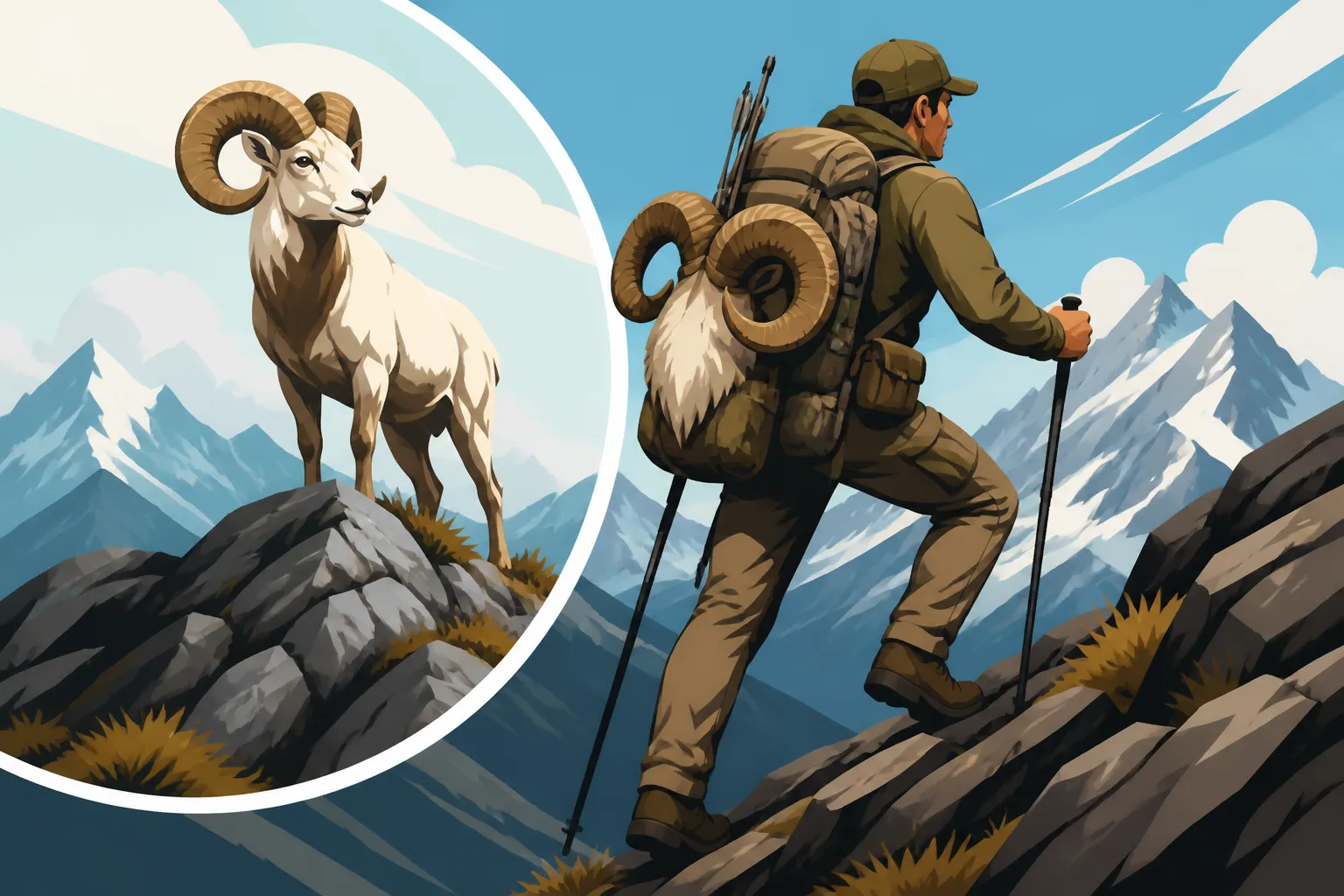
Once you harvest a ram, the real work begins. You'll be quartering an animal, carefully caping out the hide, and then adding 60-100 pounds of meat, hide, and horns to your already substantial pack. Suddenly, your pack weight can soar past the 100-pound mark. Now, imagine navigating that treacherous scree field, that steep shale slide, or that spongy tundra with a load like that. You might have to make multiple trips to pack out the animal, each one a grueling ascent and descent. This isn't just about strength; it's about endurance, core stability, and the ability to maintain balance under extreme duress. Backpack Hunting in Alaska: Gear Weight and Meat Loads offers more insights into managing these loads. Many hunters underestimate this phase, focusing only on the "hunt" part, but the "pack out" is often the most physically punishing and where injuries are most likely to occur. Your training must specifically prepare you for handling these immense loads on uneven ground, ensuring your knees, back, and shoulders can withstand the strain.
Building Your Core Training Regimen
Getting ready for an Alaska sheep hunt isn't about looking good in a mirror; it's about functional strength and endurance. You need a training plan that mimics the demands of the hunt itself, building a robust, resilient body capable of tackling the mountains. Consistency is key here; a few weeks of intense workouts won't cut it. Start months, ideally a year, in advance, and make physical preparation a non-negotiable part of your routine.
Cardiovascular Endurance: Fueling Your Mountain Engine
Your heart and lungs are your engine in the mountains, and you need to train them to operate efficiently under sustained stress. This isn't about being able to sprint; it's about maintaining a strong, steady pace for hours on end, often uphill, with a heavy load.
The best way to build this is by hiking. Seriously, hit the trails. Find the steepest hills you can, load up a pack (start light and gradually increase the weight), and go. Simulate the up and down, the uneven footing. If you don't have mountains nearby, use a stair climber, a treadmill on maximum incline, or even stadium stairs. Aim for sessions that last 1-2 hours, 3-4 times a week, pushing your heart rate into a challenging but sustainable zone. Don't be afraid to take it slow if you're carrying significant weight; the goal is time under tension and consistent effort, not speed. Incorporate "rucking," which is simply walking with a weighted pack, into your weekly routine. Start with 20-30 pounds and gradually add weight until you're comfortable carrying 60-70 pounds for several miles over varied terrain. This prepares your body for the relentless march across vast landscapes and up steep slopes.
Strength Training: Preparing for the Pack Out
While cardio is critical, you can't neglect strength. You need a strong foundation to prevent injury, stabilize your joints, and manage those heavy pack-out loads. Focus on compound movements that work multiple muscle groups simultaneously, mimicking the real-world demands of mountain hunting.
Think squats, deadlifts, lunges, step-ups, and farmer's carries. These exercises build strength in your legs, glutes, core, and back – all vital for negotiating steep terrain and carrying weight. Incorporate exercises that target your core strength directly, like planks and Russian twists, as a strong core is essential for balance and pack stability. Don't forget your upper body, either. While you might not be bench-pressing a ram, you'll need upper body strength for scrambling over rocks, pulling yourself up ledges, and maintaining control of your rifle. Rows, pull-ups, and overhead presses can help here. The goal is functional strength – the ability to move your body and heavy objects effectively, not just lift maximum weight. When you're Packing a Ram Off a Cliff Face, you'll be grateful for every ounce of strength you've built. Consistency with these exercises, 2-3 times a week, will build the robust frame you need.
Flexibility and Mobility: Staying Injury-Free
Often overlooked, flexibility and mobility are crucial for preventing injuries and allowing your body to move freely through challenging terrain. Tight hips, stiff hamstrings, or an immobile spine can lead to awkward movements, muscle strains, or even falls, especially when you're tired or carrying a heavy pack.
Incorporate a consistent stretching routine into your training, focusing on your hips, hamstrings, quads, and lower back. Yoga or Pilates can be excellent additions, improving overall body awareness, balance, and range of motion. Spend 15-20 minutes after each workout, or dedicate specific sessions to mobility work. Foam rolling can also help release tight muscles and improve circulation. Remember, you'll be contorting your body into unusual positions while climbing, descending, and even just setting up camp. Being limber will make all these tasks easier and reduce your risk of pulling a muscle in the middle of nowhere. Don't let a preventable tweak sideline you from the hunt of a lifetime.
Here's a sample weekly training schedule to give you an idea:
| Day | Focus | Example Activities |
|---|---|---|
| Monday | Strength (Lower Body/Core) | Squats, Deadlifts, Lunges, Step-ups, Planks |
| Tuesday | Cardio (Rucking/Incline) | 60-90 min weighted pack hike (start light, increase weight), or treadmill on max incline |
| Wednesday | Active Recovery/Mobility | Yoga, foam rolling, light stretching, easy walk |
| Thursday | Strength (Full Body) | Overhead Press, Rows, Farmer's Carries, Core circuit |
| Friday | Cardio (Intervals/Long) | Hill sprints (short, intense) or another 90-120 min weighted hike |
| Saturday | Long Endurance Hike | 3-5+ hours with 40-60 lbs pack over challenging terrain |
| Sunday | Rest | Complete rest or very light activity |
Simulating Hunt Conditions for Peak Readiness
The gym is a great starting point, but it can only take you so far. To truly prepare for an Alaska sheep hunt, you need to move beyond sterile environments and start mimicking the actual conditions you’ll face in the mountains. This means getting outside, getting uncomfortable, and understanding how your body performs when pushed to its limits in a realistic setting.
Hiking with Your Actual Pack and Gear
This is perhaps the single most important aspect of your training. Get your actual hunting pack, load it with the gear you intend to bring (or simulate the weight with sandbags/water bottles if you don't want to beat up your camp gear), and hit the steepest, nastiest trails you can find. Don't just walk; challenge yourself. Find rocky sections, scramble up steep inclines, practice descending loose slopes. Gradually increase the weight in your pack until you can comfortably carry at least 50-60 pounds for several hours over rough terrain. This isn't just about building strength; it's about conditioning your shoulders, hips, and feet to the unique pressures of backpacking.
Pay close attention to how your pack fits and feels under load. Does it rub anywhere? Are the straps digging in? Can you access your water and snacks easily? Does your rifle sling feel comfortable after an hour of climbing? Practice setting up your tent and sleeping system after a long, grueling hike when you’re tired. Imagine doing it in the wind and rain. This helps you identify gear issues, refine your packing strategy, and builds muscle memory for essential camp tasks. If you're planning to set up a spike camp above a basin, physically practicing that setup after a tough climb will reveal any weaknesses in your system or your physical readiness. Setting Up a Spike Camp Above a Sheep Basin goes into more detail on practicalities. The more you can simulate the hunt, the fewer surprises you'll have when you're actually there.
Nutrition and Hydration in Training
What you eat and drink on a sheep hunt directly impacts your energy levels, recovery, and overall performance. Don't wait until you're in the field to figure out what works for your body. Use your long training hikes to experiment with different trail foods. What snacks keep your energy up without upsetting your stomach? Do you prefer bars, gels, nuts, or dehydrated meals? How many calories do you truly need to sustain yourself during an all-day push with a heavy pack?
Practice your hydration strategy as well. How much water do you need to carry? How often do you need to drink? Do you prefer a hydration bladder or water bottles? Experiment with water purification methods you plan to use in the field – a pump filter, squeeze filter, or chemical treatment. Make sure you can use it efficiently, even when you're tired and cold. Understanding your caloric and hydration needs beforehand will prevent bonking or dehydration, which can be detrimental, if not dangerous, in a remote mountain environment. Eating and drinking adequately during your training sessions also helps your body recover faster, allowing you to hit the next workout with renewed vigor.
Mental Toughness: The Unseen Muscle
Physical conditioning is only half the battle. An Alaska sheep hunt will inevitably throw challenges your way: terrible weather, endless climbs, frustrating setbacks, and profound exhaustion. This is where mental toughness becomes your most critical asset. You'll need the grit to keep putting one foot in front of the other when every fiber of your being screams for you to stop.
Cultivate this mental resilience in your training. Don't always quit when you're tired; push a little further. Embrace discomfort. When you're on a long, arduous hike, practice positive self-talk and visualization. Break down the daunting task into smaller, manageable goals: "just to that next ridge," or "just 20 more steps." Learn to solve problems calmly when things go wrong on a training hike, whether it's a blister, a twisted ankle (on a safe, accessible trail, of course!), or a navigation error. The ability to maintain composure and think clearly under physical and mental stress is paramount in the mountains where Alpine Navigation Without Cell Service is the norm. Your mind can either be your strongest ally or your biggest enemy; train it to be the former.
What to Consider Beyond the Gym
Beyond the structured workouts and simulated hikes, there are other crucial elements to consider in your preparation. These are the details that often make the difference between a successful, safe, and enjoyable hunt and a miserable, potentially dangerous one. Think of them as the advanced course in sheep hunting readiness.
Gear Selection and Practice
Your gear is an extension of yourself in the sheep mountains, and its importance cannot be overstated. You need to be intimately familiar with every piece, from your boots to your binoculars.
Start with your boots. This isn't just about buying a good pair; it's about breaking them in, understanding how they perform in wet conditions, on steep inclines, and with a heavy pack. Your feet are your foundation, and blisters or inadequate support can cripple your hunt. Boot Requirements for Coastal Alaska Hunts can give you an idea of the crucial features, even if your hunt isn't strictly coastal. Wear your boots extensively on your training hikes. Next, think about your layering system. Alaska weather is notoriously fickle, and you'll need to know how to add and subtract layers to regulate your body temperature, staying dry and comfortable whether it's raining, snowing, or sunny. Practice packing and unpacking your tent, sleeping bag, and stove until it's second nature. Understand your navigation tools inside and out – GPS, map, and compass. Can you confidently navigate with them in the dark or in thick fog? Every piece of gear should be tested and proven before you step foot in the Alaskan wilderness.
High-Altitude Acclimatization
While many Alaska sheep hunts don't involve the extreme elevations of some Lower 48 or international hunts, you will still be operating at significantly higher altitudes than sea level, combined with intense physical exertion. The air will feel thinner, and your body will work harder to get oxygen.
For most Alaska sheep hunts, direct high-altitude acclimatization training (like sleeping in altitude tents) might be overkill unless you're coming from sea level and heading straight to very high peaks. However, if you have the opportunity to spend a few days at a higher elevation prior to your hunt, it can certainly help your body adjust. More importantly, consistent, intense cardiovascular training, as outlined earlier, will build your body's efficiency at utilizing oxygen, making you more resilient to the effects of thinner air. The goal is to maximize your aerobic capacity so that even if the air is thinner, your body is incredibly efficient at converting what little oxygen is available into usable energy. Discussing the Fitness Expectations on an Alaska Sheep Hunt with experienced hunters or guides will give you a clearer picture of typical elevations and how they impact performance.
Consulting with Experts and Resources
You don't have to figure all of this out alone. There's a wealth of knowledge available from experienced hunters, guides, and specialized resources. Don't hesitate to tap into it.
If you're considering a guided hunt, talk extensively with your potential guide. They can provide specific advice on the physical demands of their particular areas and hunts, as well as gear recommendations tailored to the conditions you'll face. Many hunters find invaluable resources through platforms like BookYourHunt when researching guided opportunities, providing a way to connect with reputable outfitters. They'll also be able to tell you about Asking a Guide About Typical Shot Distances and what kind of physical positioning that might require. If you're planning an unguided hunt, online hunting forums, specialized blogs, and books on mountain hunting can offer a treasure trove of information. Utilize tools from services like GoHunt for detailed planning and unit information, which can help you understand the terrain you'll be covering. Talk to people who have successfully completed Alaska sheep hunts. Learn from their experiences, both positive and negative. Their insights can be invaluable for refining your training plan, gear list, and mental preparation. Booking an Alaska Sheep Hunt With a Guide is a decision point where you can get a lot of practical advice on preparation.
Disclaimer
This article is for general informational purposes only and does not constitute professional advice. Laws, prices and regulations vary by location and change over time. Consult a qualified professional for guidance on your specific situation.